Explaining Rituals

Image by Terren in Virginia via Flickr, CC BY 2.0

While I was raking up fallen leaves in the yard recently, a passerby stopped to talk.

This lady was from India, and was curious about why Canadians raked up leaves each fall. Was it some cultural tradition of ours, she asked, a ritual that we enjoyed doing?

I smiled at her mistaken assumption, but explained that if we didn’t rake up the leaves, the lawn underneath would die. With a blanket of leaves blocking the sun and air, the grass would be smothered.

We’re certainly not raking up dozens of bags of leaves because it’s fun!

Our conversation got me thinking about rituals, and how we sometimes need to explain them to puzzled outsiders.

Why do kids dress up in outlandish costumes on Halloween and go door to door asking for candy?

Why do we decorate a tree in our homes at Christmas?

And why do Christians have bread and wine at Communion? Is it because they get hungry and need a snack partway through a church service?

Like Lucy in the old sitcom, we have some explaining to do…

Read more

Nip Sin in the Bud

Image by mouad gnnoni from Pixabay

Is it possible to limit yourself to just one piece of chocolate?

I’ve never been able to.

I find that having the first piece simply whets my appetite for a second. And I deserve a treat, don’t I?

Then I reason that dark chocolate contains antioxidants, so I’d better have several more pieces, if only for medicinal purposes. After all, you wouldn’t want me to oxidate, would you? I should hope not.

Finally, I rationalize continuing my chocolate binge by referring to the nutritional information on the package of my favourite dark chocolate for support.

It states that 4 squares of the chocolate contain 25% of my daily recommended amount of iron. So if I ate 16 squares, I’d be getting 100% of my daily iron needs met, right? Well, it’s important to prevent anemia, so I then decide I’d better finish off the package completely.

Do you see how my excuses and justifications led from having one piece of chocolate to consuming an entire heap of the stuff in short order? And how easily this all happened?

It’s the same way with sin, isn’t it?

It starts out tiny and unnoticeable, but can soon grow into a mess of mammoth proportions.

That’s why it’s so important to nip sin in the bud, because we have no idea where a “small” sin will lead.

Read more

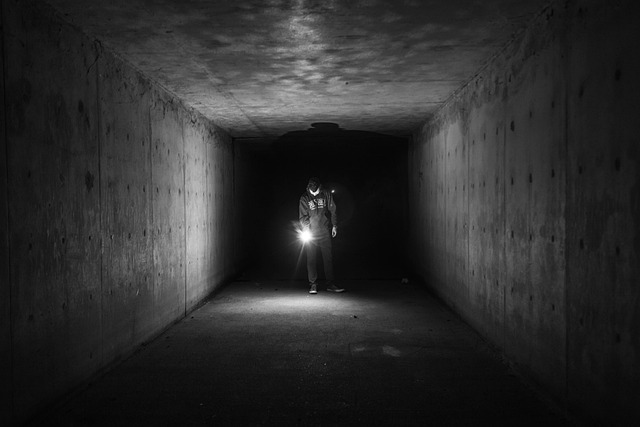
Shine Your Light!

Image by StockSnap from Pixabay

If you’re fumbling around in the darkness, what should you do?

Turn on a light, of course.

But there are places on earth where this truism can have unexpected effects.

The “midnight zone” of oceans is one of them.

This zone, ranging from about 3,000 to 13,000 feet below the water’s surface, is in constant darkness. The sun’s rays simply cannot penetrate this far down.

The only light at this extreme depth comes from the bioluminescence of various sea creatures themselves.

Scientists who want to study the sea life in this region are faced with a problem. Normally, if you want to examine a dark area, you’d simply shine a light into it. Indeed, the submersibles scientists use for underwater research have headlights for this express purpose.

But casting a light on the creatures in the midnight zone freaks them out. They’re not used to bright light, and assume it’s some sort of enemy.

Startled swordfish will attempt kamikaze runs at a submersible’s lights. Other creatures are blinded or are plunged into terror by the blazing illumination: they either freeze or flee.

Scientists soon realized that their submersibles’ lights were simply creating a no-go zone around the vessel, hampering their research. So they switched to using a red light, a colour which most of the undersea creatures can’t see.

Sometimes light can have a contradictory effect, can’t it?

As believers we see this when we introduce the light of Christ to others.

Read more

Forgive and Forget? Not!

Image by John Liu on Flickr CC BY-2.0

I know you’ll love these wise insights on forgiveness from my friend Veronica Gerber. We’re very fortunate to have her as our guest blogger today!


It’s popular to think of “forgive and forget” but, paradoxically, the bridge to forgiveness includes remembering, not forgetting!

Remembering what?

  • How much I’ve been forgiven and what it cost the Savior
  • Actions have consequences; learning from past mistakes
  • Vengeance belongs to the Lord

What dynamic is at work when you find it hard to forgive?

In my own experience, I’ve found it easiest to forgive when I remember how much I myself have been forgiven. When it’s hard to forgive, perhaps it’s because I’ve actually forgotten how much the Lord has forgiven me.

"Be kind and compassionate to one another, forgiving each other, just as in Christ God forgave you." (Ephesians 4:32, NIV)

That being said, actions do have repercussions. There is often a place for rebuke. Forgiving one another does not mean sweeping consequences aside! It’s not an easy or glib exercise.

"He who rebukes a man will in the end gain more favour than he who has a flattering tongue." (Proverbs 28:23, NIV)

True forgiveness includes a thorough assessment of the offence and yet chooses to extend the grace of forgiveness.

Read more