God Won’t Waste Your Pain

Quilting Bee circa 1910s, New Jersey
Photo by Richard on Flickr CC BY-2.0

Did you grow up in a family that hated wasting things? So did I.

Instead of throwing out old scraps of fabric, my paternal great-grandmother would twist the lengths and sew the resulting cords together into a rag rug. Nothing was wasted.

It was the same on my mother’s side of the family. Material from clothes that were no longer of use would be cut up and sewn into quilts. My Mom recalls sitting underneath the quilting frame as a child when her mother and other female relatives worked together at a quilting bee (Mom thought she was “helping” push the needle back up to the top surface). Even as a little girl, my mother learned an early lesson in letting nothing go to waste.

I must have inherited that trait.

I love recipes that not only produce a yummy result, but that are efficient. By that I mean that you’re not left with partly used cans of an ingredient that will languish in the fridge and eventually have to be thrown out.

I prefer a recipe that uses up the whole can of an ingredient, or, if it calls for 3 egg yolks for the batter, it also calls for 3 egg whites for the filling or a meringue. Nothing is wasted. No leftover egg whites that you have to store until you think of another recipe that can use them up.

Likewise, I think God is efficient in how He manages our lives. He won’t waste anything we go through: it all has a purpose, even the negative parts.

Read more
The Chocolate Doctrine

Photo by Jean Beaufort PublicDomainPictures.net

One of the wonderful things about chocolate (and there are many), is how well it pairs with other foods.

Chocolate seems to go well with just about everything. It marries happily with fruits like strawberries, raspberries, pears, cherries and bananas. It perfectly complements the flavours of nuts, such as peanuts, cashews, hazelnuts, almonds and macadamia nuts.

Chocolate cheerfully coexists with citrus, coconut, ginger, caramel, coffee, dairy or mint. It has even been known to blend with the flavours of chili and meat in some Mexican dishes.

Some adventurous people claim that chocolate goes well with broccoli (well, perhaps…if you held the broccoli).

You’ve got to hand it to a food that is uncompromising about its own flavour yet harmonizes with such a wide variety of other substances.

Did you know that the Bible implies that we should be a bit like chocolate? Not in so many words, of course, but the concept is still there.

Read more

Golden at the Broken Places

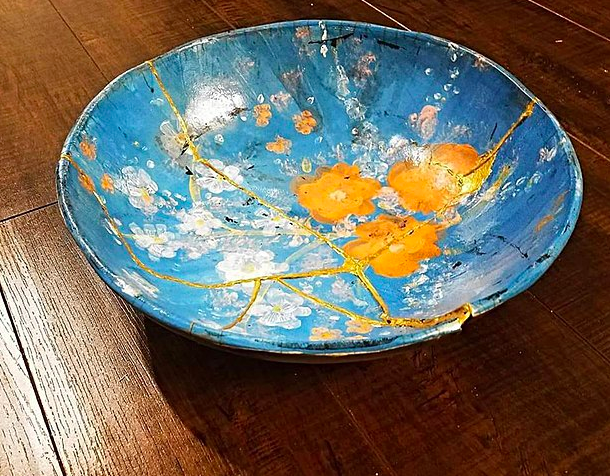
Bowl repaired using Kintsugi method by artist Ruthann Hurwitz.
Wikimedia Commons CC BY-SA-4.0

We all shudder at the sound of something breaking, don’t we? We can’t help but wince when we hear glass or crockery shattering into pieces on the floor.

Why do we have that involuntary reaction? Because we know that the object probably can’t be repaired: it’s likely to be damaged irreparably, and must be thrown away.

We’re wincing at the sound of loss.

But what if there were a way to not only put the pieces back together, but to make the object more beautiful than it was before, despite the breaks?

The Japanese long ago invented a way of doing just that, and have even made an art form of it. It’s called “Kintsugi,” which means “golden joinery.”

The process involves mending the cracks in pottery with gold lacquer. Instead of trying to hide the damaged areas, they are instead highlighted with something precious. The end result is a restored piece of pottery that is beautiful at the broken places.

But what happens if it’s not a piece of pottery that is broken, but a life? How can a shattered heart be put back together?

Long ago, God also devised a way to put the pieces of a broken life back together again. God doesn’t throw away broken people; they still have value to Him. He puts them back together again with the gold lacquer of His Son’s love and redemptive power.

Read more

Get With God’s Program!

Photo by Jill Wellington on Pixabay

I don’t seem to have much luck getting birds to cooperate with me.

Years ago, I bought a Victorian-style birdhouse, and painted it light blue with white trim. I nailed it to a tree where I could see it when sitting at my kitchen table. I imagined the delight I’d have watching birds move in and raise their young there. I couldn’t wait for my new feathered neighbours!

But the birds refused to move in.

Year after year, the pretty birdhouse sat empty. I was so disappointed. What ingrates those birds were! And after all the trouble I’d gone to for them!

The problem was, I’d put the birdhouse where I wanted it, with no thought to their needs.

The birdhouse was pretty, certainly, but its placement didn’t suit the birds one bit. Being nailed to a tree made it too accessible to predators like squirrels or racoons. The birds didn’t feel safe nesting there.

I thought the problem was with the birds, but it was with me. I’d done it all on my terms and expected them to get with the program.

Don’t we sometimes do the same with God?

We want to do things on our terms, in our own way, and expect God to get with our program. I’m afraid it doesn’t work that way.

Read more

What Is Your Inukshuk?

Inukshuk Photo by Jsig9 on Pixabay

If you’re Canadian, you probably know what an inukshuk is.

If you’re not Canadian, then let me offer you my condolences. (Sorry! Just kidding!)

But seriously, as we Canadians celebrate our national birthday today, it seems apt to delve into the meaning behind this iconic symbol of the high north.

An inukshuk is a stone structure built by the Inuit and other peoples of the Arctic regions of North America. The stones may simply be stacked vertically, or they may take the form of a human figure.

The distinctive shape of the inukshuk is featured on the flag of Nunavut, a Canadian territory, and also served as the inspiration for the logo of the 2010 Olympics in Vancouver.

Inukshuks have been traditionally used by the Inuit people as landmarks for navigation, guideposts for travellers in a barren landscape. They might also mark out a sacred spot, or function as a commemorative sign.

I think we believers need “inukshuks” in our lives, don’t we?

Reminders of the things God has done for us, how far He’s brought us. Beacons to others travelling the same journey, showing them the path that leads to life.

Read more