A Special Kind of Faith

Tulip bulbs at a flower market
Photo from Pxhere, Public Domain

They say that planting seeds is an act of faith.

I think that’s true: you put seeds in the ground in spring, hoping most will germinate and grow into a plant. If you’re lucky, you might see hints of growth in a few days, but often it can be weeks before a little green head pokes its way out of the soil.

If planting seeds takes faith, then I think it takes a special act of faith to plant bulbs in the fall.

In the fall, you know the days are getting shorter and colder. The leaves are dropping from the trees, and tender plants are beginning to die from early frosts. You know that snow will soon blanket the garden to the depth of a couple feet.

You’re heading into a barren season.

The precious tulip, daffodil, or hyacinth bulbs that you’ve just planted will disappear from your view for many months. You’ll have no indication that they’re all right, let alone any guarantee that they’ll eventually bloom. They may fall prey to rabbits, squirrels or deer. Who knows what will happen to them?

And yet you still go ahead and plant fall bulbs, trusting that they’ll survive the frigid winter and bloom later in spring.

Some things in our lives take special faith to trust for, too, don’t they?

Read more
Jam the Signal!

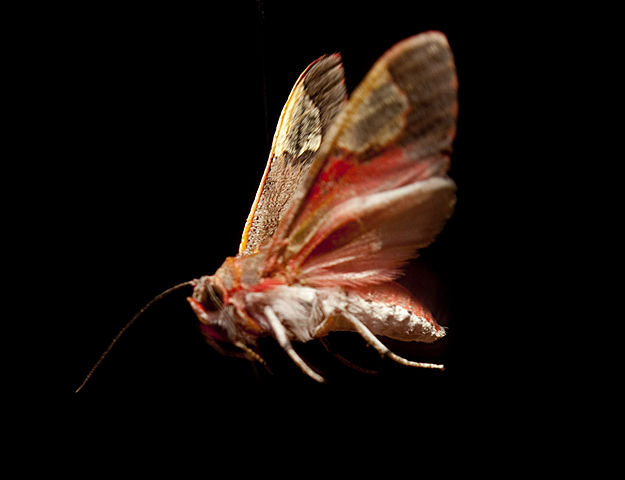
The tiger moth Bertholdia trigona is the only animal in nature known to jam
the echolocation of its predator
Photo from Wikimedia Commons

Bats are crafty creatures.

Being nocturnal, bats search for food at night, but their night vision is fairly poor. So instead they use echolocation, or reflected sound, to home in on insects such as moths. Their built-in sonar directs them to the precise location of the tasty morsels; then it’s just a matter of swooping in and gobbling them up.

So the bats’ prey have to be crafty as well.

Certain species of tiger moth have the ability to emit sonar of their own. As a bat is closing in, the moth emits a fusillade of ultrasonic clicks. This barrage blurs and disrupts the bat’s echolocation: the signal is essentially jammed. The baffled hunter can no longer “see” the moth, and is tricked into thinking its target has vanished. Thwarted, the hungry predator flies away, and the prey is safe.

Our little tiger moth beats its enemy at its own game.

Wouldn’t it be nice if we could “jam the signal” of the enemy of our soul? If we could disrupt and counter the lies the world tells us about ourselves?

In fact, there’s a way that we can.

Read more

Lest We Forget

View from D-Day Landing Craft, June 6, 1944

Each year we mark November 11th as Remembrance Day in Canada (Veterans Day in the US).

On this special day, we remember the servicemen and -women who lost their lives to ensure the freedom we cherish so deeply today.

The numbers are staggering: it’s estimated that over 400,000 U.S. military personnel lost their lives during World War II. The US National D-Day Memorial Foundation estimates that over 4,000 Allied servicemen lost their lives on June 6, 1944 (D-Day) alone.

The fatalities during World War I are equally appalling, with close to 60,000 Canadians having lost their lives in service. The best estimate of war historians is that over 140,000 Allied soldiers lost their lives during the hellish Battle of the Somme alone in 1916 (including my great-uncle Pte. Robert John Tisdale, still in his teens).

The numbers who lost their lives in the Korean War, the Gulf War, Afghanistan, and others only adds to the toll of war’s terrible cost.

But wait a minute…every sentence I just wrote contained a mistake. Did you spot it?

Read more

Fill Up Your Storehouse

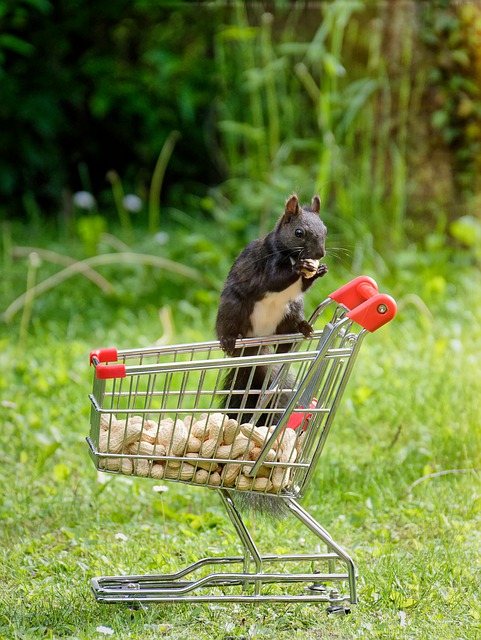
Image by Alexa from Pixabay

This is a busy (and nutty) time of year for squirrels.

The little critters are hard at work storing up nuts and seeds for the hard winter ahead.

Depending on the species, they may either store their nuts in one spot (a stash), or hide them by burying them in multiple locations (known as “scatter-hoarding”). They’ve even been known to shamelessly steal nuts from the stashes of other squirrels.

The jury is out on whether squirrels actually remember where they’ve hidden all those nuts. Some studies suggest they can recall the location of thousands of buried nuts. Other research implies that squirrels fail to recover a good number of their treasures, which allows the nuts and acorns to grow into trees.

One thing is for certain: these little guys are single-minded about gathering up nuts before winter, often using unconventional places to store them.

Like cars.

Just ask Bill Fischer of Fargo, North Dakota. For the past eight years, a red squirrel has been using Bill’s pickup truck to store walnuts. Each year, the poor man has to remove thousands of walnuts from every crevice of his truck, including the engine compartment and bumpers.

The critter set a new record several years ago, stashing 348 pounds of nuts in Bill’s vehicle. And this was all the work of one tiny squirrel.

These crafty little animals might exasperate us, but we can learn something from them:

They make sure they’ve “squirrelled away” provision for hard times to come.

I think we should do something similar:

Store up the Word of God in your heart, because you never know when you might need a certain verse to sustain you in a tough situation.

Read more