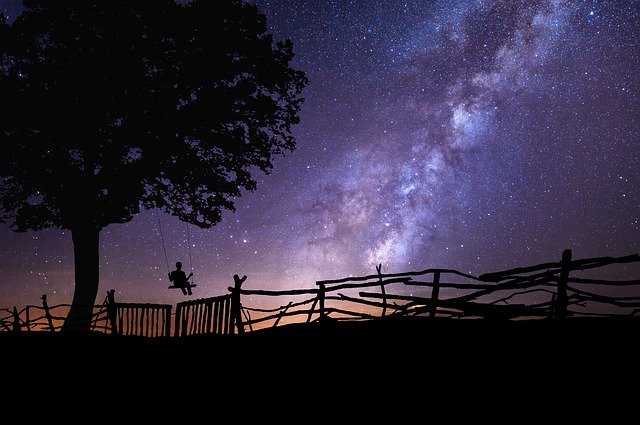
Create Your Own Dark Sky Preserve

I sometimes wonder if people who live in the countryside have a better appreciation for God’s creation than we city folk?

I’m specifically thinking of the ability to see the majesty of God’s handiwork as seen in the starry night sky.

Living in a big city (in my case, Toronto), I’m only able to see a handful of heavenly bodies. I can see the Big Dipper and a smattering of other stars, bright planets such as Venus, and the moon in its phases. But that’s about it.

Big cities produce so much ambient light that it obscures our view of the wonder of the night sky. That’s why many jurisdictions are creating what’s known as “dark sky preserves.” These are regions far enough away from the lights of built-up urban areas that the majority of stars can still be seen.

Governments commit to protecting these preserves from development so that the full range of the starry sky will always be visible from those areas. They seem to understand that it’s important for us to be able to maintain our connection with the night sky, and see it the way our ancestors did.

Perhaps we should take a page from their book, and create some “dark sky preserves” in our own lives.

I don’t mean areas from which to see the night sky, but spaces in our lives that remind us of God’s majesty and creative ingenuity as expressed in nature.

Read more
A Series of Fortunate Events

Sometimes it takes a bit of time before we can tell if an event will turn out to be good or bad for us.

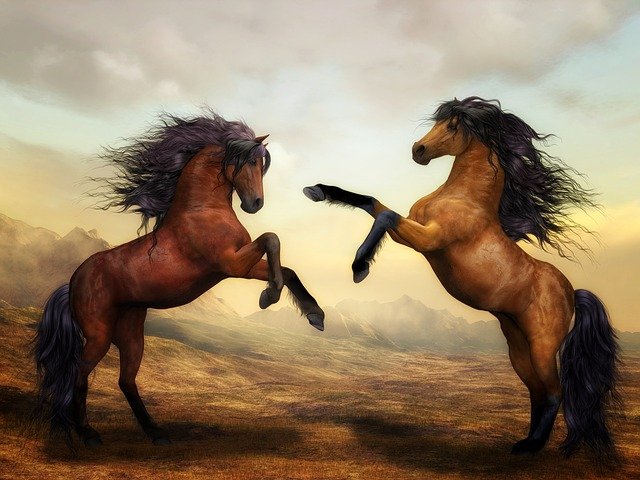
Take the famous Chinese proverb about Sai Weng losing his horse. The story goes like this:

Sai Weng, a old farmer, raised horses for a living. One day, his prized stallion ran away. His neighbours comforted him in his misfortune by saying, “What terrible luck!”

Sai Weng merely replied, “Maybe so, maybe not. We’ll see.”

Later, the stallion returned, bringing with it several wild mares. The farmer’s neighbours congratulated him on his good fortune: “What wonderful luck!”

Again, Sai Weng only said, “Maybe so, maybe not. We’ll see.”

One day, Sai Weng’s son tried to ride one of the new mares, but was thrown off and broke his leg. The neighbours again commiserated with the farmer, saying, “What bad luck!”

Sai Weng once again replied, “Maybe so, maybe not. We’ll see.”

Later, soldiers from the national army came through town, conscripting all able-bodied men for service in the war. The farmer’s son was spared, however, because he was still recovering from his broken leg. The neighbours said, “What great luck!”

Sai Weng simply said with a smile, “We’ll see.”

We often can’t judge whether an event in an of itself is fortunate or unfortunate. Sometimes only time will tell the whole story.

This is especially true when God is working behind the scenes of our lives, fashioning seemingly random events to conform to His purposes. God is often playing a “long game,” as it were: in the end, individual events that we might view as bad actually turn out to be good.

Read more

What Birds Can Teach Us About Prayer

It’s good to keep in touch with those you love, isn’t it?

Even birds know this.

Birds will engage in what are called “contact calls” with their mate or others in their flock. Unlike a bird’s song, a call is usually shorter and quieter. The purpose of contact calls is to maintain a continuous connection and to keep track of where each bird is located.

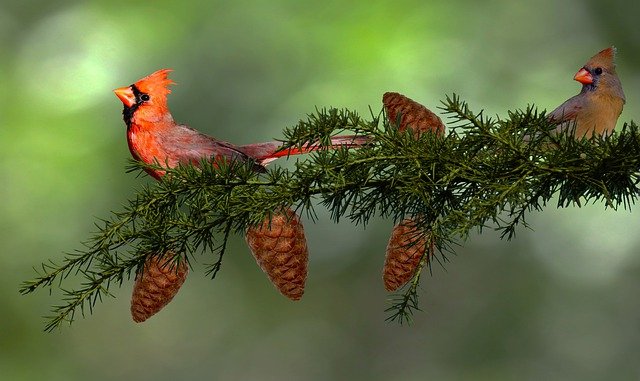
The Northern Cardinal, for instance, makes a brief metallic “chip” sound to keep tabs on its mate’s location when they’re both foraging for food. The mate will respond with the same call as reassurance that they’re nearby and that all is well.

We humans engage in the same type of behaviour. We’ll often make a short phone call or send a quick text to a loved one to keep track of how they’re doing and to reassure them that we’re all right.

I think our Creator would appreciate getting a “contact call” from us on a regular basis, too.

We have the privilege of doing so through the medium of prayer.

For many of us, however, we only engage in prayer when we’re in a crisis.

Read more