Explaining Rituals

Image by Terren in Virginia via Flickr, CC BY 2.0

While I was raking up fallen leaves in the yard recently, a passerby stopped to talk.

This lady was from India, and was curious about why Canadians raked up leaves each fall. Was it some cultural tradition of ours, she asked, a ritual that we enjoyed doing?

I smiled at her mistaken assumption, but explained that if we didn’t rake up the leaves, the lawn underneath would die. With a blanket of leaves blocking the sun and air, the grass would be smothered.

We’re certainly not raking up dozens of bags of leaves because it’s fun!

Our conversation got me thinking about rituals, and how we sometimes need to explain them to puzzled outsiders.

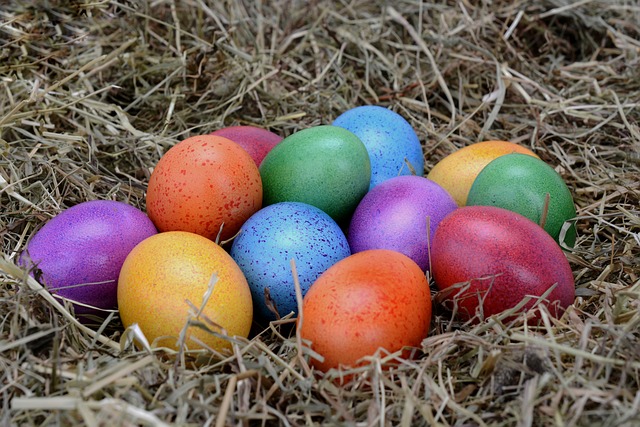
Why do kids dress up in outlandish costumes on Halloween and go door to door asking for candy?

Why do we decorate a tree in our homes at Christmas?

And why do Christians have bread and wine at Communion? Is it because they get hungry and need a snack partway through a church service?

Like Lucy in the old sitcom, we have some explaining to do…

Read more

Nip Sin in the Bud

Image by mouad gnnoni from Pixabay

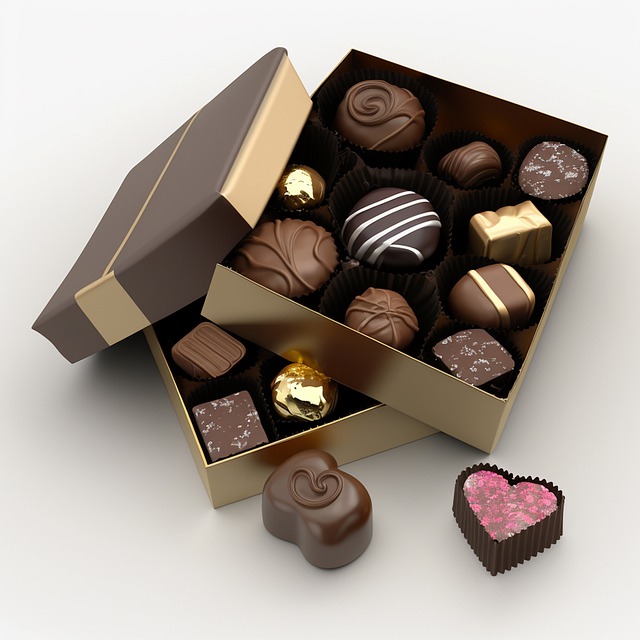
Is it possible to limit yourself to just one piece of chocolate?

I’ve never been able to.

I find that having the first piece simply whets my appetite for a second. And I deserve a treat, don’t I?

Then I reason that dark chocolate contains antioxidants, so I’d better have several more pieces, if only for medicinal purposes. After all, you wouldn’t want me to oxidate, would you? I should hope not.

Finally, I rationalize continuing my chocolate binge by referring to the nutritional information on the package of my favourite dark chocolate for support.

It states that 4 squares of the chocolate contain 25% of my daily recommended amount of iron. So if I ate 16 squares, I’d be getting 100% of my daily iron needs met, right? Well, it’s important to prevent anemia, so I then decide I’d better finish off the package completely.

Do you see how my excuses and justifications led from having one piece of chocolate to consuming an entire heap of the stuff in short order? And how easily this all happened?

It’s the same way with sin, isn’t it?

It starts out tiny and unnoticeable, but can soon grow into a mess of mammoth proportions.

That’s why it’s so important to nip sin in the bud, because we have no idea where a “small” sin will lead.

Read more

Shine Your Light!

Image by StockSnap from Pixabay

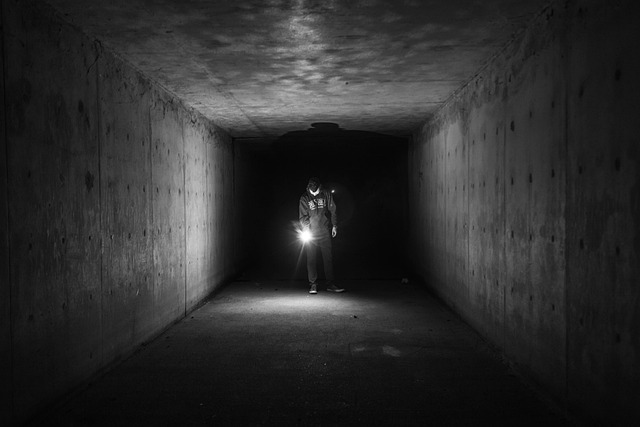
If you’re fumbling around in the darkness, what should you do?

Turn on a light, of course.

But there are places on earth where this truism can have unexpected effects.

The “midnight zone” of oceans is one of them.

This zone, ranging from about 3,000 to 13,000 feet below the water’s surface, is in constant darkness. The sun’s rays simply cannot penetrate this far down.

The only light at this extreme depth comes from the bioluminescence of various sea creatures themselves.

Scientists who want to study the sea life in this region are faced with a problem. Normally, if you want to examine a dark area, you’d simply shine a light into it. Indeed, the submersibles scientists use for underwater research have headlights for this express purpose.

But casting a light on the creatures in the midnight zone freaks them out. They’re not used to bright light, and assume it’s some sort of enemy.

Startled swordfish will attempt kamikaze runs at a submersible’s lights. Other creatures are blinded or are plunged into terror by the blazing illumination: they either freeze or flee.

Scientists soon realized that their submersibles’ lights were simply creating a no-go zone around the vessel, hampering their research. So they switched to using a red light, a colour which most of the undersea creatures can’t see.

Sometimes light can have a contradictory effect, can’t it?

As believers we see this when we introduce the light of Christ to others.

Read more

Forgive and Forget? Not!

Image by John Liu on Flickr CC BY-2.0

I know you’ll love these wise insights on forgiveness from my friend Veronica Gerber. We’re very fortunate to have her as our guest blogger today!


It’s popular to think of “forgive and forget” but, paradoxically, the bridge to forgiveness includes remembering, not forgetting!

Remembering what?

  • How much I’ve been forgiven and what it cost the Savior
  • Actions have consequences; learning from past mistakes
  • Vengeance belongs to the Lord

What dynamic is at work when you find it hard to forgive?

In my own experience, I’ve found it easiest to forgive when I remember how much I myself have been forgiven. When it’s hard to forgive, perhaps it’s because I’ve actually forgotten how much the Lord has forgiven me.

"Be kind and compassionate to one another, forgiving each other, just as in Christ God forgave you." (Ephesians 4:32, NIV)

That being said, actions do have repercussions. There is often a place for rebuke. Forgiving one another does not mean sweeping consequences aside! It’s not an easy or glib exercise.

"He who rebukes a man will in the end gain more favour than he who has a flattering tongue." (Proverbs 28:23, NIV)

True forgiveness includes a thorough assessment of the offence and yet chooses to extend the grace of forgiveness.

Read more

How to Pack for Eternity

Image by Irina L from Pixabay

The way you pack for a trip says something about you.

Some people are super-organized, and that’s reflected in their packing behaviour.

They create lists of things to be done before the trip. Colour-coding of priority tasks is often involved. Any item they could possibly need while abroad is obtained, efficiently packed, and checked off the list.

Some nations have gone to war with less preparation than this.

Other people are more random. Sure, they’ll throw some clothes in a suitcase, but there’s no grand plan they’re following. Often, the things they pack for a trip will be a bit puzzling.

A survey of British travellers revealed the odd things that some people bring along with them wherever they go. The top 10 strangest items that people simply couldn’t do without when on a trip included:

  • Framed pictures of dead cats;
  • A loved one’s ashes;
  • A stuffed pet hamster;
  • An emotional support boa constrictor. (Really?)

But seriously, what’s the most important thing to bring with us on a trip?

People!

The ones we love most: our best buddies or our dearest family members.

Movies like “Home Alone” have taught us the perils of leaving behind someone important when we travel.

But what about life’s most important journey?

The one to our eternal home?

The same holds true. The most important thing to bring with us is people.

Read more

The Cure for Seasickness

Image by Manfred Richter from Pixabay

Ever been to sea?

If you have, you just might have experienced a bout of seasickness. For landlubbers, the first time on a boat that is rolling and pitching on the waves can produce feelings of nausea.

Why is this?

The problem is a disconnect between the messages your eyes and your inner ear are giving your brain. If you’re in an enclosed space on a boat, your eyes tell you that you’re standing on level ground. The fluids swishing around in your inner ear, however, tell a different story: that you’re being tossed to and fro. It’s the contradictions between these messages that produces the sensation of seasickness.

So what’s the solution?

A time-tested remedy for seasickness is to get up on deck and look at the horizon: it’s the only thing that isn’t moving when the boat you’re aboard encounters heavy seas.

Looking at a fixed target gives your eyes a stationary point of reference, allowing your brain to reconcile this information with the motions your inner ear is reporting. Once you can see what “level” is, your brain can more easily deal with the feeling of movement from your inner ear.

And this isn’t just an old-wives’ tale: scientific studies have backed up the idea that staring at the horizon actually does make you feel steadier while at sea.

But what if you’re on dry land and feel “seasick” with the turbulence in your life?

What if it feels like the challenges in your life have put you in heavy, roiling seas, and you can barely tell up from down?

The same advice applies: focus on a fixed point, something that can be relied upon not to change.

For believers, that thing is Jesus.

Read more

Who Floats Your Boat?

Image by Bernd from Pixabay

Today we have a special treat—a guest post by my dear friend Veronica Gerber. Be encouraged by her insights into the story of Jesus stilling the storm!


“That day when evening came, he said to his disciples, ‘Let us go over to the other side.’ Leaving the crowd behind, they took him along, just as he was, in the boat. There were also other boats with him. A furious squall came up, and the waves broke over the boat, so that it was nearly swamped. Jesus was in the stern, sleeping on a cushion. The disciples woke him and said to him, ‘Teacher, don’t you care if we drown?’
“He got up, rebuked the wind and said to the waves, ‘Quiet! Be still!’ Then the wind died down and it was completely calm.
“He said to his disciples, ‘Why are you so afraid? Do you still have no faith?’
“They were terrified and asked each other, ‘Who is this? Even the wind and the waves obey him!’” (Mark 4:35-41)

In this true-life adventure story that Mark recounts for us, Jesus is roused by the cries of his disciples and dramatically calms the storm.

Are you also in a storm? Perhaps you are a believer and so Jesus is already living in your heart—in your boat so to speak—but you feel as if he’s asleep?

Read more

Multiply Your Thanksgiving

Image by Sabrina Ripke from Pixabay

Is it ever possible to be too thankful?

Not in my books.

Especially when Thanksgiving Day involves your favourite foods; roast turkey with all the trimmings, cranberry sauce, potatoes and gravy, and pumpkin pie.

That’s why Canadians who visit relatives in the States in the fall are lucky: they get to celebrate Thanksgiving Day twice.

This year, Canadian Thanksgiving is today, Oct. 9, while Americans celebrate their Thanksgiving on Nov. 23. Canadians popping across the border to spend time with American relatives on their holiday get to have an encore of the Thanksgiving feast.

This is not a problem if you love turkey, as I do. (If you don’t, please invite me over and I’ll eat your share for you.)

This got me thinking: is it ever possible to be too thankful to God?

Again, my answer would have to be no.

It pleases God greatly when we thank Him for what He’s done in our lives.

Read more

Turning Minuses into Plusses

Image by Tumisu from Pixabay

In math, as in sports, mistakes count as permanent marks against your score.

These setbacks are always a lag on your performance, and you struggle to overcome them.

But in God’s marking system, our mistakes and failures are viewed differently: minuses aren’t permanent, and can even be turned into plusses.

First of all, God provides forgiveness for our sins through the atonement bought by His Son on the Cross. Our sins are wiped off the record, and we’re given a fresh start.

Secondly, God can even use our mistakes to further His purposes. He can bring good out of the messy parts of our lives.

Examples from the Old and New Testaments show us how:

Read more

Life on Mars

Image of Mars by WikiImages from Pixabay

Is there life on Mars?

For generations, we earthlings have conjectured about the possible existence of alien life on the planet next door to us.

I’m afraid this blog can neither confirm nor deny the presence of little green men on Mars.

Scientists do tell us, however, that water once flowed on its surface.

That’s right: the Red Planet was once blue, like Earth.

So why is Mars known today as a dusty, dry, barren place, whereas Earth still has abundant supplies of water?

The key lies in Earth’s magnetic field.

A planet’s magnetic field acts as a shield, protecting its atmosphere from being blown into space by radiation from its star.

Mars once had a magnetic field of its own. But is was both farther from the Sun and smaller than Earth to begin with. Scientists theorize that over time, its molten iron core cooled, and with it the dynamo powering its magnetic field.

As Mars’ magnetic field weakened, the Sun’s solar wind slowly stripped away its atmosphere. The water which once flowed on its surface dried up, until there was nothing left but some empty channels to hint at the rivers which once coursed through them.

Simply put, Mars let its fire burn out.

I think we can learn an important lesson from our planetary neighbour.

We shouldn’t let our fire for God fizzle out.

Read more