What Is Your “Burning Bush”?

Image by Leonora Enking via Flickr CC BY-SA 2.0

You’ve got to love a plant that turns pink in the autumn.

I’m referring to the Euonymus alatus shrub, whose leaves change from green to a vivid, hot pink in the fall.

One of its nicknames is “burning bush,” because in autumn the shrub looks like it’s on fire. It must have reminded people of the burning bush Moses encountered in Exodus 3, through which God spoke to him.

I think God uses many different ways to speak to us today, each a “burning bush” tailored to our unique personalities.

Probably the primary way that God communicates to us is through Scripture. We read or hear a verse that seems to speak directly into our situation. By reading the words of Jesus, we “hear” God’s heart. We may also receive a word from the Holy Spirit or sense God’s guidance through prayer.

There are many instances in the Bible of God giving someone a message through dreams or visions. He may relay information in a dramatic fashion via an audible voice, or the more subtle “still, small voice.”

Other times God may use another person to convey something to you: a Christian speaker or author, or a family member or friend who’s a believer. God may also speak to you through the lyrics of a song or hymn.

He might be sending a message to you through your circumstances, especially via some difficult situation. Or, you may encounter a coincidence that seems like a “sign,” and you think God may be trying to tell you something.

With me, I feel that God occasionally “speaks” to me through nature.

Read more

Your Training Won’t Make Sense at First

Image by Bart via Flickr. CC-BY-NC 2.0

“Why do we have to learn math? We’ll never use it in real life!”

Did you ever say something like that to your teachers in school?

It’s true that you may never have used algebra once you graduated from high school. Your knowledge of trigonometry or calculus may have lain dormant since then, too.

But that wasn’t actually the point of algebra, or any other subject.

The point of learning math was to train your brain.

Mastering mathematical concepts increases your problem-solving skills, develops flexible thinking and creativity, and encourages analytical reasoning.

These are things that are extremely valuable in every area of life.

But you might not have been able to see that when you were trying to understand the Pythagorean theorem in school.

That’s because your training often won’t make sense until much later.

Several heroes in the Bible found this out:

Read more

The Wrong Idea of Dessert

Image of sweet red bean soup by Roland from Flickr, CC BY 2.0

Do you like brownies? How about chocolate cake?

If you do, then you and I are on the same page when it comes to sweets. We both have the same idea of what a perfect dessert is.

Not everyone might agree with us, however.

Take my friend John, whose background is Greek. He likes syrupy-sweet desserts like the Greek classic baklava, or nut-based ones like walnut cake, things I love as well.

John happens to be married to an Asian woman. They agree on most things, except when it comes to dessert.

Case in point: John’s in-laws once treated him to dinner at a Chinese restaurant. They promised him an extra-special dessert to finish off the banquet, something he’d absolutely love.

John couldn’t wait: his mouth was watering in anticipation of this mystery dessert. He imagined something intensely sweet to finish off the meal, perhaps a cake with multiple layers and lots of icing.

But when the dessert was placed in front of him, John was confused.

It was red bean soup.

While this dish is popular among Chinese people and is considered the crown jewel to end a banquet with, it wasn’t John’s idea of dessert. He was gracious in front of his in-laws, but secretly felt cheated.

The problem? John’s definition of dessert was different to that of his in-laws. His expectations were askew, so he was disappointed with what he got.

I think the same thing happens to us when read certain Bible verses—we may build up incorrect expectations based on our ingrained ideas.

Read more

Dressing Up Animals

Image by Robledo Rafael Andrade on Pexels

Do you enjoy dressing your pet in clothes?

I won’t tell anyone if you do.

There’s something undeniably appealing about seeing animals in mini versions of human clothing, isn’t there?

(Your cat, however, might not agree.)

Even if you’re the type to roll your eyes at the idea of dressing up animals, there’s a lesson we can learn about this from the Bible.

Wait, what? The Bible mentions putting clothing on animals?

Yes, it does!

Let’s take a look at one of the more unusual stories in the Old Testament, found in the Book of Jonah.

Read more

The Company We Keep

Tony and his mustachioed friend Frank. But which is which?
Image by Tony Alter on Flickr.

They say that sometimes spouses eventually start to resemble one another.

Some husbands and wives may not find this idea terribly thrilling.

A more disturbing trend is when people are dead ringers for their dogs, with the same flowing locks as their Afghan hound, jowls of their English bulldog, or roly-poly wrinkles of their Shar-Pei.

(Let’s hope none of my readers resembles the Komondor dog, which looks like a walking mop head!)

I guess it’s true to say that we become more like the people we spend a lot of time with.

We tend to conform to our friends’ attitudes and emotions, to their likes and dislikes, and even to their speech patterns. This can affect us for good or ill.

The Bible has a few things to say about how important it is to carefully choose the company we keep…

Read more

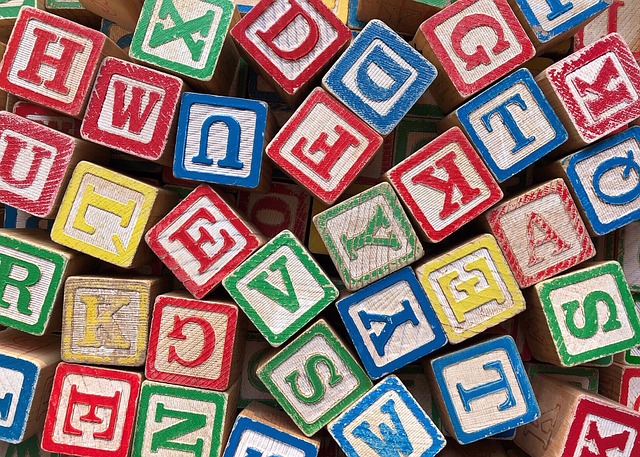
Cna Yuo Raed Tihs?

Image by WOKANDAPIX from Pixabay

I’ll bet you can!

I’m sure most of us immediately deciphered the title of this post as “Can You Read This?”

But how was your brain able to make sense of the jumbled letters so quickly?

Researchers believe that our brains use context to make predictions about what’s to come. Take an example like:

“Yuo cna porbalby raed tihs esaliy desptie teh msispeillgns.”

This is readable because as our brains decipher each word, they also predict which words would logically come next in order to make a coherent sentence. When faced with a word we can’t quite unscramble, our brains fill in the gaps based on subsequent words.

This even works with words that have NUMB3RS 1NST3AD 0F L3773RS. The numbers’ similar appearance to letters trumps their normal meaning.

Jumbled words are easiest to read when the first and last letters of the word remain the same, and only the letters between them are transposed. But when the middle letters are scrambled more confusingly, your brain has a harder time trying to process all the letters simultaneously. Try deciphering this:

“Big ccunoil tax ineesacrs tihs yaer hvae seezueqd the inmcoes of mnay pneosenirs.”

That was a bit more difficult, wan’t it?

But what about when it’s our lives that are a-jumble? When things happen to us that don’t seem to fit a meaningful pattern?

How do we make sense of the bewildering hardships and crises that often beset believers?

Read more

The Burning Question

Image by Anelka from Pixabay

Are tomatoes fruits or vegetables?

I might have opened up a can of worms just by asking, because disagreement has surrounded this issue for generations.

In fact, the US Supreme Court has even weighed in on this burning question.

This issue was brought to a head in 1893 in Nix v. Hedden. The Court held that, even though tomatoes are fruits botanically, they would be classified as vegetables for the purposes of tariffs, imports and customs.

Did this settle the matter? Hardly.

Some US states have since named the tomato their state fruit; others call it their state vegetable.

It’s the sort of issue that produces arguments to this day.

Let me ask you another question:

Was Jesus simply a good man and teacher, or was He Lord?

The answer to this question has eternal consequences for each of us. It’s not simply a matter of “You say tomayto, I say tomahto.”

Read more

In the Shadow of His Wings

Image by Radovan Zierik from Pixabay

Sometimes there can be something very powerful right above you, and you’re not even aware of it.

I’ve found this out a few times while on a walk in a nature area.

I’ll think I’m totally alone: I don’t see or hear any other creature.

But then suddenly a large shadow will zoom across the path in front of my feet.

I look up to see what the shadow belongs to, and spot a majestic red-tailed hawk. He’d probably been circling above me the whole time, but he was so silent that I didn’t know he was there.

Recently, I came across two large, striped feathers on the ground. Their tell-tale markings told me they belonged to a bird of prey. Looking up into a nearby tree, I was surprised to see a hawk perched by its nest. I’d walked underneath the same tree many times before without realizing the nest was even there.

In each case, the bird had been right there with me, but I initially hadn’t been aware of its presence.

Similarly, sometimes we feel that God isn’t near us.

We can’t see or hear Him. We can’t seem to feel His presence in our lives. It feels like we’re alone in our struggles.

But there is something (or rather, Someone) powerful right above us, who promises to never leave us or forsake us. God’s children are never truly alone.

Read more

Turning the Bitter Sweet

Image by Steve Buissinne from Pixabay

“Go suck a lemon!”

Have you ever heard anyone say that?

It means they’re annoyed with you and want you to experience something unpleasant. Lemon juice is so sour that it makes your mouth pucker.

But if lemon juice is so bitter, why are lemon desserts so yummy?

It’s thanks to the addition of a sweetener.

I like lemon-based desserts much better than orange-flavoured ones. It seems to me that the combination of sour and sweet is what makes lemon desserts so satisfying (see below for Lemon Poppyseed Cake recipe).

They say when life hands you lemons, make lemonade.

No, when life hands you lemons, turn it over to God.

He can transform your unwelcome experiences into something good, and make the bitter waters of your life sweeter than any lemonade.

Read more

Eternity In Our Hearts

Image by Szabolcs Molnar from Pixabay

They say elephants never forget; I think the same may be true of cats.

A friend of mine recently downsized by moving into the lower level of her own home and renting out the upstairs.

She’s perfectly happy with the arrangement. One of her cats, however, is not.

This cat remembers that he once had the run of the entire house. He still recalls that there was a wonderful place called Upstairs.

Despite having lots of room to roam downstairs, including access to a big backyard, this cat keeps trying to break into the upper level of the house. I’m told he meows plaintively at the connecting door between the two units, and tries to pry it open with his paw.

This cat knows that there’s something missing in his life. Even though Downstairs is perfectly nice, he still feels the ache to be Upstairs once again.

I think many of us know the feeling.

We have an innate sense that this world is not as it should be.

It’s broken in some way: there’s something missing.

Humans seem to have a mysterious longing for a world set right. We ache for it, even though we haven’t experienced it.

Read more