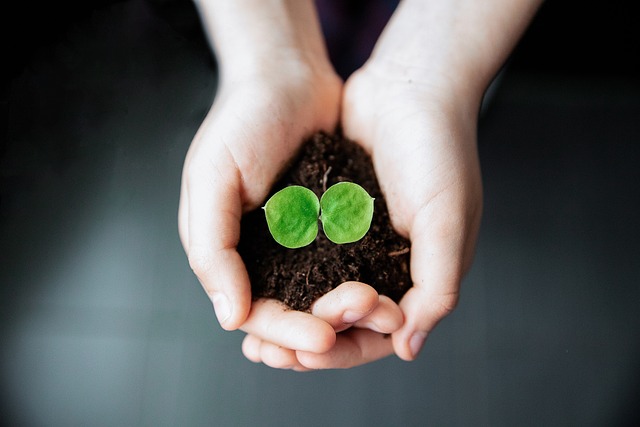
The Key to Stronger Faith

Chickadee Photo by Larry Doucet on Pixabay

A chickadee may have a bird-brain, but it can actually be pretty smart.

Especially if it lives in a harsh climate.

What does climate have to do with bird intelligence? As it turns out, more than you’d expect.

Biologists have discovered that chickadees living in the mountains or in northern latitudes, where the weather is more severe, were smarter than their peers living more comfortably down below.

Chickadees from harsher habitats had superior spatial memories and problem-solving abilities than those living in gentler climes. They were better at finding stored caches of food and at figuring out how to access a worm treat that scientists had cleverly tucked into a glass tube.

The harsh environment made their brains work a bit harder.

Is there a lesson for humans in the example of the chickadees?

Yes, but it isn’t to move to a more wintry climate (take it from a Canadian who’s done her share of shovelling snow—it hasn’t made me smarter!).

The takeaway here is that there can be unseen benefits to the challenges we face.

Read more

The Promise of Return

Photo of Monarch butterfly by Peter Miller on Flickr CC BY-NC-ND-2.0

One of the greatest natural events on Earth is now underway: the migration of the monarch butterfly.

Each fall, millions of these colourful insects set off from their summer breeding grounds in the northeastern U.S. and Canada for a gruelling journey. They travel thousands of miles across North America all the way to Mexico, where they’ll spend the winter.

Many people believe that the monarch butterflies that leave in the fall are the same ones that arrive back in the spring, but this isn’t so. Individual butterflies don’t make the entire round-trip journey. The ones that migrate from the northeastern part of North America in fall will never return.

Rather, their great-great-grandchildren are the ones who will arrive the following spring, as successive generations keep making their way north. The entire annual migration cycle of the monarch takes about four generations.

Perhaps I’m being fanciful, but I can imagine monarch butterflies telling their children of the awesome journey they’ll be undertaking. They may say that they’ll only be able to go part of the way with them, but to keep the faith and keep going.

Maybe they encourage their children to tell successive generations to keep believing in the promise of return. Because eventually, their descendants will see the promise fulfilled.

Aren’t we in a similar situation as believers?

We’re living in a time when we’re awaiting the fulfillment of a promise, the promise of Christ’s return. We’re not sure exactly when Christ will come back to Earth, but He has promised that He will.

Read more

What Geese Can Teach Us

Photo by David Mark on Pixabay

Usually, the first signs of fall are visual: the leaves on trees start to redden, the fall asters begin blooming, and the sun is at a noticeably lower angle.

But sometimes you can hear the onset of fall.

There’s a chill in the air hereabouts this week, and it won’t be long before we hear the sound of Canada geese honking at each other as they fly overhead, preparing to go south for the winter. They’ll fly to warmer climes in their iconic V-formation, honking the whole trip.

But why do they honk at one another as they undertake their momentous journey, and why fly in a V-shape at all?

The lessons geese can teach us have long been used in leadership seminars, but I think they apply to our Christian walk as well.

The V-shape that Canada geese fly in actually has aerodynamic benefits to the flock. As each goose flaps its wings, uplift is created for the bird following it. By flying in a V-formation, the flock can add over 70% more flying range than if each bird was flying on its own.

As Christians, we’re all “flying” in the same direction, pointing others to Christ. We have a common purpose, to bring others into the Kingdom, and a common destination, our heavenly home. We’re more effective when we work together in Christian community, because we give one another “uplift” and turbocharge one another’s efforts.

Read more

The God of Second Chances

Image by Irina from Pixabay

It’s an awesome feeling to realize that you’ve got a second chance, isn’t it?

A friend of mine discovered this after moving into a house with a large garden in the summer. A beginner gardener, she was delighted to finally have enough space for an extensive vegetable garden. She immediately planted some tomato and cucumber seedlings, which are now growing vigorously.

Because she’d moved in mid-summer, however, she lamented that she’d missed the chance to start growing vegetables like beets, spinach, peas, and carrots from seed in spring. She knew that cool-weather-loving veggies like peas wouldn’t thrive in the summer heat. She figured that if you didn’t plant those seeds in the spring, you’d missed your chance for the whole year.

But the garden, like God, often gives us second chances.

I told my friend that she could actually plant those seeds in summer for a fall harvest. There was still time to grow a second crop before the frosts of November hit. She hadn’t missed out after all: she could still grow the cool-weather veggies she’d hoped for.

What a wonderful metaphor for how God deals with us!

So often, we think we’ve missed out on what we’d wanted to accomplish or what God had planned for us. We figure that either the passage of time or our own mistakes have disqualified us from achieving our dreams. We lament that it’s too late for us.

But with God, it’s never too late. Our Heavenly Father never gives up on us, and never writes us off.

Read more

The Language of Flowers and the Language of God

Say it with flowers!
Wikimedia Commons, CC BY-SA-2.0

Flowers speak. Not just through their fragrance or their beauty, but with secret codes, too.

Perhaps you’ve heard of the “language of flowers” that was popular during Victorian times?

This enchanting symbolic language enabled suitors to send coded messages to their paramours, ones that couldn’t be spoken aloud. The message depended on the particular flowers and colours chosen for the bouquet. An entire conversation could be carried out solely through flowers, with no words employed at all.

We all know that red roses symbolize true love, and we’d rightly guess that the forget-me-not begs that the giver be remembered. But did you know the following flower meanings?

Red carnation: My heart aches for you
Hyacinth: Your loveliness charms me
Canterbury bell: Your letter received
Yellow rose: Jealousy
Butterfly weed: Let me go
Weeping willow: Sadness

The Victorian language of flowers is a cryptic tongue. Most people only see the surface of the flower and not the symbolic meaning hidden within it.

God has His own “language of flowers,” but it actually encompasses all of creation. God is continually speaking to us through nature:

“For ever since the world was created, people have seen the earth and sky. Through everything God made, they can clearly see his invisible qualities—his eternal power and divine nature. So they have no excuse for not knowing God.” (Romans 1:20)
“The heavens proclaim the glory of God. The skies display his craftsmanship.” (Psalm 19:1)

If we listened in to what nature was saying about its Creator, what messages would be revealed?

Read more

Lost In Translation

Sign on toilet door in Chengdu airport, China
Photo by Anne Roberts on Flickr, CC BY-NC-SA-2.0

There’s a real art to translation: zeroing in on just the right words to convey the nuance of what the original author intended.

Done well, a translated work can be a masterpiece in its own right.

Oftentimes, though, a translation can turn out to be a farce, as in the following examples:

A menu item in Chinese for a roasted gluten dish was translated into English as “Sixi Roasted Husband.” (The perfect dish for wives who’ve finally had enough of their mates?)

A hot and spicy chicken dish on another Chinese menu became “Chicken Rude and Unreasonable” in English. (No wonder the chicken met his end—he had it coming!)

Or this Google Translate zinger: “It’s been the goat in the budget, because His raining badly, so quite short, he is on the bucket month out.” (Not sure what this meant in the original Danish, but I hope the goat was able to figure it out.)

Then there’s the sign for a hair salon in China whose English name is “Could Not Connect To Translator Service.” (A bit of a give-away that they didn’t bother hiring a real live translator?)

Sometimes, we have a different understanding or “translation” of what God actually meant in certain Bible verses.

For example, in times of difficulty, we cling to verses such as Romans 8:28:

“And we know that all things work together for good to those who love God, to those who are the called according to his purpose.”

However, it can often be hard to see what good could possibly come from our difficult situations. We might be going through health challenges, injustice, hardship or loneliness. Where is the good in any of that?

But maybe we have a limited understanding of what “good” means. Perhaps we and God have different “translations” of what this looks like in our lives.

Read more

God Won’t Waste Your Pain

Quilting Bee circa 1910s, New Jersey
Photo by Richard on Flickr CC BY-2.0

Did you grow up in a family that hated wasting things? So did I.

Instead of throwing out old scraps of fabric, my paternal great-grandmother would twist the lengths and sew the resulting cords together into a rag rug. Nothing was wasted.

It was the same on my mother’s side of the family. Material from clothes that were no longer of use would be cut up and sewn into quilts. My Mom recalls sitting underneath the quilting frame as a child when her mother and other female relatives worked together at a quilting bee (Mom thought she was “helping” push the needle back up to the top surface). Even as a little girl, my mother learned an early lesson in letting nothing go to waste.

I must have inherited that trait.

I love recipes that not only produce a yummy result, but that are efficient. By that I mean that you’re not left with partly used cans of an ingredient that will languish in the fridge and eventually have to be thrown out.

I prefer a recipe that uses up the whole can of an ingredient, or, if it calls for 3 egg yolks for the batter, it also calls for 3 egg whites for the filling or a meringue. Nothing is wasted. No leftover egg whites that you have to store until you think of another recipe that can use them up.

Likewise, I think God is efficient in how He manages our lives. He won’t waste anything we go through: it all has a purpose, even the negative parts.

Read more

The Chocolate Doctrine

Photo by Jean Beaufort PublicDomainPictures.net

One of the wonderful things about chocolate (and there are many), is how well it pairs with other foods.

Chocolate seems to go well with just about everything. It marries happily with fruits like strawberries, raspberries, pears, cherries and bananas. It perfectly complements the flavours of nuts, such as peanuts, cashews, hazelnuts, almonds and macadamia nuts.

Chocolate cheerfully coexists with citrus, coconut, ginger, caramel, coffee, dairy or mint. It has even been known to blend with the flavours of chili and meat in some Mexican dishes.

Some adventurous people claim that chocolate goes well with broccoli (well, perhaps…if you held the broccoli).

You’ve got to hand it to a food that is uncompromising about its own flavour yet harmonizes with such a wide variety of other substances.

Did you know that the Bible implies that we should be a bit like chocolate? Not in so many words, of course, but the concept is still there.

Read more

Golden at the Broken Places

Bowl repaired using Kintsugi method by artist Ruthann Hurwitz.
Wikimedia Commons CC BY-SA-4.0

We all shudder at the sound of something breaking, don’t we? We can’t help but wince when we hear glass or crockery shattering into pieces on the floor.

Why do we have that involuntary reaction? Because we know that the object probably can’t be repaired: it’s likely to be damaged irreparably, and must be thrown away.

We’re wincing at the sound of loss.

But what if there were a way to not only put the pieces back together, but to make the object more beautiful than it was before, despite the breaks?

The Japanese long ago invented a way of doing just that, and have even made an art form of it. It’s called “Kintsugi,” which means “golden joinery.”

The process involves mending the cracks in pottery with gold lacquer. Instead of trying to hide the damaged areas, they are instead highlighted with something precious. The end result is a restored piece of pottery that is beautiful at the broken places.

But what happens if it’s not a piece of pottery that is broken, but a life? How can a shattered heart be put back together?

Long ago, God also devised a way to put the pieces of a broken life back together again. God doesn’t throw away broken people; they still have value to Him. He puts them back together again with the gold lacquer of His Son’s love and redemptive power.

Read more

Get With God’s Program!

Photo by Jill Wellington on Pixabay

I don’t seem to have much luck getting birds to cooperate with me.

Years ago, I bought a Victorian-style birdhouse, and painted it light blue with white trim. I nailed it to a tree where I could see it when sitting at my kitchen table. I imagined the delight I’d have watching birds move in and raise their young there. I couldn’t wait for my new feathered neighbours!

But the birds refused to move in.

Year after year, the pretty birdhouse sat empty. I was so disappointed. What ingrates those birds were! And after all the trouble I’d gone to for them!

The problem was, I’d put the birdhouse where I wanted it, with no thought to their needs.

The birdhouse was pretty, certainly, but its placement didn’t suit the birds one bit. Being nailed to a tree made it too accessible to predators like squirrels or racoons. The birds didn’t feel safe nesting there.

I thought the problem was with the birds, but it was with me. I’d done it all on my terms and expected them to get with the program.

Don’t we sometimes do the same with God?

We want to do things on our terms, in our own way, and expect God to get with our program. I’m afraid it doesn’t work that way.

Read more