Do The Math

Image by Gerd Altmann from Pixabay

Life is sort of like math class.

How so?

Let’s assume I’m in school and have to take a math test.

There’s an equation at the top of the page I’m handed, and blank space underneath for me to write out my solution to the equation.

But I don’t solve the equation.

Instead, in the first third of the blank space I write a funny, rhyming poem about math class. Next, I draw a bunch of smiling numerals with little arms and legs and depict them as dancing together. In the last third of the page I write a short essay about the benefits of studying math.

I hand in my test to the teacher, and await the results.

The next day, the teacher tells me, “Lori, the poem you wrote had me in stitches. Your drawing of the dancing numbers was delightful, too. And I’d love to incorporate some of the insights in your essay into one of my lessons.”

“That’s great!” I’d say. “So what mark did I get?”

“Zero,” the teacher would respond.

“But why?” I’d ask. “I thought you loved what I wrote.”

“I did: the things you filled the page with were all good and creative and helpful. But they don’t count towards your mark. You failed to do the one thing required of you, which was to solve the equation.”

Is the teacher being fair? Yes.

Is there one thing that God requires of us?

Read more

The Cleanest Place in the World

What is the cleanest place on Earth?

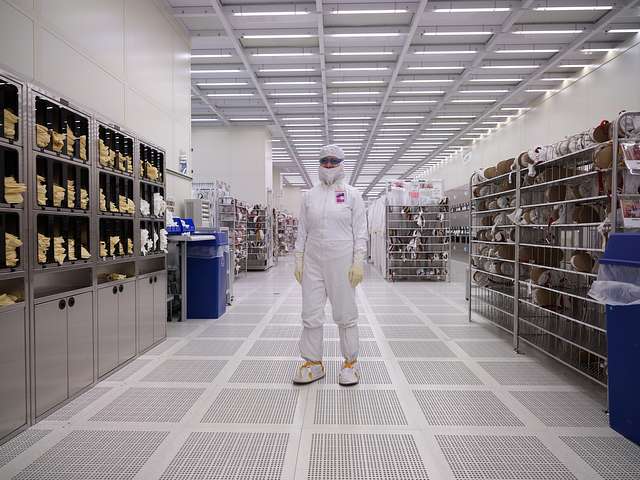
If you guessed a room where semiconductors are made, you’d probably be right.

A microchip factory has to be exceptionally clean to avoid introducing contamination into the chip-making process. In fact, the air in their “cleanrooms” is filtered to be vastly cleaner than that of a sterile hospital operating room.

Anything that sheds particles must be avoided in a microchip cleanroom. Contaminants include human hair, dead skin cells, makeup, bacteria, and even micro-dust from pencils or paper.

So semiconductor workers must wear head-to-toe “bunny suits,” protective glasses, booties, hoods, face masks, and two pairs of gloves. These suits may include self-contained HEPA filter packs, because even human breath contains contaminants.

Let’s assume that I arrived one morning at a microchip factory as a new employee.

Let’s say I told the supervisor that I’d cleaned myself diligently in the shower that morning, washed my hair twice, gargled with Listerine, scrubbed my hands with bleach, and put on brand-new clothes. I was certain that I was clean enough to enter the factory.

The supervisor would say, “Hold your horses, Lori. You still have to put on a protective covering before you can come into the cleanroom.”

I might argue, “But I’m already cleaner than 95% of other people. I don’t need a covering. Let me in!”

My boss would say, “I’m sorry, but you’re not as clean as you think you are. We have very high standards here. You have to suit up first.”

Isn’t that sort of what entering Heaven is like?

Read more

The Polar Bear’s Secret

Pop quiz: What colour is a polar bear’s skin?

Did you guess “white”?

It’s the obvious answer, isn’t it, because their fur is white.

Surprisingly, though, you’d be wrong.

If you shaved a polar bear, you’d discover that it would look much like its cousin, the black bear.

That’s right: polar bears have black skin!

Don’t believe me? Here’s a clue: check out their noses and foot pads. They’re both black. Their thick fur so completely hides the blackness underneath that you’d never know it’s there.

Not only that, but polar bears’ fur isn’t actually white.

Pardon me?

It’s true! Their outer coat of fur consists of translucent hollow hairs that scatter and reflect visible light. These hairs have no white pigment, but merely appear white due to an optical trick involving the physics of light.

The polar bears certainly had us fooled, didn’t they?

And they’re not the only ones.

There are people whose lives have been so thoroughly changed by the gospel of Christ that you’d be shocked to discover their dark past.

Read more

The Stand-In

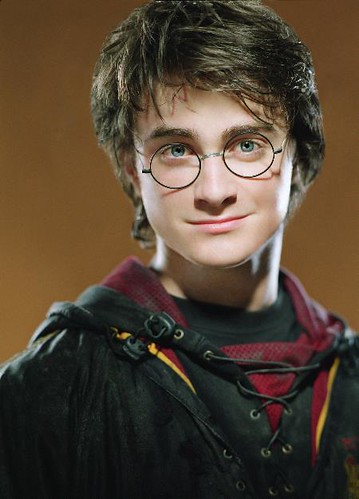
Daniel Radcliffe as Harry Potter.
Photo by longplay on Flickr.

If you’re a Harry Potter fan, this post might have special resonance for you.

While much media attention has focussed on the astonishing success of the Harry Potter juggernaut over the years, perhaps less attention has been paid to the stories of the unsung heroes behind the scenes who have worked so hard to create the films in the franchise.

A recent documentary, “David Holmes: The Boy Who Lived,” sheds light on the poignant story of one of these individuals.

David Holmes was chosen early on to be the stunt double for Daniel Radcliffe, who played Harry Potter in the films. Starting with the very first film, and for the next ten years, David and Daniel worked closely together and developed a strong bond.

David’s exceptional talents as a gymnast enabled him to perform breathtaking stunts. As a stand-in for Daniel, David’s skills were brought into play whenever a stunt was deemed too dangerous for the lead actor himself.

All went well, until the filming of the next-to-last Harry Potter movie in 2009.

While filming a scene for “Harry Potter and the Deathly Harrows, Part One,” a tragic accident left David paralyzed with a spinal injury, turning his world upside down.

The documentary is an inspiring account of David’s story and of the bond that still exists between the two men. It also depicts the reverberations the accident had on Daniel’s life, and how he navigated the complex mix of guilt and admiration brought on by seeing the great cost his friend bore for taking his place.

And therein lies the lesson we can learn from this as believers.

We, too, have someone who stood in our place and paid a terrible price for doing so.

Read more

The Greatest Miracle of All

Image by Chil Vera from Pixabay

What would you pick as Jesus’ greatest miracle?

Feeding the 5,000 with just five loaves and two fish?

Yes, that definitely rates as one of Jesus’ greatest hits.

Calming a storm with only His words?

That one would make the top ten as well.

How about walking on water?

Oh, now we’re getting somewhere! That miracle surely places in the top three.

Wait a second….we haven’t mentioned Jesus’ raising of the dead. He did that several times: the widow of Nain’s son, Jairus’ daughter, and Lazarus.

That has to be Jesus’ greatest miracle!

Doesn’t it?

Perhaps not. Perhaps none of these is Jesus’ greatest miracle.

But if that’s true, then what would qualify?

Read more

The Ultimate Makeover

Photo by Neriman Özaydın via Pexels

We all love before-and-after transformations, don’t we?

The dramatic TV makeover that transforms a Plain Jane into a femme fatale.

Or the renovation that turns a dated, nondescript room into something fit for the pages of “House Beautiful” magazine.

But TV shows and magazines aren’t the only places to find dramatic makeovers.

There are astonishing before-and-after changes in the Bible, too.

One example of this is found in Peter, the brash, impulsive disciple of Jesus. A bit hot-headed, Peter was often afflicted by “foot-in-mouth” disease.

When we first meet Peter, he’s working as a fisherman. When Jesus provides the group with a miraculous catch of fish after they’d worked all night and caught nothing, Peter is scared. He says, “Depart from me, Lord, for I am a sinful man!” ((Luke 5:1-10)

The demonstration of Jesus’ holiness and miracle-working power leaves Peter shaken.

Another snapshot of Peter is seen when he and the disciples are in a boat with Jesus. A storm whips up and they are afraid for their lives; Jesus, however, is asleep. Peter and the others wake Jesus up and say, “Don’t you care that we’re about to die?” (Matthew 8:23-27)

The prospect of imminent death rattles Peter.

Our last view of Peter occurs when Jesus has been arrested. Peter skulks around to see what will become of him while at the same time trying to disassociate himself from Jesus. When a of couple servant girls insist that he was definitely a friend of Jesus, Peter doesn’t have the courage to admit it. (Matthew 26:69-74)

The possibility of getting in trouble compels Peter to clam up about the truth.

But what a difference a day makes!

I’m referring, of course, to Resurrection day!

Read more

Merry Christmas!

Welcome to the cafe! Come on in and take a seat!

I’m so glad that you’ve chosen to spend a small part of your Christmas here at The Faith Cafe.

You’ll notice that the cafe is all decked out for the holidays, with a wreath on the front door, garlands above the fireplace, lights galore, and a huge Christmas tree in the corner. (Remember, this is a virtual cafe, so you’ll have to use your imagination!)

We’ve got Christmas carols playing, and all your favourite treats behind the counter: mulled cider, hot chocolate, specialty coffees, and plenty of baked treats.

The only thing missing?

Being able to see you in person and shake your hand!

So short of doing that, I’d like to thank each of you who has dropped by this site in the past year and has been kind enough to read (and like) my posts.

I’ve been thrilled that The Faith Cafe has logged visitors from almost every continent (I’m still waiting for someone at a research station in Antarctica to drop by!).

Read more

Last-Minute Christmas

Image of Lafayette department store in Paris
by Peggy und Marco Lachmann-Anke from Pixabay

Do you leave your Christmas shopping until the last minute?

Surveys show that many of us do, with some people putting off their gift-buying until Christmas Eve itself.

This is a risky practice, because more often than not, the gift you come up with will be rather…interesting, shall we say.

With the stores sold out of the most popular items and the most common sizes and colours, you’re reduced to choosing gifts that are sometimes not well matched to the recipient.

Such as an extra-small sweater (in purple, no less) for your hefty brother.

Or an electric drill for your great-aunt Elspeth.

Oh, well, I suppose there are always gift cards!

But sometimes last-minute ideas can be wonderful.

Think of the origin of the Christmas carol “Silent Night,” which dates back to Austria in 1818.

Read more

Easter Eggs at Christmas

Image by Annette from Pixabay

At Christmas, do your thoughts turn to Easter eggs?

Probably not, unless you’re an avid player of video games or a fan of certain movie franchises.

In the cinematic and computer worlds, an “Easter egg” is a secret message, image, or feature hidden in software, games, or films.

With video games, an Easter egg might be an unpublished feature or hidden property of the game that is normally hidden from the public eye. It can only be accessed by certain button combinations that are not common knowledge.

Easter eggs inserted by filmmakers in their works might involve a jokey detail or an obscure reference to a previous movie by the same auteur. Only the most alert audience members catch them.

For instance, famed film director Alfred Hitchcock had a penchant for appearing in cameo roles in his own movies. In 39 of the 52 films he directed, he left “Easter eggs” consisting of himself in blink-and-you-miss-it bit parts.

Are there any “Easter eggs” to be found hidden in the Christmas story in the Bible?

Actually, there are.

If you read the Scriptures closely, you’ll find that there are foreshadowings of Easter sprinkled throughout the accounts of Christ’s miraculous birth.

Read more

I’m Dreaming of an Orange Christmas

What if all you got for Christmas was an orange?

You’d no doubt feel disappointed and short-changed, as though Scrooge had been put in charge of the gift-giving this year.

A measly orange? Where was the new big-screen TV you were expecting? Or the latest iPhone you thought would be in your Christmas stocking?

Actually, there was a time when receiving an orange for Christmas was considered a special treat. Oranges were once so rare in northern countries that Christmas was the only time you would splurge on them, and they came to symbolize the holiday season. In some families, an orange would be the only present you’d receive, and you would be thankful for it.

These days, we receive so many gifts that one individual present doesn’t stand out as much. Not only that, we seem to expect increasingly expensive gifts as the years go by.

Surveys show that the average American will spend about $1,000 on Christmas each year, which includes gifts, food, and decorations. Parents spend an average of $200-$300 per child on Christmas presents for their offspring.

That would buy a lot of oranges!

But with all this spending, we don’t seem to cherish the most important gift enough:

Jesus.

Somehow the incalculable worth of the gift of Jesus to humankind gets lost in the mix.

So how do we return to viewing the celebration of the birth of the Christ child as central to our Christmas celebrations?

Read more