Put On The Right Costume

It’s amazing what a cape can do.

Ask any child who puts on a superhero costume for Halloween.

They suddenly feel braver. Their confidence gets a boost. They believe that they can achieve things that they couldn’t before.

Actors understand this. Many actors report that they can more readily get in character for their role once they don the costume associated with it.

Interestingly, some actors identify with the characters they portray so much that they become real-life action heroes.

Tom Cruise has reportedly rescued people in real life at least six times, including coming to the aid of a woman set upon by muggers in London, rescuing a family from a burning boat in France, and helping the victim of a hit-and-run in California.

Likewise, action star Harrison Ford has pulled someone out of a burning car, and has used his own helicopter to rescue a stricken hiker.

The theory behind this phenomenon is called “embodied cognition,” and it might help explain how actors and others become their roles.

In the case of action heroes, acting brave in movies may lead to actually being brave. The more you practice something, the more you become it.

The key might be in putting on a costume or adopting a set of behaviours.

I think that’s why Scripture tells us to “put on” Christ.

Read more
The Things That Bug Us

Image by Ralf Kunze from Pixabay

Do you ever think that you could have designed this planet a bit better than God did?

Don’t get me wrong. I love the beauty of God’s Creation: the animals, birds, trees, flowers, oceans, mountains, and starry night sky.

But I have just one quibble….

Bugs.

I think God made far too many of them.

Scientists estimate that there are 10 quintillion bugs on Earth, which works out to well over a billion insects per person.

I find this excessive. All most of them do is bite, sting, or frighten people.

In an ideal world of my creation, there would only be a few select insects. Cute ones like ladybugs and beautiful ones like butterflies would make the cut, but I can do without the rest.

Plus, I’d make a lot more flowers. Sound good?

There’s only one problem with the utopia I’ve designed: what would pollinate the flowers?

Insects are responsible for the vast majority of pollination. In my version of this world, I would have eliminated the very things that make possible productivity in flowering plants.

I think we take the same attitude when it comes to things in our lives that we find unpleasant or demanding.

We want nothing to do with the things that “bug” us.

Read more

You Were Meant to Soar

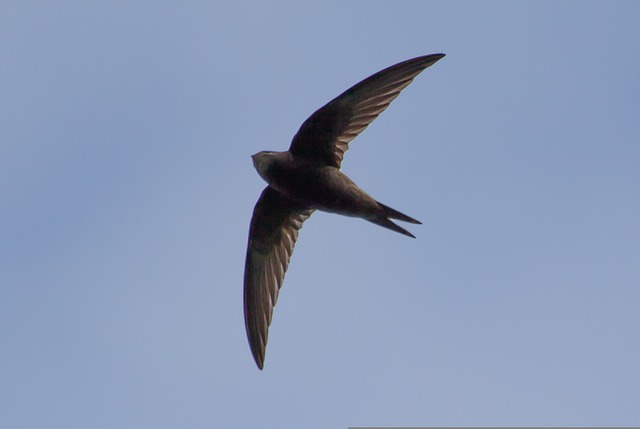
Image of European swift by Kev from Pixabay

What is the ultimate flying machine?

The Concorde? A high-tech fighter jet?

I’d suggest to you that the holder of this title belongs to the common swift.

The swift holds the record for the fastest confirmed level flight of any bird: 111.5 km/h (69.3 mph). (Birds like falcons can fly faster, but only when diving down through the air to catch prey.)

Swifts also spend most of their lives on the wing, landing only to nest. Some individuals can spend up to ten months in continuous flight. In a single year a common swift can cover at least 200,000 km. No other bird spends as much of its life in the sky.

They are truly astonishing creatures.

A funny thing about swifts, though: they don’t do very well on the ground.

Their small, weak legs, which are placed far back on their bodies, are really only good for clinging to vertical surfaces like cliffs. They never voluntarily settle on the ground, where they’d be vulnerable to predation. Although swifts are capable of taking flight from level ground, they prefer to “fall” into the air from a high point.

Simply put, swifts were meant to soar.

And so were you.

But oftentimes there are things inhibiting our flight…

Read more

Straight Out of Left Field

Image by Pexels from Pixabay

Have you ever had a time in your life when God did a work for you that came straight out of left field?

The blessing, provision or miracle he bestowed on you caught you off guard and astonished you. It was completely unexpected and surprising.

You never saw it coming.

God seems to like to work that way, doesn’t he?

Think of Moses in the Old Testament, when he was leading the children of Israel out of bondage in Egypt.

They found themselves in a jam: cornered at the Red Sea with the Egyptian army snapping at their heels.

Moses had faith that God would save them, but I wonder if he was racking his brains trying to figure out just how it would happen.

Maybe God would send a flotilla of boats from the other side to rescue them, Dunkirk-style? But no one knew they were coming, and at any rate, the only people on the other side were either enemies or strangers.

Maybe God would send an affable and reasonable Egyptian captain to negotiate with Moses? Not likely, since all of Egypt’s firstborn had just been killed. The Egyptians were in no mood to parley with their escaped slaves.

No matter what Moses came up with as a potential solution, he never could have expected the curveball that God threw:

God miraculously parted the waters of the Red Sea and allowed the Israelites to cross over on dry ground, then closed up the waters to drown their enemies. Moses surely didn’t see that one coming!

And that’s not the only curveball that God threw…

Read more

God Always Leaves a Light On For You

Image of Border Collie by Jacqueline Galand from Pixabay

When you come home late at night, isn’t it nice when a family member has left a light on for you?

It shows they care about you, and want you to be guided safely back inside.

I was reminded of this recently when I came across a fun fact about border collies, a highly intelligent breed of dog often used to herd sheep.

The border collie usually sports a prominent white tip on its tail. This characteristic colouration is known as the “Shepherd’s Lantern.”

The white tip of the collie’s tail stands out in the dim light of dusk, allowing the shepherd to be guided home from the pasture after a long day’s work.

That got me thinking:

Our Heavenly Father gives us a “lantern,” too.

God loves us and wants to make sure we’re guided home to him.

He does this in two ways:

Read more

God Didn’t Make a Mistake When He Made You

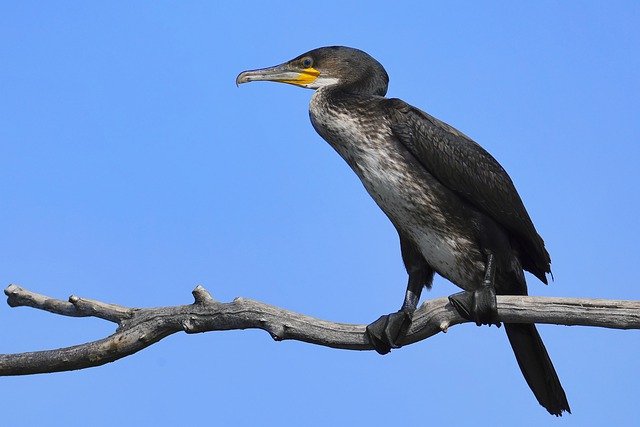
Cormorant. Image by sharkolot from Pixabay

Pity the poor cormorant.

This ungainly waterfowl is never at the top of anyone’s list of favourite birds.

It looks almost prehistoric, with its matte black feathers and strongly hooked bill. It lacks the beauty of a brightly coloured cardinal or the elegance of a swan.

The cormorant sits unusually low in the water, as though it’s about to sink. And because its wing feathers aren’t waterproof like those of other waterfowl, it needs to stand for long periods with wings outstretched, drying its feathers out in the sun.

It’s clumsy on land, and must expend more energy flying than other birds.

Nothing seems quite right about the cormorant.

Did God make a mistake when he fashioned them?

Not at all!

The cormorant’s lack of waterproofing actually plays to its advantage. Its waterlogged feathers make it less buoyant than ducks, enabling it to dive deeper in search of fish to eat.

Cormorants are excellent divers, agile and swift, with some species being able to dive to an astounding 150 feet.

So its “deficiencies” aren’t actually a bug, but rather a feature.

Do you ever feel like you’re not as good at things as other people? Do you feel as though you simply don’t measure up?

Rest assured, God didn’t make a mistake when he made you.

Read more

A Perfect Fit

Image of tailorbird by hartono subagio from Pixabay

There’s nothing quite like a perfect fit, is there?

When you buy a piece of clothing that hugs you where it’s supposed to, and is more flowing where you want it to be looser, you feel confident and comfortable. There’s something special about a garment that seems like it was made just for you.

The tailorbird of tropical Asia know this, too. When it fashions a nest for its young, it makes sure it is perfectly suited for its young family.

The female tailorbird makes its nest out of a living leaf hanging from a shrub or tree. She chooses a leaf and carefully checks it for size by wrapping it around her body like a cloak.

If the leaf suits her, she uses her needlelike beak to sew the sides together with plant fibre or spider silk, making as many as 200 stitches.

Once the leaf “cup” has been sewn, the male tailorbird lines it with soft materials in preparation for the eggs that will soon be laid in it. The parent birds make a perfect home for their chicks.

If a tailorbird goes to so much trouble to make nest that is perfectly suited for her family, won’t God make sure that the service He has in mind for you is a perfect fit, too?

Read more

Don’t Get Used To It

How would you feel if you won the lottery?

Pretty amazing, I’d imagine!

And the feelings of joy and gratitude at your good fortune would last for a long time, wouldn’t they?

Um, maybe not.

Researchers have discovered that positive feelings following a stroke of good luck soon subside and return to baseline. By the same token, people eventually adjust back to their baseline after some misfortune has befallen them.

This phenomenon is called “hedonic adaptation.” Whether your situation is good or bad, you get used to it.

I wonder if something like this happened to the children of Israel after being freed from slavery in Egypt.

Read more

The Fires of Life

Image of giant sequoia by LoggaWiggler from Pixabay

Forest fires are fearsome things.

They can lay waste to hundreds of square miles of mature trees and displace wildlife. If they spread to areas of human habitation, they can raze buildings to the ground and devastate communities.

And yet, fires can play an important role in nature. Trying to suppress them too drastically can have a negative effect on the ecology of the forest.

It can backfire, so to speak.

Take the giant sequoia, native to inland California. This majestic tree can live for thousands of years and grow to a height of almost 300 feet.

You’d think that protecting groves of sequoias from fire would help preserve them. But sometimes when we interfere with the natural cycle of fire and regrowth, we do a forest no favours.

The suppression of fire during the last century by U.S. land management authorities actually hobbled the sequoia’s ability to survive. Its seedlings can only grow into mature trees if competing plants are regularly eliminated by low-level forest fires. (The sequoia’s spongy bark helps protect it against fire.)

Not only that, the cones of the sequoia require the intense heat of a forest fire in order to open up and release their cargo of seeds. If the surrounding ground has just been cleared of competing vegetation by fire and enriched with the resultant nutritious ash, the seeds are given an additional leg up to grow.

So the sequoia can only grow to its impressive grandeur with the help of fire.

Perhaps the same is true of us.

Read more

All Hands On Deck

Image by Dirk Wouters from Pixabay

Do you ever feel like God couldn’t use you in His service?

Do you think you’re not qualified, because you don’t have any unique gifts?

Do you think ministry is just for pastors or other specially talented people like musicians and singers?

Banish these thoughts from your mind.

God can use anyone in the service of His Kingdom, and He has gifted each one of us with a unique combination of talents, skill sets, personalities, and backgrounds. There are people you can reach for the gospel that no one else can.

If you need more convincing, let’s take a look at the Old Testament book of Nehemiah. It took place at a time when Jerusalem’s walls and gates were in a shambles, which left the city vulnerable to attack from enemies.

Everyone’s help was needed to complete the repair work, and that included some of the most unlikely people.

Read more