You Can’t Go Wrong With These Ingredients!

When you’re trying out a new recipe for the first time, do you ever get apprehensive that it won’t work out?

I certainly do. That’s why I usually stick with one of my mother’s tried-and-true dessert recipes.

I worry that if I bake a dessert I’ve never attempted before, I’m bound to mess it up. I fear that I’ll disappoint the people I serve it to, and tongues will wag.

As I walk by, people will whisper, “There’s that woman who serves fallen soufflés!”

Or, “Isn’t she the one who bakes cookies that are as hard as hockey pucks?”

In the worst-case scenario of my imagination, my baking debacle will be so embarrassing that I’d have to leave town.

With some recipes, however, you really can’t go wrong, even if you’ve never tried them before.

Brownies, for instance.

A while ago I tried a brownie recipe (see recipe below) that was different from my mother’s traditional one. I was a little nervous about how it would turn out, as I’d be serving it to friends and wanted to impress them.

I needn’t have worried.

How far wrong can you go when you throw together things like chocolate, butter and sugar? As long as you don’t burn it to a crisp, it’s going to be yummy.

You’ve got the right ingredients. Bake away!

Read more

God Will Go Ahead of You

Do you ever get a bit anxious when faced with something completely new?

Like how to find a new job in an economy that’s unlike anything you’ve seen before? Or how to navigate a world that’s turned upside-down?

Many of us shrink from the prospect of entering uncharted territory.

And we’re not the only ones: even some animals balk when confronted with something unfamiliar.

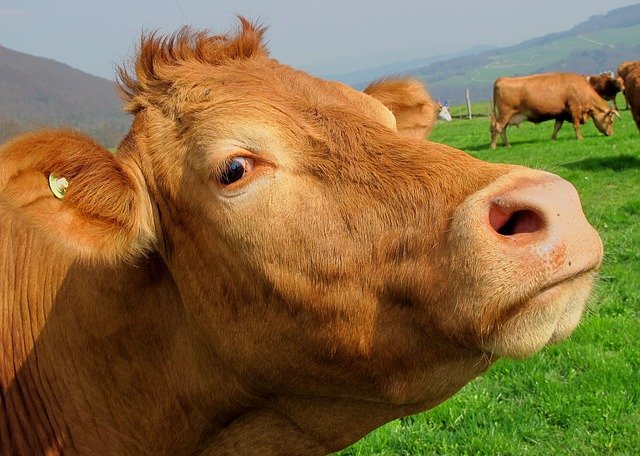
Cows are notorious for disliking disruptions to their routines and environments. They’re particularly averse to new gates. Cows are made so nervous by new entrances and openings that they’ll stubbornly resist going through them.

This trait is so well known that it’s given rise to a phrase: “Like a cow looking at a new gate.” It means to view something with bewilderment and confusion, as though to say, “Are you serious? I’m not going through that.”

Do you feel this way when faced with the uncertainties that a new situation may bring? Is fear of the unknown keeping you from stepping forward in faith to realize your dreams?

Fear has a way of paralyzing us, so that we stay stuck where we are instead of trying something new.

But we needn’t be afraid.

God will go through the gate ahead of us.

Read more

Create Your Own Dark Sky Preserve

I sometimes wonder if people who live in the countryside have a better appreciation for God’s creation than we city folk?

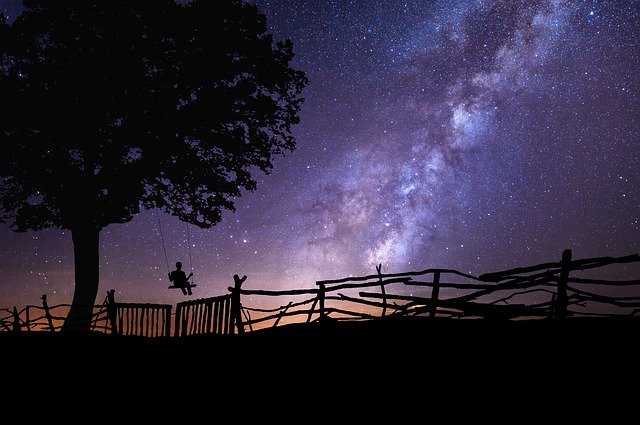
I’m specifically thinking of the ability to see the majesty of God’s handiwork as seen in the starry night sky.

Living in a big city (in my case, Toronto), I’m only able to see a handful of heavenly bodies. I can see the Big Dipper and a smattering of other stars, bright planets such as Venus, and the moon in its phases. But that’s about it.

Big cities produce so much ambient light that it obscures our view of the wonder of the night sky. That’s why many jurisdictions are creating what’s known as “dark sky preserves.” These are regions far enough away from the lights of built-up urban areas that the majority of stars can still be seen.

Governments commit to protecting these preserves from development so that the full range of the starry sky will always be visible from those areas. They seem to understand that it’s important for us to be able to maintain our connection with the night sky, and see it the way our ancestors did.

Perhaps we should take a page from their book, and create some “dark sky preserves” in our own lives.

I don’t mean areas from which to see the night sky, but spaces in our lives that remind us of God’s majesty and creative ingenuity as expressed in nature.

Read more

A Series of Fortunate Events

Sometimes it takes a bit of time before we can tell if an event will turn out to be good or bad for us.

Take the famous Chinese proverb about Sai Weng losing his horse. The story goes like this:

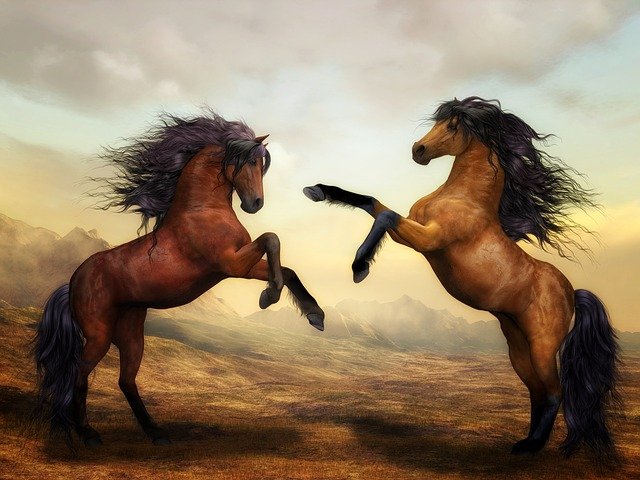
Sai Weng, a old farmer, raised horses for a living. One day, his prized stallion ran away. His neighbours comforted him in his misfortune by saying, “What terrible luck!”

Sai Weng merely replied, “Maybe so, maybe not. We’ll see.”

Later, the stallion returned, bringing with it several wild mares. The farmer’s neighbours congratulated him on his good fortune: “What wonderful luck!”

Again, Sai Weng only said, “Maybe so, maybe not. We’ll see.”

One day, Sai Weng’s son tried to ride one of the new mares, but was thrown off and broke his leg. The neighbours again commiserated with the farmer, saying, “What bad luck!”

Sai Weng once again replied, “Maybe so, maybe not. We’ll see.”

Later, soldiers from the national army came through town, conscripting all able-bodied men for service in the war. The farmer’s son was spared, however, because he was still recovering from his broken leg. The neighbours said, “What great luck!”

Sai Weng simply said with a smile, “We’ll see.”

We often can’t judge whether an event in an of itself is fortunate or unfortunate. Sometimes only time will tell the whole story.

This is especially true when God is working behind the scenes of our lives, fashioning seemingly random events to conform to His purposes. God is often playing a “long game,” as it were: in the end, individual events that we might view as bad actually turn out to be good.

Read more

What Birds Can Teach Us About Prayer

It’s good to keep in touch with those you love, isn’t it?

Even birds know this.

Birds will engage in what are called “contact calls” with their mate or others in their flock. Unlike a bird’s song, a call is usually shorter and quieter. The purpose of contact calls is to maintain a continuous connection and to keep track of where each bird is located.

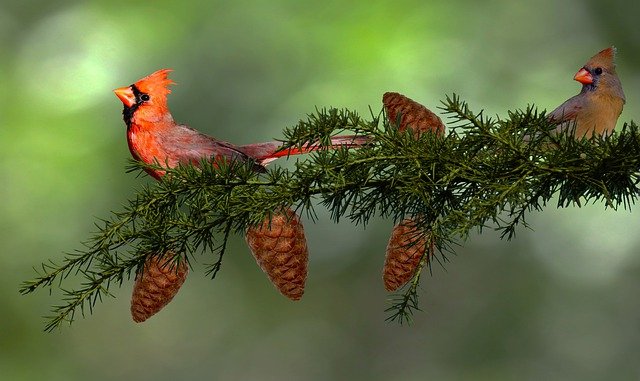
The Northern Cardinal, for instance, makes a brief metallic “chip” sound to keep tabs on its mate’s location when they’re both foraging for food. The mate will respond with the same call as reassurance that they’re nearby and that all is well.

We humans engage in the same type of behaviour. We’ll often make a short phone call or send a quick text to a loved one to keep track of how they’re doing and to reassure them that we’re all right.

I think our Creator would appreciate getting a “contact call” from us on a regular basis, too.

We have the privilege of doing so through the medium of prayer.

For many of us, however, we only engage in prayer when we’re in a crisis.

Read more

Which Body Part Are You?

Don’t you just love cookies shaped like little people, such as gingerbread men and women?

I always start munching on gingerbread people at the head. According to a survey conducted by the folks at Dunkin’ Donuts, I’m not alone. Almost two thirds of people surveyed start at the top when eating a gingerbread figure. A fifth of people begin with the legs, while the remainder go for the arms first. (To make some gingerbread people yourself, see below for a classic recipe.)

We seem to have a penchant for foods shaped like bodies, or at least named after various body parts.

There are chicken fingers, kidney beans, artichoke hearts, navel oranges, black-eyed peas, heads of lettuce, ladyfingers and elbow macaroni.

The Italians have given us pasta shapes like orecchiette (little ears), linguini (little tongues), and capellini (angel’s hair). In France, cotton candy is called, “Dad’s beard.”

Our bodies are precious to us and are wondrously made, so it’s no wonder we pay tribute to them by naming foods after our various body parts.

But did you know that if you’re a believer, you don’t just have your own body, you’re a part of another body, too?

Scripture tells us that those who follow Jesus are all parts of the body of Christ.

“Our bodies have many parts, but the many parts make up only one body when they are all put together. So it is with the ‘body’ of Christ.” (1 Corinthians 12:12)
“All of you together are Christ’s body, and each of you is a part of it.” (1 Corinthians 12:27)
Read more

Sing While You Fly!

Birds, like humans, have different quirks.

Some birds like to have everything “just so” before they sing.

The time of day has to be just right, they have to be perched at the top of just the right tree, or they have to be within earshot of a desirable mate.

They would never think of singing if the conditions weren’t to their liking, or if they were busy doing something else at the time, like flying.

Other birds aren’t quite so picky.

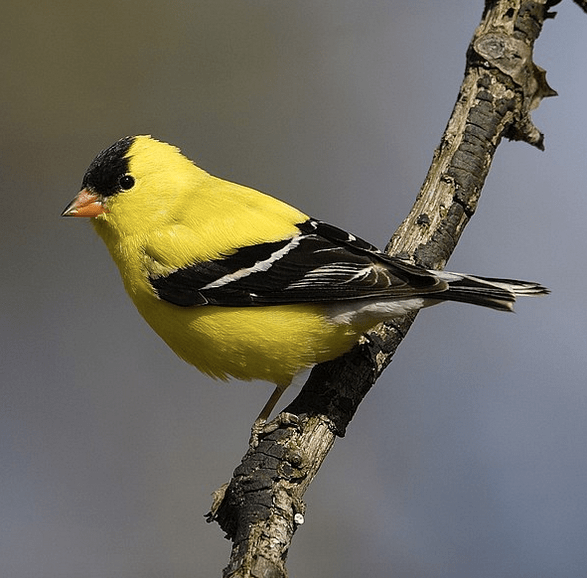
Take the American goldfinch, for example.

This handsome little songbird has some unusual traits. One of them is that his flight pattern resembles a roller-coaster instead of a level path.

Another is that the goldfinch is perfectly happy singing while he’s flying.

He doesn’t wait until just the right circumstances fall into place—this yellow fellow sings while he goes about his daily business.

Perhaps we can take a page from the goldfinch’s book?

Read more

Don’t Spoil Your Spiritual Appetite!

When you were young, did your parents ever admonish you not to eat sweets too close to dinner time because it would “spoil your appetite”?

Mine certainly did. However, delaying dessert until after dinner is difficult to do.

The look of a beautifully frosted cake or the smell of freshly baked cookies can be notoriously tempting. And of course, one cookie or piece of cake invariably leads to another…

Before you know it, you’ve stuffed yourself with sugary foods and are too full to eat dinner. You miss out on all the good protein and vegetables in the main meal.

I guess Mom and Dad knew best: we should fill ourselves with more nourishing things first, and leave the dessert until afterward as a treat, not the main course.

The same lesson holds for us spiritually, doesn’t it?

We should concentrate on things of substance in our lives first.

So often we fill our lives with things we think will make us happy: entertainment, money, accomplishments, or possessions. But these things are temporary, and will eventually disappoint us. They’re not really satisfying in a lasting way.

Read more

Bloom Where You’re Planted?

Some say you should “bloom where you’re planted.”

You can get all manner of products printed with this slogan: T-shirts, mugs, posters, and notecards.

But is that always the best advice?

Maybe not. There’s something to be said for not staying in the same place for too long.

Your garden will tell you that if you plant the same type of vegetable in the same plot year after year, you’ll notice that the health of the plant and the yield it produces will begin to suffer. The plant will be attacked by more diseases and pests, and the nutrients in the soil will have been depleted by past crops of the same type.

The answer to this problem?

Crop rotation.

Don’t plant the same type of vegetable or crop in the same location several years running. Mix it up; plant something new in that spot.

What about in life?

Does God intend us to stay rooted to the same location for much of our lives?

Read more

You’re Not Insignificant to God!

When you look up at the stars in the night sky, what do you feel?

Many people say the vastness of the universe and the countless stars make them feel puny and insignificant.

In a way, that’s understandable.

The star that Earth orbits around is just one of many in the Milky Way, the galaxy in which we live. In fact, there are perhaps 100 billion stars in our cosmic “neighbourhood.”

And the Milky Way is just one of many galaxies. Estimates vary as to how many galaxies exist in the observable universe: some experts suggest a couple hundred billion, and others postulate as many as 10 trillion.

It’s impossible for us to know how many stars there are in the observable universe, but here’s the largest guess I came across: Multiplying the higher number of estimated galaxies by the Milky Way’s estimated 100 billion stars gives a possibility of 1 septillion stars in the universe (1 quadrillion in the European system). That’s a “1” with 24 zeroes after it!

The Milky Way is so enormous that, even travelling at light speed, it would take 100,000 years to travel across it. The observable universe is incredibly more vast: according to current thinking, it’s about 93 billion light years in diameter.

No wonder people feel small when they contemplate the unimaginable expanse of the universe!

But for me, this knowledge doesn’t make me feel insignificant.

It makes me feel just the opposite.

Read more