The Mystery of the Larch Tree

It’s easy to categorize trees, isn’t it?

Deciduous trees lose their leaves in the autumn. Coniferous trees bear cones and keep their needles throughout the year. It’s simple to tell them apart.

Case closed, right?

But what about the larch tree? It bears cones and has needles like a conifer, but the needles drop off each autumn like a deciduous tree.

So which is it, coniferous or deciduous?

The answer to this mystery is that it’s both at once. The larch tree is actually a “deciduous conifer.”

Larches fall into a special third category of tree. It’s a member of the pine family, and yet its wood is harder than pine wood; it’s more like the hardwood of deciduous trees. It has needles like a conifer, but they turn a golden yellow each autumn and drop off, like the leaves of a deciduous tree.

Larches are a rare combination of deciduous and coniferous, unique trees with characteristics of both.

You could say that larches are two things at the same time.

In the same way, you could say that Jesus was two things at once. Just as the larch is one tree with two natures, Jesus was one being with dual natures: both God and human.

Read more

What Love Looks Like

The incomparable Taj Mahal, India

The Taj Mahal, in Agra, India, is considered to be one of the world’s most beautiful buildings, and rightly so.

Built from white marble, it was commissioned in 1631 by Shah Jahan as a memorial to his favourite wife, Mumtaz Mahal, who died that year giving birth to their fourteenth child.

For many in India and around the world, the Taj Mahal is an iconic symbol of love. Every stone and jewel used in its construction speaks of the tremendous affection the Shah had for his wife, and his grief at her passing. To many people, the Taj Mahal is the embodiment of love.

What does love look like to you?

Read more

The Polar Bear’s Secret

Pop quiz: What colour is a polar bear’s skin?

Did you guess “white”?

It’s the obvious answer, isn’t it, because their fur is white.

Surprisingly, though, you’d be wrong.

If you shaved a polar bear, you’d discover that it would look much like its cousin, the black bear.

That’s right: polar bears have black skin!

Don’t believe me? Here’s a clue: check out their noses and foot pads. They’re both black. Their thick fur so completely hides the blackness underneath that you’d never know it’s there.

Not only that, but polar bears’ fur isn’t actually white.

Pardon me?

It’s true! Their outer coat of fur consists of translucent hollow hairs that scatter and reflect visible light. These hairs have no white pigment, but merely appear white due to an optical trick involving the physics of light.

The polar bears certainly had us fooled, didn’t they?

And they’re not the only ones.

There are people whose lives have been so thoroughly changed by the gospel of Christ that you’d be shocked to discover their dark past.

Read more

Islands of Hope

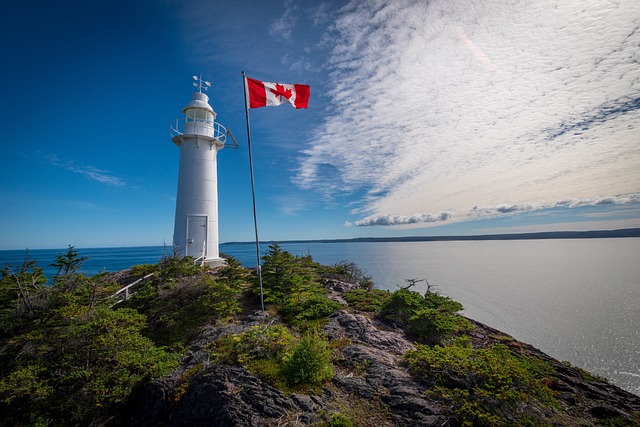
Image of lighthouse on the coast of Newfoundland by Felix Dilly from Pixabay

Transoceanic plane travel has always been fraught with potential problems.

Fuel could run low or a plane could develop mechanic problems mid-flight. The pilots would need a place to set down, pronto.

But in the middle of the ocean, where is there to land?

That’s where islands come in.

There are some handy places to land even in the vast expanse of the oceans.

In the Pacific, islands such as Midway, Wake, and Hawaii are available. The Atlantic offers Iceland, the Azores, and Bermuda, among others.

Not least is Newfoundland, an island off the eastern coast of Canada. For decades its Gander airport was used as a refuelling stop for planes making the hop across the Atlantic. It’s also an emergency landing spot for aircraft in trouble.

Gander is perhaps best known for its role in accepting 38 diverted planes that had to set down during the terrorist attacks in the U.S. on 9/11, twenty-two years ago today. Over six thousand passengers were generously hosted by the surrounding communities until U.S. airspace was reopened, a story commemorated in the hit musical, “Come From Away.”

Gander was truly an island of hope during that time.

I think we can all be islands of hope for others.

Read more

Bring Out the Big Guns

Image of Tsar Cannon, Moscow, by Tatyana Kazakova from Pixabay

Have you ever had a day when you simply needed chocolate?

Maybe you faced some problems, and needed a pick-me-up. Or you were dealing with a heartbreak and needed a balm for your ragged emotions.

And you knew that milk chocolate just wouldn’t cut it, let alone white chocolate.

It required the stronger stuff. You needed to bring out the big guns to help you cope with your challenges:

Dark chocolate.

Only the intense flavour and strength of chocolate with over 80% cocoa solids would do the trick. Nothing else would suffice.

Sometimes we reach a similar point in our spiritual lives, too.

The Christian life isn’t all a bed of roses. Oftentimes we face desperate circumstances, and we may find ourselves crying in a heap on the floor.

Read more

God Is Always a Step Ahead of You

Image by kariwil from Pixabay

Don’t you love it when someone anticipates your needs?

You feel good when someone makes provision for something you’ll require before the need even arises. Or when they start setting in motion something for you before you even ask.

It makes you feel sort of special, doesn’t it?

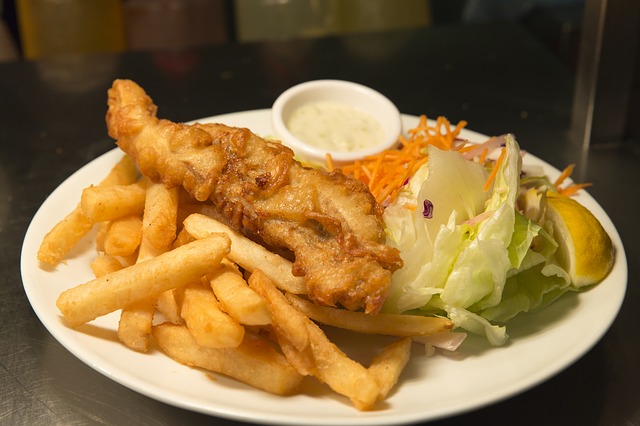
As a teen, I’d occasionally stop by a little fish-and-chip joint on my way home from school. This little restaurant had an open kitchen, and the owner/cook could see the street through the front window.

Carlo, the owner, would see me get off the bus and wait at the lights. He knew what I liked to eat, so he’d start deep-frying my halibut before I even crossed the street and entered his restaurant.

He anticipated what I’d want and started cooking it before I even placed my order.

God does the same sort of thing for us, too.

Read more

Marinate in God’s Word

Image courtesy of Pixabay

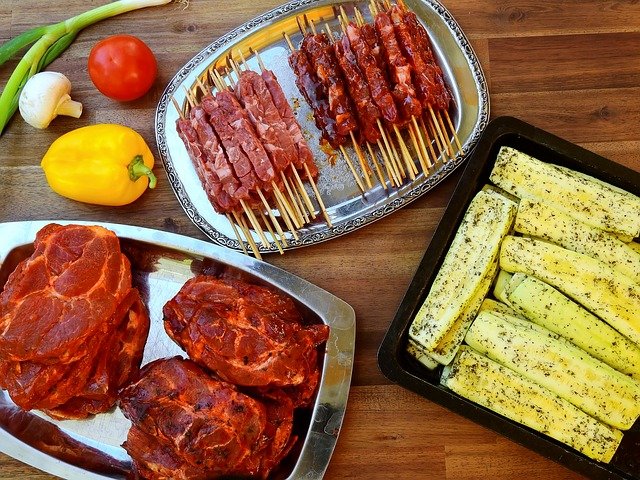
Are you planning on firing up the grill to barbecue some meat this summer?

Many people believe the key to success is to marinate the meat beforehand.

When you marinate food before barbecuing it, more is going on than meets the eye (or the taste buds).

You’re doing more than simply soaking the food in a seasoned liquid to add extra flavour to it.

You’re actually changing its structure and making it yield.

Marinating tenderizes meat, breaking down tough connective tissues to make it more palatable. It also helps meat retain moisture, ensuring that the cooked meat will be juicy and not dry.

Marinades usually have a sharp, acidic ingredient, like wine, vinegar or lemon juice, or an enzymatic one, like yogurt of papaya. Herbs, spices and oils are added as well.

Whether you use a red-wine-based marinade for beef dishes, or a tangy yogurt-lemon one for chicken, your meat is guaranteed to turn out tender.

Likewise, when we meditate on God’s Word, or “marinate” in it, we’re doing more than simply adding Biblical quotations to our knowledge base.

As we absorb and internalize Scripture, it changes us and doesn’t leave us the same.

Read more

Check In To The Grace Hotel

Image by Andrea Piacquadio via Pexels.

As any traveller knows, hotel staff can make or break your stay.

Especially the staff at the front desk, because they set the tone immediately. Within minutes, you get the sense of whether your hotel stay will be a happy or problematic one.

Case in point: when I was very young, my family spent some time travelling in Europe.

We stayed in a beautiful country where the people happened to be sticklers for rules and regulations. While we enjoyed our time in this nation, dealing with officials who insisted on strict adherence to protocols and procedures, even for tourists, became a bit tiresome.

Then we landed up in the south of France.

We arrived at a hotel late at night, exhausted, and trudged up to the front desk. My father introduced himself and mentioned to the clerk what country we’d just arrived from. He then began fishing out the documentation he needed to register for our stay.

The desk clerk took one look at two weary travellers with a cranky toddler in tow (me!), and said,

“Relax. You’re not in that country anymore. Here’s your room key. Go get some sleep and we’ll deal with the paperwork in the morning.”

I think my Dad almost cried out of gratitude and relief.

Although we settled the bill with the hotel when we left, my Dad doesn’t remember us ever properly registering with them!

Isn’t that what God’s grace is like?

God accepts us before we’ve proven ourselves or filled out all the forms or ticked off all the boxes.

Read more

All You Can Eat

Image by Chris from Pixabay

When it comes to yummy treats, children often don’t want to share.

When my father was a little boy, he and his brother would almost come to blows when it was time for dessert. There would be loud protests if one brother thought he was getting a smaller slice of pie.

So my grandparents came up with a rule: one brother would cut the pieces, and the other would get to choose his portion first.

The idea behind this arrangement was that if the pieces had been cut unequally by the first brother, the other would take advantage of this and choose the larger slice. So the boy cutting the pieces would want to make sure that they were as close in size as possible.

My dad or his brother would actually use a protractor to cut the pie to ensure that each slice was exactly the same angle. Each was determined not to let his brother get a larger piece!

This is a humorous story, but the attitude it portrays can linger in our thoughts as we become adults.

It can even affect how we view God’s beneficence.

We’re somehow afraid that when God divvies things up, there won’t be enough for us. We think that if God gives someone else certain blessings or gifts, it will mean less is available for us.

But God’s economy doesn’t work this way—it’s not a zero sum game.

Read more

The Slippery Slope

Image by Hermann Kollinger from Pixabay

As in many northern climes, a favourite pastime of Canadian children in winter is tobogganing.

I did my share of barrelling down snowy slopes on a sled when I was a kid.

Even though we lived in a big city, we had nature nearby. A ravine adjoined our neighbourhood, featuring steep hills bordering a river valley.

These hills were perfect for tobogganing.

The trick was to follow the paths through the snow that others had already made. Trying to forge a path through newly fallen snow yourself was hard going, but if you positioned your sled on ready-made routes, you could really pick up some speed.

The highest hill in the ravine was nicknamed “The Killer” by the kids. When the snow was tamped down by dozens of tobogganing runs it became icy, and you’d find yourself going faster than you expected.

You could build up so much momentum sliding down this hill that you could end up plunging into the freezing cold river.

It was a slippery slope, quite literally.

And dangerous.

Sometimes in life we find ourselves on slippery slopes, don’t we?

If we’re not careful, we might blindly follow the path of others into sin. It might seem fun at first, and we might not notice that we’re accelerating.

Eventually, though, we may lose control and not be able to stop in time. We can unexpectedly end up in dangerous places.

Make no mistake, sin is a killer.

It kills relationships, reputations, trust, and future options.

Most importantly, it kills our connection with God.

Read more