Let God Surprise You!

We all love receiving more than we expected, don’t we?

Like when you order a product online, and to your surprise the company throws in some extra goodies or samples as a bonus.

Or perhaps it’s your birthday, and your family outdoes themselves with a party, special gifts and a scrumptious meal, all despite being in a lockdown.

It makes us feel valued to be the recipients of these unexpected blessings.

God certainly knows this. That’s why He often seems to enjoy outdoing Himself, showing up in a big way in answer to prayer or simply to demonstrate His power and majesty.

This is how Paul describes God’s “above and beyond” abilities in Ephesians 3:20:

“Now to Him who is able to do exceedingly abundantly above all that we ask or think, according to the power that works in us, to Him be glory in the church by Christ Jesus to all generations, forever and ever. Amen.” (NKJV, italics mine)

The term Paul uses to express God’s ability to work beyond what we pray for, think or even dream is possible is variously translated “superabundantly more” (AMP), “infinitely more” (NLT), “immeasurably more” (NIV) and “far more abundantly beyond all” (NASB).

However you phrase it, it says a lot about God’s character, His generosity and his abounding love for His children.

Read more

My Secret Is Finally Out!

Image by philm1310 from Pixabay

Are you a secret cookie dough eater?

Many of us learned as youngsters that raw cookie dough can taste even better than baked cookies. As adults, some of us will sneak a spoonful or two of cookie dough when we’re baking, and there’s nothing wrong with that.

For some of us, however, our addiction to raw cookie dough is rather more extensive. We have a particular problem resisting those tubes of uncooked cookie dough that you can buy in the refrigerated sections of grocery stores.

When we were kids, our Mom would buy a tube of dough and put it in the fridge, but it would mysteriously disappear before she had a chance to bake it.

As adults, our addiction to this surreptitious habit continued. We’d sometimes eat an entire tube of dough without baking a single cookie for our families.

Last summer, the Pillsbury company finally acknowledged what many of us have known for decades: their raw cookie dough tastes darn good, and people can’t resist it. So they’ve developed a formula that is safe to eat raw.

Pillsbury Cookie Dough tubes now state on the label: “Eat or Bake.”

Fellow cookie dough eaters: our secret is finally out!

And yes, I’m admitting that I’ve been a surreptitious cookie dough eater, too. There, I’ve said it.

Frankly, it’s a relief to have it out in the open. It feels liberating to finally admit my secret “sin.”

Read more

Do You Abhor a Vacuum?

Image by 22594 from Pixabay

Aristotle said that “nature abhors a vacuum.”

So do I, frankly. Perhaps I should simply stop vacuuming? After all, who am I to argue with Aristotle?

Seriously, though, what that phrase suggests is that empty spaces are unnatural, and somehow or other nature will seek to fill them.

I encountered a dramatic example of this truism through a friend of my late father.

This friend had developed a disorder called Charles Bonnet Syndrome. Macular degeneration had left voids or blank spots in his field of vision. The brain finds these empty spaces to be disturbing, so in Charles Bonnet Syndrome it fills in the blank areas with patterns or random images from its memory bank.

The result was that my father’s friend would “see” people or animals that weren’t actually there. His wife would have to tell him that, no, there wasn’t really a stranger sitting on their couch, or a cow in their backyard. The hallucinations he experienced were just his brain attempting to paper over the upsetting voids in his visual field.

It seems that human nature abhors a vacuum, too.

We all have voids or empty spaces in our lives that we seek to fill: areas of dissatisfaction, lack of love or absence of validation. These blank areas make us uneasy, so we try to fill them up.

Read more

What Is Your “Job One”?

Man installing seat into Ford F-150 pickup truck at the Kansas City, MO plant. Wikimedia Commons CC BY-2.0

Sometimes we need a reminder of what we’re really here for, don’t we?

Many companies know this. Their employees can get so focussed on the little details of their tasks that they lose sight of what their main goal is.

That’s why for many years the auto manufacturer Ford put a large sign on the walls of its factories:

“Quality is Job One.”

An employee might have been helping to assemble the engine, working on the upholstery of the seats, or perfecting the paint finish on the vehicle.

But no matter what their specific task, the sign reminded the workers that their overarching goal was to produce a quality product.

Perhaps we as Christians sometimes need to be reminded what our primary function here on earth is?

Read more

Doomscrolling? Try Hopescrolling!

Image by Robin Higgins from Pixabay

Have you been prone to “doomscrolling” recently?

Doomscrolling is a new word that’s been coined to describe the habit of obsessively consuming a large quantity of negative online news.

The committee of the Australian Macquarie Dictionary even named “doomscrolling” their Word of the Year for 2020.

Humans have a natural tendency to pay more attention to bad news, but the doomscrolling trend has accelerated during the pandemic.

We compulsively check our news apps and social media feeds, endlessly scanning the latest ominous headlines. We feed ourselves a steady diet shocking or disheartening news about rising COVID-19 case numbers, hospital intensive care units filling up, businesses shutting down, political instability or even weather woes.

We can’t seem to help ourselves, even when we sense that doomscrolling is probably detrimental to our mental health. All this bad news saturating our minds can leave us depressed, anxious, angry or hopeless.

We need an antidote to the feeling of despair that doomscrolling can produce.

I’d like to propose that we adopt a new habit:

Hopescrolling!

Read more

Believe Six Impossible Things!

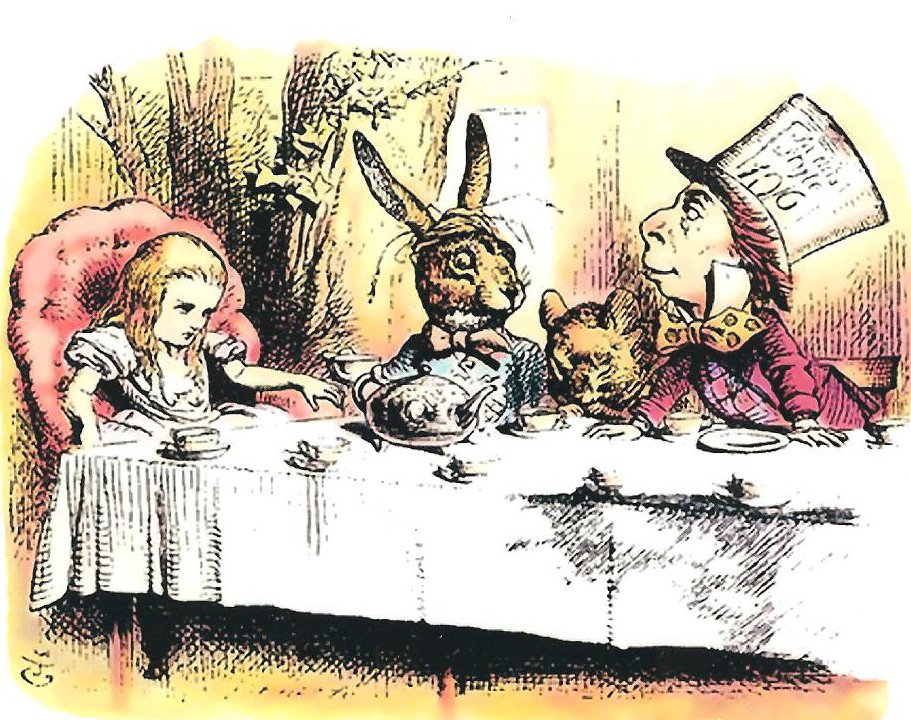
Alice In Wonderland Mad Hatter Tea Party. Image from Pixy.org CC BY-NC-ND-4.0

With 2020 behind us, it’s time to believe that good things are in store for us in 2021.

Are you having trouble believing that? Has your faith been a bit battered by the events of the past year? Do you find it difficult to believe that God has something good lined up for your future?

You’re not the only one to think certain things are simply impossible.

Have you read the book, “Alice in Wonderland,” by Lewis Carroll? At one point in the story, Alice is challenged by the White Queen to believe impossible things.

When the Queen says that she’s a hundred and one years old, Alice is incredulous.

“I can’t believe that,” said Alice.

“Can’t you?” the Queen said, in a pitying tone. “Try again; draw a long breath, and shut your eyes.”

Alice laughed.

“There is no use trying,” said Alice; “one can’t believe impossible things.”

“I dare say you haven’t had much practice,” said the Queen. “When I was your age, I always did it for half an hour a day. Why, sometimes I’ve believed as many as six impossible things before breakfast.”

Even though this story is fictional, I think we as believers in God can learn a lesson from it. Sometimes God wants us to believe things that the world might consider to be “impossible.”

Read more

You’re Not Insignificant to God

Man looking at the Milky Way
Photo by Evgeni Tcherkassi on Pixabay

When you look up at the stars in the night sky, what do you feel?

Many people say the vastness of the universe and the countless stars make them feel puny and insignificant.

In a way, that’s understandable.

The star that Earth orbits around is just one of many in the Milky Way, the galaxy in which we live. In fact, there are perhaps 100 billion stars in our cosmic “neighbourhood.”

And the Milky Way is just one of many galaxies. Estimates vary as to how many galaxies exist in the observable universe: some experts suggest a couple hundred billion, and others postulate as many as 10 trillion.

It’s impossible for us to know how many stars there are in the observable universe, but here’s the largest guess I came across: Multiplying the higher number of estimated galaxies by the Milky Way’s estimated 100 billion stars gives a possibility of 1 septillion stars in the universe (1 quadrillion in the European system). That’s a “1” with 24 zeroes after it!

The Milky Way is so enormous that, even travelling at light speed, it would take 100,000 years to travel across it. The observable universe is incredibly more vast: according to current thinking, it’s about 93 billion light years in diameter.

No wonder people feel small when they contemplate the unimaginable expanse of the universe!

But for me, this knowledge doesn’t make me feel insignificant.

It makes me feel just the opposite.

Read more

The God of More Than Enough

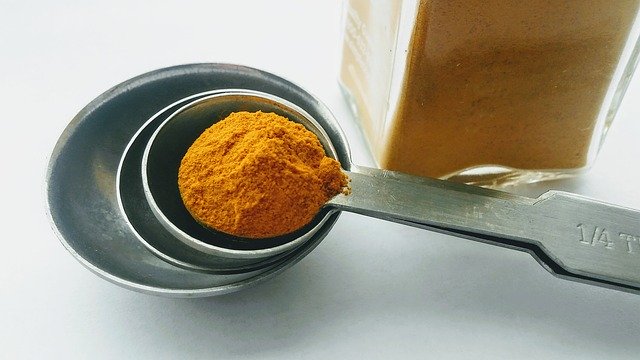
Photo by Jenny Porter on Pixabay

In recipes, a teaspoonful of an ingredient doesn’t always mean a level teaspoon.

It can be “heaping,” meaning generous enough to form a heap on top, or “scant,” which means barely coming up to the rim of the spoon.

Likewise, a recipe might call for you to press down the brown sugar in a measuring cup so that it’s “packed.” Or it might instruct you to use only a “pinch” of a spice.

But the measures God uses are always generous. The blessings and grace He bestows on us are never meagre or paltry, but plentiful and abundant.

Read more

The Moonbow Connection

Lunar Rainbow over Victoria Falls, Zambia
Photo courtesy Calvin Bradshaw (calvinbradshaw.com)
Wikimedia Commons, CC BY-SA 3.0

I’ll bet most of us have seen a rainbow at some time in our lives, but have you ever seen a moonbow?

Frankly, until recently I didn’t even know such a thing existed. Moonbows, also known as lunar rainbows, are rainbows which are produced by moonlight rather than by direct sunlight. As such, they’re usually fainter than regular rainbows, and may even appear white.

But moonbows are still evidence of the sun’s presence, because they’re created by reflected sunlight bouncing off the moon. They’re a very special reminder that the sun is still shining, even when we can’t see it.

Sometimes I think God puts believing friends in our lives to function as “moonbows” for us.

Read more

Golden at the Broken Places

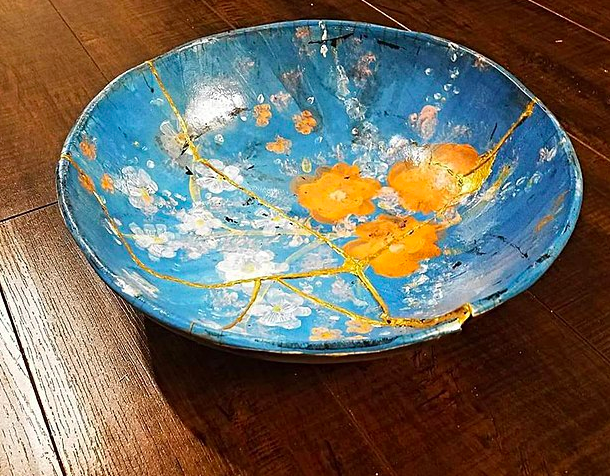
Bowl repaired by Kintsugi method by artist Ruthann Hurwitz
Wikimedia Commons CC BY-SA-4.0

We all shudder at the sound of something breaking, don’t we? We can’t help but wince when we hear glass or crockery shattering into pieces on the floor.

Why do we have that involuntary reaction? Because we know that the object probably can’t be repaired: it’s likely to be damaged irreparably, and must be thrown away.

We’re wincing at the sound of loss.

But what if there were a way to not only put the pieces back together, but to make the object more beautiful than it was before, despite the breaks?

The Japanese long ago invented a way of doing just that, and have even made an art form of it. It’s called “Kintsugi,” which means “golden joinery.” The process involves mending the cracks in pottery with gold lacquer. Instead of trying to hide the damaged areas, they are instead highlighted with something precious. The end result is a restored piece of pottery that is beautiful at the broken places.

But what happens if it’s not a piece of pottery that is broken, but a life? How can a shattered heart be put back together?

Read more