The Most Astounding Thing About Christmas

What’s the most astounding thing about Christmas to you?

The amount of electricity used in powering all the Christmas lights on people’s homes?

The credit card bill you’re racking up to buy gifts for family, friends, and coworkers?

The way your Uncle Louie consistently manages to buy you the most inappropriate gift imaginable, every single year?

The ugly Christmas sweater said uncle wears to every holiday event, even formal ones?

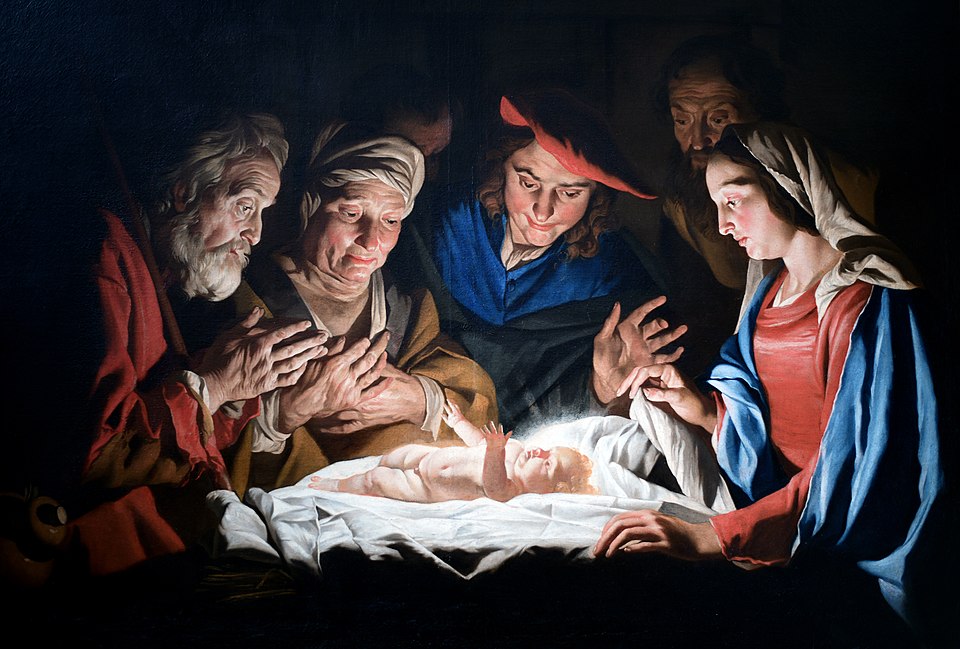
No, the most astounding thing about Christmas is that the Creator of the Universe, Almighty God, came down to earth and was born as a baby.

God Himself, the perfect and holy One, entered our messy, sinful world in the form of Jesus and dwelt with us for 33 years. Then He died on a Cross for our sins. All this was done out of immense love for us.

The theological term for God coming to us in this fashion is the Incarnation, which literally means “God made flesh.”

The Incarnation features heavily in my favourite Christmas carol, “Hark the Herald Angels Sing.”

Its writer, Charles Wesley, seems to have been so astounded by the fact of the Incarnation that he sprinkled this hymn with at least 10 references to it. See if you can spot them:

Read more

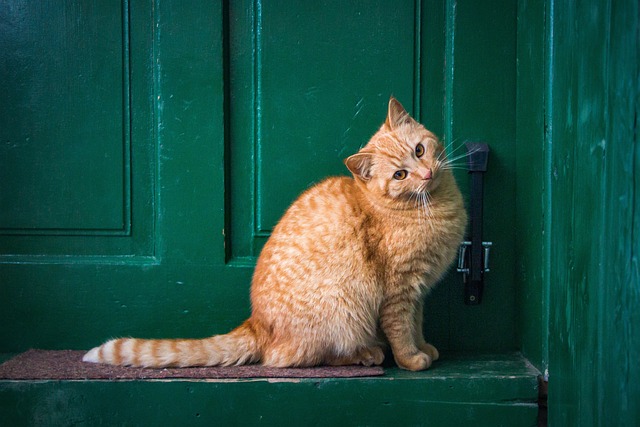
Cats and Dogs

Image by Chiriac Ciprian from Pixabay

When two people couldn’t be more different, we say they’re like night and day, or chalk and cheese.

Comparing people who are unalike to cats and dogs can also be apt. There are several notable differences between these species of our furry friends:

They say dog is man’s best friend. If so, then a cat is man’s strange, aloof roommate.

Owners train their dogs. Cats train their owners.

Dogs don’t mind it when you dress them in silly clothing. Cats give you murderous looks if you so much as attempt to put a hat on them.

Dogs look at their owners and think: “These people feed, shelter and love me: they must be gods!”

Cats look at their owners and think: “These people feed, shelter and love me: I must be a god!”

But perhaps cats and dogs have more in common than we might think.

They both come running when they hear the can opener. They both know who in the family has the most comfortable lap. And they both show their love by licking you and shedding their fur on you.

There are two people in the Bible, who, at first glance, couldn’t seem to be more different: Simeon and the thief on the cross. Both of their stories are found in the Book of Luke.

Read more

You Dirty Dog!

Bad dog! Image from Picryl, Public Domain.

Imagine your living room is perfectly clean.

I mean perfectly. Your white couch is utterly spotless. Your white carpet looks pristine. There isn’t an iota of dust or dirt anywhere in the room.

And then your dog wants in.

Rover somehow found the only mud puddle in the dog park and spent a considerable amount of time rolling around in it.

He stands on the other side of the back door, wagging his tail and smiling, unable to figure out why you won’t let him in. After all, surely you love him, don’t you?

But you know that the second you let Rover in, he’ll shake his fur and send thousands of bits of mud all over your perfectly clean living room.

The solution?

Clean Rover off before he can enter the house. Hose him down, dry him off, and wipe his paws. Rover may not understand the necessity of all this, but it’s your living room and your rules.

Likewise, we sometimes can’t understand why God wouldn’t let us into Heaven just as we are.

Sure, we’ve committed a few sins, but we’re pretty decent people overall, aren’t we? Doesn’t God love us? What’s the necessity of a having a Saviour to atone for our sins?

Read more

Do The Math

Image by Gerd Altmann from Pixabay

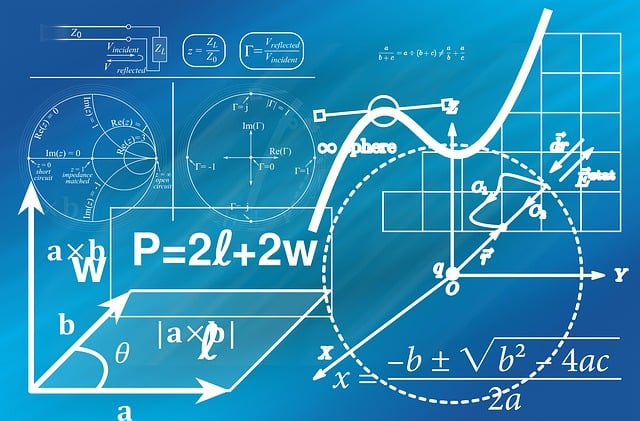
Life is sort of like math class.

How so?

Let’s assume I’m in school and have to take a math test.

There’s an equation at the top of the page I’m handed, and blank space underneath for me to write out my solution to the equation.

But I don’t solve the equation.

Instead, in the first third of the blank space I write a funny, rhyming poem about math class. Next, I draw a bunch of smiling numerals with little arms and legs and depict them as dancing together. In the last third of the page I write a short essay about the benefits of studying math.

I hand in my test to the teacher, and await the results.

The next day, the teacher tells me, “Lori, the poem you wrote had me in stitches. Your drawing of the dancing numbers was delightful, too. And I’d love to incorporate some of the insights in your essay into one of my lessons.”

“That’s great!” I’d say. “So what mark did I get?”

“Zero,” the teacher would respond.

“But why?” I’d ask. “I thought you loved what I wrote.”

“I did: the things you filled the page with were all good and creative and helpful. But they don’t count towards your mark. You failed to do the one thing required of you, which was to solve the equation.”

Is the teacher being fair? Yes.

Is there one thing that God requires of us?

Read more

The Cleanest Place in the World

What is the cleanest place on Earth?

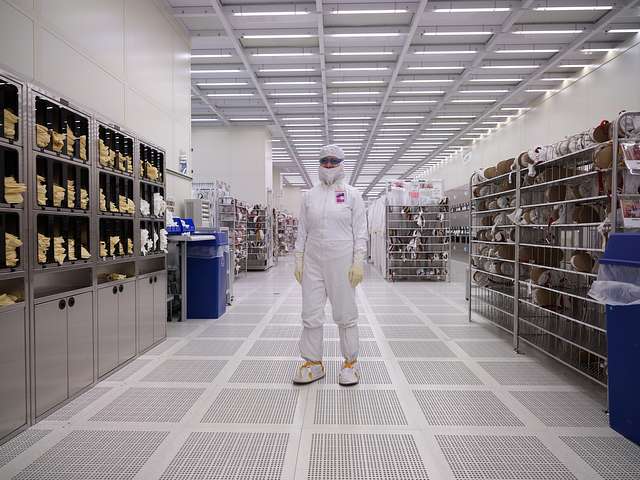
If you guessed a room where semiconductors are made, you’d probably be right.

A microchip factory has to be exceptionally clean to avoid introducing contamination into the chip-making process. In fact, the air in their “cleanrooms” is filtered to be vastly cleaner than that of a sterile hospital operating room.

Anything that sheds particles must be avoided in a microchip cleanroom. Contaminants include human hair, dead skin cells, makeup, bacteria, and even micro-dust from pencils or paper.

So semiconductor workers must wear head-to-toe “bunny suits,” protective glasses, booties, hoods, face masks, and two pairs of gloves. These suits may include self-contained HEPA filter packs, because even human breath contains contaminants.

Let’s assume that I arrived one morning at a microchip factory as a new employee.

Let’s say I told the supervisor that I’d cleaned myself diligently in the shower that morning, washed my hair twice, gargled with Listerine, scrubbed my hands with bleach, and put on brand-new clothes. I was certain that I was clean enough to enter the factory.

The supervisor would say, “Hold your horses, Lori. You still have to put on a protective covering before you can come into the cleanroom.”

I might argue, “But I’m already cleaner than 95% of other people. I don’t need a covering. Let me in!”

My boss would say, “I’m sorry, but you’re not as clean as you think you are. We have very high standards here. You have to suit up first.”

Isn’t that sort of what entering Heaven is like?

Read more

How to Pack for Eternity

Image by Irina L from Pixabay

The way you pack for a trip says something about you.

Some people are super-organized, and that’s reflected in their packing behaviour.

They create lists of things to be done before the trip. Colour-coding of priority tasks is often involved. Any item they could possibly need while abroad is obtained, efficiently packed, and checked off the list.

Some nations have gone to war with less preparation than this.

Other people are more random. Sure, they’ll throw some clothes in a suitcase, but there’s no grand plan they’re following. Often, the things they pack for a trip will be a bit puzzling.

A survey of British travellers revealed the odd things that some people bring along with them wherever they go. The top 10 strangest items that people simply couldn’t do without when on a trip included:

  • Framed pictures of dead cats;
  • A loved one’s ashes;
  • A stuffed pet hamster;
  • An emotional support boa constrictor. (Really?)

But seriously, what’s the most important thing to bring with us on a trip?

People!

The ones we love most: our best buddies or our dearest family members.

Movies like “Home Alone” have taught us the perils of leaving behind someone important when we travel.

But what about life’s most important journey?

The one to our eternal home?

The same holds true. The most important thing to bring with us is people.

Read more

Eternity In Our Hearts

Image by Szabolcs Molnar from Pixabay

They say elephants never forget; I think the same may be true of cats.

A friend of mine recently downsized by moving into the lower level of her own home and renting out the upstairs.

She’s perfectly happy with the arrangement. One of her cats, however, is not.

This cat remembers that he once had the run of the entire house. He still recalls that there was a wonderful place called Upstairs.

Despite having lots of room to roam downstairs, including access to a big backyard, this cat keeps trying to break into the upper level of the house. I’m told he meows plaintively at the connecting door between the two units, and tries to pry it open with his paw.

This cat knows that there’s something missing in his life. Even though Downstairs is perfectly nice, he still feels the ache to be Upstairs once again.

I think many of us know the feeling.

We have an innate sense that this world is not as it should be.

It’s broken in some way: there’s something missing.

Humans seem to have a mysterious longing for a world set right. We ache for it, even though we haven’t experienced it.

Read more

Have You Found The Way?

Image by claumoho on Flickr CC BY-2.0

Have you ever tried navigating through a maze?

Perhaps as a kid you tried to find your way in and out of a hedge maze in a park. Or maybe you visited a maze made of corn or sunflower stalks in a farmer’s field. They’re fun, aren’t they?

Mazes can vary dramatically in size. Some are so large that visitors are given an emergency cell phone number to call if they get lost in the maze and can’t find their way out!

You might wonder, is a maze the same as a labyrinth?

The terms are often used interchangeably, but there’s actually a difference between them.

A maze is known as “multicursal.”

It branches off into many confusing paths and surprising dead ends. A maze may have several entrances and exits. The surrounding hedges or walls are so high and dense that you can’t see the whole pattern unless you get up high in a viewing tower or balloon ride. A maze is for entertainment, a fun puzzle to try to solve.

A labyrinth, on the other hand, is “unicursal.”

A labyrinth has only one track or walkway, and it doesn’t branch off into dead ends. There’s only one way in or out. You enter, follow the path to the centre, and continue on the same path until you reach the exit. Sometimes the barriers on either side are very low, allowing you to see the entire pattern. Walking a labyrinth can be a calming, spiritual practice.

Which does Christianity most resemble, a maze or a labyrinth?

Jesus implies that it’s more like a labyrinth:

There’s only one way in, and one path to follow.

Read more

Sticker Shock

Image by Merio from Pixabay

Have you been taken aback recently by rising prices?

I think a lot of us have been suffering from sticker shock lately.

Whether it’s an item at the grocery store, gas at the pumps, or a house to live in, prices have been going up.

We look at something that we’re accustomed to buying at a certain amount and do a double-take at the suddenly inflated cost.

We think, “Are you kidding me? I’m not paying that much! They’ve got to be crazy charging that price.”

And off we stomp in a huff.

But aren’t you glad Jesus didn’t do the same?

He could easily have suffered from “sticker shock” when faced with the incalculable price He’d have to pay to save us from our sins.

Read more

There’s No Place Like Home

Image by burtamus from Pixabay

There’s no place like home, is there?

A lot of animals would agree with that statement, if they could speak.

Many birds and animals have an uncanny “homing instinct” that allows them to travel thousands of miles to return to the very same location each year.

Monarch butterflies from eastern North America return to the same wintering grounds in central Mexico each year, even to the very same forest.

Sea-dwelling Pacific salmon return to the same river they were born in to spawn.

Pregnant sea turtles migrate thousands of miles across the ocean to lay their eggs on the same beach on which they were born decades earlier.

And then there are homing pigeons, the champions of long-distance way-finding. Their homing instincts are so reliable that they’ve been used in wartime to deliver crucial messages over enemy lines.

But how do they do it?

One theory suggests that homing pigeons may have a mineral called magnetite in their beaks, which acts as a tiny GPS unit. This would allow them to sense the earth’s magnetic fields and their own position in relation to it. If true, it would mean that these birds are essentially flying compasses, with their beaks pointing them in the direction they should go.

It makes me wonder: do humans have a “homing instinct”?

Read more