The Most Astounding Thing About Christmas

What’s the most astounding thing about Christmas to you?

The amount of electricity used in powering all the Christmas lights on people’s homes?

The credit card bill you’re racking up to buy gifts for family, friends, and coworkers?

The way your Uncle Louie consistently manages to buy you the most inappropriate gift imaginable, every single year?

The ugly Christmas sweater said uncle wears to every holiday event, even formal ones?

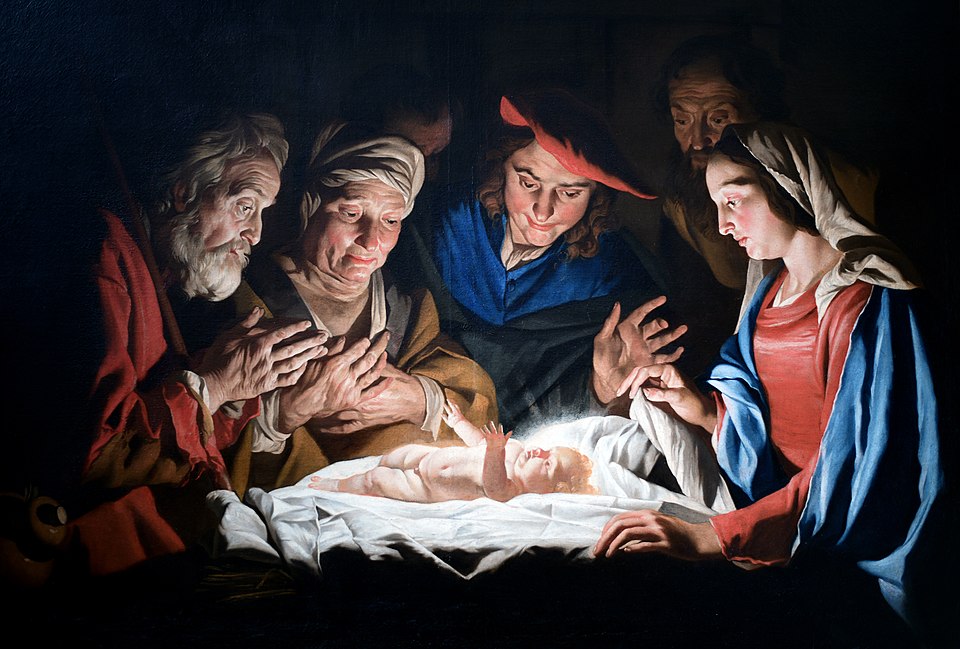
No, the most astounding thing about Christmas is that the Creator of the Universe, Almighty God, came down to earth and was born as a baby.

God Himself, the perfect and holy One, entered our messy, sinful world in the form of Jesus and dwelt with us for 33 years. Then He died on a Cross for our sins. All this was done out of immense love for us.

The theological term for God coming to us in this fashion is the Incarnation, which literally means “God made flesh.”

The Incarnation features heavily in my favourite Christmas carol, “Hark the Herald Angels Sing.”

Its writer, Charles Wesley, seems to have been so astounded by the fact of the Incarnation that he sprinkled this hymn with at least 10 references to it. See if you can spot them:

Read more

Are You on Santa’s Naughty or Nice List?

Are you on Santa’s “Naughty” list or his “Nice” list?

Sometimes it’s hard to know, isn’t it?

You shovelled the snow off your elderly neighbour’s walkway, so that counts as nice.

But on the other hand, you greedily ate half a pan of freshly baked brownies before sharing them with your family. Not so nice.

You made up for that by running errands for a sick friend, and volunteering to work late at the office to help finish a project. Definitely heading well into “nice” territory!

But then you lost your temper at your spouse, fibbed to get out of visiting your mother-in-law, and illegally parked your car in a disabled space while you dashed into the store to buy milk. Uh-oh! Looks like you’re squarely back on the naughty list.

With Santa, it’s hard to know where you stand on the naughty/nice spectrum.

That’s why it’s good to know that, if you’re a believer in Jesus, there’s only one list:

Forgiven.

If you’re trusting in Jesus’ atoning work on the Cross, your name is added to the “Forgiven” list.

Read more

God Will Go Ahead of You

Do you ever get a bit anxious when faced with something completely new?

Like how to find a new job in an economy that’s unlike anything you’ve seen before? Or how to navigate a world that’s turned upside-down?

Many of us shrink from the prospect of entering uncharted territory.

And we’re not the only ones: even some animals balk when confronted with something unfamiliar.

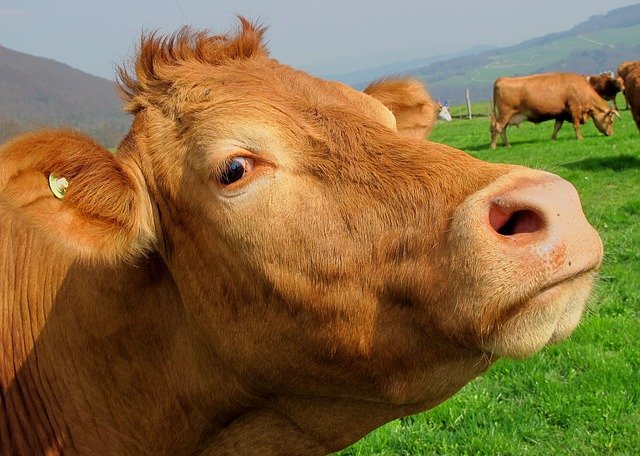
Cows are notorious for disliking disruptions to their routines and environments. They’re particularly averse to new gates. Cows are made so nervous by new entrances and openings that they’ll stubbornly resist going through them.

This trait is so well known that it’s given rise to a phrase: “Like a cow looking at a new gate.” It means to view something with bewilderment and confusion, as though to say, “Are you serious? I’m not going through that.”

Do you feel this way when faced with the uncertainties that a new situation may bring? Is fear of the unknown keeping you from stepping forward in faith to realize your dreams?

Fear has a way of paralyzing us, so that we stay stuck where we are instead of trying something new.

But we needn’t be afraid.

God will go through the gate ahead of us.

Read more

Don’t Spoil Your Spiritual Appetite!

When you were young, did your parents ever admonish you not to eat sweets too close to dinner time because it would “spoil your appetite”?

Mine certainly did. However, delaying dessert until after dinner is difficult to do.

The look of a beautifully frosted cake or the smell of freshly baked cookies can be notoriously tempting. And of course, one cookie or piece of cake invariably leads to another…

Before you know it, you’ve stuffed yourself with sugary foods and are too full to eat dinner. You miss out on all the good protein and vegetables in the main meal.

I guess Mom and Dad knew best: we should fill ourselves with more nourishing things first, and leave the dessert until afterward as a treat, not the main course.

The same lesson holds for us spiritually, doesn’t it?

We should concentrate on things of substance in our lives first.

So often we fill our lives with things we think will make us happy: entertainment, money, accomplishments, or possessions. But these things are temporary, and will eventually disappoint us. They’re not really satisfying in a lasting way.

Read more

This Is Who We Are

Today, Canada celebrates its birthday! July 1st is Canada Day, a holiday on which we have parties, set off fireworks, and wave the flag.

We’re all attached to our national flags, aren’t we? Each is beautiful in its own way. Some flags have blocks of colour; some feature significant symbols; others have patterns of stars and stripes. A handful of countries depict plants or trees on their flags, mine among them.

Canada’s flag has a maple leaf at its centre. In fact, the nickname for our flag is the Maple Leaf. As a nature lover, I’m proud to have a symbol of a plant on my national flag, and especially pleased that it’s a leaf from one of my favourite trees.

Growing up, I loved maple trees: I climbed them, enjoyed the sugar and fudge made from their sap, collected their red and orange leaves in autumn to press and even jumped into raked-up piles of them.

I’d venture to say that all Canadians love maple trees. The trees themselves are beautiful and stately; the wood harvested from them is so strong it can be used as the flooring for bowling alleys; we harvest precious sap from them to make sought-after products like maple syrup; and the leaves turn gorgeous colours in the autumn.

The maple leaf is the emblem of Canada. It symbolizes who we are as a people: hardy, strong, nature-loving northerners.

Just as the maple tree is important to Canadians, there’s another tree which is very important to a certain group of people:

It’s the tree Christ was crucified on.

Read more

Smoothing Out the Rough Spots

All of us have a few rough edges, don’t we?

We may be a bit bristly with people; we may have a short fuse; or we may have a puffed-up ego.

The problem is that no one likes having their rough edges smoothed out.

In the Bible, this process is called sanctification. It’s the way by which God makes a believer more like Jesus. It involves progressive spiritual growth and holiness.

And it’s not always easy or comfortable.

Sanctification to me is rather like sanding down a beat-up antique before refinishing it.

Read more

You Need a North Star

Polaris star trail

Many of us have GPS systems in our cars or on our phones. They allow us to pinpoint our locations on a map, letting us know exactly where we are.

But in the days before modern technology, how did people navigate? If they needed to cross an ocean, what told them where they were?

The North Star did.

More formally known as Polaris, the North Star is the brightest star in the Ursa Minor constellation. Because it’s almost in a direct line above the north celestial pole, the North Star appears to stand motionless in the sky, with the other stars seeming to rotate around it.

This made it a perfect fixed point by which to draw measurements for celestial navigation. In fact, the Old English word for the North Star meant “ship-star,” reflecting its use in helping to chart a course when sailing.

We still need a north star today.

Not to get from point A to point B in our vehicles, but to navigate the seas of our lives. When our whole world has turned topsy-turvy, we need a fixed point to focus on to keep us on a stable course.

Read more

Who Loves You?

Photo from Pxhere

How many times today has someone told you that they love you?

If you have a loving family, you’ll probably hear them express their love for you frequently.

But what if your family ties are a bit strained? What if you don’t have many close relationships at all, and consider yourself to be fairly alone in the world?

Then you probably don’t hear the words “I love you” nearly enough.

There’s a remedy for that:

Open a Bible.

The unfailing love of God is a soundtrack that reverberates through the Scriptures.

It’s easy to find verses in the New Testament that exemplify God’s love:

“But God demonstrates his own love for us in this: While we were still sinners, Christ died for us.” (Romans 5:8)
“This is real love—not that we loved God, but that he loved us and sent his Son as a sacrifice to take away our sins.” (1 John 4:10)
And of course: “For God so loved the world that he gave his one and only Son, that whoever believes in him shall not perish but have eternal life.” (John 3:16)

But what about the Old Testament?

Read more

If This Isn’t Love…

The love of God for us is one of those topics that you could spend a lifetime exploring.

As believers, we often focus on the Crucifixion of Jesus to demonstrate God’s love.

And rightly so: Jesus’ sacrifice on the Cross to redeem us from our sins was the epitome of extravagant love.

“God showed his great love for us by sending Christ to die for us while we were still sinners.” (Romans 5:8)

But I wonder if we give short shrift to the Incarnation.

The fact that God took on human form and walked among us for 33 years shows an astonishing level of love.

When Jesus came to earth, our story became His story. He chose to go through the same pain we do, and carry the same burdens we do.

Read more

With God, You Get the Flower First!

Eastern Redbud Tree

Sometimes nature can be a bit unpredictable—things happen in an order we wouldn’t expect.

Normally, plants put forth leaves long before they produce flowers.

But some trees and shrubs flip the script, so to speak.

With certain plants, the normal sequence is reversed: the flowers come first, before the leaves have developed.

A good example is the beautiful redbud tree. It puts forth gorgeous pink flowers on its bare branches in early spring, when none of its leaves are yet in sight.

The forsythia shrub bears its bright yellow flowers in advance of its leaves, and the lovely magnolia presents its pink or white blooms before the green foliage appears. Some maples and oaks also exhibit this flower-first behaviour, although with less showy blossoms.

All of these plants give us a treat in springtime when we’re starved for colour. We get the flower first without having to wait for the leaves.

Why do some plants reverse the normal order of things?

Some trees are wind-pollinated, so put forth flowers before their bulky leaves get in the way. The same goes for flowers that need extra sunlight. Other plants produce a mass of conspicuous flowers first, unobscured by leaves, to better attract the attention of pollinating insects.

Did you know that God also flipped the script and gave us the flower first, so to speak?

Read more