The Essential Ingredient

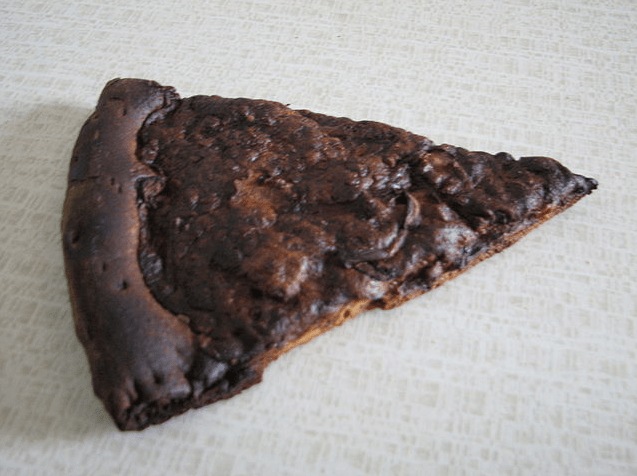
Perhaps this pizza slice is slightly overcooked?
Photo by Kevin Payravi, Wikimedia Commons, CC BY SA-3.0

Have you ever cooked a dish which turned out to be plainly inedible, or even downright dangerous to consume?

It can happen to the best of us, as these examples prove:

A grandmother with failing eyesight accidentally grabbed a bottle of ammonia instead of vinegar when making potato salad for her family. They started gagging at the mere smell of it, which fortunately prevented anyone from eating it!

An 18-year-old living on his own for the first time wanted to make fried rice. He poured some oil into a very hot pan, then dumped in a bunch of uncooked rice. Needless to say, the burned mess had to be thrown out.

Another young person forgot to add water when cooking packaged ramen noodles. I guess cooking isn’t for everyone!

Did you know that a cooking fail even happened in the Bible?

Read more

The Language of Flowers and the Language of God

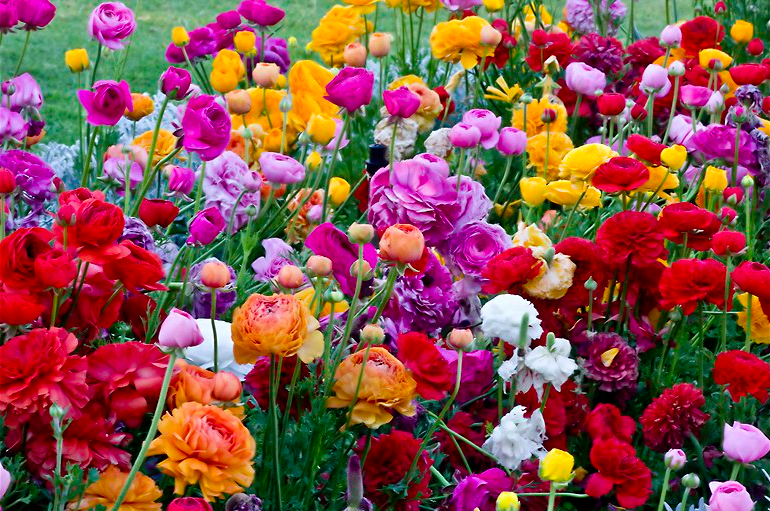
Say it with flowers!
Wikimedia Commons, CC BY-SA-2.0

Flowers speak. Not just through their fragrance or their beauty, but with secret codes, too.

Perhaps you’ve heard of the “language of flowers” popular during Victorian times? This enchanting symbolic language enabled suitors to send coded messages to their paramours, ones that couldn’t be spoken aloud. The message depended on the particular flowers and colours chosen for the bouquet. An entire conversation could be carried out solely through flowers, with no words employed at all.

We all know that red roses symbolize true love, and we’d rightly guess that the forget-me-not begs that the giver be remembered. But did you know the following flower meanings?

Red carnation: My heart aches for you
Hyacinth: Your loveliness charms me
Canterbury bell: Your letter received
Yellow rose: Jealousy
Butterfly weed: Let me go
Weeping willow: Sadness

The Victorian language of flowers is a cryptic tongue. Most people only see the surface of the flower and not the symbolic meaning hidden within it.

God has His own “language of flowers,” but it actually encompasses all of creation. God is continually speaking to us through nature:

“For ever since the world was created, people have seen the earth and sky. Through everything God made, they can clearly see his invisible qualities—his eternal power and divine nature. So they have no excuse for not knowing God.” (Romans 1:20 NLT)

“The heavens proclaim the glory of God. The skies display his craftsmanship.” (Psalm 19:1 NLT)

If we listened in to what nature was saying about its Creator, what messages would be revealed?

Read more

Lost In Translation

Sign on toilet door in Chengdu airport, China
Photo by Anne Roberts on Flickr, CC BY-NC-SA-2.0

There’s a real art to translation: zeroing in on just the right words to convey the nuance of what the original author intended.

Done well, a translated work can be a masterpiece in its own right.

Oftentimes, though, a translation can turn out to be a farce, as in the following examples:

A menu item in Chinese for a roasted gluten dish was translated into English as “Sixi Roasted Husband.” (The perfect dish for wives who’ve finally had enough of their mates?)

A hot and spicy chicken dish on another Chinese menu became “Chicken Rude and Unreasonable” in English. (No wonder the chicken met his end—he had it coming!)

Or this Google Translate zinger: “It’s been the goat in the budget, because His raining badly, so quite short, he is on the bucket month out.” (Not sure what this meant in the original Danish, but I hope the goat was able to figure it out.)

Then there’s the sign for a hair salon in China whose English name is “Could Not Connect To Translator Service.” (A bit of a give-away that they didn’t bother hiring a real live translator?)

Sometimes, we have a different understanding or “translation” of what God actually meant in certain Bible verses.

Read more

Chocolate: Everybody’s Friend

Photo by Jean Beaufort, PublicDomainPictures.net

One of the wonderful things about chocolate (and there are many), is how well it pairs with other foods.

Chocolate seems to go well with just about everything. It marries happily with fruits like strawberries, raspberries, pears, cherries and bananas. It perfectly complements the flavours of nuts, such as peanuts, cashews, hazelnuts, almonds and macadamia nuts.

Chocolate cheerfully coexists with citrus, coconut, ginger, caramel, coffee, dairy or mint. It has even been known to blend with the flavours of chili and meat in some Mexican dishes.

Some adventurous people claim that chocolate goes well with broccoli (well, perhaps…if you held the broccoli).

You’ve got to hand it to a food that is uncompromising about its own flavour yet harmonizes with such a wide variety of other substances.

Did you know that the Bible implies that we should be a bit like chocolate? Not in so many words, of course, but the concept is still there.

Read more

Focus on the Best, Pluck Out the Rest

Photo by Joffi on Pixabay

If you have a vegetable garden, what you’re probably doing about this time of the summer is pinching suckers off your tomato plants.

“Suckers” are the little growths between the main stem of your tomato plant and the lateral branches. These side shoots may be healthy and vigorous, but letting them grow would only rob the tomatoes themselves of growth potential. Better to pluck off the suckers in order to direct all the plant’s energy into ripening the tomatoes.

An extreme example of this practice can be seen in the growing of prize-winning pumpkins. The farmer or gardener will pluck off all but the most promising nascent pumpkins, sometimes leaving only one growing on each vine. The plant is forced to pour all its photosynthesis power into producing one massive pumpkin. World-record-setting pumpkins have weighed over 2,000 pounds!

There’s something to be said for focussing on the important things, isn’t there? It can produce astounding results.

Maybe there’s a lesson here we can apply to our own lives.

Read more

Buy and Hold the Best Investment

Image by Gerd Altmann on Pixabay

Do you play the stock market?

What kind of an investor are you? Do you engage in active trading, or do you prefer to buy and hold investments?

Active or “day” traders believe that through rapid, speculative trading they can gain a larger profit more quickly than through passive investing.

The “buy and hold” strategy, on the other hand, is based on holding stocks for a long period of time with the idea that their value will gradually increase over the years.

It’s beyond my pay grade to tell you which form of investing is better: after all, The Faith Cafe isn’t a financial blog.

But I do have a hot investing tip for you.

This tip comes from an unlikely source, but don’t worry, I’m not engaging in insider trading or passing on confidential information.

This sure-fire investment advice comes from the Book of Proverbs in the Bible.

Would you like to hear it?

Read more

Golden at the Broken Places

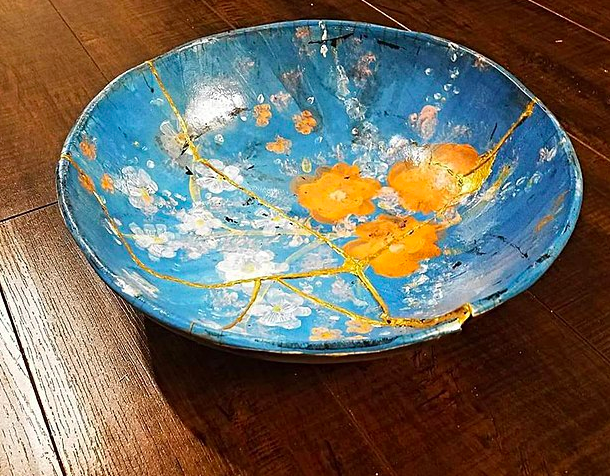
Bowl repaired by Kintsugi method by artist Ruthann Hurwitz
Wikimedia Commons CC BY-SA-4.0

We all shudder at the sound of something breaking, don’t we? We can’t help but wince when we hear glass or crockery shattering into pieces on the floor.

Why do we have that involuntary reaction? Because we know that the object probably can’t be repaired: it’s likely to be damaged irreparably, and must be thrown away.

We’re wincing at the sound of loss.

But what if there were a way to not only put the pieces back together, but to make the object more beautiful than it was before, despite the breaks?

The Japanese long ago invented a way of doing just that, and have even made an art form of it. It’s called “Kintsugi,” which means “golden joinery.” The process involves mending the cracks in pottery with gold lacquer. Instead of trying to hide the damaged areas, they are instead highlighted with something precious. The end result is a restored piece of pottery that is beautiful at the broken places.

But what happens if it’s not a piece of pottery that is broken, but a life? How can a shattered heart be put back together?

Read more

Let’s Get With The Program

Photo by Jill Wellington on Pixabay

I don’t seem to have much luck getting birds to cooperate with me.

Years ago, I bought a Victorian-style birdhouse, and painted it light blue with white trim. I nailed it to a tree where I could see it when sitting at my kitchen table. I imagined the delight I’d have watching birds move in and raise their young there. I couldn’t wait for my new feathered neighbours!

But the birds refused to move in.

Year after year, the pretty birdhouse sat empty. I was so disappointed. What ingrates those birds were! And after all the trouble I’d gone to for them!

The problem was, I’d put the birdhouse where I wanted it, with no thought to their needs.

The birdhouse was pretty, certainly, but its placement didn’t suit the birds one bit. Being nailed to a tree made it too accessible to predators like squirrels or raccoons. The birds didn’t feel safe nesting there.

I thought the problem was with the birds, but it was with me. I’d done it all on my terms and expected them to get with the program.

Don’t we sometimes do the same with God?

We want to do things on our terms, in our own way, and expect God to get with our program. I’m afraid it doesn’t work that way.

Read more

Got Baggage? Jesus Understands

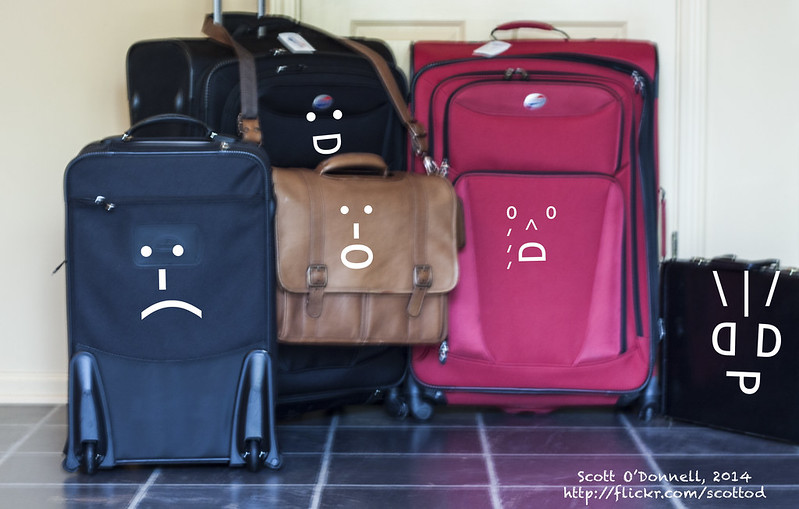
Image by Scott O’Donnell on Flickr CC BY-2.0

Do you ever feel like you have too much “baggage” to ever be accepted by people, let alone by God?

Do you need a sense of hope that you could be loved despite the burdens you’re carrying from your background? Then read on…

A few weeks ago, we explored the moving account of Ruth and Boaz in the Old Testament. It’s a favourite of many people, because it’s one of the few outright love stories in the Bible. But we sometimes get so caught up in the romance of the story that we miss how startling their pairing actually was.

Boaz was a wealthy landowner living in ancient Israel. He was successful and respected, a descendent of Abraham himself. One would have expected him to marry a woman of his own people, someone from an equally illustrious family.

But Boaz ended up marrying Ruth, a woman with three strikes against her: she was poor, a widow and a foreigner. She had nothing and was a nobody in the eyes of the Israelites. In fact, she was worse than that: she was a Moabite, a group hated by the Israelites. No doubt Ruth was looked down on by many in the community.

So why would Boaz agree to marry her? We know that Boaz respected Ruth for how she’d cared for her mother-in-law. And certainly, God’s hand was on their meeting and their union. But why was Boaz so accepting of the idea of marrying someone like Ruth? Why was he not put off by her “baggage”?

I believe an answer lies in Boaz’ background. Turns out he had some baggage of his own.

Read more

In Dependence Day

Image by Linnaea Mallette, Publicdomainpictures.net

This weekend, my neighbours south of the border celebrate their nation’s birthday.

July 4th is known as Independence Day for our American friends. There is much to admire about their yearning for freedom and their hard-won independence.

On the whole, independence is a good thing. We try to foster independence in our children, and rejoice when they’re finally able to do tasks for themselves, such as tying their own shoelaces or making their own beds (although some teenagers never seem to master this one).

But as Christians, we have a slightly different take on independence. We’re called to live “in dependence” on God, not independent of Him.

Read more