An Invisible Crisis

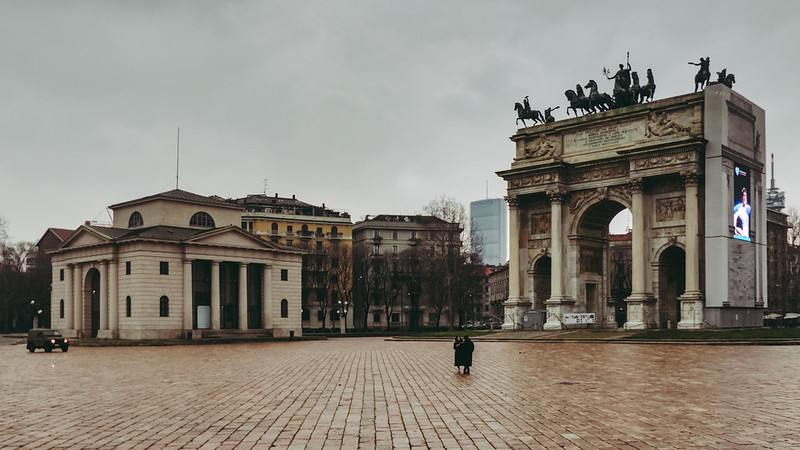
Empty streets of Milan, Italy during the pandemic
Photo by Alberto Trentanni on Flickr CC BY-NC-ND 2.0

There’s something strange about the crisis the world is undergoing right now: from the outside, things look surprisingly normal.

If you view the streets of your town during this pandemic, most things look the same as they did before. The buildings are intact, the streetlights come on at night like clockwork, and the spring flowers are blooming. This isn’t a crisis like a flood or earthquake, where the devastation is plain to see.

The COVID-19 crisis seems almost invisible, until you realize that something isn’t quite right when you look around: missing from the scene is the normal hum of human activity. The workplaces are shut, people aren’t in restaurants, and children aren’t in playgrounds. An eerie quiet pervades most areas.

It’s only when you look behind closed doors that you see the devastating impact of the pandemic. The high death toll in some nursing homes, the stressed out health care workers, and the loneliness of self-isolation.

When we have a crisis of our own, like depression or despair, we can look a bit like those intact buildings. Things look normal from the outside. When people look at us, there’s no evidence of the turmoil raging within.

Read more

Season of Stillness

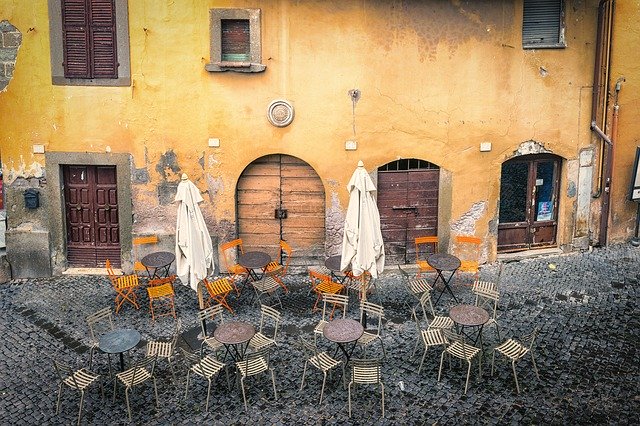
Empty cafe in Italy
Photo by Peter H. on Pixabay

The lockdowns associated with the coronavirus pandemic have produced some unexpected results in the natural world.

With fewer vehicles and industrial machines operating, noise pollution has been reduced so dramatically that seismologists can hear sounds from inside the planet that they couldn’t detect previously.

In cities, reduced traffic noise is allowing people to hear birdsong, the chatter of squirrels, and the chirping of crickets like never before. People have been surprised to discover that they can now hear the flapping of birds’ wings as they pass overhead.

A quieter environment is probably also allowing animals to hear each other better. City birds usually have to sing more loudly than their country cousins to make themselves heard above the urban cacophony: perhaps their mates and rivals can hear them more easily now. With a reduction in ship traffic, marine mammals might also be finding that they can contact each other with greater ease now that there is less “acoustic smog” in the oceans.

If we can hear the creation better during the lockdowns, and creation can hear itself better, can we hear our Creator better?

Read more

What Lions Guard Your Door?

New York City’s library lions, “Patience” and “Fortitude”
Photo by Dave and Margie Hill on flickr cc by-sa 2.0

For over a century, two marble lions have guarded the main branch of the New York Public Library at Fifth Avenue and 42nd Street in Manhattan. These majestic stone creatures flank the entrance to the building, keeping careful watch over all who enter.

During the 1930s the library lions were officially named “Patience” and “Fortitude” by then-mayor Fiorello LaGuardia. He felt that those names embodied the qualities that New Yorkers would need to survive the Great Depression of that era.

If ever there was a time when New Yorkers (and indeed all of us) again need patience and fortitude, it’s during the COVID-19 crisis. New York has been struck particularly hard by this pandemic, but they are pulling through in large part thanks to the selfless health care workers who have done their utmost to guard the health and welfare of those under their care.

We still need guardians, don’t we? Particularly during times like these.

What “lions” guard your door?

Read more

The Best Worst Day

1895 lithograph of Edvard Munch’s “The Scream”
Photo by Steven Zucker on Flickr CC BY-NC-SA-2.0

There are some dates in history which stand out for being associated with awful events. Each year, when the calendar rolls around to these dates, we shudder in horror when we recall what happened.

Here are a few “worst days in history” that come to mind:

September 11th, 2001: the deadly World Trade Centre terrorist attacks in New York.

August 6, 1945: the dropping of a nuclear bomb on Hiroshima, Japan.

June 28, 1914: the day Archduke Ferdinand was assassinated, igniting the horrific First World War which killed tens of millions.

December 26, 2004: the Boxing Day tsunami which killed hundreds of thousands.

Some horrible dates in history have specific terms associated with them, such as:

December 7, 1941: the Japanese attack on Pearl Harbor, a date which President Roosevelt said would “live in infamy.”

October 29, 1929: called “Black Tuesday,” the worst day of a stock market crash which would send the world spiralling into the Great Depression.

What term is associated with the horrible day Jesus Christ was crucified?

Good. It’s called Good Friday.

But why?

Read more

Your Finest Hour

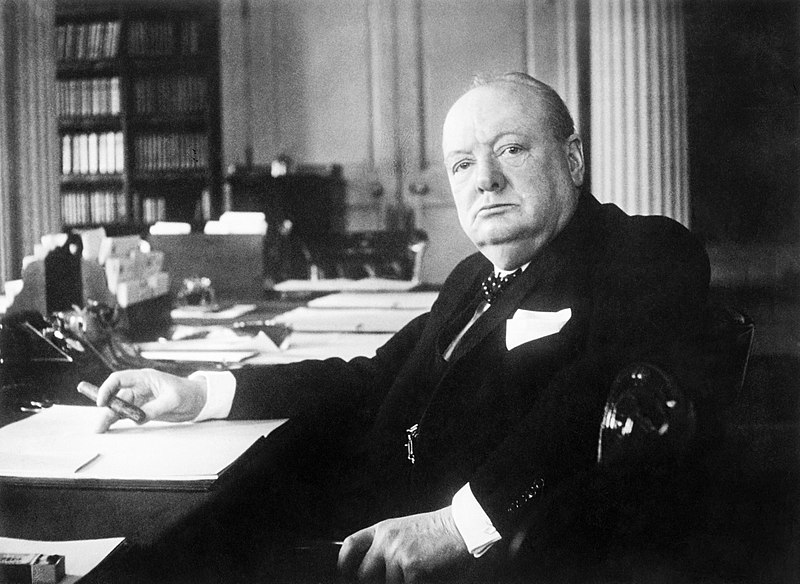
Winston Churchill, British Prime Minister during World War II
Wikimedia Commons, Public Domain

Thanks to COVID-19, we’re living in conditions that are almost unprecedented for many of us. Large swathes of the globe are living under the types of restrictions that many countries haven’t seen since the Second World War.

Students of history might be seeing additional parallels between the current pandemic and conditions during World War II. They might be calling to mind right now Winston Churchill’s famous line from a speech he delivered to the UK House of Commons in June of 1940, shortly after he became Prime Minister:

“Let us therefore brace ourselves to our duties, and so bear ourselves that, if the British Empire and its Commonwealth last for a thousand years, men will still say: ‘This was their finest hour.’ ”

Amid the news reports of hoarding and panic-buying, there are also some uplifting examples of people rising to the occasion and showing care and kindness to others.

Allow me to share with you some accounts of what may be some people’s “finest hour”:

Read more

No Social Distancing With God

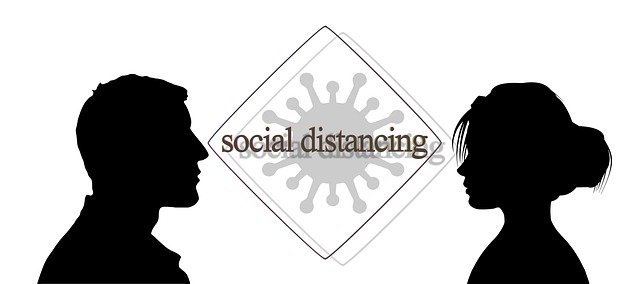
Social Distancing Due to COVID-19 Virus
Photo by Gerd Altmann on Pixabay

Thanks to the coronavirus, we’ve all had to learn some new phrases recently. We’re now painfully familiar with terms like COVID-19, “social distancing,” “self-isolation,” and “flatten the curve.”

Social distancing is perhaps the most wrenching new practice many of us have had to adopt. After all, humans are a social species. It’s unnatural for us to avoid contact with other people, and to keep 2 meters away from those we do encounter.

It’s extremely important that we do so right now, but still….it sort of hurts, doesn’t it?

But there is some good news in all of this:

There’s no social distancing with God.

Read more

Volatility Index of Your Heart

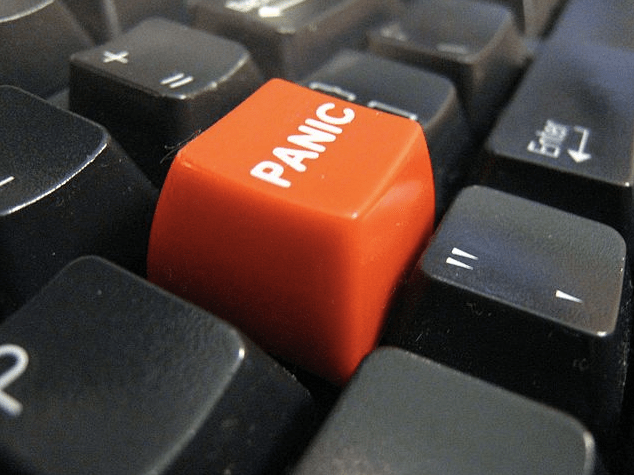
Feel like pressing the panic button?
Photo from Wikimedia Commons CC BY-SA-2.0

If you follow the stock market, you might be familiar with something called the Volatility Index. Sometimes called the “fear index,” it gauges the market’s anxiety level.

When investors are fearful and markets are in turmoil, the volatility index spikes higher. Now happens to be one of those times, thanks to fears over the impact of the coronavirus.

It made me wonder, do our hearts have a “volatility index” of their own?

And if they do, what can we do to keep our emotions on an even keel, when our circumstances might give us every reason to panic? How can we find peace even in the midst of turmoil?

Read more

The Best Driving Tip of All

How NOT to park
Photo by Todd Dwyer on Flickr CC BY-SA 2.0

As a follow-up to last week’s post, “Life Lessons from Driving in Snow,” I thought I’d continue on the topic of driving and give you the best driving tip I’ve ever heard.

I learned this valuable piece of advice from watching the TV programme, “Canada’s Worst Driver.” There are various iterations of this show around the globe: perhaps your country has something similar. These “worst driver” shows are often hilarious but are also educational. You can learn a lot about how not to drive from atrocious drivers.

Before I present the best driving tip of all, here are some memorable examples of appalling driving as reported by driving instructors:

Read more

What Does Love Look Like To You?

The Taj Mahal at sunset.

The Taj Mahal, in Agra, India, is considered to be one of the world’s most beautiful buildings, and rightly so. Built from white marble, it was commissioned in 1631 by Shah Jahan as a memorial to his favourite wife, Mumtaz Mahal, who died that year giving birth to their fourteenth child.

For many in India and around the world, the Taj Mahal is an iconic symbol of love. Every stone and jewel used in its construction speaks of the tremendous affection the Shah had for his wife, and his grief at her passing. To many people, the Taj Mahal is the embodiment of love.

What does love look like to you?

Read more

The Only Horoscope You Need

Signs of the Zodiac on an Astronomical Clock

What’s your astrological sign? Are you a Libra or a Leo? Do you read your horoscope daily and make life decisions based on that advice?

Or maybe you follow Chinese astrology, which is based on the year in which you were born rather than the month. The Chinese are about to celebrate the Lunar New Year, heralding the beginning of the Year of the Rat.

Both of these systems teach that the time cycle in which you were born determines your personality, and to some extent the course of your life. But this might leave you with a sense of being powerless, at the mercy of impersonal forces beyond your control.

Isn’t there something better to help you navigate your way through life?

Read more