Marinate in God’s Word

Image courtesy of Pixabay

Are you planning on firing up the grill to barbecue some meat this summer?

Many people believe the key to success is to marinate the meat beforehand.

When you marinate food before barbecuing it, more is going on than meets the eye (or the taste buds).

You’re doing more than simply soaking the food in a seasoned liquid to add extra flavour to it.

You’re actually changing its structure and making it yield.

Marinating tenderizes meat, breaking down tough connective tissues to make it more palatable. It also helps meat retain moisture, ensuring that the cooked meat will be juicy and not dry.

Marinades usually have a sharp, acidic ingredient, like wine, vinegar or lemon juice, or an enzymatic one, like yogurt of papaya. Herbs, spices and oils are added as well.

Whether you use a red-wine-based marinade for beef dishes, or a tangy yogurt-lemon one for chicken, your meat is guaranteed to turn out tender.

Likewise, when we meditate on God’s Word, or “marinate” in it, we’re doing more than simply adding Biblical quotations to our knowledge base.

As we absorb and internalize Scripture, it changes us and doesn’t leave us the same.

Read more

Amplify the Signal

Image from Pixabay.

Does your dog or cat come running when it hears the can opener?

Does your husband?

I guess we all tune in to sounds that are important to us, don’t we?

Parents are able to zero in on the specific cry of their child at a playground. They’re able to filter out the sounds of other children to focus on their own.

If you drop some coins on the floor, everyone’s head swivels toward the sound. Our ears strain out the other ambient noises in the environment and prick up at the sound of money tinkling.

Obviously, our family and money are things that are important to us.

But what about the messages that God is trying to send us?

Do we tune in to those with as much attention?

Or are there so many distractions in our lives that we’re unable to focus on the character of God and His love for us?

Maybe we need to adjust the signal-to-noise ratio in our lives.

Read more

The Burning Question

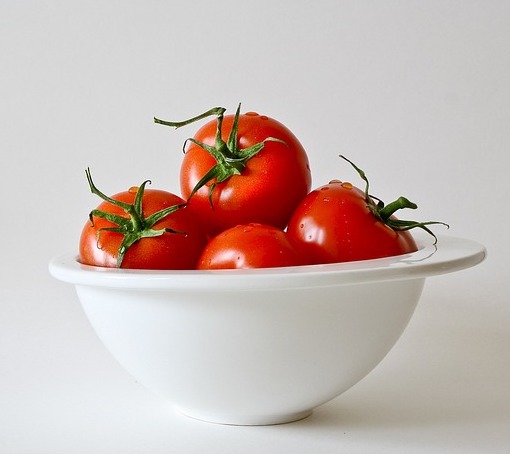
Image by Anelka from Pixabay

Are tomatoes fruits or vegetables?

I might have opened up a can of worms just by asking, because disagreement has surrounded this issue for generations.

In fact, the US Supreme Court has even weighed in on this burning question.

This issue was brought to a head in 1893 in Nix v. Hedden. The Court held that, even though tomatoes are fruits botanically, they would be classified as vegetables for the purposes of tariffs, imports and customs.

Did this settle the matter? Hardly.

Some US states have since named the tomato their state fruit; others call it their state vegetable.

It’s the sort of issue that produces arguments to this day.

Let me ask you another question:

Was Jesus simply a good man and teacher, or was He Lord?

The answer to this question has eternal consequences for each of us. It’s not simply a matter of “You say tomayto, I say tomahto.”

Read more

Conspicuous Camouflage

Image of blue tang fish by Tewy via Wikimedia Commons, CC BY-2.5

Whenever I did something wrong as a little girl, I thought I had a surefire way of escaping my parents.

I would hide behind a large potted plant we had and close my eyes.

Somehow, I thought that my parents wouldn’t be able to see me if I did this. Unfortunately for me, their eyesight was a bit better than I’d bargained on.

If you look at the natural world, you’ll find that I’m not the only one who often thinks they can’t be seen.

Take the blue tang fish, made famous by its cartoon equivalent in the Pixar movies “Finding Nemo” and “Finding Dory.”

Like a few other reef fish, this aquatic animal is blue and yellow. To other fish and to its predators, the blue tang is perfectly camouflaged. To them, its yellow markings seem to disappear against similarly coloured corals, and its blue body blends in with the shade of the water.

There’s only one problem:

To snorkelling humans, the blue tang sticks out like a sore thumb. Far from being camouflaged, this fish’s dramatic colours are incredibly conspicuous to our eyes. Why is that?

It’s because our eyesight is very different from that of undersea creatures. The particular trio of cones in human vision is especially good at discriminating blues and yellows.

So what is hidden to other fish is glaringly obvious to us.

I think God’s “eyesight” works in a similar fashion.

Read more

God Takes Us “As-Is”

Image by Paul Brennan from Pixabay

When choosing a new place to live, we like things to be move-in ready, don’t we?

We want a home where we don’t need to make any repairs. We don’t want to deal with wonky stairs, leaky faucets, frightful wallpaper, or dated fixtures.

We shy away from a house that requires a lot of work. We think: let someone else take on that mess. We want something in perfect condition.

We seem to have a built-in bias against any product that has a few “issues.” When we see something at a store that is discounted and marked “As-Is,” we don’t want it. We figure there’s something wrong with it.

Thankfully, God doesn’t see us that way.

He takes us as-is.

He doesn’t mind our messes, broken places, wonky personalities, quirks, or frightful attitudes.

God doesn’t shy away from our “issues.” He takes us as we are.

Read more

Check In To The Grace Hotel

Image by Andrea Piacquadio via Pexels.

As any traveller knows, hotel staff can make or break your stay.

Especially the staff at the front desk, because they set the tone immediately. Within minutes, you get the sense of whether your hotel stay will be a happy or problematic one.

Case in point: when I was very young, my family spent some time travelling in Europe.

We stayed in a beautiful country where the people happened to be sticklers for rules and regulations. While we enjoyed our time in this nation, dealing with officials who insisted on strict adherence to protocols and procedures, even for tourists, became a bit tiresome.

Then we landed up in the south of France.

We arrived at a hotel late at night, exhausted, and trudged up to the front desk. My father introduced himself and mentioned to the clerk what country we’d just arrived from. He then began fishing out the documentation he needed to register for our stay.

The desk clerk took one look at two weary travellers with a cranky toddler in tow (me!), and said,

“Relax. You’re not in that country anymore. Here’s your room key. Go get some sleep and we’ll deal with the paperwork in the morning.”

I think my Dad almost cried out of gratitude and relief.

Although we settled the bill with the hotel when we left, my Dad doesn’t remember us ever properly registering with them!

Isn’t that what God’s grace is like?

God accepts us before we’ve proven ourselves or filled out all the forms or ticked off all the boxes.

Read more

The Missing Epitaph

Image by Neil Chappell on Pixabay

What would you like written on your tombstone?

Maybe you’ve already given some thought as to what your epitaph should be. Perhaps you’d like a mention of your accomplishments or family ties.

You might even hope that something humorous be inscribed on your gravestone, as in the following examples:

“I told you I was sick.” (Written on the gravestone of William H. Hahn, Jr., of Princeton, New Jersey.)

“Here lies Lester Moore, Four slugs from a 44, No Les, No more.” (An actual epitaph in the Boothill Graveyard in Tombstone, Arizona.)

“There goes the neighborhood.” (Epitaph of self-deprecating comedian Rodney Dangerfield.)

“Here lies the body of Jonathan Blake. Stepped on the gas instead of the brake.” (On the tombstone of an accident victim in Unionville, Pennsylvania.)

“Here lies John Yeast. Pardon me for not rising.” (This cheeky epitaph is on a grave in Ruidoso, New Mexico.)

What was written on Christ’s tombstone? Any guesses?

Absolutely nothing.

Why?

Because He didn’t stay in the tomb for very long and isn’t there now.

Jesus was only a temporary resident in the dark chamber in which He lay.

Unlike John Yeast, Jesus did rise.

Read more

New Life From Broken Eggs

Image by Kornelia Thor on Pixabay

There is often great beauty in simple things. Take the egg, for instance.

Even a plain white egg is pleasingly shaped, adorably sized, and a perfect blend of form and function.

Add some decoration, and you’ve got a small masterpiece.

Countries such as Ukraine have made an art out of decorating eggs as an Easter tradition.

Eggs “decorated” by God have a beauty all their own. There’s a charm to naturally speckled bird eggs that is irresistible.

You’d like to keep them intact forever, enjoying their freckled surface and gentle colours for as long as possible.

But if the eggs perpetually remained in the same state and were never broken open, you’d miss out on an even greater joy: you’d never get to see the chick emerge.

Sometimes you have to let go of something you love to receive an ever greater blessing.

This is something the disciples had to learn at the first Easter.

Read more

All You Can Eat

Image by Chris from Pixabay

When it comes to yummy treats, children often don’t want to share.

When my father was a little boy, he and his brother would almost come to blows when it was time for dessert. There would be loud protests if one brother thought he was getting a smaller slice of pie.

So my grandparents came up with a rule: one brother would cut the pieces, and the other would get to choose his portion first.

The idea behind this arrangement was that if the pieces had been cut unequally by the first brother, the other would take advantage of this and choose the larger slice. So the boy cutting the pieces would want to make sure that they were as close in size as possible.

My dad or his brother would actually use a protractor to cut the pie to ensure that each slice was exactly the same angle. Each was determined not to let his brother get a larger piece!

This is a humorous story, but the attitude it portrays can linger in our thoughts as we become adults.

It can even affect how we view God’s beneficence.

We’re somehow afraid that when God divvies things up, there won’t be enough for us. We think that if God gives someone else certain blessings or gifts, it will mean less is available for us.

But God’s economy doesn’t work this way—it’s not a zero sum game.

Read more

Welcome to Your Spring!

Satellite captures moment of spring equinox. Image by NASA Goddard Space Flight Center via Flickr CC BY-2.0

Welcome to Spring!

If you live in the Northern Hemisphere, today marks the vernal equinox, the first day of astronomical spring. (For those Down Under, this day heralds the arrival of autumn.)

The return of spring signals longer days with more sunlight and warmer temperatures. Even though it may take a while to see blooming flowers (especially in Canada!), the spring equinox is a reminder that brighter days are ahead.

But what exactly is an equinox?

We have two of them each year, in spring and fall. Each one marks the day when the sun is directly above the Earth’s equator (from our perspective), and night and day are of equal length.

The sun’s path then crosses the celestial equator (an imaginary line or circle in the sky directly above the Earth’s equator), and heads north or south, depending on the time of year.

At the spring equinox, the sun is rising into the Northern Hemisphere: it’s our turn for renewal.

But no matter where you live on the planet or what time of year it is, you can experience a new season of rebirth in your life.

Your new beginning comes when the Son rises in your life.

Read more