God Will Go Ahead of You

Do you ever get a bit anxious when faced with something completely new?

Like how to find a new job in an economy that’s unlike anything you’ve seen before? Or how to navigate a world that’s turned upside-down?

Many of us shrink from the prospect of entering uncharted territory.

And we’re not the only ones: even some animals balk when confronted with something unfamiliar.

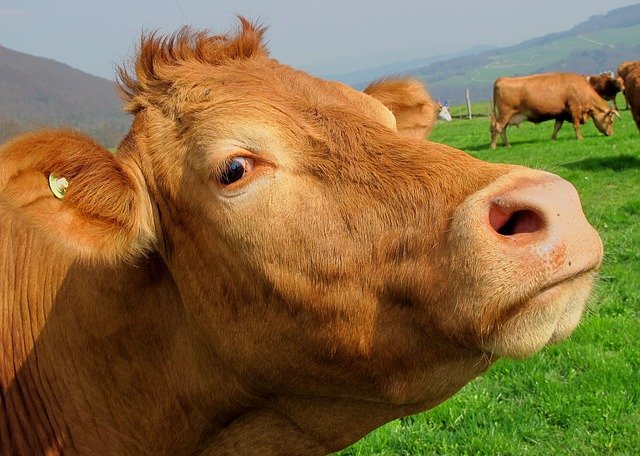
Cows are notorious for disliking disruptions to their routines and environments. They’re particularly averse to new gates. Cows are made so nervous by new entrances and openings that they’ll stubbornly resist going through them.

This trait is so well known that it’s given rise to a phrase: “Like a cow looking at a new gate.” It means to view something with bewilderment and confusion, as though to say, “Are you serious? I’m not going through that.”

Do you feel this way when faced with the uncertainties that a new situation may bring? Is fear of the unknown keeping you from stepping forward in faith to realize your dreams?

Fear has a way of paralyzing us, so that we stay stuck where we are instead of trying something new.

But we needn’t be afraid.

God will go through the gate ahead of us.

Read more
What Birds Can Teach Us About Prayer

It’s good to keep in touch with those you love, isn’t it?

Even birds know this.

Birds will engage in what are called “contact calls” with their mate or others in their flock. Unlike a bird’s song, a call is usually shorter and quieter. The purpose of contact calls is to maintain a continuous connection and to keep track of where each bird is located.

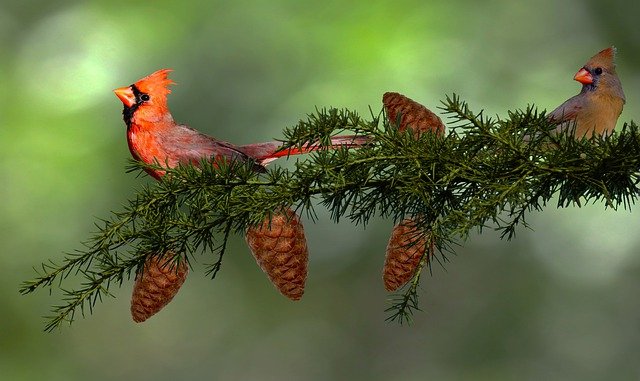
The Northern Cardinal, for instance, makes a brief metallic “chip” sound to keep tabs on its mate’s location when they’re both foraging for food. The mate will respond with the same call as reassurance that they’re nearby and that all is well.

We humans engage in the same type of behaviour. We’ll often make a short phone call or send a quick text to a loved one to keep track of how they’re doing and to reassure them that we’re all right.

I think our Creator would appreciate getting a “contact call” from us on a regular basis, too.

We have the privilege of doing so through the medium of prayer.

For many of us, however, we only engage in prayer when we’re in a crisis.

Read more

Sing While You Fly!

Birds, like humans, have different quirks.

Some birds like to have everything “just so” before they sing.

The time of day has to be just right, they have to be perched at the top of just the right tree, or they have to be within earshot of a desirable mate.

They would never think of singing if the conditions weren’t to their liking, or if they were busy doing something else at the time, like flying.

Other birds aren’t quite so picky.

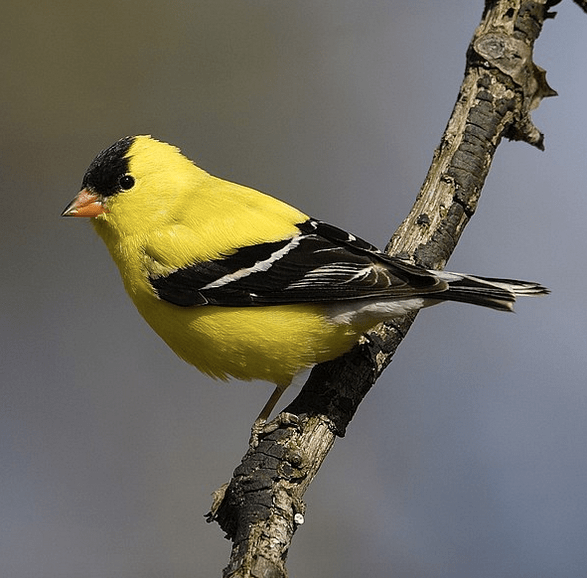
Take the American goldfinch, for example.

This handsome little songbird has some unusual traits. One of them is that his flight pattern resembles a roller-coaster instead of a level path.

Another is that the goldfinch is perfectly happy singing while he’s flying.

He doesn’t wait until just the right circumstances fall into place—this yellow fellow sings while he goes about his daily business.

Perhaps we can take a page from the goldfinch’s book?

Read more

Are You a Cat or a Dog?

It’s hard to embarrass a cat. They just don’t seem to have a sense of shame.

If they’ve done something naughty, like shredded the fabric on your expensive couch with their claws, they’re not actually sorry about it. They’re just ticked off that you’re making such a big fuss about it.

Cats seem to lack the ability to be repentant.

Dogs, on the other hand, can definitely feel and show contrition.

Just take a look at the plethora of “dog-shaming” videos online.

Dog owners upload clips in which they confront their mutts with the evidence of their misdeeds. The owners come home to garbage-strewn rooms, destroyed furniture, and chewed-up shoes. The disaster area is documented on video, and then the camera pans to the dog…

The results are often hilarious.

The mutt slinks off with its tail between its legs, or else sits there looking sheepish and trying not to meet their owner’s eyes. The pooch might even try to hide in a cupboard.

Yes, dogs know when they’ve done something wrong.

The question is, do we?

Are we quick to ask God’s forgiveness when we sin, or do we justify our behaviour to ourselves and continue in our disobedience?

Read more

Jam the Signal!

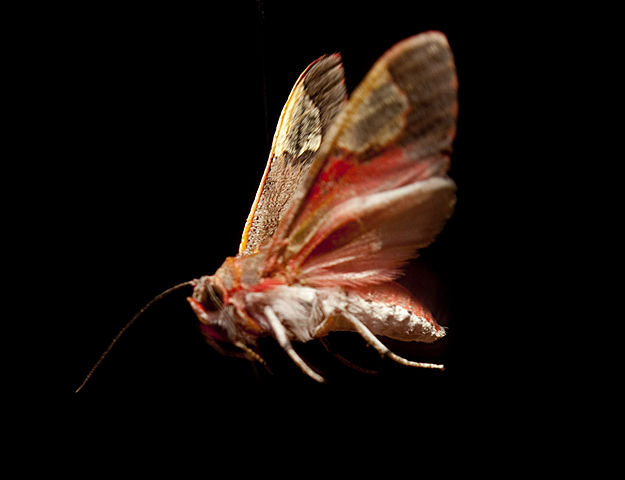
The tiger moth Bertholdia trigona is the only animal in nature known to jam
the echolocation of its predator
Photo from Wikimedia Commons

Bats are crafty creatures.

Being nocturnal, bats search for food at night, but their night vision is fairly poor. So instead they use echolocation, or reflected sound, to home in on insects such as moths. Their built-in sonar directs them to the precise location of the tasty morsels; then it’s just a matter of swooping in and gobbling them up.

So the bats’ prey have to be crafty as well.

Certain species of tiger moth have the ability to emit sonar of their own. As a bat is closing in, the moth emits a fusillade of ultrasonic clicks. This barrage blurs and disrupts the bat’s echolocation: the signal is essentially jammed. The baffled hunter can no longer “see” the moth, and is tricked into thinking its target has vanished. Thwarted, the hungry predator flies away, and the prey is safe.

Our little tiger moth beats its enemy at its own game.

Wouldn’t it be nice if we could “jam the signal” of the enemy of our soul? If we could disrupt and counter the lies the world tells us about ourselves?

In fact, there’s a way that we can.

Read more

Fill Up Your Storehouse

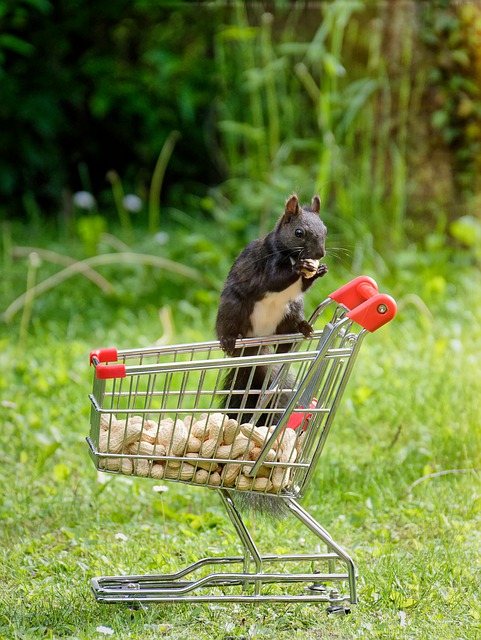
Image by Alexa from Pixabay

This is a busy (and nutty) time of year for squirrels.

The little critters are hard at work storing up nuts and seeds for the hard winter ahead.

Depending on the species, they may either store their nuts in one spot (a stash), or hide them by burying them in multiple locations (known as “scatter-hoarding”). They’ve even been known to shamelessly steal nuts from the stashes of other squirrels.

The jury is out on whether squirrels actually remember where they’ve hidden all those nuts. Some studies suggest they can recall the location of thousands of buried nuts. Other research implies that squirrels fail to recover a good number of their treasures, which allows the nuts and acorns to grow into trees.

One thing is for certain: these little guys are single-minded about gathering up nuts before winter, often using unconventional places to store them.

Like cars.

Just ask Bill Fischer of Fargo, North Dakota. For the past eight years, a red squirrel has been using Bill’s pickup truck to store walnuts. Each year, the poor man has to remove thousands of walnuts from every crevice of his truck, including the engine compartment and bumpers.

The critter set a new record several years ago, stashing 348 pounds of nuts in Bill’s vehicle. And this was all the work of one tiny squirrel.

These crafty little animals might exasperate us, but we can learn something from them:

They make sure they’ve “squirrelled away” provision for hard times to come.

I think we should do something similar:

Store up the Word of God in your heart, because you never know when you might need a certain verse to sustain you in a tough situation.

Read more

You Dirty Dog!

Bad dog! Image from Picryl, Public Domain.

Imagine your living room is perfectly clean.

I mean perfectly. Your white couch is utterly spotless. Your white carpet looks pristine. There isn’t an iota of dust or dirt anywhere in the room.

And then your dog wants in.

Rover somehow found the only mud puddle in the dog park and spent a considerable amount of time rolling around in it.

He stands on the other side of the back door, wagging his tail and smiling, unable to figure out why you won’t let him in. After all, surely you love him, don’t you?

But you know that the second you let Rover in, he’ll shake his fur and send thousands of bits of mud all over your perfectly clean living room.

The solution?

Clean Rover off before he can enter the house. Hose him down, dry him off, and wipe his paws. Rover may not understand the necessity of all this, but it’s your living room and your rules.

Likewise, we sometimes can’t understand why God wouldn’t let us into Heaven just as we are.

Sure, we’ve committed a few sins, but we’re pretty decent people overall, aren’t we? Doesn’t God love us? What’s the necessity of a having a Saviour to atone for our sins?

Read more

The Key to Stronger Faith

Chickadee Photo by Larry Doucet on Pixabay

A chickadee may have a bird-brain, but it can actually be pretty smart.

Especially if it lives in a harsh climate.

What does climate have to do with bird intelligence? As it turns out, more than you’d expect.

Biologists have discovered that chickadees living in the mountains or in northern latitudes, where the weather is more severe, were smarter than their peers living more comfortably down below.

Chickadees from harsher habitats had superior spatial memories and problem-solving abilities than those living in gentler climes. They were better at finding stored caches of food and at figuring out how to access a worm treat that scientists had cleverly tucked into a glass tube.

The harsh environment made their brains work a bit harder.

Is there a lesson for humans in the example of the chickadees?

Yes, but it isn’t to move to a more wintry climate (take it from a Canadian who’s done her share of shovelling snow—it hasn’t made me smarter!).

The takeaway here is that there can be unseen benefits to the challenges we face.

Read more

The Promise of Return

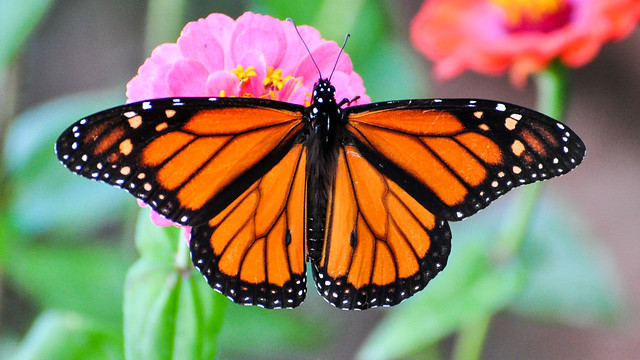
Photo of Monarch butterfly by Peter Miller on Flickr CC BY-NC-ND-2.0

One of the greatest natural events on Earth is now underway: the migration of the monarch butterfly.

Each fall, millions of these colourful insects set off from their summer breeding grounds in the northeastern U.S. and Canada for a gruelling journey. They travel thousands of miles across North America all the way to Mexico, where they’ll spend the winter.

Many people believe that the monarch butterflies that leave in the fall are the same ones that arrive back in the spring, but this isn’t so. Individual butterflies don’t make the entire round-trip journey. The ones that migrate from the northeastern part of North America in fall will never return.

Rather, their great-great-grandchildren are the ones who will arrive the following spring, as successive generations keep making their way north. The entire annual migration cycle of the monarch takes about four generations.

Perhaps I’m being fanciful, but I can imagine monarch butterflies telling their children of the awesome journey they’ll be undertaking. They may say that they’ll only be able to go part of the way with them, but to keep the faith and keep going.

Maybe they encourage their children to tell successive generations to keep believing in the promise of return. Because eventually, their descendants will see the promise fulfilled.

Aren’t we in a similar situation as believers?

We’re living in a time when we’re awaiting the fulfillment of a promise, the promise of Christ’s return. We’re not sure exactly when Christ will come back to Earth, but He has promised that He will.

Read more

What Geese Can Teach Us

Photo by David Mark on Pixabay

Usually, the first signs of fall are visual: the leaves on trees start to redden, the fall asters begin blooming, and the sun is at a noticeably lower angle.

But sometimes you can hear the onset of fall.

There’s a chill in the air hereabouts this week, and it won’t be long before we hear the sound of Canada geese honking at each other as they fly overhead, preparing to go south for the winter. They’ll fly to warmer climes in their iconic V-formation, honking the whole trip.

But why do they honk at one another as they undertake their momentous journey, and why fly in a V-shape at all?

The lessons geese can teach us have long been used in leadership seminars, but I think they apply to our Christian walk as well.

The V-shape that Canada geese fly in actually has aerodynamic benefits to the flock. As each goose flaps its wings, uplift is created for the bird following it. By flying in a V-formation, the flock can add over 70% more flying range than if each bird was flying on its own.

As Christians, we’re all “flying” in the same direction, pointing others to Christ. We have a common purpose, to bring others into the Kingdom, and a common destination, our heavenly home. We’re more effective when we work together in Christian community, because we give one another “uplift” and turbocharge one another’s efforts.

Read more