Beauty in Unexpected Places

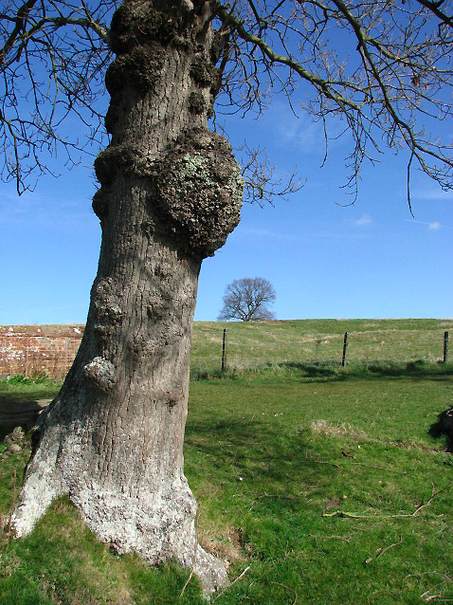
Burl on Tree Trunk.
Image by Evelyn Simak, Wikimedia Commons, CC BY SA-2.0

Sometimes there can be magic hidden within the most unlikely of places.

Take tree burls, for instance (or burrs, to our British friends).

These rounded, knotty growths found on tree trunks can seem very ugly.

Burls form when the tree is under some kind of stress, causing bud growth cells to develop in an abnormal way. Such stressors might include bacteria, viruses, fungi, insect infestations, or wounds. A burl is visible evidence of how the tree is dealing with these attacks.

They look rather like tumours, and mar the otherwise regular pattern of the bark.

Surely there’s nothing good about burls?

But there is.

Their unsightly exterior hides magnificence.

Few people know that inside these contorted and gnarled outgrowths is concealed something wonderful. The wood that burls yield is unusual and highly figured, making it valued and sought after by woodworkers and artists.

This unique wood is prized for its beauty and rarity, and is often used for veneers or inlays in fine furniture, trim or panelling inside luxury cars, and for household objects like bowls or pens, which become works of art.

Do you have a few “burls” in your life? Some knotty problems that have grown into a tangled mess?

Wonder if God could ever bring something good out of them?

He can!

Read more

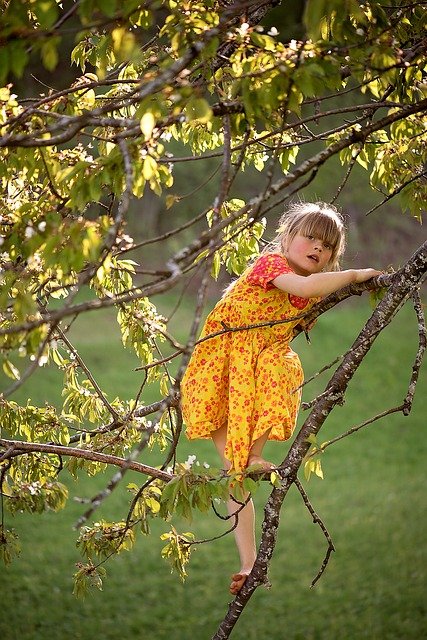
The Best Tree to Climb

Image by Pezibear from Pixabay

Did you climb trees when you were a child? (Or do you still?)

As a bit of a tomboy in my childhood, I was an inveterate tree-climber.

But I quickly learned that some trees were a lot easier to climb than others.

Some trees have rough bark, prickly needles or sticky, oozing sap: I wouldn’t even bother trying to climb those. Other trees might have smooth bark, but their branches were too close together or too high off the ground for a child to manage.

The old apple tree in my backyard was perfect, however. It had been climbed by generations of neighbourhood kids, with the result that much of the bark on the best branches had been worn smooth by little hands.

Its limbs had open architecture, making them as welcoming to children as open arms. And they were low enough to the ground that even the youngest tyke could clamber up.

That tree was a magnet for the neighbourhood kids, a favourite spot for us to gather. I have fond memories of it!

As I look back, it seems to me that we as believers should try to be a bit more like that old apple tree.

How?

Read more

Inscribed in the Palms of His Hands

Image by Lisa Johnson from Pixabay

Have you ever been tempted to carve initials or names in the trunk of a tree?

Perhaps linking yours with those of someone you love, like “M + F” or “Josh loves Amanda”? The inscriptions could last for centuries, emblems immortalizing your love for generations to come.

(Of course, as a nature lover, I’d rather people not make carvings in the bark of a living tree. But I can understand the impulse to do so.)

In fact, people have been engraving things on tree trunks for millennia.

Birch trees are a natural choice due to their white bark. The smooth silver-grey bark of beech trees is also a magnet for trunk-carvers. Indo-European peoples have used it for writing-related purposes since antiquity. In some modern European languages, the words for “book” and “beech” are either very close or identical. No wonder the beech has been called the “patron tree” (sort of like a patron saint) of writers.

Did you know that God sometimes inscribes things in usual places, too?

Read more

Don’t Look For The Living Among The Dead

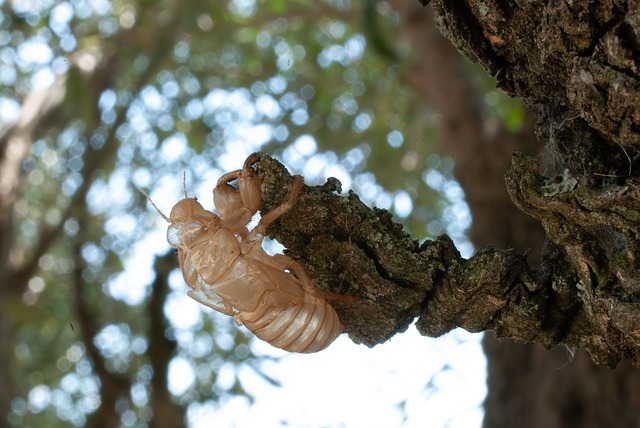
Image of cicada exoskeleton by Franck Barske from Pixabay

When I was a little girl, I loved to explore in the woods.

One day I came across a cicada clinging to a tree trunk. Except this insect didn’t look alive: its body was transparent, and it never moved.

What was wrong with the cicada, I wondered?

I finally realized that I wasn’t looking at a live bug, but rather at its discarded exoskeleton.

When it’s time for a nymph cicada to turn into an adult, it clings to a tree and sheds its outer body. The abandoned shell remains, still clinging to the bark of the tree, while the “reborn” cicada flies off.

My mistake that day?

I was looking for the living among the dead.

Some of the Jesus’ followers made the same error.

Read more

There’s No Place Like Home

Image by burtamus from Pixabay

There’s no place like home, is there?

A lot of animals would agree with that statement, if they could speak.

Many birds and animals have an uncanny “homing instinct” that allows them to travel thousands of miles to return to the very same location each year.

Monarch butterflies from eastern North America return to the same wintering grounds in central Mexico each year, even to the very same forest.

Sea-dwelling Pacific salmon return to the same river they were born in to spawn.

Pregnant sea turtles migrate thousands of miles across the ocean to lay their eggs on the same beach on which they were born decades earlier.

And then there are homing pigeons, the champions of long-distance way-finding. Their homing instincts are so reliable that they’ve been used in wartime to deliver crucial messages over enemy lines.

But how do they do it?

One theory suggests that homing pigeons may have a mineral called magnetite in their beaks, which acts as a tiny GPS unit. This would allow them to sense the earth’s magnetic fields and their own position in relation to it. If true, it would mean that these birds are essentially flying compasses, with their beaks pointing them in the direction they should go.

It makes me wonder: do humans have a “homing instinct”?

Read more

Your “Spring” Is On Its Way!

Image by Jill Wellington from Pixabay

A beautiful red cardinal has been singing heartily outside my window the past week, as though it’s already spring.

My hibiscus houseplant has broken its winter dormancy and is putting forth flower buds.

But there’s still snow on the ground, and there’s bound to be more snow coming. This is Canada, after all, and it’s only March. It’s still cold enough outside to need a winter coat.

Doesn’t seem like spring to me.

Do the cardinal and the hibiscus know something I don’t?

In fact, they do. They sense the lengthening of the day and the increased hours of sunlight, things that have escaped my notice.

They know that spring is on its way, even if I can’t see it coming just yet.

In the same way, God knows a thing or two that we don’t.

He knows when a turnaround in our situation on its way, even if we can’t see any evidence of a change in the offing.

He knows that our “spring” is coming.

Read more

Angels Are Fighting For You

Image of the Northern Lights by Noel Bauza from Pixabay

If you’re lucky enough to have seen the Northern or Southern Lights, what do you think you’re seeing?

This spectacular light display, called the aurora borealis or australis, is usually confined to the high latitudes at the Earth’s poles.

Many people view these shifting ribbons of light as a sort of otherworldly dance in the sky. Others see the swirling colours as a mystical painting come to life. Some indigenous peoples believed the eerie, glowing streamers were ancestral spirits.

But when you look at the auroras, what you’re really seeing is a battle.

The entrancing, ghostly lights result from charged particles from the Sun interacting with the Earth’s magnetic field. These particles, borne on the solar wind, are constantly bombarding our planet. At times they’re more intense, as during periods of high sunspot activity.

The Earth’s magnetic field protects us from this barrage of particles, like a “deflector shield” in a science fiction movie. Without this protection, the solar wind would eventually kill us.

Our magnetic field is always there, an invisible but highly effective shield. It deflects 98% of the particles spewed out by the Sun in our direction, but is slightly weaker near the poles. During the ethereal display known as the Northern and Southern Lights, our magnetic blanket becomes visible as it works to protect us.

What we see as an intriguing and beautiful phenomenon is actually visible evidence of a fierce battle going on for our lives.

Likewise, in life, sometimes we don’t fully understand the battles that are raging behind the scenes.

Unknowingly, as we go about our daily lives, believers are being protected by heavenly forces from harm. We usually can’t see these protective beings, but they’re there nonetheless, working on our behalf.

Read more

Follow The Cat

Image by congerdesign from Pixabay

If you have ever owned a cat (or have been owned by one), you’ll know that if you want to find the warmest, most comfortable place in your home, just follow the cat.

Cats unerringly zero in on the most comfortable spot in your house. They’re not above stealing your favourite chair or displacing you from your own bed in their quest for comfort.

Our feline friends consistently find the sunniest windowsill on which to perch or a warm heating vent in the floor over which to drape themselves. They’ll snuggle into the coziest, most protected part of the sofa, or stake out a claim on the most comfy lap.

Cats are masters at pinpointing zones of highest comfort.

But if you’re in need of comfort, reassurance, love and protection, where do you find it?

Follow the people who know the Source of all comfort.

Read more

Faster Than The Speed of Light

Artist’s concept of Mars Perseverance Rover, Wikimedia Commons, Public Domain

Last week, NASA’s science rover “Perseverance” landed successfully on Mars, to jubilant cheers from scientists back home.

Mission managers at NASA’s Jet Propulsion Lab near Los Angeles had been waiting anxiously for confirmation that the craft had landed safely.

Because it takes radio waves 11 minutes to reach Earth from Mars, “Perseverance” had already settled on the surface of the Red Planet by the time news of its safe arrival reached scientists back on Earth. NASA had to endure a nerve-wracking wait before they got the verification.

We encounter this time lag throughout our universe.

The light from our own Sun takes 8 minutes to reach Earth. Light from Pluto takes 5 hours. It takes 8 years for the light from the “Dog Star” Sirius to reach our planet.

This time lag means that with stars extremely distant from us, we’re actually seeing them now as they were thousands of years ago. It takes that long for their light to travel to us.

It sometimes seems as though there’s a similar “time lag” between our brains and our hearts.

Read more

What Birds Can Teach Us About Prayer

Image by GeorgeB2 from Pixabay

It’s good to keep in touch with those you love, isn’t it?

Even birds know this.

Birds will engage in what are called “contact calls” with their mate or others in their flock. Unlike a bird’s song, a call is usually shorter and quieter. The purpose of contact calls is to maintain a continuous connection and to keep track of where each bird is located.

The Northern Cardinal, for instance, makes a brief metallic “chip” sound to keep tabs on its mate’s location when they’re both foraging for food. The mate will respond with the same call as reassurance that they’re nearby and that all is well.

We humans engage in the same type of behaviour. We’ll often make a short phone call or send a quick text to a loved one to keep track of how they’re doing and to reassure them that we’re all right.

I think our Creator would appreciate getting a “contact call” from us on a regular basis, too.

Read more