The Promise of Return

Monarch Butterfly
Photo by Peter Miller on Flickr CC BY-NC-ND-2.0

One of the greatest natural events on Earth is now underway: the migration of the monarch butterfly.

Each fall, millions of these colourful insects set off from their summer breeding grounds in the northeastern U.S. and Canada for a gruelling journey. They travel thousands of miles across North America all the way to Mexico, where they’ll spend the winter.

Many people believe that the monarch butterflies which leave in the fall are the same ones which arrive back in the spring, but this isn’t so. Individual butterflies don’t make the entire round-trip journey. The ones which migrate from the northeastern part of North America in fall will never return.

Rather, their great-great-grandchildren are the ones who will arrive the following spring, as successive generations keep making their way north. The entire annual migration cycle of the monarch takes about four generations.

Perhaps I’m being fanciful, but I can imagine monarch butterflies telling their children of the awesome journey they’ll be undertaking. They may say that they’ll only be able to go part of the way with them, but to keep the faith and keep going.

Maybe they encourage their children to tell successive generations to keep believing in the promise of return. Because eventually, their descendants will see the promise fulfilled.

Aren’t we in a similar situation as believers?

Read more

Bloom Where You’re Planted?

Photo by Jim Black on Pixabay

Some say you should “bloom where you’re planted.”

You can get all manner of products printed with this slogan: T-shirts, mugs, posters, and notecards.

But is that always the best advice? Maybe not. There’s something to be said for not staying in the same place for too long.

Your garden will tell you that if you plant the same type of vegetable in the same plot year after year, you’ll notice that the health of the plant and the yield it produces will begin to suffer. The plant will be attacked by more diseases and pests, and the nutrients in the soil will have been depleted by past crops of the same type.

The answer to this problem? Crop rotation.

Don’t plant the same type of vegetable or crop in the same location several years running. Mix it up; plant something new in that spot.

What about in life?

Does God intend us to stay rooted to the same location for much of our lives?

Read more

A Special Kind of Faith

Tulip bulbs at a flower market
Photo from Pxhere, Public Domain

They say that planting seeds is an act of faith.

I think that’s true: you put seeds in the ground in spring, hoping most will germinate and grow into a plant. If you’re lucky, you might see hints of growth in a few days, but often it can be weeks before a little green head pokes its way out of the soil.

If planting seeds takes faith, then I think it takes a special kind of faith to plant bulbs in the fall.

In the fall, you know the days are getting shorter and colder. The leaves are dropping from the trees, and tender plants are beginning to die from early frosts. You know that snow will soon blanket the garden to the depth of a couple feet. You’re heading into a barren season.

The precious tulip, daffodil or hyacinth bulbs that you’ve just planted will disappear from your view for many months. You’ll have no indication that they’re all right, let alone any guarantee that they’ll eventually bloom. They may fall prey to rabbits, squirrels or deer. Who knows what will happen to them?

And yet you still go ahead and plant fall bulbs, trusting that they’ll survive the frigid winter and bloom later in spring.

Some things in our lives take special faith to trust for, too, don’t they?

Read more

A Gardener’s Worst Enemy

Garlic Mustard
Photo by Simone VomFeld on Pixabay

Gardeners may not realize it, but they’re a bit like soldiers in wartime. Their enemies aren’t people, of course, but an even more insidious foe:

Weeds.

Weeds infiltrate our gardens like enemy invaders: dandelions, nettles, thistles, couch grass and garlic mustard, to name a few. They may seem innocent enough when there are only a few of them, but make no mistake: their ultimate aim is to take over and occupy your territory.

One vanguard weed may sneak in and settle, and you think nothing of it. If you’re not vigilant, though, that lone plant will soon multiply into an overwhelming host.

Or you pull up a dandelion and think that’s the end of it, but unless you’ve been very thorough, part of the taproot remains deep in the soil. The weed will come up again long after you thought you’ve eradicated it.

The seeds of weeds may stay in the soil of your garden and remain viable for years. They lie in wait like sleeper agents, waiting patiently for the right opportunity to spring up and attack.

The mission of weeds is simple but deadly: to compete with other plants for light, water and nutrients and crowd them out so they die. They’re dastardly adversaries, often needing less sunlight and water than other plants to survive.

And the worst part of it is that they’re very hard to kill.

Weeds are sort of like sin, aren’t they?

Read more

What Geese Can Teach Us

Canada Geese Flying
Photo by David Mark on Pixabay

Usually, the first signs of fall are visual: the leaves on trees start to redden, the fall asters begin blooming, and the sun is at a noticeably lower angle.

But sometimes you can hear the onset of fall.

Today at The Faith Cafe we could hear the sound of Canada geese honking at each other as they flew overhead, preparing to fly south for the winter. They’ll fly to warmer climes in their iconic V-formation, honking the whole trip.

But why do they honk at one another as they undertake their momentous journey, and why fly in a V-shape at all?

The lessons geese can teach us have long been used in leadership seminars, but I think they apply to our Christian walk as well.

Read more

The Language of Flowers and the Language of God

Say it with flowers!
Wikimedia Commons, CC BY-SA-2.0

Flowers speak. Not just through their fragrance or their beauty, but with secret codes, too.

Perhaps you’ve heard of the “language of flowers” popular during Victorian times? This enchanting symbolic language enabled suitors to send coded messages to their paramours, ones that couldn’t be spoken aloud. The message depended on the particular flowers and colours chosen for the bouquet. An entire conversation could be carried out solely through flowers, with no words employed at all.

We all know that red roses symbolize true love, and we’d rightly guess that the forget-me-not begs that the giver be remembered. But did you know the following flower meanings?

Red carnation: My heart aches for you
Hyacinth: Your loveliness charms me
Canterbury bell: Your letter received
Yellow rose: Jealousy
Butterfly weed: Let me go
Weeping willow: Sadness

The Victorian language of flowers is a cryptic tongue. Most people only see the surface of the flower and not the symbolic meaning hidden within it.

God has His own “language of flowers,” but it actually encompasses all of creation. God is continually speaking to us through nature:

“For ever since the world was created, people have seen the earth and sky. Through everything God made, they can clearly see his invisible qualities—his eternal power and divine nature. So they have no excuse for not knowing God.” (Romans 1:20 NLT)

“The heavens proclaim the glory of God. The skies display his craftsmanship.” (Psalm 19:1 NLT)

If we listened in to what nature was saying about its Creator, what messages would be revealed?

Read more

The God of Second Chances

Hands holding seedling
Photo by Pikrepo

It’s an awesome feeling to realize that you’ve got a second chance, isn’t it?

A friend of mine discovered this after moving into a house with a large garden this summer. A beginner gardener, she was delighted to finally have enough space for an extensive vegetable garden. She immediately planted some tomato and cucumber seedlings, which grew vigorously and are now producing ripe veggies.

Because she’d moved in mid-summer, however, she lamented that she’d missed the chance to start growing vegetables like beets, spinach, peas, and carrots from seed in spring. She knew that cool-weather-loving veggies like peas wouldn’t thrive in the summer heat. She figured that if you didn’t plant those seeds in the spring, you’d missed your chance for the whole year.

But the garden, like God, often gives us second chances.

I told my friend that she could actually plant those seeds now for a fall harvest. There was still time to grow a second crop before the frosts of November hit. She hadn’t missed out after all: she could still grow the cool-weather veggies she’d hoped for.

What a wonderful metaphor for how God deals with us!

Read more

Blue Roses and Black Tulips

Photo by Faye Mozingo on Pixabay

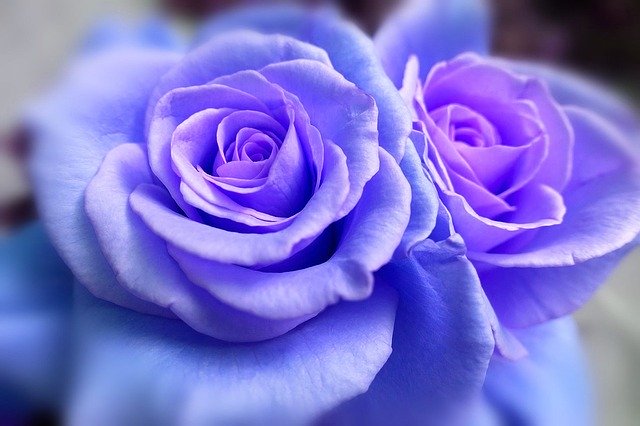
For generations, gardeners have been trying to achieve the impossible: to breed a truly blue rose or a perfectly black tulip.

These two flowers have so intrigued people’s imaginations that they’ve entered both lore and literature.

Blue roses are often used to symbolize mystery and a longing to attain the impossible. Some cultures even say that whoever holds a blue rose will have his or her wishes granted.

Black tulips were featured in an 1850 novel by Alexander Dumas called what else but “The Black Tulip.” This swashbuckling tale of love, murder and greed centres on the quest for a unique jet-black tulip.

The problem is that blue roses and black tulips don’t exist in nature. Roses lack the specific gene that allows for a “true blue” colour. It’s the same story with black tulips: optically black flowers are virtually unknown in nature.

Plant breeders have come close to achieving a blue rose through hybridization, but the “blue” is often closer to lilac or mauve. To produce a bluer flower, they’ve had to resort to dyeing or genetically modifying the plant.

As for tulips, the “black” ones are usually a deep eggplant or plum colour. They give the appearance of being extremely dark, but are not optically black.

Maybe this is a hint that we were never meant to find perfection in this world.

Read more

The Moonbow Connection

Lunar Rainbow over Victoria Falls, Zambia
Photo courtesy Calvin Bradshaw (calvinbradshaw.com)
Wikimedia Commons, CC BY-SA 3.0

I’ll bet most of us have seen a rainbow at some time in our lives, but have you ever seen a moonbow?

Frankly, until recently I didn’t even know such a thing existed. Moonbows, also known as lunar rainbows, are rainbows which are produced by moonlight rather than by direct sunlight. As such, they’re usually fainter than regular rainbows, and may even appear white.

But moonbows are still evidence of the sun’s presence, because they’re created by reflected sunlight bouncing off the moon. They’re a very special reminder that the sun is still shining, even when we can’t see it.

Sometimes I think God puts believing friends in our lives to function as “moonbows” for us.

Read more

Focus on the Best, Pluck Out the Rest

Photo by Joffi on Pixabay

If you have a vegetable garden, what you’re probably doing about this time of the summer is pinching suckers off your tomato plants.

“Suckers” are the little growths between the main stem of your tomato plant and the lateral branches. These side shoots may be healthy and vigorous, but letting them grow would only rob the tomatoes themselves of growth potential. Better to pluck off the suckers in order to direct all the plant’s energy into ripening the tomatoes.

An extreme example of this practice can be seen in the growing of prize-winning pumpkins. The farmer or gardener will pluck off all but the most promising nascent pumpkins, sometimes leaving only one growing on each vine. The plant is forced to pour all its photosynthesis power into producing one massive pumpkin. World-record-setting pumpkins have weighed over 2,000 pounds!

There’s something to be said for focussing on the important things, isn’t there? It can produce astounding results.

Maybe there’s a lesson here we can apply to our own lives.

Read more