Prayers Live On, Like Lilacs

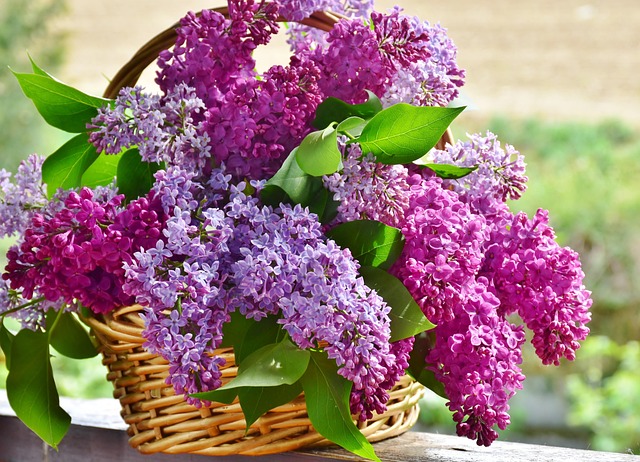
This is a special time of year in my part of Canada: the lilacs are speaking!

Lilac flowers don’t use words, of course. They announce their presence through their beautiful fragrance and delicate purple colour.

But there’s another way lilac shrubs can talk to us. Their very location can give us clues to the history of a place.

“…the story of early Canada can be read in the lilacs clustered where log cabins once stood, at the edge of abandoned fields—flowers marking time in centuries.” (from “A New Leaf,” by Merilyn Simonds)

Settlers to the northern parts of North America would often plant lilac shrubs on either side of the front door to their farmhouse. Generations or even centuries later, the building has long since been torn down, but the lilacs live on.

If you see a pair of huge lilac bushes in a field or empty lot, you can be pretty sure they used to flank someone’s front door. The house is gone, the family has moved away, but the fragrance of the lilacs they planted still fills the air.

This reminds me a bit of how prayers can live on, long after the person who prayed them is gone.

Read more

With God, You Get the Flower First!

Eastern Redbud Tree

Sometimes nature can be a bit unpredictable—things happen in an order we wouldn’t expect.

Normally, plants put forth leaves long before they produce flowers.

But some trees and shrubs flip the script, so to speak.

With certain plants, the normal sequence is reversed: the flowers come first, before the leaves have developed.

A good example is the beautiful redbud tree. It puts forth gorgeous pink flowers on its bare branches in early spring, when none of its leaves are yet in sight.

The forsythia shrub bears its bright yellow flowers in advance of its leaves, and the lovely magnolia presents its pink or white blooms before the green foliage appears. Some maples and oaks also exhibit this flower-first behaviour, although with less showy blossoms.

All of these plants give us a treat in springtime when we’re starved for colour. We get the flower first without having to wait for the leaves.

Why do some plants reverse the normal order of things?

Some trees are wind-pollinated, so put forth flowers before their bulky leaves get in the way. The same goes for flowers that need extra sunlight. Other plants produce a mass of conspicuous flowers first, unobscured by leaves, to better attract the attention of pollinating insects.

Did you know that God also flipped the script and gave us the flower first, so to speak?

Read more

A Special Kind of Faith

Tulip bulbs at a flower market
Photo from Pxhere, Public Domain

They say that planting seeds is an act of faith.

I think that’s true: you put seeds in the ground in spring, hoping most will germinate and grow into a plant. If you’re lucky, you might see hints of growth in a few days, but often it can be weeks before a little green head pokes its way out of the soil.

If planting seeds takes faith, then I think it takes a special act of faith to plant bulbs in the fall.

In the fall, you know the days are getting shorter and colder. The leaves are dropping from the trees, and tender plants are beginning to die from early frosts. You know that snow will soon blanket the garden to the depth of a couple feet.

You’re heading into a barren season.

The precious tulip, daffodil, or hyacinth bulbs that you’ve just planted will disappear from your view for many months. You’ll have no indication that they’re all right, let alone any guarantee that they’ll eventually bloom. They may fall prey to rabbits, squirrels or deer. Who knows what will happen to them?

And yet you still go ahead and plant fall bulbs, trusting that they’ll survive the frigid winter and bloom later in spring.

Some things in our lives take special faith to trust for, too, don’t they?

Read more

Jam the Signal!

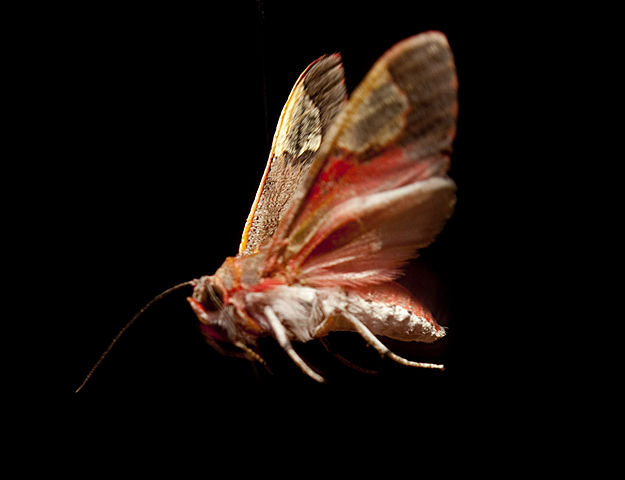
The tiger moth Bertholdia trigona is the only animal in nature known to jam
the echolocation of its predator
Photo from Wikimedia Commons

Bats are crafty creatures.

Being nocturnal, bats search for food at night, but their night vision is fairly poor. So instead they use echolocation, or reflected sound, to home in on insects such as moths. Their built-in sonar directs them to the precise location of the tasty morsels; then it’s just a matter of swooping in and gobbling them up.

So the bats’ prey have to be crafty as well.

Certain species of tiger moth have the ability to emit sonar of their own. As a bat is closing in, the moth emits a fusillade of ultrasonic clicks. This barrage blurs and disrupts the bat’s echolocation: the signal is essentially jammed. The baffled hunter can no longer “see” the moth, and is tricked into thinking its target has vanished. Thwarted, the hungry predator flies away, and the prey is safe.

Our little tiger moth beats its enemy at its own game.

Wouldn’t it be nice if we could “jam the signal” of the enemy of our soul? If we could disrupt and counter the lies the world tells us about ourselves?

In fact, there’s a way that we can.

Read more

Fill Up Your Storehouse

Image by Alexa from Pixabay

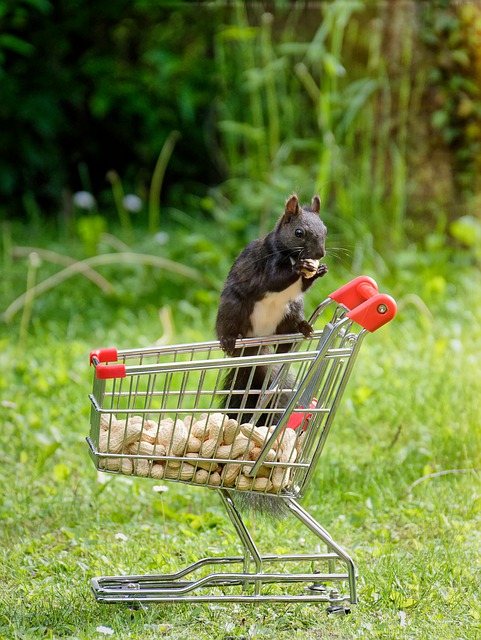
This is a busy (and nutty) time of year for squirrels.

The little critters are hard at work storing up nuts and seeds for the hard winter ahead.

Depending on the species, they may either store their nuts in one spot (a stash), or hide them by burying them in multiple locations (known as “scatter-hoarding”). They’ve even been known to shamelessly steal nuts from the stashes of other squirrels.

The jury is out on whether squirrels actually remember where they’ve hidden all those nuts. Some studies suggest they can recall the location of thousands of buried nuts. Other research implies that squirrels fail to recover a good number of their treasures, which allows the nuts and acorns to grow into trees.

One thing is for certain: these little guys are single-minded about gathering up nuts before winter, often using unconventional places to store them.

Like cars.

Just ask Bill Fischer of Fargo, North Dakota. For the past eight years, a red squirrel has been using Bill’s pickup truck to store walnuts. Each year, the poor man has to remove thousands of walnuts from every crevice of his truck, including the engine compartment and bumpers.

The critter set a new record several years ago, stashing 348 pounds of nuts in Bill’s vehicle. And this was all the work of one tiny squirrel.

These crafty little animals might exasperate us, but we can learn something from them:

They make sure they’ve “squirrelled away” provision for hard times to come.

I think we should do something similar:

Store up the Word of God in your heart, because you never know when you might need a certain verse to sustain you in a tough situation.

Read more

You Dirty Dog!

Bad dog! Image from Picryl, Public Domain.

Imagine your living room is perfectly clean.

I mean perfectly. Your white couch is utterly spotless. Your white carpet looks pristine. There isn’t an iota of dust or dirt anywhere in the room.

And then your dog wants in.

Rover somehow found the only mud puddle in the dog park and spent a considerable amount of time rolling around in it.

He stands on the other side of the back door, wagging his tail and smiling, unable to figure out why you won’t let him in. After all, surely you love him, don’t you?

But you know that the second you let Rover in, he’ll shake his fur and send thousands of bits of mud all over your perfectly clean living room.

The solution?

Clean Rover off before he can enter the house. Hose him down, dry him off, and wipe his paws. Rover may not understand the necessity of all this, but it’s your living room and your rules.

Likewise, we sometimes can’t understand why God wouldn’t let us into Heaven just as we are.

Sure, we’ve committed a few sins, but we’re pretty decent people overall, aren’t we? Doesn’t God love us? What’s the necessity of a having a Saviour to atone for our sins?

Read more

Still Water Reflects Best

Lago di Limides, Italy
Photo by Julius Silver on Pixabay

We seem to have difficulty being still these days, don’t we?

For many of us, life happens at warp speed. We’re always on the go, and have little downtime to pause and reflect on things.

But with all our constant motion, are we missing out on something?

Recently, I visited a park with a pond large enough to almost be a small lake. A slight breeze left ripples on the water, disturbing the reflection of the trees in the distance. The image on the water’s surface was wavy and impressionistic, not a true representation of the landscape nearby.

I then walked to a different part of the park where a river flowed lazily into the pond. The water was running slowly, and because it was sheltered from the breeze in this area, it was very still. The trees here were perfectly reflected in the water, giving a mirror image of their true forms.

I guess that to get the best reflection in water, stillness is the key.

Perhaps the spiritual lesson here is that if our lives are too frantic, it’s hard for us to reflect Christ.

Read more

The Key to Stronger Faith

Chickadee Photo by Larry Doucet on Pixabay

A chickadee may have a bird-brain, but it can actually be pretty smart.

Especially if it lives in a harsh climate.

What does climate have to do with bird intelligence? As it turns out, more than you’d expect.

Biologists have discovered that chickadees living in the mountains or in northern latitudes, where the weather is more severe, were smarter than their peers living more comfortably down below.

Chickadees from harsher habitats had superior spatial memories and problem-solving abilities than those living in gentler climes. They were better at finding stored caches of food and at figuring out how to access a worm treat that scientists had cleverly tucked into a glass tube.

The harsh environment made their brains work a bit harder.

Is there a lesson for humans in the example of the chickadees?

Yes, but it isn’t to move to a more wintry climate (take it from a Canadian who’s done her share of shovelling snow—it hasn’t made me smarter!).

The takeaway here is that there can be unseen benefits to the challenges we face.

Read more

The Promise of Return

Photo of Monarch butterfly by Peter Miller on Flickr CC BY-NC-ND-2.0

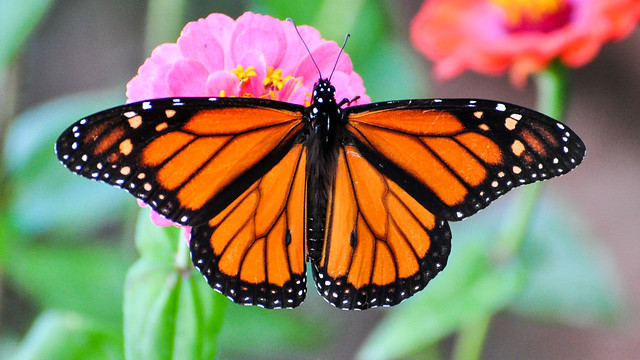
One of the greatest natural events on Earth is now underway: the migration of the monarch butterfly.

Each fall, millions of these colourful insects set off from their summer breeding grounds in the northeastern U.S. and Canada for a gruelling journey. They travel thousands of miles across North America all the way to Mexico, where they’ll spend the winter.

Many people believe that the monarch butterflies that leave in the fall are the same ones that arrive back in the spring, but this isn’t so. Individual butterflies don’t make the entire round-trip journey. The ones that migrate from the northeastern part of North America in fall will never return.

Rather, their great-great-grandchildren are the ones who will arrive the following spring, as successive generations keep making their way north. The entire annual migration cycle of the monarch takes about four generations.

Perhaps I’m being fanciful, but I can imagine monarch butterflies telling their children of the awesome journey they’ll be undertaking. They may say that they’ll only be able to go part of the way with them, but to keep the faith and keep going.

Maybe they encourage their children to tell successive generations to keep believing in the promise of return. Because eventually, their descendants will see the promise fulfilled.

Aren’t we in a similar situation as believers?

We’re living in a time when we’re awaiting the fulfillment of a promise, the promise of Christ’s return. We’re not sure exactly when Christ will come back to Earth, but He has promised that He will.

Read more

What Geese Can Teach Us

Photo by David Mark on Pixabay

Usually, the first signs of fall are visual: the leaves on trees start to redden, the fall asters begin blooming, and the sun is at a noticeably lower angle.

But sometimes you can hear the onset of fall.

There’s a chill in the air hereabouts this week, and it won’t be long before we hear the sound of Canada geese honking at each other as they fly overhead, preparing to go south for the winter. They’ll fly to warmer climes in their iconic V-formation, honking the whole trip.

But why do they honk at one another as they undertake their momentous journey, and why fly in a V-shape at all?

The lessons geese can teach us have long been used in leadership seminars, but I think they apply to our Christian walk as well.

The V-shape that Canada geese fly in actually has aerodynamic benefits to the flock. As each goose flaps its wings, uplift is created for the bird following it. By flying in a V-formation, the flock can add over 70% more flying range than if each bird was flying on its own.

As Christians, we’re all “flying” in the same direction, pointing others to Christ. We have a common purpose, to bring others into the Kingdom, and a common destination, our heavenly home. We’re more effective when we work together in Christian community, because we give one another “uplift” and turbocharge one another’s efforts.

Read more