The Blessings Of Barren Seasons

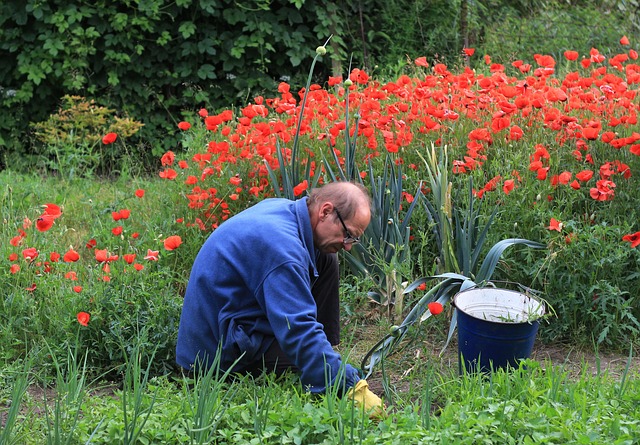
Image by Henning Sørby from Pixabay

Looking out the window here at The Faith Cafe, you see that the trees in the park display a stark beauty.

Stripped of their leaves in winter, they stand amid the snow looking rather barren and forlorn.

But a funny thing happens when a tree has lost its leaves: you can see things that you didn’t know were there before.

Going for a walk in your neighbourhood in winter, you might see that the bare trees are now revealing things that had been concealed by summer’s foliage. You might be surprised to see a bird’s nest the size of a teacup nestled in the bare branches; you’d passed beneath it dozens of times without knowing it was right above you.

Or you might see a larger nest, called a drey, which was built by squirrels. You’d had no idea that the squirrels had been raising a family there in their hidden home, perhaps in a tree just feet from your own house.

With the trees denuded of leaves, you might spot a kite or balloon that had been caught in the branches months before. Only winter could reveal this lost object. Maybe it belonged to your child: “So that’s where it went!” you think.

Or you realize that there are dead branches in some of the trees around your house that need removing. You can only see the problem now that the dense foliage has been stripped away.

So it is with us, too.

Sometimes there are things we can only see when we hit a barren season in our lives, brought on by a loss, a breakup, a setback, or a disappointment. Sometimes it’s only when something has been stripped away from us that other things are revealed.

Read more

Supercharge Your Prayers

Fertilized vs. unfertilized rows of maize. Wikimedia Commons, Public Domain

If you’re a gardener, you might sometimes look at your plants and decide that they’re missing something.

They need more “oomph.”

That’s where fertilizer comes in.

It can supercharge your flowers and vegetable plants by providing them with nutrients, such as nitrogen, that might be lacking in the soil.

With the addition of fertilizer, your plants can grow to their full potential and become as fruitful as they were meant to be.

Similarly, our prayers sometimes need more oomph, too.

But how do we give them that? How do we go about supercharging our prayers?

Read more

He Loves Me, He Loves Me Not

Did you ever play games with flowers as a child?

Perhaps you squeezed the “mouth” of a snapdragon flower to make it “talk.”

Or maybe you held a buttercup underneath the chin of a friend. If it reflected back a yellow colour, it meant that they liked butter (apparently, everyone does!).

Probably one of the most famous flower games involves the daisy: it’s considered the oracle of affairs of the heart. The daisy supposedly has the ability to tell you if your sweetheart truly loves you or not.

It goes like this: you pluck off each petal of a daisy in turn, and as you do so, alternately say, “He loves me,” or “He loves me not.”

The final petal tells you which statement is true.

You’re left in suspense the whole time, and worry about what the last petal will reveal.

I know this is just a children’s game, but even as adults we sometimes worry if we’re truly loved, don’t we?

Human love can be a fickle thing, and we can often be unsure about the commitment and loyalty of those we love.

That’s why it’s so good to know that with Jesus, we’re never left wondering whether He loves us or not. He never leaves us in suspense as to whether He cares.

He always does.

And He always will.

Read more

Need A Clean Slate?

Image of birch bark by Lisa Johnson from Pixabay

If you feel like you could use a clean slate, you’re not the only one.

Birch trees feel the need to start afresh with a new page occasionally, too.

Except they do it literally, by allowing their outer bark to peel off to reveal a fresh layer underneath.

Why do birches do this?

After all, most trees don’t shed their bark. As trees grow from the inside out, their rigid outer bark, which can’t stretch, splits and cracks instead. This gives tree bark the rough texture and fissure-like patterns that we’re all familiar with.

The drawback of these crevices and grooves is that pests and parasites like to burrow into them, which can affect the health of the tree.

Birches have solved this problem by growing smooth bark. This type of bark doesn’t split, which means it’s more impervious to insects, bacteria and fungi. As the birch grows, it exfoliates some of its outer bark, like a snake shedding its skin.

Along with the shed bark the tree is able to cast off insects, moss and lichen at the same time. Birch trees are continually refreshing themselves.

Smart, isn’t it?

Could you use a fresh start, too? Would you like to get rid of some things that are dragging you down?

Jesus gives us an opportunity to do just that.

Read more

The Way of Escape

Image of Jewelweed flower by jimaro morales from Pixabay

Sometimes Mother Nature can reach out and bite you.

If you’ve ever suffered the ill effects of a run-in with stinging nettles or poison ivy, you’ll know what I mean.

Both of these plants produce an unpleasant, itchy rash if your exposed skin comes in contact with them. If this happens when you’re out in the woods and nowhere near a pharmacy to buy rash cream, where do you find some relief?

From Mother Nature herself!

The wilderness might have stung you, but it also provides an effective solution.

Plants such as dock and jewelweed (also called touch-me-not) help relieve the sting from nettles and the itch from poison ivy. The sap of these “rescue” plants, when rubbed on the skin, provides a cooling, soothing effect. Native Americans have known this trick for millennia.

Conveniently, dock and jewelweed can usually be found growing in the same area as poison ivy and stinging nettles.

Coincidence? I’m not so sure.

I think God placed the “cures” near the harmful plants on purpose.

For one thing, He knew we’d need a ready remedy for skin woes when out in the bush.

Also, it illustrates a truth contained in the Bible:

When we are faced with temptation, God always provides a way of escape along with it.

Read more

Plant the Seeds of Your Dreams

Vintage seed packets. Photo by Douglas Coulter on Flickr. CC BY-NC-SA 2.0

If you’re a gardener, you probably have a stash of seeds tucked away.

I certainly do. I have a special bin in a cupboard where I store all my seed packets:

Envelopes containing seeds I’ve harvested over the years from plants in my garden. Seeds that friends have collected from their own gardens and then passed on to me, along with handwritten notes about the plants.

Packets of seeds I’ve bought the Botanic Garden’s seed fairs that look intriguing: seeds of rare plants, unusual colours of better known plants, or hard-to-find heirloom varieties of vegetables or flowers.

I have a veritable treasure trove of seeds in my cupboard!

There’s only one problem:

Those seeds are doing me absolutely no good sitting in a bin on a shelf.

I may take the packets out from time to time and look rapturously at the photos on the front. I might imagine how nice it would be to grow such gorgeous flowers or unusual veggies.

But until I put those seeds in the ground, all they are is wishful thinking and pretty pictures.

If I don’t take a step of faith and plant my seeds, I’ll never get a harvest.

Similarly, we sometimes leave our dreams and desires on a shelf, so to speak.

Read more

We Must Experience Christ Firsthand

What’s your favourite floral fragrance?

If you said rose or lavender, you’re in luck.

These flowers are among those from which we can easily extract essential oils. These substances can then be used in products ranging from perfumes to scented soaps. If you love the smell of these flowers, you have all manner of ways to experience the scent. You can do so directly, by smelling the flower, or secondhand, as it were, through items made from their oils.

But some flowers don’t produce enough usable essential oils.

My favourite floral scent, lilac, is one of them.

Unfortunately for me, the aromatic compounds in lilacs are nearly impossible to acquire. Trying to extract the fragrance through steam distillation can end up destroying the scent profile. And the tiny amount of essential oils that may result are so expensive to produce that it’s not economically worthwhile to bother.

The end result is that you can’t buy true lilac essential oil. Perfumers may be able to mimic the scent of lilacs through synthesis, but the resulting fragrance hasn’t been distilled solely from the actual flower itself; it’s merely an approximation, a blend of other floral notes. No chemist can authentically capture the unique scent of the lilac.

If you want to experience the true fragrance of lilacs, there’s only one way to do it. You have to experience it “live,” by smelling an actual cluster of flowers.

Likewise, if we want to experience Jesus, it has to be “live.”

Read more

Weeding, Like Forgiving, Never Ends

Weeding the garden, like forgiving, is a task that’s never-ending.

We can’t simply say, “I weeded last week, so I’m done now. I won’t need to weed for the rest of the season.”

Every gardener know that the weeds will keep cropping up. The job of weeding is one that lasts for as long as you have a garden.

So it is with forgiving those who have offended or hurt us. Forgiving is not optional for believers: we are to forgive others as God has forgiven us.

But sometimes we think that it’s a “one-and-done” effort. We grudgingly forgive someone once, and assume we’re done with it.

Inevitably, though, we learn that it doesn’t work that way. The next week, we might ruminate about what they did to us and get mad all over again. We find there’s still a root of bitterness in our heart, and we have to forgive them once more.

Like weeding, the duty to forgive is ongoing. It may require more “rinse and repeat” cycles than you might imagine.

Read more

Allow God to Prune You

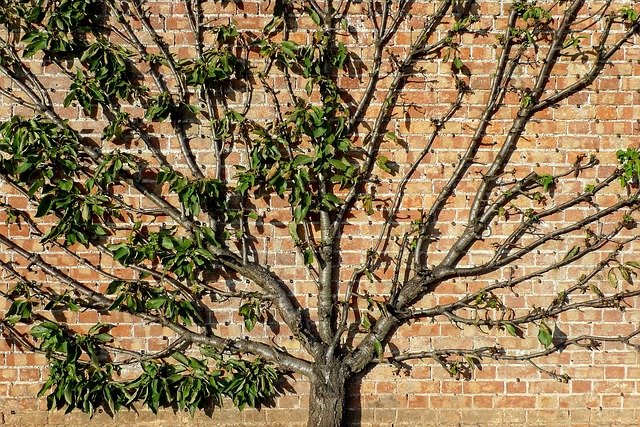
Fruit tree espaliered against wall. Image by Andrew Martin from Pixabay

If I were a young apple tree, I probably wouldn’t like being pruned very much.

If I saw the gardener heading my way with secateurs or pruning shears, I’d probably flinch. I would hope that he would just give me a little trim, and leave most of my luxuriant growth intact.

But the gardener invariably has other ideas.

I’d watch in horror as one branch after another was lopped off. They seemed perfectly good to me, but the gardener thought otherwise.

Why has the gardener cut me back so severely?

To make me more fruitful.

God does the same with us, and we find it just as uncomfortable.

The truth is, pruning hurts, and it seems to involve so much wastage.

But our loving Heavenly Father knows that it’s for our own good. Scripture says that it’s for His glory that we bear much fruit.

Read more

What Makes A Garden?

Japanese garden. Image by Drobekpetr from Pixabay

If something doesn’t fit your idea of a garden, is it still a garden?

I must confess to having trouble warming up to Japanese gardens. They often feature distinctive elements such as conifers and moss, gravel raked to suggest waves in water, stone lanterns or water basins, and perhaps a bridge.

But to me, a garden isn’t really a garden unless its primary focus is an abundance of colourful flowers.

So are Japanese gardens still gardens? Very much so!

They still celebrate nature, even if some elements are suggested rather than incorporated literally. They still reflect the beauty that God has placed on this Earth. They still have the essentials down pat.

I guess I need to expand my idea of what a garden is.

We shouldn’t look askance at the way others have created their gardens. God smiles on them all.

Perhaps this is a lesson we can apply to the Christian life, too.

Read more