With God, You Get the Flower First!

Redbud blossoms. Photo by Sheila Brown, Public Domain CC0

Sometimes nature can be a bit unpredictable—things happen in an order we wouldn’t expect.

Normally, plants put forth leaves long before they produce flowers.

But some trees and shrubs flip the script, so to speak.

With certain plants, the normal sequence is reversed: the flowers come first, before the leaves have developed.

A good example is the beautiful redbud tree. It puts forth gorgeous pink flowers on its bare branches in early spring, when none of its leaves are yet in sight.

The forsythia shrub bears its bright yellow flowers in advance of its leaves, and the lovely magnolia presents its pink or white blooms before the green foliage appears. Some maples and oaks also exhibit this flower-first behaviour, although with less showy blossoms.

All of these plants give us a treat in springtime when we’re starved for colour. We get the flower first without having to wait for the leaves.

Why do some plants reverse the normal order of things?

Some trees are wind-pollinated, so put forth flowers before their bulky leaves get in the way. The same goes for flowers that need extra sunlight. Other plants produce a mass of conspicuous flowers first, unobscured by leaves, to better attract the attention of pollinating insects.

Did you know that God also flipped the script and gave us the flower first, so to speak?

Read more
Beauty in Unexpected Places

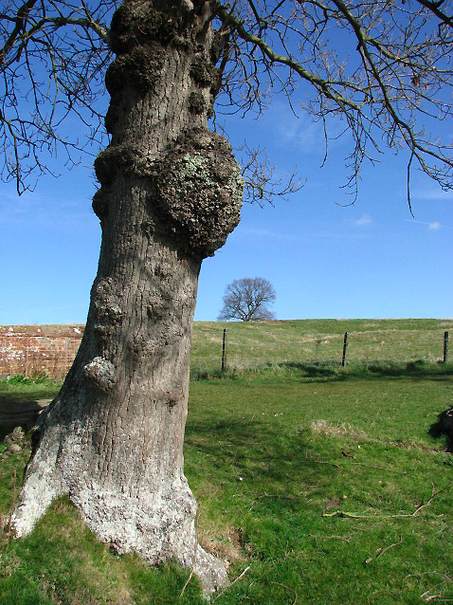
Burl on Tree Trunk.
Image by Evelyn Simak, Wikimedia Commons, CC BY SA-2.0

Sometimes there can be magic hidden within the most unlikely of places.

Take tree burls, for instance (or burrs, to our British friends).

These rounded, knotty growths found on tree trunks can seem very ugly.

Burls form when the tree is under some kind of stress, causing bud growth cells to develop in an abnormal way. Such stressors might include bacteria, viruses, fungi, insect infestations, or wounds. A burl is visible evidence of how the tree is dealing with these attacks.

They look rather like tumours, and mar the otherwise regular pattern of the bark.

Surely there’s nothing good about burls?

But there is.

Their unsightly exterior hides magnificence.

Few people know that inside these contorted and gnarled outgrowths is concealed something wonderful. The wood that burls yield is unusual and highly figured, making it valued and sought after by woodworkers and artists.

This unique wood is prized for its beauty and rarity, and is often used for veneers or inlays in fine furniture, trim or panelling inside luxury cars, and for household objects like bowls or pens, which become works of art.

Do you have a few “burls” in your life? Some knotty problems that have grown into a tangled mess?

Wonder if God could ever bring something good out of them?

He can!

Read more

The Best Tree to Climb

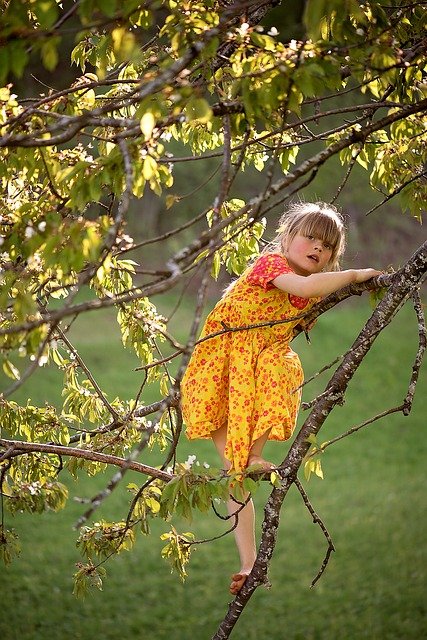
Image by Pezibear from Pixabay

Did you climb trees when you were a child? (Or do you still?)

As a bit of a tomboy in my childhood, I was an inveterate tree-climber.

But I quickly learned that some trees were a lot easier to climb than others.

Some trees have rough bark, prickly needles or sticky, oozing sap: I wouldn’t even bother trying to climb those. Other trees might have smooth bark, but their branches were too close together or too high off the ground for a child to manage.

The old apple tree in my backyard was perfect, however. It had been climbed by generations of neighbourhood kids, with the result that much of the bark on the best branches had been worn smooth by little hands.

Its limbs had open architecture, making them as welcoming to children as open arms. And they were low enough to the ground that even the youngest tyke could clamber up.

That tree was a magnet for the neighbourhood kids, a favourite spot for us to gather. I have fond memories of it!

As I look back, it seems to me that we as believers should try to be a bit more like that old apple tree.

How?

Read more

Inscribed in the Palms of His Hands

Image by Lisa Johnson from Pixabay

Have you ever been tempted to carve initials or names in the trunk of a tree?

Perhaps linking yours with those of someone you love, like “M + F” or “Josh loves Amanda”? The inscriptions could last for centuries, emblems immortalizing your love for generations to come.

(Of course, as a nature lover, I’d rather people not make carvings in the bark of a living tree. But I can understand the impulse to do so.)

In fact, people have been engraving things on tree trunks for millennia.

Birch trees are a natural choice due to their white bark. The smooth silver-grey bark of beech trees is also a magnet for trunk-carvers. Indo-European peoples have used it for writing-related purposes since antiquity. In some modern European languages, the words for “book” and “beech” are either very close or identical. No wonder the beech has been called the “patron tree” (sort of like a patron saint) of writers.

Did you know that God sometimes inscribes things in usual places, too?

Read more

Turn Over A New Leaf!

Image by Websi from Pixabay

If you live in an region where the trees drop their leaves in the fall, you’ll have noticed something.

Some species of trees are quick to cast off their leaves once the weather turns colder. In my area, the mountain ash trees are always the first to be denuded of leaves in October.

Other trees seem more reluctant to give up their leafy attire, holding on stubbornly until the frost and the wind finally make them release their grip. In my backyard, an old sugar maple is usually the laggard.

The most notorious holdouts, however, are immature beech trees. They retain their dried leaves through the whole winter, only dropping them when the new growth of spring finally forces the old leaves off the branches.

We can be a bit like young beech trees, too, I think.

We may hold on too long to something that isn’t working, despite evidence that we should let it go.

Or we may cling to a dream that is clearly unrealistic, even though God is trying to nudge us in a different direction.

Sometimes God is telling us that it’s time to turn over a new leaf, so to speak. He wants us to cast off outmoded ways of thinking and let go of unproductive ways of doing things.

Read more

The Seeds of Your Comeback Are Already Forming

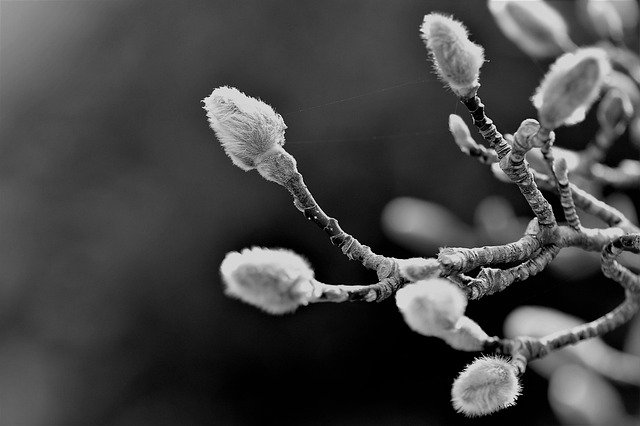
Magnolia Buds in Winter. Photo by Pitsch on Pixabay

It can be hard to hold on to hope when winter is coming, can’t it?

The trees and shrubs seem barren of any evidence that life will ever reemerge. It can be rather depressing.

But if you look closely at certain plants during winter, you’ll see something exciting:

Flower buds!

Yes, some plants, such as magnolias, actually set their flower buds for next year during the previous growing season. You can see these buds on the branches all winter long.

In the case of magnolias, the buds are encased in a hairy protective scale to insulate them from the cold, almost like a silvery fur coat. When the time is right the next spring, the flowers are all ready to burst open into glorious bloom.

Isn’t it encouraging to know that the promise of next year’s flowers is already there during the bleak winter?

In the same way, the seeds of your comeback are forming deep within you.

Read more

Bloom Where You’re Planted?

Photo by Jim Black on Pixabay

Some say you should “bloom where you’re planted.”

You can get all manner of products printed with this slogan: T-shirts, mugs, posters, and notecards.

But is that always the best advice? Maybe not. There’s something to be said for not staying in the same place for too long.

Your garden will tell you that if you plant the same type of vegetable in the same plot year after year, you’ll notice that the health of the plant and the yield it produces will begin to suffer. The plant will be attacked by more diseases and pests, and the nutrients in the soil will have been depleted by past crops of the same type.

The answer to this problem? Crop rotation.

Don’t plant the same type of vegetable or crop in the same location several years running. Mix it up; plant something new in that spot.

What about in life?

Does God intend us to stay rooted to the same location for much of our lives?

Read more

A Special Kind of Faith

Tulip bulbs at a flower market
Photo from Pxhere, Public Domain

They say that planting seeds is an act of faith.

I think that’s true: you put seeds in the ground in spring, hoping most will germinate and grow into a plant. If you’re lucky, you might see hints of growth in a few days, but often it can be weeks before a little green head pokes its way out of the soil.

If planting seeds takes faith, then I think it takes a special kind of faith to plant bulbs in the fall.

In the fall, you know the days are getting shorter and colder. The leaves are dropping from the trees, and tender plants are beginning to die from early frosts. You know that snow will soon blanket the garden to the depth of a couple feet. You’re heading into a barren season.

The precious tulip, daffodil or hyacinth bulbs that you’ve just planted will disappear from your view for many months. You’ll have no indication that they’re all right, let alone any guarantee that they’ll eventually bloom. They may fall prey to rabbits, squirrels or deer. Who knows what will happen to them?

And yet you still go ahead and plant fall bulbs, trusting that they’ll survive the frigid winter and bloom later in spring.

Some things in our lives take special faith to trust for, too, don’t they?

Read more

A Gardener’s Worst Enemy

Garlic Mustard
Photo by Simone VomFeld on Pixabay

Gardeners may not realize it, but they’re a bit like soldiers in wartime. Their enemies aren’t people, of course, but an even more insidious foe:

Weeds.

Weeds infiltrate our gardens like enemy invaders: dandelions, nettles, thistles, couch grass and garlic mustard, to name a few. They may seem innocent enough when there are only a few of them, but make no mistake: their ultimate aim is to take over and occupy your territory.

One vanguard weed may sneak in and settle, and you think nothing of it. If you’re not vigilant, though, that lone plant will soon multiply into an overwhelming host.

Or you pull up a dandelion and think that’s the end of it, but unless you’ve been very thorough, part of the taproot remains deep in the soil. The weed will come up again long after you thought you’ve eradicated it.

The seeds of weeds may stay in the soil of your garden and remain viable for years. They lie in wait like sleeper agents, waiting patiently for the right opportunity to spring up and attack.

The mission of weeds is simple but deadly: to compete with other plants for light, water and nutrients and crowd them out so they die. They’re dastardly adversaries, often needing less sunlight and water than other plants to survive.

And the worst part of it is that they’re very hard to kill.

Weeds are sort of like sin, aren’t they?

Read more

The Language of Flowers and the Language of God

Say it with flowers!
Wikimedia Commons, CC BY-SA-2.0

Flowers speak. Not just through their fragrance or their beauty, but with secret codes, too.

Perhaps you’ve heard of the “language of flowers” popular during Victorian times? This enchanting symbolic language enabled suitors to send coded messages to their paramours, ones that couldn’t be spoken aloud. The message depended on the particular flowers and colours chosen for the bouquet. An entire conversation could be carried out solely through flowers, with no words employed at all.

We all know that red roses symbolize true love, and we’d rightly guess that the forget-me-not begs that the giver be remembered. But did you know the following flower meanings?

Red carnation: My heart aches for you
Hyacinth: Your loveliness charms me
Canterbury bell: Your letter received
Yellow rose: Jealousy
Butterfly weed: Let me go
Weeping willow: Sadness

The Victorian language of flowers is a cryptic tongue. Most people only see the surface of the flower and not the symbolic meaning hidden within it.

God has His own “language of flowers,” but it actually encompasses all of creation. God is continually speaking to us through nature:

“For ever since the world was created, people have seen the earth and sky. Through everything God made, they can clearly see his invisible qualities—his eternal power and divine nature. So they have no excuse for not knowing God.” (Romans 1:20 NLT)

“The heavens proclaim the glory of God. The skies display his craftsmanship.” (Psalm 19:1 NLT)

If we listened in to what nature was saying about its Creator, what messages would be revealed?

Read more