What Birds Can Teach Us About Prayer

It’s good to keep in touch with those you love, isn’t it?

Even birds know this.

Birds will engage in what are called “contact calls” with their mate or others in their flock. Unlike a bird’s song, a call is usually shorter and quieter. The purpose of contact calls is to maintain a continuous connection and to keep track of where each bird is located.

The Northern Cardinal, for instance, makes a brief metallic “chip” sound to keep tabs on its mate’s location when they’re both foraging for food. The mate will respond with the same call as reassurance that they’re nearby and that all is well.

We humans engage in the same type of behaviour. We’ll often make a short phone call or send a quick text to a loved one to keep track of how they’re doing and to reassure them that we’re all right.

I think our Creator would appreciate getting a “contact call” from us on a regular basis, too.

We have the privilege of doing so through the medium of prayer.

For many of us, however, we only engage in prayer when we’re in a crisis.

Read more

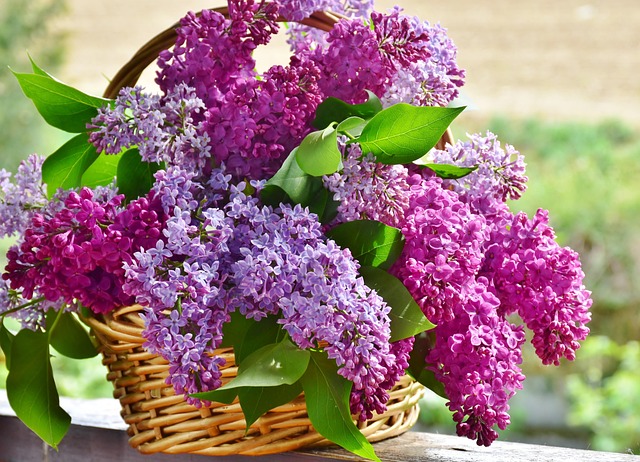
Prayers Live On, Like Lilacs

This is a special time of year in my part of Canada: the lilacs are speaking!

Lilac flowers don’t use words, of course. They announce their presence through their beautiful fragrance and delicate purple colour.

But there’s another way lilac shrubs can talk to us. Their very location can give us clues to the history of a place.

“…the story of early Canada can be read in the lilacs clustered where log cabins once stood, at the edge of abandoned fields—flowers marking time in centuries.” (from “A New Leaf,” by Merilyn Simonds)

Settlers to the northern parts of North America would often plant lilac shrubs on either side of the front door to their farmhouse. Generations or even centuries later, the building has long since been torn down, but the lilacs live on.

If you see a pair of huge lilac bushes in a field or empty lot, you can be pretty sure they used to flank someone’s front door. The house is gone, the family has moved away, but the fragrance of the lilacs they planted still fills the air.

This reminds me a bit of how prayers can live on, long after the person who prayed them is gone.

Read more

The Commander of the Universe Has Your Back

Canadian Army reservists train at Fort Pickett.
Photo from Virginia Guard Public Affairs.

Do you ever wish you had your own personal army?

It would come in handy, wouldn’t it, when your boss chews you out, or when someone cuts you off in traffic. Just summon your cavalry, and your tormentors would soon change their tune.

The Bible doesn’t promise us our own armed forces, but it does say that we can call on the name of the Commander of all the forces in the universe:

The Lord of Hosts.

This compound name for God is found over 270 times in Scripture. The Hebrew word for “hosts,” Sabaoth, can refer to human armies, angelic armies, or celestial bodies such as the sun, moon and stars. It’s a military term: God as Commander of all creation.

We see this name for God appear when David confronts Goliath. David says,

“You come to me with a sword and with a spear and with a javelin, but I come to you in the name of the LORD of Hosts, the God of the armies of Israel, whom you have defied.” (1 Samuel 17:45)

Goliath must have wondered what David was talking about. The only army he could see, the Israelite army under King Saul, had been quaking in their boots for 40 days at the thought of confronting him in battle. And now here’s this kid with a slingshot talking about armies in the plural. Faced with David’s “threat,” Goliath might have thought, “Oh, yeah, you and whose army?” Famous last words, indeed!

Elisha and his servant were given the privilege of seeing God’s Heavenly armies. When they were surrounded by the Aramean army, Elisha prayed that his servant’s spiritual eyes would be opened. They were able to see the fiery multitudes of the Lord’s armies protecting them, the horses and chariots of fire. It was actually the Arameans who were surrounded! (2 Kings 6:17).

The title “Lord of Hosts” includes control over military forces, but it is also employed in Scripture to describe God’s power over every aspect of life…

Read more

God Is Always a Step Ahead of You

Image by kariwil from Pixabay

Don’t you love it when someone anticipates your needs?

You feel good when someone makes provision for something you’ll require before the need even arises. Or when they start setting in motion something for you before you even ask.

It makes you feel sort of special, doesn’t it?

As a teen, I’d occasionally stop by a little fish-and-chip joint on my way home from school. This little restaurant had an open kitchen, and the owner/cook could see the street through the front window.

Carlo, the owner, would see me get off the bus and wait at the lights. He knew what I liked to eat, so he’d start deep-frying my halibut before I even crossed the street and entered his restaurant.

He anticipated what I’d want and started cooking it before I even placed my order.

God does the same sort of thing for us, too.

Read more

Your Heavenly Pinch Hitter

Image by Keith Johnston from Pixabay

Do you ever feel a bit shaky when you’re “up at bat” in life?

Sometimes we face daunting challenges, and don’t feel we’re capable of facing them on our own. We feel like we need a bit of help, someone who can take over for us when we’re at our weakest.

Someone like a pinch hitter.

In baseball, a pinch hitter acts as substitute who bats for a teammate. The pinch hitter might step in because the original player is injured, or when the one next up at bat is a less effective hitter, such as when a pitcher is worn out after six or seven innings pitching.

The manager might decide that the substitute has a better chance of helping their team to score, or may send in the pinch hitter to execute a specific play. In many cases, the pinch hitter will be called upon at a critical moment in the game.

Sounds like a handy person to have around, doesn’t it?

Did you know that believers have a heavenly “pinch hitter”?

This teammate who goes come to your aid is the Holy Spirit Himself.

Read more

What Is Your “Burning Bush”?

Image by Leonora Enking via Flickr CC BY-SA 2.0

You’ve got to love a plant that turns pink in the autumn.

I’m referring to the Euonymus alatus shrub, whose leaves change from green to a vivid, hot pink in the fall.

One of its nicknames is “burning bush,” because in autumn the shrub looks like it’s on fire. It must have reminded people of the burning bush Moses encountered in Exodus 3, through which God spoke to him.

I think God uses many different ways to speak to us today, each a “burning bush” tailored to our unique personalities.

Probably the primary way that God communicates to us is through Scripture. We read or hear a verse that seems to speak directly into our situation. By reading the words of Jesus, we “hear” God’s heart. We may also receive a word from the Holy Spirit or sense God’s guidance through prayer.

There are many instances in the Bible of God giving someone a message through dreams or visions. He may relay information in a dramatic fashion via an audible voice, or the more subtle “still, small voice.”

Other times God may use another person to convey something to you: a Christian speaker or author, or a family member or friend who’s a believer. God may also speak to you through the lyrics of a song or hymn.

He might be sending a message to you through your circumstances, especially via some difficult situation. Or, you may encounter a coincidence that seems like a “sign,” and you think God may be trying to tell you something.

With me, I feel that God occasionally “speaks” to me through nature.

Read more

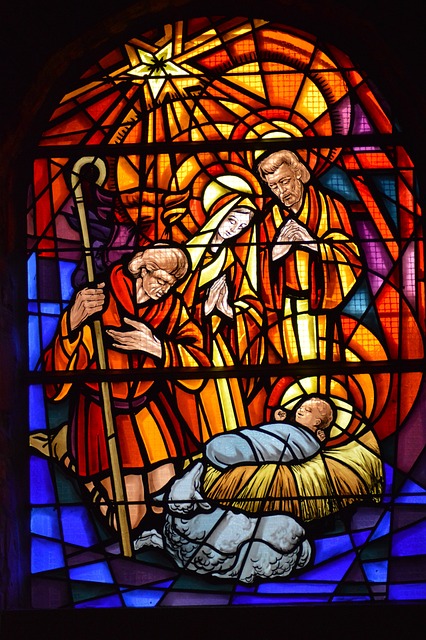
God With Us

I’m so pleased to share with you another guest post by my friend Veronica Gerber. I know you’ll be blessed by her wisdom!


What’s in a name?

So it’s Christmas time again … when we remember Jesus’ birth:

“For unto us a child is born, to us a son is given,
and the government will be on his shoulders.
And he will be called Wonderful, Counsellor,
Mighty God, Everlasting Father, Prince of Peace.” (Isaiah 9:6)

Do you have a favourite way of addressing God or thinking of Jesus?

I’m quite partial to Emmanuel which means “God with us” … ever alongside those who have eyes to see and ears to hear. It’s all too easy to lose sight, so to speak, of Jesus being with us in the day-to-day, especially during the hustle and bustle of Christmas, wouldn’t you say?

“Behold, a virgin shall be with child, and shall bring forth a son, and they shall call his name Emmanuel, which being interpreted is God with us.” (Matthew 1:23)

C.S. Lewis has written about God’s plan, “The whole thing narrows and narrows, until at last it comes down to a little point, small as the point of a spear—a Jewish girl at her prayers.”

Today as I read the accounts of Jesus’ birth I tremble to think of the fate of the world resting on the responses of two rural teenagers long ago. How many times did Mary review the angel’s words? How many times did Joseph second-guess his own encounter with an angel—“Was it just a dream?”—as he endured the hot shame of living among villagers who could plainly see the changing shape of his fiancée?

Mary, the virgin, whose parenthood was unplanned, had a commendable response to the angel. She heard the angel out, pondered the repercussions, and nonetheless replied:

“I am the Lord’s servant.
May it be to me as you have said.”

Often a work of God comes with two edges, great joy and great pain … as is the joy and travail of giving birth. In Mary’s matter-of-fact response, she embraced both. She was the first person to accept Jesus on his own terms, regardless of the personal cost. An ordinary beginning, an extraordinary journey.

It makes me wonder what work of God hinges on me at my prayers? And on you and your prayers?

Read more

Supercharge Your Prayers

Fertilized vs. unfertilized rows of maize. Wikimedia Commons, Public Domain

If you’re a gardener, you might sometimes look at your plants and decide that they’re missing something.

They need more “oomph.”

That’s where fertilizer comes in.

It can supercharge your flowers and vegetable plants by providing them with nutrients, such as nitrogen, that might be lacking in the soil.

With the addition of fertilizer, your plants can grow to their full potential and become as fruitful as they were meant to be.

Similarly, our prayers sometimes need more oomph, too.

But how do we give them that? How do we go about supercharging our prayers?

Read more

All in Good Time

They say cooking is an art, but baking is a science.

Part of what makes baking scientific is that it often calls for exact timing.

When you cook a roast or a turkey in the oven, the estimated cooking time can vary. The meat will be in the oven for several hours, and the recipe might give you as much as a half-hour window to start checking for doneness.

But when you’re baking cookies, the recipe will sometimes only give you a two-minute span to remove them from the oven. You have to be on your toes so you don’t miss this window, but at least you have a greater degree of certainty as to when the baking process will be over.

We humans crave certainty, don’t we? And that’s especially true when we’re going through difficult things in our personal lives.

Wouldn’t you love it if God told us exactly when our time of suffering would end?

Read more

Plant the Seeds of Your Dreams

Vintage seed packets. Photo by Douglas Coulter on Flickr. CC BY-NC-SA 2.0

If you’re a gardener, you probably have a stash of seeds tucked away.

I certainly do. I have a special bin in a cupboard where I store all my seed packets:

Envelopes containing seeds I’ve harvested over the years from plants in my garden. Seeds that friends have collected from their own gardens and then passed on to me, along with handwritten notes about the plants.

Packets of seeds I’ve bought the Botanic Garden’s seed fairs that look intriguing: seeds of rare plants, unusual colours of better known plants, or hard-to-find heirloom varieties of vegetables or flowers.

I have a veritable treasure trove of seeds in my cupboard!

There’s only one problem:

Those seeds are doing me absolutely no good sitting in a bin on a shelf.

I may take the packets out from time to time and look rapturously at the photos on the front. I might imagine how nice it would be to grow such gorgeous flowers or unusual veggies.

But until I put those seeds in the ground, all they are is wishful thinking and pretty pictures.

If I don’t take a step of faith and plant my seeds, I’ll never get a harvest.

Similarly, we sometimes leave our dreams and desires on a shelf, so to speak.

Read more