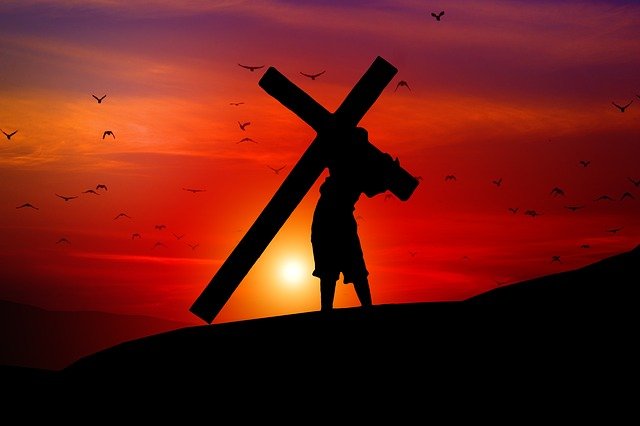
This Is Who We Are

Today, Canada celebrates its birthday! July 1st is Canada Day, a holiday on which we have parties, set off fireworks, and wave the flag.

We’re all attached to our national flags, aren’t we? Each is beautiful in its own way. Some flags have blocks of colour; some feature significant symbols; others have patterns of stars and stripes. A handful of countries depict plants or trees on their flags, mine among them.

Canada’s flag has a maple leaf at its centre. In fact, the nickname for our flag is the Maple Leaf. As a nature lover, I’m proud to have a symbol of a plant on my national flag, and especially pleased that it’s a leaf from one of my favourite trees.

Growing up, I loved maple trees: I climbed them, enjoyed the sugar and fudge made from their sap, collected their red and orange leaves in autumn to press and even jumped into raked-up piles of them.

I’d venture to say that all Canadians love maple trees. The trees themselves are beautiful and stately; the wood harvested from them is so strong it can be used as the flooring for bowling alleys; we harvest precious sap from them to make sought-after products like maple syrup; and the leaves turn gorgeous colours in the autumn.

The maple leaf is the emblem of Canada. It symbolizes who we are as a people: hardy, strong, nature-loving northerners.

Just as the maple tree is important to Canadians, there’s another tree which is very important to a certain group of people:

It’s the tree Christ was crucified on.

Read more

The Best Worst Day

There are some dates in history which stand out for being associated with awful events. Each year, when the calendar rolls around to these dates, we shudder in horror when we recall what happened.

Here are a few “worst days in history” that come to mind:

September 11th, 2001: the deadly World Trade Centre terrorist attacks in New York.

August 6, 1945: the dropping of a nuclear bomb on Hiroshima, Japan.

June 28, 1914: the day Archduke Ferdinand was assassinated, igniting the horrific First World War which killed tens of millions.

December 26, 2004: the Boxing Day tsunami which killed hundreds of thousands.

Some horrible dates in history have specific terms associated with them, such as:

December 7, 1941: the Japanese attack on Pearl Harbor, a date which President Roosevelt said would “live in infamy.”

October 29, 1929: called “Black Tuesday,” the worst day of a stock market crash which would send the world spiralling into the Great Depression.

What term is associated with the horrible day Jesus Christ was crucified?

“Good.” It’s called Good Friday.

But why?

Read more

The Game is Rigged

In life, it’s easy to conclude that you’re getting the short end of the stick.

On social media, everyone seems to be having a better life than you are.

At the grocery store, each year you pay a bit more for the same item.

In the parking lot, the other guy inevitably gets the spot you were waiting for.

At the casino, the house always wins.

Even your bathroom scale seems to be part of the conspiracy against you: surely it’s rounding up?

But with God, this isn’t true. The game is rigged in your favour!

How so?

When we think of the scales of justice and mercy, we assume they’re evenly balanced. But God actually has his finger on the scale, so to speak. For those who believe in His Son, it’s tilted heavily toward mercy.

“The Lord isn't slow about keeping his promises, as some people think he is. In fact, God is patient, because he wants everyone to turn from sin and no one to be lost.” (2 Peter 3:9)

God longs to be merciful (Isaiah 30:18). But at the same time He must judge sin.

How does He reconcile these two seemingly contradictory impulses?

At the Cross.

Read more

Lest We Forget

View from D-Day Landing Craft, June 6, 1944

Each year we mark November 11th as Remembrance Day in Canada (Veterans Day in the US).

On this special day, we remember the servicemen and -women who lost their lives to ensure the freedom we cherish so deeply today.

The numbers are staggering: it’s estimated that over 400,000 U.S. military personnel lost their lives during World War II. The US National D-Day Memorial Foundation estimates that over 4,000 Allied servicemen lost their lives on June 6, 1944 (D-Day) alone.

The fatalities during World War I are equally appalling, with close to 60,000 Canadians having lost their lives in service. The best estimate of war historians is that over 140,000 Allied soldiers lost their lives during the hellish Battle of the Somme alone in 1916 (including my great-uncle Pte. Robert John Tisdale, still in his teens).

The numbers who lost their lives in the Korean War, the Gulf War, Afghanistan, and others only adds to the toll of war’s terrible cost.

But wait a minute…every sentence I just wrote contained a mistake. Did you spot it?

Read more

The Language of Flowers and the Language of God

Say it with flowers!
Wikimedia Commons, CC BY-SA-2.0

Flowers speak. Not just through their fragrance or their beauty, but with secret codes, too.

Perhaps you’ve heard of the “language of flowers” that was popular during Victorian times?

This enchanting symbolic language enabled suitors to send coded messages to their paramours, ones that couldn’t be spoken aloud. The message depended on the particular flowers and colours chosen for the bouquet. An entire conversation could be carried out solely through flowers, with no words employed at all.

We all know that red roses symbolize true love, and we’d rightly guess that the forget-me-not begs that the giver be remembered. But did you know the following flower meanings?

Red carnation: My heart aches for you
Hyacinth: Your loveliness charms me
Canterbury bell: Your letter received
Yellow rose: Jealousy
Butterfly weed: Let me go
Weeping willow: Sadness

The Victorian language of flowers is a cryptic tongue. Most people only see the surface of the flower and not the symbolic meaning hidden within it.

God has His own “language of flowers,” but it actually encompasses all of creation. God is continually speaking to us through nature:

“For ever since the world was created, people have seen the earth and sky. Through everything God made, they can clearly see his invisible qualities—his eternal power and divine nature. So they have no excuse for not knowing God.” (Romans 1:20)
“The heavens proclaim the glory of God. The skies display his craftsmanship.” (Psalm 19:1)

If we listened in to what nature was saying about its Creator, what messages would be revealed?

Read more

What Love Looks Like

The incomparable Taj Mahal, India

The Taj Mahal, in Agra, India, is considered to be one of the world’s most beautiful buildings, and rightly so.

Built from white marble, it was commissioned in 1631 by Shah Jahan as a memorial to his favourite wife, Mumtaz Mahal, who died that year giving birth to their fourteenth child.

For many in India and around the world, the Taj Mahal is an iconic symbol of love. Every stone and jewel used in its construction speaks of the tremendous affection the Shah had for his wife, and his grief at her passing. To many people, the Taj Mahal is the embodiment of love.

What does love look like to you?

Read more

The Stand-In

Daniel Radcliffe as Harry Potter.
Photo by longplay on Flickr.

If you’re a Harry Potter fan, this post might have special resonance for you.

While much media attention has focussed on the astonishing success of the Harry Potter juggernaut over the years, perhaps less attention has been paid to the stories of the unsung heroes behind the scenes who have worked so hard to create the films in the franchise.

A recent documentary, “David Holmes: The Boy Who Lived,” sheds light on the poignant story of one of these individuals.

David Holmes was chosen early on to be the stunt double for Daniel Radcliffe, who played Harry Potter in the films. Starting with the very first film, and for the next ten years, David and Daniel worked closely together and developed a strong bond.

David’s exceptional talents as a gymnast enabled him to perform breathtaking stunts. As a stand-in for Daniel, David’s skills were brought into play whenever a stunt was deemed too dangerous for the lead actor himself.

All went well, until the filming of the next-to-last Harry Potter movie in 2009.

While filming a scene for “Harry Potter and the Deathly Harrows, Part One,” a tragic accident left David paralyzed with a spinal injury, turning his world upside down.

The documentary is an inspiring account of David’s story and of the bond that still exists between the two men. It also depicts the reverberations the accident had on Daniel’s life, and how he navigated the complex mix of guilt and admiration brought on by seeing the great cost his friend bore for taking his place.

And therein lies the lesson we can learn from this as believers.

We, too, have someone who stood in our place and paid a terrible price for doing so.

Read more

God Is Always a Step Ahead of You

Image by kariwil from Pixabay

Don’t you love it when someone anticipates your needs?

You feel good when someone makes provision for something you’ll require before the need even arises. Or when they start setting in motion something for you before you even ask.

It makes you feel sort of special, doesn’t it?

As a teen, I’d occasionally stop by a little fish-and-chip joint on my way home from school. This little restaurant had an open kitchen, and the owner/cook could see the street through the front window.

Carlo, the owner, would see me get off the bus and wait at the lights. He knew what I liked to eat, so he’d start deep-frying my halibut before I even crossed the street and entered his restaurant.

He anticipated what I’d want and started cooking it before I even placed my order.

God does the same sort of thing for us, too.

Read more

The Ultimate Love Story

Image by lillaby from Pixabay

Valentine’s Day is just around the corner!

On this beloved day of the calendar, we celebrate our love for that special someone in our lives. Many of us will be giving (or receiving) boxes of chocolates and bouquets of roses as an expression of that love.

But sometimes those roses have thorns, don’t they?

The truth is, love sometimes hurts. It can cost us something.

We think of Valentine’s Day as simply about romantic love, but the history behind this day shows us that true love is often about sacrifice.

This was certainly the case for Saint Valentine of Rome, for whom Valentine’s Day is named.

This third-century priest was known for his evangelistic work and for aiding persecuted Christians. He was martyred for his faith on February 14 in AD 269, executed by order of Emperor Claudius for refusing to deny Christ.

Saint Valentine patterned for us a life focussed on loving others; he refused to deny the Source of that love, even if it cost him his life.

Christ modelled that sort of sacrificial love, too.

He would let nothing stop His purpose of showing love to others by securing for them a way to spend eternity with Him, even if it cost Him His life.

And it did.

Read more

Easter: Jesus’ Finest Hour

Image by Gerd Altmann from Pixabay

What makes something your “finest hour”?

To answer that question, we first have to reach back to June 16, 1940, when that phrase was made famous in a speech by British Prime Minister Winston Churchill.

World War Two had begun the previous year. France, Poland, Norway, Denmark, Belgium and the Netherlands had all fallen under the jackboots of the Nazis. It was a dark time, and the only thing standing between Hitler and control of the rest of Europe was the island nation of Britain.

In this context, Churchill prepared his people for the immense sacrifices that would be asked of them in the coming battles. He told them that the survival of their nation and way of life lay at stake. He let them know the consequences both of success and of failure in the task ahead of them.

He concluded his speech with one of the great rallying cries in history:

“Let us therefore brace ourselves to our duties, and so bear ourselves that, if the British Empire and its Commonwealth last for a thousand years, men will still say, ‘This was their finest hour.’ ”

Churchill was telling the British people that their finest hour would not be a time of ease or comfort. Rather, it would encompass pain, sacrifice, duty, and selflessness.

The same holds true for us.

And the same held true for Jesus in His finest hour.

Read more