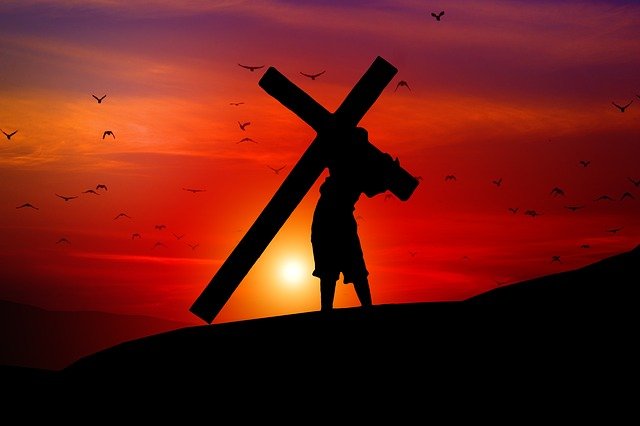
The Best Worst Day

There are some dates in history which stand out for being associated with awful events. Each year, when the calendar rolls around to these dates, we shudder in horror when we recall what happened.

Here are a few “worst days in history” that come to mind:

September 11th, 2001: the deadly World Trade Centre terrorist attacks in New York.

August 6, 1945: the dropping of a nuclear bomb on Hiroshima, Japan.

June 28, 1914: the day Archduke Ferdinand was assassinated, igniting the horrific First World War which killed tens of millions.

December 26, 2004: the Boxing Day tsunami which killed hundreds of thousands.

Some horrible dates in history have specific terms associated with them, such as:

December 7, 1941: the Japanese attack on Pearl Harbor, a date which President Roosevelt said would “live in infamy.”

October 29, 1929: called “Black Tuesday,” the worst day of a stock market crash which would send the world spiralling into the Great Depression.

What term is associated with the horrible day Jesus Christ was crucified?

“Good.” It’s called Good Friday.

But why?

Read more

The Game is Rigged

In life, it’s easy to conclude that you’re getting the short end of the stick.

On social media, everyone seems to be having a better life than you are.

At the grocery store, each year you pay a bit more for the same item.

In the parking lot, the other guy inevitably gets the spot you were waiting for.

At the casino, the house always wins.

Even your bathroom scale seems to be part of the conspiracy against you: surely it’s rounding up?

But with God, this isn’t true. The game is rigged in your favour!

How so?

When we think of the scales of justice and mercy, we assume they’re evenly balanced. But God actually has his finger on the scale, so to speak. For those who believe in His Son, it’s tilted heavily toward mercy.

“The Lord isn't slow about keeping his promises, as some people think he is. In fact, God is patient, because he wants everyone to turn from sin and no one to be lost.” (2 Peter 3:9)

God longs to be merciful (Isaiah 30:18). But at the same time He must judge sin.

How does He reconcile these two seemingly contradictory impulses?

At the Cross.

Read more

The Mystery of the Larch Tree

It’s easy to categorize trees, isn’t it?

Deciduous trees lose their leaves in the autumn. Coniferous trees bear cones and keep their needles throughout the year. It’s simple to tell them apart.

Case closed, right?

But what about the larch tree? It bears cones and has needles like a conifer, but the needles drop off each autumn like a deciduous tree.

So which is it, coniferous or deciduous?

The answer to this mystery is that it’s both at once. The larch tree is actually a “deciduous conifer.”

Larches fall into a special third category of tree. It’s a member of the pine family, and yet its wood is harder than pine wood; it’s more like the hardwood of deciduous trees. It has needles like a conifer, but they turn a golden yellow each autumn and drop off, like the leaves of a deciduous tree.

Larches are a rare combination of deciduous and coniferous, unique trees with characteristics of both.

You could say that larches are two things at the same time.

In the same way, you could say that Jesus was two things at once. Just as the larch is one tree with two natures, Jesus was one being with dual natures: both God and human.

Read more

The Ultimate Love Story

Image by lillaby from Pixabay

Valentine’s Day is just around the corner!

On this beloved day of the calendar, we celebrate our love for that special someone in our lives. Many of us will be giving (or receiving) boxes of chocolates and bouquets of roses as an expression of that love.

But sometimes those roses have thorns, don’t they?

The truth is, love sometimes hurts. It can cost us something.

We think of Valentine’s Day as simply about romantic love, but the history behind this day shows us that true love is often about sacrifice.

This was certainly the case for Saint Valentine of Rome, for whom Valentine’s Day is named.

This third-century priest was known for his evangelistic work and for aiding persecuted Christians. He was martyred for his faith on February 14 in AD 269, executed by order of Emperor Claudius for refusing to deny Christ.

Saint Valentine patterned for us a life focussed on loving others; he refused to deny the Source of that love, even if it cost him his life.

Christ modelled that sort of sacrificial love, too.

He would let nothing stop His purpose of showing love to others by securing for them a way to spend eternity with Him, even if it cost Him His life.

And it did.

Read more

Thirteen By Any Other Name…Is Still Thirteen

I recently realized that I wasn’t living in the house that I thought I was.

Last summer I moved into a house bearing the number 15. I love everything about it: the house itself, the neighbours, and the area’s community spirit.

It wasn’t until some months later that I realized that I didn’t actually live at #15: I live at #13. The house next door is #11, and opposite my house is #12. Counting from the bottom of the street, mine is the thirteenth house.

So why didn’t the city call it #13 when it was assigning street numbers to the houses?

In many countries, the number 13 has unlucky connotations. Why? One reason is that there were thirteen present at the Last Supper, including Judas, who would betray Jesus.

Some people are superstitious about this number, and try to avoid its “bad luck” by keeping away from anything labelled 13. There’s even a word for the fear of the number thirteen: triskaidekaphobia.

The result is that many companies and cities fudge their numbering to avoid 13. This is why many hotels and tall buildings seem to lack a thirteenth floor: the elevator buttons skip from floor 12 to 14.

The thirteenth floor continues to exist, as does the thirteenth house on a street: we haven’t erased them. But we just call them by other names. We simply pretend that they’re actually the fourteenth floor or the fifteenth house. Everyone goes along with this fiction because it means we don’t have to face reality. We’re deluding ourselves, of course, but it seems we prefer to live in denial.

We do the same with sin, don’t we?

We call it by other names so we don’t have to face up to the reality of what it really is.

Read more

The Wrong Yardstick

Image by Ariel from Pixabay

Do you have a friend who’s a bit of a screw-up?

No? You’ve got to get one!

Friends who make a shambles of things are amazing, because they make you feel so competent by comparison.

Your friend Sue might misplace one of her children, regularly set off the smoke detector when cooking, or accidentally rear-end a police car.

You roll your eyes smugly and think, “At least I’m not as bad as she is!”

In the same way, we like to justify ourselves before God by comparing our sins to those of others.

We think, “At least I’m not a bank robber or a serial killer. I’m not as bad as others. On the whole, I figure I’m a pretty decent person. I don’t think I really qualify as a ‘sinner.’ ”

The problem with this is that we’re using the wrong yardstick.

Instead of measuring ourselves against other people, we should be seeing whether we pass muster according to God’s standards.

Read more

Easter: Jesus’ Finest Hour

Image by Gerd Altmann from Pixabay

What makes something your “finest hour”?

To answer that question, we first have to reach back to June 16, 1940, when that phrase was made famous in a speech by British Prime Minister Winston Churchill.

World War Two had begun the previous year. France, Poland, Norway, Denmark, Belgium and the Netherlands had all fallen under the jackboots of the Nazis. It was a dark time, and the only thing standing between Hitler and control of the rest of Europe was the island nation of Britain.

In this context, Churchill prepared his people for the immense sacrifices that would be asked of them in the coming battles. He told them that the survival of their nation and way of life lay at stake. He let them know the consequences both of success and of failure in the task ahead of them.

He concluded his speech with one of the great rallying cries in history:

“Let us therefore brace ourselves to our duties, and so bear ourselves that, if the British Empire and its Commonwealth last for a thousand years, men will still say, ‘This was their finest hour.’ ”

Churchill was telling the British people that their finest hour would not be a time of ease or comfort. Rather, it would encompass pain, sacrifice, duty, and selflessness.

The same holds true for us.

And the same held true for Jesus in His finest hour.

Read more

He Loves Me, He Loves Me Not

Did you ever play games with flowers as a child?

Perhaps you squeezed the “mouth” of a snapdragon flower to make it “talk.”

Or maybe you held a buttercup underneath the chin of a friend. If it reflected back a yellow colour, it meant that they liked butter (apparently, everyone does!).

Probably one of the most famous flower games involves the daisy: it’s considered the oracle of affairs of the heart. The daisy supposedly has the ability to tell you if your sweetheart truly loves you or not.

It goes like this: you pluck off each petal of a daisy in turn, and as you do so, alternately say, “He loves me,” or “He loves me not.”

The final petal tells you which statement is true.

You’re left in suspense the whole time, and worry about what the last petal will reveal.

I know this is just a children’s game, but even as adults we sometimes worry if we’re truly loved, don’t we?

Human love can be a fickle thing, and we can often be unsure about the commitment and loyalty of those we love.

That’s why it’s so good to know that with Jesus, we’re never left wondering whether He loves us or not. He never leaves us in suspense as to whether He cares.

He always does.

And He always will.

Read more

Winter, the Great Leveller

Photo by Mark Evans on Flickr, CC BY-ND-2.0

If you live in a cold climate, as I do, you’ll have noticed that winter has a way levelling us out.

It shows us we’re all in the same boat.

Let me explain:

No matter how rich or poor you are, you’re going to have to deal with snow one way or another. If you live in a cold climate, there’s no escaping this fact.

Whether you drive a snazzy, expensive car or a modest runabout, winter has a way of making all vehicles look rather crappy. No matter how much you paid for your car, road salt and slush will cover it with an ugly grey-brown film.

Image by pasja1000 from Pixabay

And despite searching high and low for the most fashionable winter parka, you’ll still end up looking like an Arctic explorer, indistinguishable from everyone else.

Winter has a way of humbling us.

I think sin has the same sort of levelling effect.

Whatever walk of life we come from, we’re all going to have to deal with our sins somehow. There’s no escaping it.

No matter how wealthy or poor we are, when sin sticks to us, it makes all of us look rather stained. Whether a pauper or a prince, the muck of sin covers us all.

And even if we try to gussy up our image and paper over our sins, it simply doesn’t work. We’re fooling ourselves if we think we’re any better or different than anyone else.

When it comes to sin, we’re all in the same boat.

Read more

The Law of the Universe

Newton’s cradle, a device which illustrates conservation of momentum and conservation of energy. Image by 3D Animation Production Company from Pixabay

If you were paying attention during physics class in high school, you’ll know that there are certain laws that the natural world abides by.

The Law of Gravity, for instance. Legend has it that this principle was discovered by a young Isaac Newton when he was hit on the head by an apple which fell from the tree he was sitting under.

Or the Law of Inertia, which states that an object at rest or in motion will continue in that state unless acted upon by an external force. So when I’m sitting in my easy chair and don’t want to get up to do any housework, I’m not being lazy. I’m simply obeying the law of inertia.

I recently heard a wag rephrase Newton’s Third Law of Motion (“For every action there is an equal and opposite reaction”). He dubbed it the Law of Emotion: for every male action there is a female overreaction!

Then there’s the Law of Conservation of Energy, which says that energy can’t be created or destroyed, but can be altered from one form to another. For instance, our bodies transform the chemical energy in food into kinetic energy to help us move around.

I think sin has a principle attached to it which is similar to the Law of Conservation of Energy.

Sin can’t just disappear. It has to be dealt with in some way.

But it can be transformed.

As author Dorothy Sayers said, “There is only one real law—the law of the universe. It may be fulfilled either by way of judgement or by the way of grace, but it must be fulfilled one way or the other.”

Read more