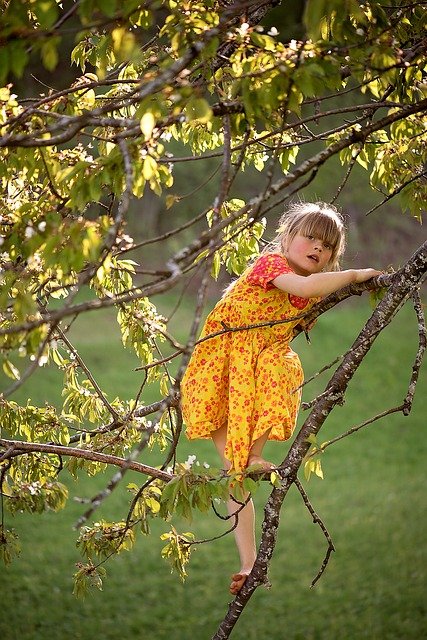
Did you climb trees when you were a child? (Or do you still?)
As a bit of a tomboy in my childhood, I was an inveterate tree-climber.
But I quickly learned that some trees were a lot easier to climb than others.
Some trees have rough bark, prickly needles or sticky, oozing sap: I wouldn’t even bother trying to climb those. Other trees might have smooth bark, but their branches were too close together or too high off the ground for a child to manage.
The old apple tree in my backyard was perfect, however. It had been climbed by generations of neighbourhood kids, with the result that much of the bark on the best branches had been worn smooth by little hands.
Its limbs had open architecture, making them as welcoming to children as open arms. And they were low enough to the ground that even the youngest tyke could clamber up.
That tree was a magnet for the neighbourhood kids, a favourite spot for us to gather. I have fond memories of it!
As I look back, it seems to me that we as believers should try to be a bit more like that old apple tree.
How?
Read more
 The Faith Cafe