A Special Kind of Faith

Tulip bulbs at a flower market
Photo from Pxhere, Public Domain

They say that planting seeds is an act of faith.

I think that’s true: you put seeds in the ground in spring, hoping most will germinate and grow into a plant. If you’re lucky, you might see hints of growth in a few days, but often it can be weeks before a little green head pokes its way out of the soil.

If planting seeds takes faith, then I think it takes a special act of faith to plant bulbs in the fall.

In the fall, you know the days are getting shorter and colder. The leaves are dropping from the trees, and tender plants are beginning to die from early frosts. You know that snow will soon blanket the garden to the depth of a couple feet.

You’re heading into a barren season.

The precious tulip, daffodil, or hyacinth bulbs that you’ve just planted will disappear from your view for many months. You’ll have no indication that they’re all right, let alone any guarantee that they’ll eventually bloom. They may fall prey to rabbits, squirrels or deer. Who knows what will happen to them?

And yet you still go ahead and plant fall bulbs, trusting that they’ll survive the frigid winter and bloom later in spring.

Some things in our lives take special faith to trust for, too, don’t they?

Read more
The Commander of the Universe Has Your Back

Canadian Army reservists train at Fort Pickett.
Photo from Virginia Guard Public Affairs.

Do you ever wish you had your own personal army?

It would come in handy, wouldn’t it, when your boss chews you out, or when someone cuts you off in traffic. Just summon your cavalry, and your tormentors would soon change their tune.

The Bible doesn’t promise us our own armed forces, but it does say that we can call on the name of the Commander of all the forces in the universe:

The Lord of Hosts.

This compound name for God is found over 270 times in Scripture. The Hebrew word for “hosts,” Sabaoth, can refer to human armies, angelic armies, or celestial bodies such as the sun, moon and stars. It’s a military term: God as Commander of all creation.

We see this name for God appear when David confronts Goliath. David says,

“You come to me with a sword and with a spear and with a javelin, but I come to you in the name of the LORD of Hosts, the God of the armies of Israel, whom you have defied.” (1 Samuel 17:45)

Goliath must have wondered what David was talking about. The only army he could see, the Israelite army under King Saul, had been quaking in their boots for 40 days at the thought of confronting him in battle. And now here’s this kid with a slingshot talking about armies in the plural. Faced with David’s “threat,” Goliath might have thought, “Oh, yeah, you and whose army?” Famous last words, indeed!

Elisha and his servant were given the privilege of seeing God’s Heavenly armies. When they were surrounded by the Aramean army, Elisha prayed that his servant’s spiritual eyes would be opened. They were able to see the fiery multitudes of the Lord’s armies protecting them, the horses and chariots of fire. It was actually the Arameans who were surrounded! (2 Kings 6:17).

The title “Lord of Hosts” includes control over military forces, but it is also employed in Scripture to describe God’s power over every aspect of life…

Read more

Life on Mars

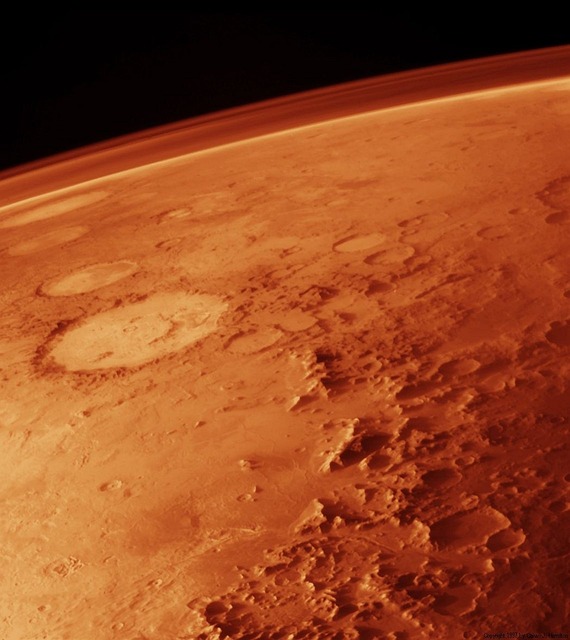
Image of Mars by WikiImages from Pixabay

Is there life on Mars?

For generations, we earthlings have conjectured about the possible existence of alien life on the planet next door to us.

I’m afraid this blog can neither confirm nor deny the presence of little green men on Mars.

Scientists do tell us, however, that water once flowed on its surface.

That’s right: the Red Planet was once blue, like Earth.

So why is Mars known today as a dusty, dry, barren place, whereas Earth still has abundant supplies of water?

The key lies in Earth’s magnetic field.

A planet’s magnetic field acts as a shield, protecting its atmosphere from being blown into space by radiation from its star.

Mars once had a magnetic field of its own. But is was both farther from the Sun and smaller than Earth to begin with. Scientists theorize that over time, its molten iron core cooled, and with it the dynamo powering its magnetic field.

As Mars’ magnetic field weakened, the Sun’s solar wind slowly stripped away its atmosphere. The water which once flowed on its surface dried up, until there was nothing left but some empty channels to hint at the rivers which once coursed through them.

Simply put, Mars let its fire burn out.

I think we can learn an important lesson from our planetary neighbour.

We shouldn’t let our fire for God fizzle out.

Read more

Precedented Times Are Coming

Aren’t you a bit tired of living in “unprecedented times”?

You’re not alone. I saw a slogan on a T-shirt the other day which read, “I miss precedented times.”

We’re all longing to go back to our normal, predictable lives, the way they used to be.

But even when we’re able to return to a semblance of our pre-pandemic existence, we still aren’t guaranteed a life without injustices, sorrows and unwelcome surprises.

Jesus told us that “in this world, you will have trouble.” And ain’t that the truth!

Even so, we can have hope that with God, we can still live in “precedented times.” How so?

When you read the Bible, you find there are precedents to receiving healing, restoration, wholeness and joy, no matter how dire the circumstances may seem.

Read more

Blessings of the Barren Season

Looking out the window here at The Faith Cafe, I notice that the deciduous trees in the park have dropped almost all of their leaves by now.

It’s always sad to have to say goodbye to the autumn leaves, isn’t it? When the last one has fallen, you’re left with a sense of loss, because you know you’re heading into the barren season of winter.

But a funny thing happens when a tree has lost its leaves: you can now see things that you didn’t know were there before.

Read more