The Other Side of the Window

Image from PIckpik

While walking in my neighbourhood the other day, I saw something mysterious.

On one person’s front lawn there stood a jumble of foot-high letters of the alphabet, placed upright on stakes near the front window.

But the letters seemed randomly placed; they didn’t form coherent words. Was this some sort of secret code? Also, the letters were backwards from the perspective of anyone walking by on the sidewalk.

I then realized that they were meant to be read by someone inside the house.

When I deciphered the letters with this in mind, it suddenly made sense. Someone inside looking out the front window would see this message clearly spelled out on their front lawn:

“Happy Birthday!”

I was looking at the letters from the wrong side of the window. If I had been inside the home gazing out, the message would have been clear from the get-go.

I think this is true of a lot of things in our lives.

Some things we go through as believers won’t make sense until we’re on the “other side of the window.” By that I mean when we’re in Heaven, looking back at our time on Earth.

Read more

When Nature Sings, Sing Along!

Image of crocuses by Annette Meyer from Pixabay

No matter where you live, spring is a time of joy.

In my part of the world, shy white snowdrops are the first flowers to bloom in spring.

Crocuses, slightly bolder in colour with their yellows or purples, are the next to make an appearance.

The tulips take their time, first poking the tips of their leaves above the ground like a periscope, as if checking to see whether it’s safe to emerge. They then burst forth in bright, vivid colours, their blooms held aloft on tall stems like upright trumpets.

“The flowers are springing up, the season of singing birds has come, and the cooing of turtledoves fills the air.” (Song of Solomon 2:12)

After a long, colourless winter, it makes my heart sing to see the arrival of spring.

But do the flowers and trees themselves sing? And if they do, what is their song telling us?

Author Linda Brooks, in her 2018 book, “Orchestra In My Garden,” seems to share my sentiments about the spring season:

”Once the snow disappears and my garden starts to emerge from its slumber, I cannot jump up fast enough to catch the first light, to lose (and find) myself among kindred spirits and bend my ear to their voices. No, I am not deluded. I do understand that plants are not human and cannot speak, but no one can convince me that they do not sing.”

She’s right: plants do sing. But she’s perhaps missed who they’re singing to.

They sing to God.

Read more

The Beauty of Redeemed Brokenness

Image of parrot tulip by Coanri/Rita via Flickr CC BY-NC-ND-2.0

What’s your favourite flower?

Even though I certainly love roses, the tulip holds a special place in my heart. It’s not as showy or fragrant as a rose, but it brings such joy in spring after a long winter.

Among the many types of tulips, I especially like the variegated ones (with multicoloured petals).

But did you know that the dramatic colour combinations of variegated tulips are caused by a virus?

Gardeners had long noticed that tulip petals occasionally “broke” into unusual patterns. But it wasn’t until the late 1500s that botanists realized that the beautiful mixed colouring arising spontaneously in some tulips was actually the result of a disease.

While the tulip-breaking virus causes lovely variegated colouring, it also weakens the tulip bulb, eventually leading to the death of its genetic line.

So how is it that we can still enjoy variegated tulips today? Why haven’t they all died out?

Fortunately, botanists centuries ago learned to graft healthy tulip bulbs onto the diseased or “broken” ones, preserving their lineage. Today, we can enjoy countless cultivars in a dizzying array of colours and patterns.

Doesn’t this remind you of what God does for us?

Read more

Beauty Out Of Brokenness

Photo by treenabelle on Pixabay

Once this pandemic is over, psychologists warn that many of us may suffer from post-traumatic stress for some time to come.

Some of us will have seen our business close down for good, suffered isolation and loneliness, or may have even lost a loved one during the COVID-19 crisis.

But is PTSD a given in these circumstances? Is there different outcome that can occur, an unexpected benefit that may arise out of these difficult times?

Psychologists say yes: there’s such a thing as post-traumatic growth.

It’s been found in survivors of war, cancer, and natural disasters. Some people emerge from a crisis with increased spirituality, a greater sense of personal strength, new priorities and closer relationships with others. What could have broken them actually made them better.

This phenomenon reminds me a bit of “sea glass.” Sea glass, or beach glass, found washed up on shores, starts out as merely cast-aside pieces of broken glass. Perhaps they’ve been tossed overboard from a ship, or thrown into the sea from land along with other garbage.

These shards of glass endure years of being buffeted against the stones of the sea bottom. It seems like they’re being dashed about mercilessly by the relentless action of the waves. Surely no good could come of this?

But then, something almost magical emerges.

Read more

What Makes A Garden?

Japanese garden. Image by Drobekpetr from Pixabay

If something doesn’t fit your idea of a garden, is it still a garden?

I must confess to having trouble warming up to Japanese gardens. They often feature distinctive elements such as conifers and moss, gravel raked to suggest waves in water, stone lanterns or water basins, and perhaps a bridge.

But to me, a garden isn’t really a garden unless its primary focus is an abundance of colourful flowers.

So are Japanese gardens still gardens? Very much so!

They still celebrate nature, even if some elements are suggested rather than incorporated literally. They still reflect the beauty that God has placed on this Earth. They still have the essentials down pat.

I guess I need to expand my idea of what a garden is.

We shouldn’t look askance at the way others have created their gardens. God smiles on them all.

Perhaps this is a lesson we can apply to the Christian life, too.

Read more

Beauty in Unexpected Places

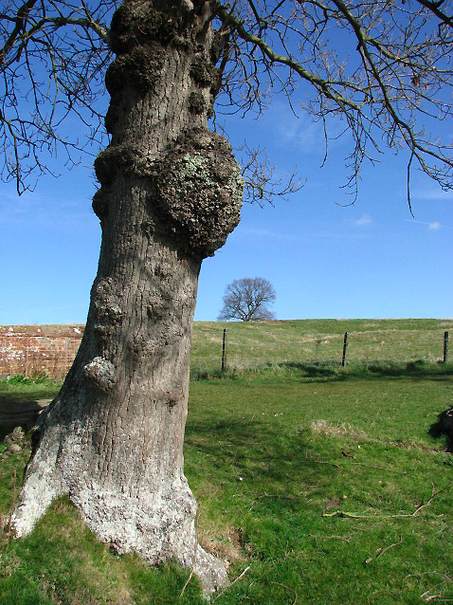
Burl on Tree Trunk.
Image by Evelyn Simak, Wikimedia Commons, CC BY SA-2.0

Sometimes there can be magic hidden within the most unlikely of places.

Take tree burls, for instance (or burrs, to our British friends).

These rounded, knotty growths found on tree trunks can seem very ugly.

Burls form when the tree is under some kind of stress, causing bud growth cells to develop in an abnormal way. Such stressors might include bacteria, viruses, fungi, insect infestations, or wounds. A burl is visible evidence of how the tree is dealing with these attacks.

They look rather like tumours, and mar the otherwise regular pattern of the bark.

Surely there’s nothing good about burls?

But there is.

Their unsightly exterior hides magnificence.

Few people know that inside these contorted and gnarled outgrowths is concealed something wonderful. The wood that burls yield is unusual and highly figured, making it valued and sought after by woodworkers and artists.

This unique wood is prized for its beauty and rarity, and is often used for veneers or inlays in fine furniture, trim or panelling inside luxury cars, and for household objects like bowls or pens, which become works of art.

Do you have a few “burls” in your life? Some knotty problems that have grown into a tangled mess?

Wonder if God could ever bring something good out of them?

He can!

Read more

Golden at the Broken Places

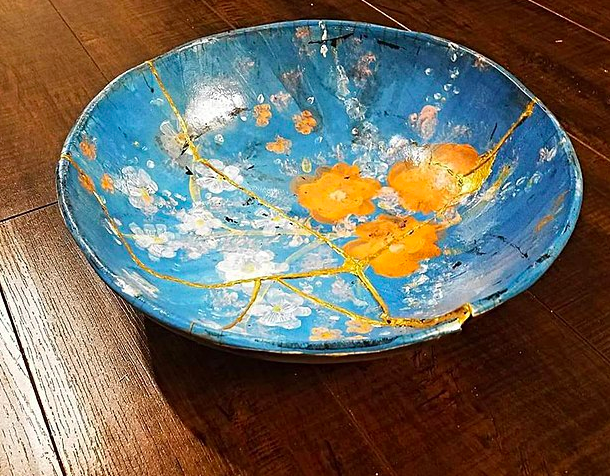
Bowl repaired by Kintsugi method by artist Ruthann Hurwitz
Wikimedia Commons CC BY-SA-4.0

We all shudder at the sound of something breaking, don’t we? We can’t help but wince when we hear glass or crockery shattering into pieces on the floor.

Why do we have that involuntary reaction? Because we know that the object probably can’t be repaired: it’s likely to be damaged irreparably, and must be thrown away.

We’re wincing at the sound of loss.

But what if there were a way to not only put the pieces back together, but to make the object more beautiful than it was before, despite the breaks?

The Japanese long ago invented a way of doing just that, and have even made an art form of it. It’s called “Kintsugi,” which means “golden joinery.” The process involves mending the cracks in pottery with gold lacquer. Instead of trying to hide the damaged areas, they are instead highlighted with something precious. The end result is a restored piece of pottery that is beautiful at the broken places.

But what happens if it’s not a piece of pottery that is broken, but a life? How can a shattered heart be put back together?

Read more

Beauty Out Of Brokenness

Sea glass on a rock
Photo by treenabelle on Pixabay

Once the worst of this pandemic is over, psychologists warn that many of us may suffer from post-traumatic stress for some time to come. Some of us will have lost a job, seen our business close down for good, suffered isolation and loneliness, or may have even lost a loved one during the COVID-19 crisis.

But is PTSD a given in these circumstances? Is there different outcome that can occur, an unexpected benefit that may arise out of these difficult times?

Psychologists say yes: there’s such a thing as post-traumatic growth. It’s been found in survivors of war, cancer, and natural disasters. Some people emerge from a crisis with increased spirituality, a greater sense of personal strength, new priorities and closer relationships with others. What could have broken them actually made them better.

This phenomenon reminds me a bit of “sea glass.” Sea glass, or beach glass, found washed up on shores, starts out as merely cast-aside pieces of broken glass. Perhaps they’ve been tossed overboard from a ship, or thrown into the sea from land along with other garbage.

These shards of glass endure years of being buffeted against the stones of the sea bottom. It seems like they’re being dashed about mercilessly by the relentless action of the waves. Surely no good could come of this?

But then, something almost magical emerges.

Read more

Try Looking Up

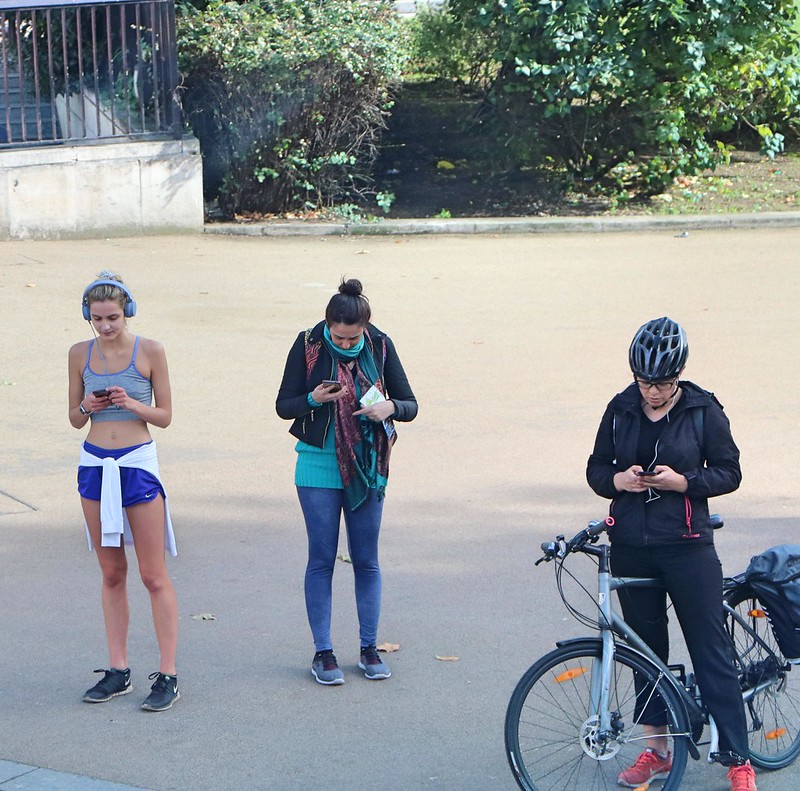
People transfixed by their phones, Hyde Park, London
Photo by Waterford_Man on Flickr CC BY-2.0

The other day I went for walk at the Toronto Botanical Gardens. Even though the trees were bare of leaves and there was snow on ground, it was still a place of great beauty.

I noticed something strange, however, about the other visitors to the park. I must have passed at least a dozen other people as I walked the winding trail down the ravine to the river, but they were all standing stock-still.

Had I wandered onto a set for some science-fiction movie, in which aliens freeze people in place in advance of taking over the planet? Or had all these people been suddenly afflicted with a disease that left them immobilized?

No, the reason they were standing as motionless as statues was because they were all staring down at their smartphones.

Read more

The Best Cover-Up Of All

Snowy bumps, Humber Bay Park East, Toronto
Photo by josullivan.59 on Flickr
CC BY-NC-SA 2.0

If you had guests coming over during the holidays, did you panic because your house was a bit of a mess? Did you try to make your place look neater by hurriedly scooping up a bunch of out-of-place objects from around the house and hurling them onto a bed, then hiding them under a comforter or blanket?

I’m not saying I’ve ever done anything like this, of course. I’ve just heard of other people who have.

Read more