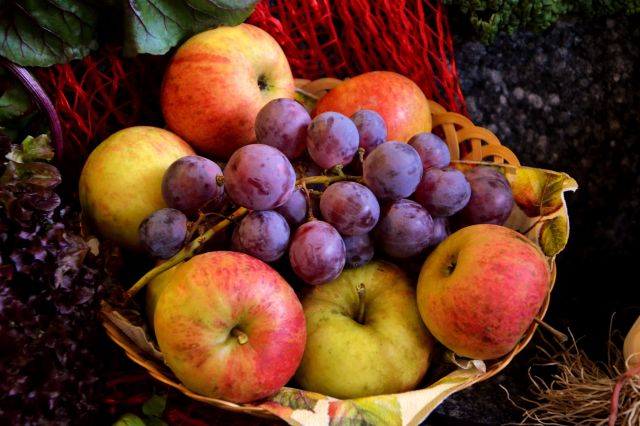
If you’re a gardener, you know the joy of harvesting fruits or vegetables that you’ve grown yourself.
You get to savour the fresh, delicious taste of home-grown produce. You’re quite literally enjoying the fruits of your labour.
Is there anything more satisfying?
How about reaping the benefits of what someone else has grown?
Perhaps you have a neighbour who gives you the excess from their own vegetable garden?
Or better yet, maybe you were as fortunate as a friend of mine. She and her family moved away from the big city a few years ago and bought a house in the suburbs, which sat on a large lot.
The previous owners of the house were botanists, so they had packed the property with beautiful and unusual perennials and shrubs. They’d also planted a number of fruit trees.
My friend and her family moved in mid-year, and didn’t need to do a lick of work in the mini-orchard in their new backyard. All they had to do was sit back and enjoy it, harvesting the fruit from trees that someone else had planted.
This reminds me of a verse from the Old Testament. Moses was telling the children of Israel that God would one day bring them into the Promised Land. Here’s how he described it:
“… a land with great and splendid cities that you did not build, with houses full of every good thing with which you did not fill them, with wells that you did not dig, and with vineyards and olive groves that you did not plant...” (Deuteronomy 6:10-12)
To me, this is a picture of what Christ has done for us.
In the old law-based covenant you reaped what you sowed, but in the new grace-based covenant we reap what Christ has sown.
Read more
 The Faith Cafe