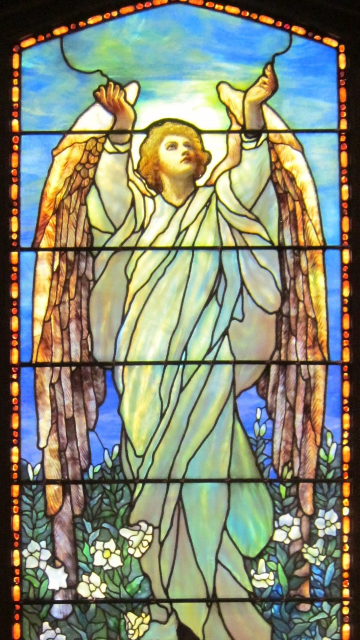
Hark! The Herald Angels Sing

Image courtesy of Hippopx CCO 1.0: Public Domain

What’s your favourite Christmas carol?

“Jingle Bells” seems to be at the top of many lists of the top Yuletide songs. It’s catchy, kids love it, and it puts people in a cheery mood.

Or perhaps you’re more partial to “Silent Night”? I don’t blame you—it’s a beautiful classic.

The honour of the best-selling Christmas single would have to go to Bing Crosby’s “White Christmas.” And with good reason—how can you not love this song?

(I’m hoping that your favourite Christmas number isn’t “Grandma Got Run Over By A Reindeer.” If it is, I’m not sure we can be friends.)

As for me, my favourite carol is “Hark The Herald Angels Sing,” with lyrics by Charles Wesley and a rousing melody by Felix Mendelssohn.

This hymn is not only enjoyable to sing, it’s also richly loaded with Biblical truths. It starts out this way:

“Hark! The herald angels sing:
‘Glory to the new-born king
Peace on earth and mercy mild
God and sinners reconciled.’ “

The angels are celebrating the inauguration of a new Kingdom featuring world-wide peace and the reconciliation of humanity to its creator.

But wait a minute: aren’t the angels jumping the gun in this account?

God and sinners wouldn’t be reconciled until decades later in Jesus’ life, at the Cross.

And since Jesus was born the world hasn’t had a year without war somewhere or other. Where is the peace the carol describes?

Aren’t the angels being a bit premature in celebrating?

Not at all.

Read more
Create Your Own BC/AD Pivot Point

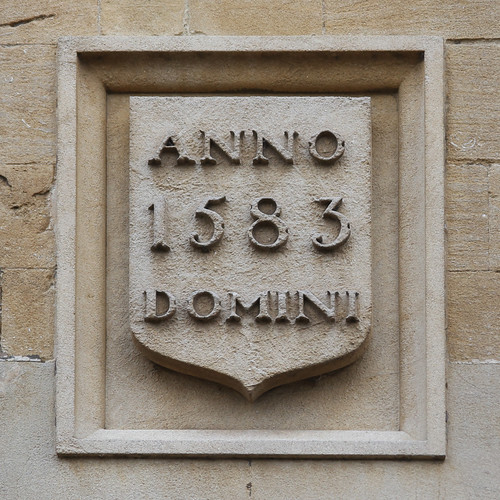
Image of Anno Domini inscription on Windsor Castle, England, by Leo Reynolds via Flickr CC BY-NC-SA 2.0

It’s natural to divide your life into “before” and “after,” isn’t it?

We mentally calculate whether something happened before or after certain important events in our lives.

We might say that such-and-such happened before we moved to Boston, or after we got married. We may recall that another thing happened after we had our son but before the twins were born.

Ancient cultures did something similar. Those with monarchies would mark events in relation to what king was on the throne at the time. They’d say that something happened in the 9th year of the reign of King so-and-so.

Certainly, most of us will divide our lives into pre-and post-pandemic eras. March of 2020 was a clear demarcation point between our previous “normal” life and one dominated by COVID-19.

The dividing lines of our lives will be different for all of us, but what most of the world has in common is the use of the same calendar system to mark off years. This system has its own before-and-after pivot point.

For instance, most of us just celebrated the start of AD 2022.

What does the “AD” mean, anyway? Or “BC” for that matter?

Read more

The Promise of Return

Monarch Butterfly
Photo by Peter Miller on Flickr CC BY-NC-ND-2.0

One of the greatest natural events on Earth is now underway: the migration of the monarch butterfly.

Each fall, millions of these colourful insects set off from their summer breeding grounds in the northeastern U.S. and Canada for a gruelling journey. They travel thousands of miles across North America all the way to Mexico, where they’ll spend the winter.

Many people believe that the monarch butterflies which leave in the fall are the same ones which arrive back in the spring, but this isn’t so. Individual butterflies don’t make the entire round-trip journey. The ones which migrate from the northeastern part of North America in fall will never return.

Rather, their great-great-grandchildren are the ones who will arrive the following spring, as successive generations keep making their way north. The entire annual migration cycle of the monarch takes about four generations.

Perhaps I’m being fanciful, but I can imagine monarch butterflies telling their children of the awesome journey they’ll be undertaking. They may say that they’ll only be able to go part of the way with them, but to keep the faith and keep going.

Maybe they encourage their children to tell successive generations to keep believing in the promise of return. Because eventually, their descendants will see the promise fulfilled.

Aren’t we in a similar situation as believers?

Read more