This Is Who We Are

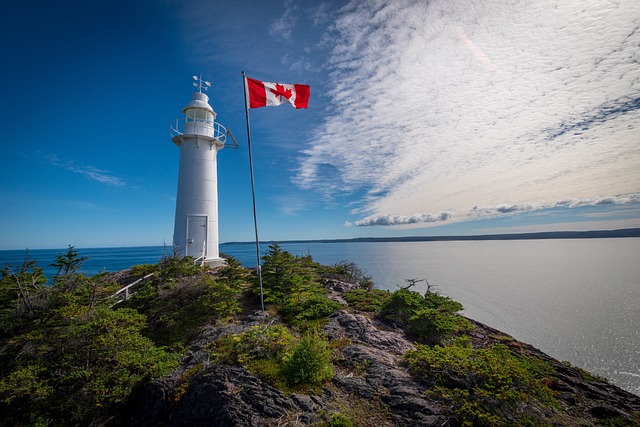
Today, Canada celebrates its birthday! July 1st is Canada Day, a holiday on which we have parties, set off fireworks, and wave the flag.

We’re all attached to our national flags, aren’t we? Each is beautiful in its own way. Some flags have blocks of colour; some feature significant symbols; others have patterns of stars and stripes. A handful of countries depict plants or trees on their flags, mine among them.

Canada’s flag has a maple leaf at its centre. In fact, the nickname for our flag is the Maple Leaf. As a nature lover, I’m proud to have a symbol of a plant on my national flag, and especially pleased that it’s a leaf from one of my favourite trees.

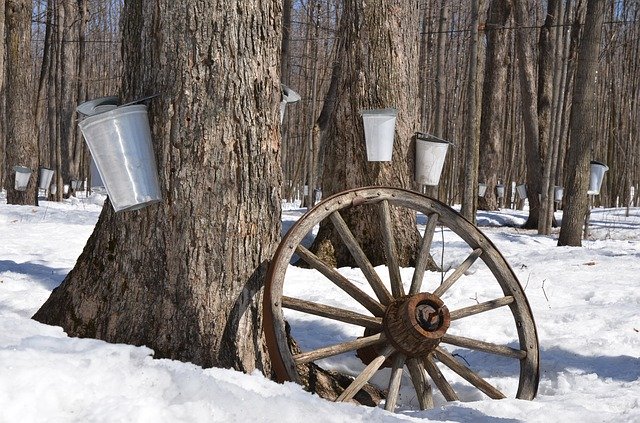
Growing up, I loved maple trees: I climbed them, enjoyed the sugar and fudge made from their sap, collected their red and orange leaves in autumn to press and even jumped into raked-up piles of them.

I’d venture to say that all Canadians love maple trees. The trees themselves are beautiful and stately; the wood harvested from them is so strong it can be used as the flooring for bowling alleys; we harvest precious sap from them to make sought-after products like maple syrup; and the leaves turn gorgeous colours in the autumn.

The maple leaf is the emblem of Canada. It symbolizes who we are as a people: hardy, strong, nature-loving northerners.

Just as the maple tree is important to Canadians, there’s another tree which is very important to a certain group of people:

It’s the tree Christ was crucified on.

Read more
The Promise of Return

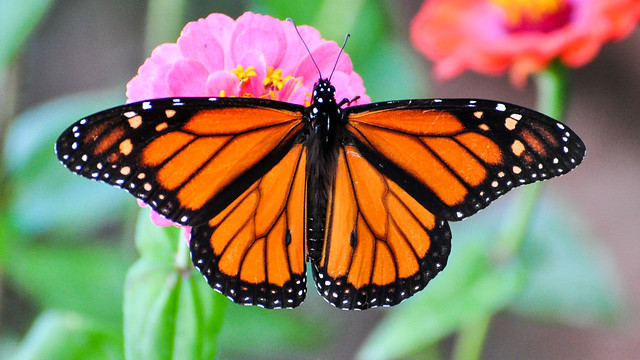
Photo of Monarch butterfly by Peter Miller on Flickr CC BY-NC-ND-2.0

One of the greatest natural events on Earth is now underway: the migration of the monarch butterfly.

Each fall, millions of these colourful insects set off from their summer breeding grounds in the northeastern U.S. and Canada for a gruelling journey. They travel thousands of miles across North America all the way to Mexico, where they’ll spend the winter.

Many people believe that the monarch butterflies that leave in the fall are the same ones that arrive back in the spring, but this isn’t so. Individual butterflies don’t make the entire round-trip journey. The ones that migrate from the northeastern part of North America in fall will never return.

Rather, their great-great-grandchildren are the ones who will arrive the following spring, as successive generations keep making their way north. The entire annual migration cycle of the monarch takes about four generations.

Perhaps I’m being fanciful, but I can imagine monarch butterflies telling their children of the awesome journey they’ll be undertaking. They may say that they’ll only be able to go part of the way with them, but to keep the faith and keep going.

Maybe they encourage their children to tell successive generations to keep believing in the promise of return. Because eventually, their descendants will see the promise fulfilled.

Aren’t we in a similar situation as believers?

We’re living in a time when we’re awaiting the fulfillment of a promise, the promise of Christ’s return. We’re not sure exactly when Christ will come back to Earth, but He has promised that He will.

Read more

What Is Your Inukshuk?

Inukshuk Photo by Jsig9 on Pixabay

If you’re Canadian, you probably know what an inukshuk is.

If you’re not Canadian, then let me offer you my condolences. (Sorry! Just kidding!)

But seriously, as we Canadians celebrate our national birthday today, it seems apt to delve into the meaning behind this iconic symbol of the high north.

An inukshuk is a stone structure built by the Inuit and other peoples of the Arctic regions of North America. The stones may simply be stacked vertically, or they may take the form of a human figure.

The distinctive shape of the inukshuk is featured on the flag of Nunavut, a Canadian territory, and also served as the inspiration for the logo of the 2010 Olympics in Vancouver.

Inukshuks have been traditionally used by the Inuit people as landmarks for navigation, guideposts for travellers in a barren landscape. They might also mark out a sacred spot, or function as a commemorative sign.

I think we believers need “inukshuks” in our lives, don’t we?

Reminders of the things God has done for us, how far He’s brought us. Beacons to others travelling the same journey, showing them the path that leads to life.

Read more

God Will Provide

Image by tlparadis from Pixabay

If you live in eastern North America, you might be lucky enough to have seen a gorgeous bird called the northern cardinal.

The male is especially distinctive, with his breathtaking red plumage and black “mask” on his face.

Up here in Canada, the cardinal is at the northernmost part of its range. We’re especially fortunate that, unlike many songbirds, cardinals don’t migrate south for the winter. We get to enjoy their presence year-round.

But what on earth do the cardinals eat here, when parts of Canada might be covered in several feet of snow?

Read more

Islands of Hope

Image of lighthouse on the coast of Newfoundland by Felix Dilly from Pixabay

Transoceanic plane travel has always been fraught with potential problems.

Fuel could run low or a plane could develop mechanic problems mid-flight. The pilots would need a place to set down, pronto.

But in the middle of the ocean, where is there to land?

That’s where islands come in.

There are some handy places to land even in the vast expanse of the oceans.

In the Pacific, islands such as Midway, Wake, and Hawaii are available. The Atlantic offers Iceland, the Azores, and Bermuda, among others.

Not least is Newfoundland, an island off the eastern coast of Canada. For decades its Gander airport was used as a refuelling stop for planes making the hop across the Atlantic. It’s also an emergency landing spot for aircraft in trouble.

Gander is perhaps best known for its role in accepting 38 diverted planes that had to set down during the terrorist attacks in the U.S. on 9/11, twenty-two years ago today. Over six thousand passengers were generously hosted by the surrounding communities until U.S. airspace was reopened, a story commemorated in the hit musical, “Come From Away.”

Gander was truly an island of hope during that time.

I think we can all be islands of hope for others.

Read more

Not In Kansas Anymore

Characters from the film “The Wizard of Oz.” Photo by Richard Hitt.

Have you ever brought preconceived notions to a new situation, but then realized they simply don’t apply anymore?

I did something of the sort when visiting Southern California as a teen.

Growing up in Central Canada, I was used to street numbers being put on the actual houses themselves, at eye-level. But when I stayed in San Diego for a time, I noticed that the street numbers were instead spray-painted on the vertical parts of the curb at the foot of people’s driveways, just a few inches above the pavement.

That made no sense, I thought to myself. In winter, those numbers on the curb will be covered under several feet of snow, and no one will be able to read them. How silly!

I soon realized that my line of thinking was faulty: it doesn’t snow in San Diego. The numbers on the curb will always be readable. What was true for Toronto had no bearing on what was true for San Diego.

I needed to realize that I was “not in Kansas anymore,” as Dorothy said in the film, “The Wizard of Oz.”

I think we sometimes make the same mistake when we think about the Kingdom of God.

We superimpose our past experiences and assumptions on it, but we don’t realize that with the Kingdom of God we’re in a whole new world. The old rules don’t apply anymore.

Read more

Date Night With God

Image by StockSnap from Pixabay

If you’re married, do you have a “date night” with your spouse?

Some people set aside time each week when they get together with their spouse, just the two of them, and do something special.

Life is so busy these days that we sometimes have to actually schedule time to spend with our spouse. We have to juggle work, raising children, community involvements, caring for aging parents, hobbies, and so on.

There are so many demands on our time that we often have difficulty making sure we’re giving enough attention to the person most important to us.

And besides, we know that our spouse is aware of our love for them. So we let things slide and don’t make the relationship a priority.

In this way, however, the bond between you starts to suffer. Without regular conversations and one-on-one time, a distance can start to grow in the relationship.

It’s the same with our relationship with God: we’re so busy with family and work commitments that we sometimes fail to fit Him in to our schedules.

Read more

This Is Who We Are

Canadian Flag Photo from PickPik

In a few days, Canada will be celebrating its birthday. July 1st is Canada Day, a holiday on which we have parties, set off fireworks, and wave the flag.

We’re all attached to our national flags, aren’t we? Each is beautiful in its own way. Some flags have blocks of colour, some feature significant symbols, others have patterns of stars and stripes. A handful of countries depict plants or trees on their flags, mine among them.

Canada’s flag has a maple leaf at its centre. In fact, the nickname for our flag is the Maple Leaf. As a nature lover, I’m proud to have a symbol of a plant on my national flag, and especially pleased that it’s a leaf from one of my favourite trees.

Growing up, I loved maple trees: I climbed them, enjoyed the sugar and fudge made from their sap, collected their red and orange leaves in autumn to press and even jumped into raked-up piles of them.

I’d venture to say that all Canadians love maple trees. The trees themselves are beautiful and stately; the wood harvested from them is so strong it can be used as the flooring for bowling alleys; we harvest precious sap from them to make sought-after products; and the leaves turn gorgeous colours in the autumn.

The maple leaf is the emblem of Canada. It symbolizes who we are as a people: hardy, strong, nature-loving northerners.

Just as the maple tree is important to Canadians, there’s another tree which is very important to a certain group of people:

It’s the tree Christ was crucified on.

Read more
How To Make Maple Syrup

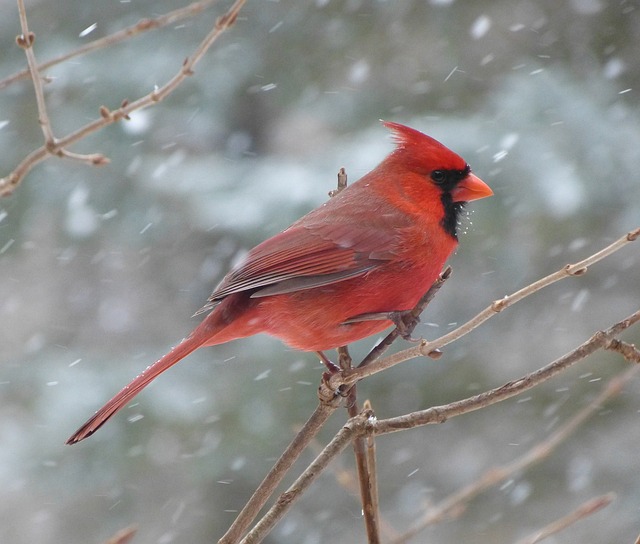
Collecting maple sap the traditional way, in buckets

Sometimes the sweetest things take the most effort to produce, don’t they?

Take, for instance, maple syrup, one of Canada’s iconic products. We often use it atop pancakes or waffles, or in desserts (see below). This delicious liquid starts out as sap collected from sugar maple trees.

Right now it’s maple syrup season in Eastern Canada: as the weather warms, the sap in the trees starts flowing freely. Holes are drilled into the trunks of the maples, and buckets or tubing collects the dripping sap, which is then transported to a central location.

And then it’s ready to be bottled, right? No! Actually, the process has only just begun.

Read more