Put On Some Heart-Shaped Glasses!

Image by StockSnap from Pixabay

When we’re going through tough times, it’s easy to get discouraged.

We all worry about our health, our families, our finances, and the future. Believers aren’t immune to these anxieties.

When life is spinning out of control, we often feel overwhelmed. We wonder where God is in our difficulties.

What we need is a different perspective.

I’m not suggesting we put on rose-coloured glasses, but rather heart-shaped ones.

The beating heart of God resounds with love for His children.

Read more

The Key to Stronger Faith

Chickadee Photo by Larry Doucet on Pixabay

A chickadee may have a bird-brain, but it can actually be pretty smart.

Especially if it lives in a harsh climate.

What does climate have to do with bird intelligence? As it turns out, more than you’d expect.

Biologists have discovered that chickadees living in the mountains or in northern latitudes, where the weather is more severe, were smarter than their peers living more comfortably down below.

Chickadees from harsher habitats had superior spatial memories and problem-solving abilities than those living in gentler climes. They were better at finding stored caches of food and at figuring out how to access a worm treat that scientists had cleverly tucked into a glass tube.

The harsh environment made their brains work a bit harder.

Is there a lesson for humans in the example of the chickadees?

Yes, but it isn’t to move to a more wintry climate (take it from a Canadian who’s done her share of shovelling snow—it hasn’t made me smarter!).

The takeaway here is that there can be unseen benefits to the challenges we face.

Read more

Lost In Translation

Sign on toilet door in Chengdu airport, China
Photo by Anne Roberts on Flickr, CC BY-NC-SA-2.0

There’s a real art to translation: zeroing in on just the right words to convey the nuance of what the original author intended.

Done well, a translated work can be a masterpiece in its own right.

Oftentimes, though, a translation can turn out to be a farce, as in the following examples:

A menu item in Chinese for a roasted gluten dish was translated into English as “Sixi Roasted Husband.” (The perfect dish for wives who’ve finally had enough of their mates?)

A hot and spicy chicken dish on another Chinese menu became “Chicken Rude and Unreasonable” in English. (No wonder the chicken met his end—he had it coming!)

Or this Google Translate zinger: “It’s been the goat in the budget, because His raining badly, so quite short, he is on the bucket month out.” (Not sure what this meant in the original Danish, but I hope the goat was able to figure it out.)

Then there’s the sign for a hair salon in China whose English name is “Could Not Connect To Translator Service.” (A bit of a give-away that they didn’t bother hiring a real live translator?)

Sometimes, we have a different understanding or “translation” of what God actually meant in certain Bible verses.

For example, in times of difficulty, we cling to verses such as Romans 8:28:

“And we know that all things work together for good to those who love God, to those who are the called according to his purpose.”

However, it can often be hard to see what good could possibly come from our difficult situations. We might be going through health challenges, injustice, hardship or loneliness. Where is the good in any of that?

But maybe we have a limited understanding of what “good” means. Perhaps we and God have different “translations” of what this looks like in our lives.

Read more

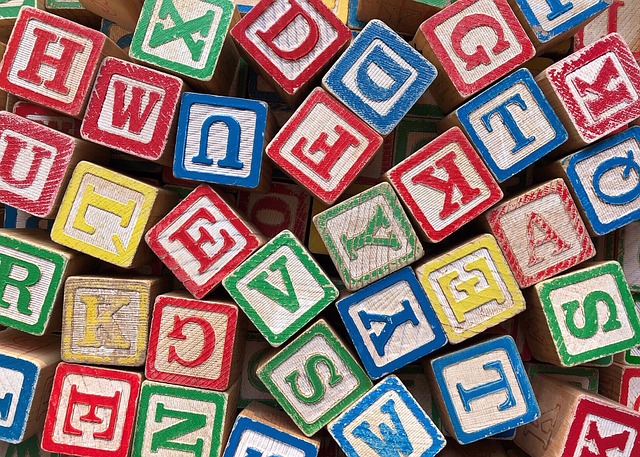
Cna Yuo Raed Tihs?

Image by WOKANDAPIX from Pixabay

I’ll bet you can!

I’m sure most of us immediately deciphered the title of this post as “Can You Read This?”

But how was your brain able to make sense of the jumbled letters so quickly?

Researchers believe that our brains use context to make predictions about what’s to come. Take an example like:

“Yuo cna porbalby raed tihs esaliy desptie teh msispeillgns.”

This is readable because as our brains decipher each word, they also predict which words would logically come next in order to make a coherent sentence. When faced with a word we can’t quite unscramble, our brains fill in the gaps based on subsequent words.

This even works with words that have NUMB3RS 1NST3AD 0F L3773RS. The numbers’ similar appearance to letters trumps their normal meaning.

Jumbled words are easiest to read when the first and last letters of the word remain the same, and only the letters between them are transposed. But when the middle letters are scrambled more confusingly, your brain has a harder time trying to process all the letters simultaneously. Try deciphering this:

“Big ccunoil tax ineesacrs tihs yaer hvae seezueqd the inmcoes of mnay pneosenirs.”

That was a bit more difficult, wan’t it?

But what about when it’s our lives that are a-jumble? When things happen to us that don’t seem to fit a meaningful pattern?

How do we make sense of the bewildering hardships and crises that often beset believers?

Read more

The Things That Bug Us

Image by Ralf Kunze from Pixabay

Do you ever think that you could have designed this planet a bit better than God did?

Don’t get me wrong. I love the beauty of God’s Creation: the animals, birds, trees, flowers, oceans, mountains, and starry night sky.

But I have just one quibble….

Bugs.

I think God made far too many of them.

Scientists estimate that there are 10 quintillion bugs on Earth, which works out to well over a billion insects per person.

I find this excessive. All most of them do is bite, sting, or frighten people.

In an ideal world of my creation, there would only be a few select insects. Cute ones like ladybugs and beautiful ones like butterflies would make the cut, but I can do without the rest.

Plus, I’d make a lot more flowers. Sound good?

There’s only one problem with the utopia I’ve designed: what would pollinate the flowers?

Insects are responsible for the vast majority of pollination. In my version of this world, I would have eliminated the very things that make possible productivity in flowering plants.

I think we take the same attitude when it comes to things in our lives that we find unpleasant or demanding.

We want nothing to do with the things that “bug” us.

Read more

The Fires of Life

Image of giant sequoia by LoggaWiggler from Pixabay

Forest fires are fearsome things.

They can lay waste to hundreds of square miles of mature trees and displace wildlife. If they spread to areas of human habitation, they can raze buildings to the ground and devastate communities.

And yet, fires can play an important role in nature. Trying to suppress them too drastically can have a negative effect on the ecology of the forest.

It can backfire, so to speak.

Take the giant sequoia, native to inland California. This majestic tree can live for thousands of years and grow to a height of almost 300 feet.

You’d think that protecting groves of sequoias from fire would help preserve them. But sometimes when we interfere with the natural cycle of fire and regrowth, we do a forest no favours.

The suppression of fire during the last century by U.S. land management authorities actually hobbled the sequoia’s ability to survive. Its seedlings can only grow into mature trees if competing plants are regularly eliminated by low-level forest fires. (The sequoia’s spongy bark helps protect it against fire.)

Not only that, the cones of the sequoia require the intense heat of a forest fire in order to open up and release their cargo of seeds. If the surrounding ground has just been cleared of competing vegetation by fire and enriched with the resultant nutritious ash, the seeds are given an additional leg up to grow.

So the sequoia can only grow to its impressive grandeur with the help of fire.

Perhaps the same is true of us.

Read more

Beauty Out Of Brokenness

Photo by treenabelle on Pixabay

Once this pandemic is over, psychologists warn that many of us may suffer from post-traumatic stress for some time to come.

Some of us will have seen our business close down for good, suffered isolation and loneliness, or may have even lost a loved one during the COVID-19 crisis.

But is PTSD a given in these circumstances? Is there different outcome that can occur, an unexpected benefit that may arise out of these difficult times?

Psychologists say yes: there’s such a thing as post-traumatic growth.

It’s been found in survivors of war, cancer, and natural disasters. Some people emerge from a crisis with increased spirituality, a greater sense of personal strength, new priorities and closer relationships with others. What could have broken them actually made them better.

This phenomenon reminds me a bit of “sea glass.” Sea glass, or beach glass, found washed up on shores, starts out as merely cast-aside pieces of broken glass. Perhaps they’ve been tossed overboard from a ship, or thrown into the sea from land along with other garbage.

These shards of glass endure years of being buffeted against the stones of the sea bottom. It seems like they’re being dashed about mercilessly by the relentless action of the waves. Surely no good could come of this?

But then, something almost magical emerges.

Read more

Same Spider, Different Silks

Dew drops on spider’s web. Image by Pezibear from Pixabay

When you let your mind wander, do you ever find yourself asking odd questions?

Such as, “Why doesn’t glue stick to the inside of the bottle?”

Or, “How do you grow a seedless fruit?”

Or how about this one:

“Why don’t spiders get caught in their own webs?”

I can’t help you with the first two, but I do have an answer for the third.

When spiders build their webs, they draw out silk from their abdomens with six spinnerets. The key is that they’re able to emit different types of silk for different purposes.

The spider first constructs a frame for its web. Then, it lays down spokes of non-sticky silk to use as walkways.

Next, the spider weaves spirals of connecting lines between the spokes using sticky silk. This is for ensnaring small insects that it will later eat. The spider knows to avoid walking on these gluey strands.

A spider can also spin stretchy silk for the centre of its web, or extra-strong silk for the anchor lines.

Whichever type of silk the spider decides to spin, it all has a specific purpose. And even though the types of silk differ, they all come from the same source.

I think we can borrow this analogy to describe how we can receive quite different things from God’s hand.

Read more

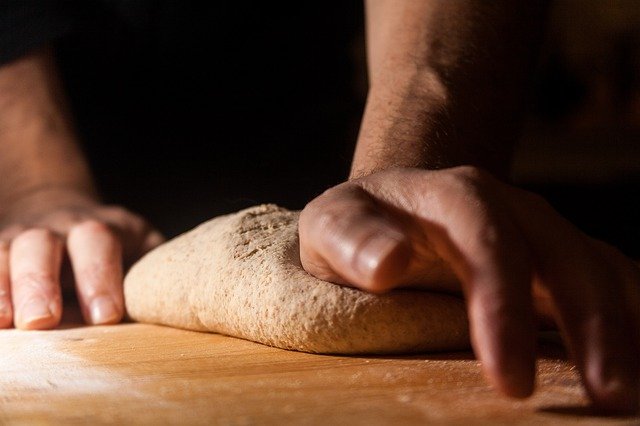
How To Become A Loaf Of Bread

Imagine that you’re a ball of bread dough (for some of us whose figures are a bit “doughy,” this isn’t much of a stretch).

You’ve had your ingredients mixed together nicely, and you’ve been resting for a while after all that effort. You feel good: you’ve even risen higher. It won’t be long now until you become a beautiful loaf of bread.

But wait! What’s that coming toward you? It’s a fist! Someone is actually punching you! You feel yourself deflate, and lose a lot of your volume. Then you’re lifted out of the warm bowl you were in and slapped onto a counter. Ouch! That hurt! The hands are now kneading and pummelling you. You wish they could be a bit more gentle.

Finally, it stops. Thank goodness! That was excruciating! You’re now resting back in your bowl in a warm spot, with a tea towel over you to protect you from drafts and from drying out. You can relax now. At least all that pain is over with.

Or is it? Some time later, here come the hands again. They lift the tea towel and begin punching you down anew, just when you’d risen to your previous height. Not again! You’ve got to be kidding! Wasn’t once enough? Once more, you’re kneaded and prodded, stretched and pressed down hard. What good could this possibly be doing you?

When all the pummelling is finished, you’re shaped and placed into a loaf pan. At least it’s cozy here, and the hands have disappeared for a while. You can rest again. Surely nothing worse will happen to you.

But then suddenly you’re thrust into a searing oven. Yikes, that’s hot! You feel your insides begin to transform, and your surface start to turn brown.

You’re becoming a loaf of bread after all.

But why all the trouble and pain? Was it really necessary?

Yes, because that’s what gave you a finer texture.

Read more

Let the Son Outshine Your Problems

Image by Pezibear from Pixabay

The moon did a disappearing act on me recently.

As I sat eating breakfast, I could see the moon shining brightly through the window. It handily outshone the streetlights, which were still on at that pre-dawn hour.

But slowly, the moon grew dimmer and fainter, although it was still high in the sky.

What had happened to its luminosity?

Had the moon changed in some way?

No, the sun had simply come up!

The sun’s growing brilliance filled the morning sky, causing the moon to appear paler than before. Eventually, I could barely see the moon at all, even though it hadn’t set behind the horizon yet.

This puts me in mind of how we sometimes view our problems.

In the darkness of our difficulties, we often focus on what’s causing us pain. The source of our problems gets our attention, out-competing other factors in our lives.

But if we let the light of Jesus shine on our situation, the truth of His unending love for us can outshine the temporary nature of our problems. Our challenges appear dimmer in the light of His forgiveness, His care for us, and His promise of eternal life.

Read more