This Is Who We Are

Today, Canada celebrates its birthday! July 1st is Canada Day, a holiday on which we have parties, set off fireworks, and wave the flag.

We’re all attached to our national flags, aren’t we? Each is beautiful in its own way. Some flags have blocks of colour; some feature significant symbols; others have patterns of stars and stripes. A handful of countries depict plants or trees on their flags, mine among them.

Canada’s flag has a maple leaf at its centre. In fact, the nickname for our flag is the Maple Leaf. As a nature lover, I’m proud to have a symbol of a plant on my national flag, and especially pleased that it’s a leaf from one of my favourite trees.

Growing up, I loved maple trees: I climbed them, enjoyed the sugar and fudge made from their sap, collected their red and orange leaves in autumn to press and even jumped into raked-up piles of them.

I’d venture to say that all Canadians love maple trees. The trees themselves are beautiful and stately; the wood harvested from them is so strong it can be used as the flooring for bowling alleys; we harvest precious sap from them to make sought-after products like maple syrup; and the leaves turn gorgeous colours in the autumn.

The maple leaf is the emblem of Canada. It symbolizes who we are as a people: hardy, strong, nature-loving northerners.

Just as the maple tree is important to Canadians, there’s another tree which is very important to a certain group of people:

It’s the tree Christ was crucified on.

Read more

Still Water Reflects Best

Lago di Limides, Italy
Photo by Julius Silver on Pixabay

We seem to have difficulty being still these days, don’t we?

For many of us, life happens at warp speed. We’re always on the go, and have little downtime to pause and reflect on things.

But with all our constant motion, are we missing out on something?

Recently, I visited a park with a pond large enough to almost be a small lake. A slight breeze left ripples on the water, disturbing the reflection of the trees in the distance. The image on the water’s surface was wavy and impressionistic, not a true representation of the landscape nearby.

I then walked to a different part of the park where a river flowed lazily into the pond. The water was running slowly, and because it was sheltered from the breeze in this area, it was very still. The trees here were perfectly reflected in the water, giving a mirror image of their true forms.

I guess that to get the best reflection in water, stillness is the key.

Perhaps the spiritual lesson here is that if our lives are too frantic, it’s hard for us to reflect Christ.

Read more

The Promise of Return

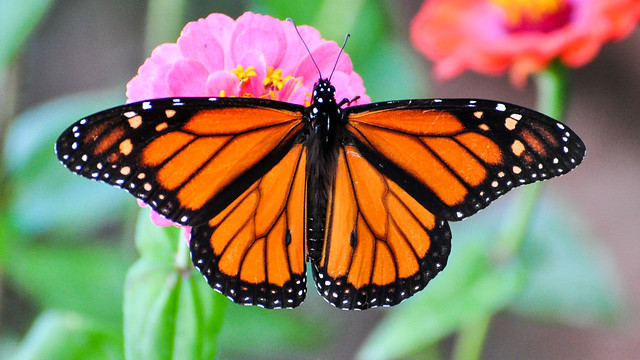
Photo of Monarch butterfly by Peter Miller on Flickr CC BY-NC-ND-2.0

One of the greatest natural events on Earth is now underway: the migration of the monarch butterfly.

Each fall, millions of these colourful insects set off from their summer breeding grounds in the northeastern U.S. and Canada for a gruelling journey. They travel thousands of miles across North America all the way to Mexico, where they’ll spend the winter.

Many people believe that the monarch butterflies that leave in the fall are the same ones that arrive back in the spring, but this isn’t so. Individual butterflies don’t make the entire round-trip journey. The ones that migrate from the northeastern part of North America in fall will never return.

Rather, their great-great-grandchildren are the ones who will arrive the following spring, as successive generations keep making their way north. The entire annual migration cycle of the monarch takes about four generations.

Perhaps I’m being fanciful, but I can imagine monarch butterflies telling their children of the awesome journey they’ll be undertaking. They may say that they’ll only be able to go part of the way with them, but to keep the faith and keep going.

Maybe they encourage their children to tell successive generations to keep believing in the promise of return. Because eventually, their descendants will see the promise fulfilled.

Aren’t we in a similar situation as believers?

We’re living in a time when we’re awaiting the fulfillment of a promise, the promise of Christ’s return. We’re not sure exactly when Christ will come back to Earth, but He has promised that He will.

Read more

Lost In Translation

Sign on toilet door in Chengdu airport, China
Photo by Anne Roberts on Flickr, CC BY-NC-SA-2.0

There’s a real art to translation: zeroing in on just the right words to convey the nuance of what the original author intended.

Done well, a translated work can be a masterpiece in its own right.

Oftentimes, though, a translation can turn out to be a farce, as in the following examples:

A menu item in Chinese for a roasted gluten dish was translated into English as “Sixi Roasted Husband.” (The perfect dish for wives who’ve finally had enough of their mates?)

A hot and spicy chicken dish on another Chinese menu became “Chicken Rude and Unreasonable” in English. (No wonder the chicken met his end—he had it coming!)

Or this Google Translate zinger: “It’s been the goat in the budget, because His raining badly, so quite short, he is on the bucket month out.” (Not sure what this meant in the original Danish, but I hope the goat was able to figure it out.)

Then there’s the sign for a hair salon in China whose English name is “Could Not Connect To Translator Service.” (A bit of a give-away that they didn’t bother hiring a real live translator?)

Sometimes, we have a different understanding or “translation” of what God actually meant in certain Bible verses.

For example, in times of difficulty, we cling to verses such as Romans 8:28:

“And we know that all things work together for good to those who love God, to those who are the called according to his purpose.”

However, it can often be hard to see what good could possibly come from our difficult situations. We might be going through health challenges, injustice, hardship or loneliness. Where is the good in any of that?

But maybe we have a limited understanding of what “good” means. Perhaps we and God have different “translations” of what this looks like in our lives.

Read more

Eternity In Our Hearts

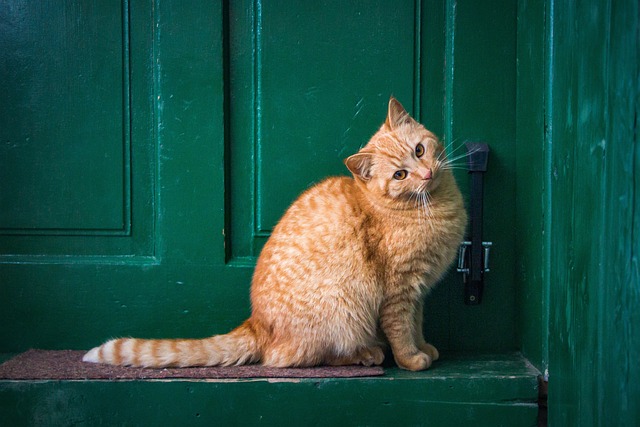
Image by Szabolcs Molnar from Pixabay

They say elephants never forget; I think the same may be true of cats.

A friend of mine recently downsized by moving into the lower level of her own home and renting out the upstairs.

She’s perfectly happy with the arrangement. One of her cats, however, is not.

This cat remembers that he once had the run of the entire house. He still recalls that there was a wonderful place called Upstairs.

Despite having lots of room to roam downstairs, including access to a big backyard, this cat keeps trying to break into the upper level of the house. I’m told he meows plaintively at the connecting door between the two units, and tries to pry it open with his paw.

This cat knows that there’s something missing in his life. Even though Downstairs is perfectly nice, he still feels the ache to be Upstairs once again.

I think many of us know the feeling.

We have an innate sense that this world is not as it should be.

It’s broken in some way: there’s something missing.

Humans seem to have a mysterious longing for a world set right. We ache for it, even though we haven’t experienced it.

Read more

Conspicuous Camouflage

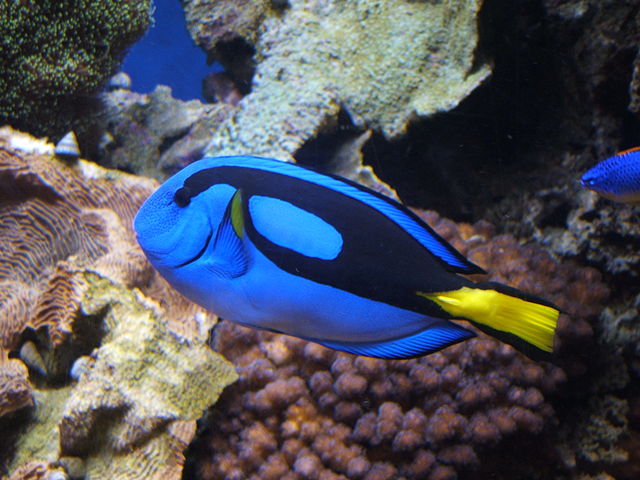
Image of blue tang fish by Tewy via Wikimedia Commons, CC BY-2.5

Whenever I did something wrong as a little girl, I thought I had a surefire way of escaping my parents.

I would hide behind a large potted plant we had and close my eyes.

Somehow, I thought that my parents wouldn’t be able to see me if I did this. Unfortunately for me, their eyesight was a bit better than I’d bargained on.

If you look at the natural world, you’ll find that I’m not the only one who often thinks they can’t be seen.

Take the blue tang fish, made famous by its cartoon equivalent in the Pixar movies “Finding Nemo” and “Finding Dory.”

Like a few other reef fish, this aquatic animal is blue and yellow. To other fish and to its predators, the blue tang is perfectly camouflaged. To them, its yellow markings seem to disappear against similarly coloured corals, and its blue body blends in with the shade of the water.

There’s only one problem:

To snorkelling humans, the blue tang sticks out like a sore thumb. Far from being camouflaged, this fish’s dramatic colours are incredibly conspicuous to our eyes. Why is that?

It’s because our eyesight is very different from that of undersea creatures. The particular trio of cones in human vision is especially good at discriminating blues and yellows.

So what is hidden to other fish is glaringly obvious to us.

I think God’s “eyesight” works in a similar fashion.

Read more

One Hundred Words for Snow (and for God)

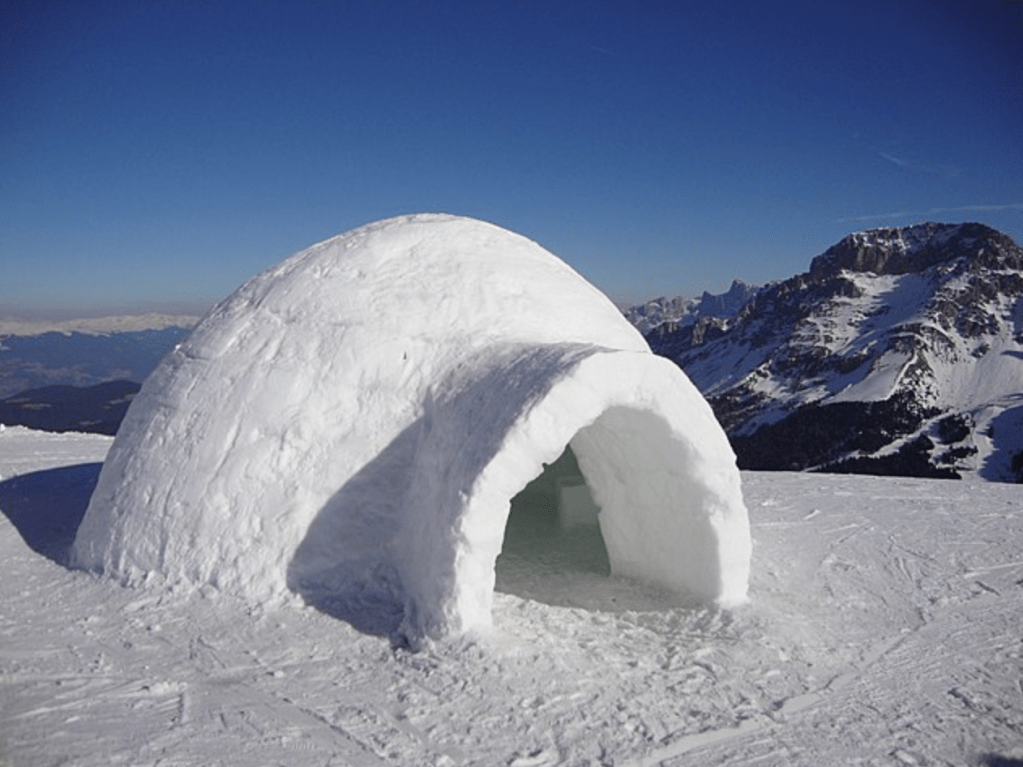
Image by Maurizio Ceol, Wikimedia Commons, CC BY 3.0

They say that the Eskimo and Inuit peoples have over 100 words for snow.

Is this actually true, or is it just a cliché?

There has been heated debate on whether the Eskimos really do have that many distinct words for snow. I consulted Giles Whittell’s 2019 book “Snow: A Scientific and Cultural Exploration” for information.

Whittell refers to a recent contribution to the question by the Smithsonian Arctic Studies Center. They determined that in Canada’s Nunavik region, the Inuit there have 53 distinct words for snow; in the Central Siberian Yupik dialect they counted 40.

Among the words listed in the Yupik dictionary are:

“kanevvluk” = fine snow
“navcaq” = snow formation about to collapse
“qanisqineq” = snow floating on water
“utvak” = snow carved in a block, as for an igloo

Clearly, those living in the extreme north do have far more words to describe snow than those who makes their homes farther south.

As Whittell says, “…people learn to describe in greatest detail what matters most to them.”

I suppose that the number of words a culture has to describe something tells us a great deal about the importance they place on it.

Read more

Create Your Own BC/AD Pivot Point

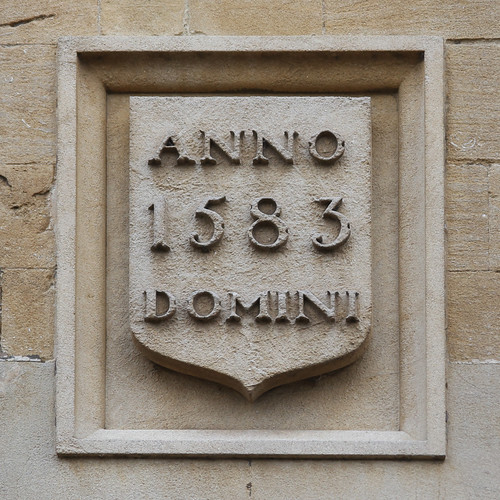
Image of Anno Domini inscription on Windsor Castle, England, by Leo Reynolds via Flickr CC BY-NC-SA 2.0

It’s natural to divide your life into “before” and “after,” isn’t it?

We mentally calculate whether something happened before or after certain important events in our lives.

We might say that such-and-such happened before we moved to Boston, or after we got married. We may recall that another thing happened after we had our son but before the twins were born.

Ancient cultures did something similar. Those with monarchies would mark events in relation to what king was on the throne at the time. They’d say that something happened in the 9th year of the reign of King so-and-so.

Certainly, most of us will divide our lives into pre-and post-pandemic eras. March of 2020 was a clear demarcation point between our previous “normal” life and one dominated by COVID-19.

The dividing lines of our lives will be different for all of us, but what most of the world has in common is the use of the same calendar system to mark off years. This system has its own before-and-after pivot point.

For instance, most of us just celebrated the start of AD 2022.

What does the “AD” mean, anyway? Or “BC” for that matter?

Read more

Merry Christmas From The Faith Cafe!

Merry Christmas to all my visitors and followers!

The Faith Cafe will be taking a short break over the holidays, but I’ll look forward to seeing you again in the New Year.

In the meantime, I’ll leave you with this quotation:

“God grant you the light in Christmas, which is faith;
the warmth of Christmas, which is love;
the radiance of Christmas, which is purity;
the righteousness of Christmas, which is justice;
the belief in Christmas, which is truth;
the all of Christmas, which is Christ.” (by Wilda English)

Image by Alexandra_Koch from Pixabay

Remember, the best Christmas gift is to realize how much you already have!

Wishing you and your family peace, love, goodwill, and all the other blessings of Christmas, plus a happy and healthy 2022!

Lori

“For unto us a child is born,
unto us a son is given:
and the government shall be upon his shoulder:
and his name shall be called Wonderful, Counsellor, the Mighty God,
The Everlasting Father, the Prince of Peace.”

Isaiah 9:6

© 2021 Lori J. Cartmell. All rights reserved.

Watch the Impossible Happen

Image by Josef Pichler from Pixabay

They say that it’s impossible for bumble bees to fly.

The theory goes that their weight and size are too great for their tiny wings to support, so according to the laws of aerodynamics they shouldn’t be able to get off the ground.

The only problem is, no one has told the bumble bees that.

They seem to have no difficulty in buzzing about in the air from flower to flower, collecting pollen and nectar to bring back to the hive.

So how do they do it, when physics would seem to suggest that they can’t?

For a long time, this was a mystery to us. Eventually we discovered that bumble bees actually don’t defy the laws of aviation: they simply fly in a different way than a plane or bird does.

We learned that the propeller-like way they beat their wings creates an invisible force above them, like a mini-tornado or -hurricane. This vortex actually sucks them upward, giving them lift in spite of their weight.

There was more going on than met the eye, which allowed the “impossible” to happen.

Likewise, when we believe in God, there is more going on in our lives than we’re aware of.

When God is working in your life, sometimes He will cause the impossible to happen, even when you can’t see how it could.

Read more