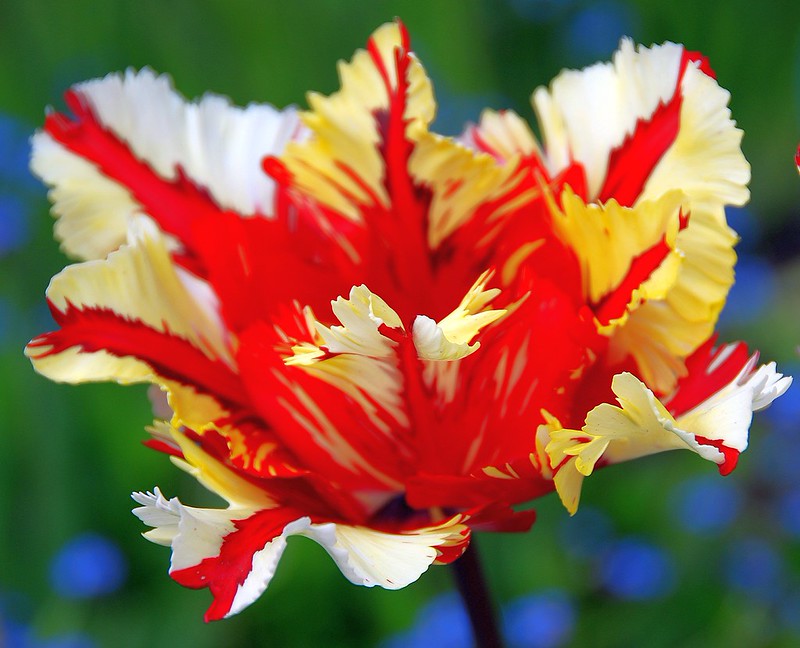
What’s your favourite flower?
Even though I certainly love roses, the tulip holds a special place in my heart. It’s not as showy or fragrant as a rose, but it brings such joy in spring after a long winter.
Among the many types of tulips, I especially like the variegated ones (with multicoloured petals).
But did you know that the dramatic colour combinations of variegated tulips are caused by a virus?
Gardeners had long noticed that tulip petals occasionally “broke” into unusual patterns. But it wasn’t until the late 1500s that botanists realized that the beautiful mixed colouring arising spontaneously in some tulips was actually the result of a disease.
While the tulip-breaking virus causes lovely variegated colouring, it also weakens the tulip bulb, eventually leading to the death of its genetic line.
So how is it that we can still enjoy variegated tulips today? Why didn’t they all die out?
Fortunately, botanists centuries ago learned to graft healthy tulip bulbs onto the diseased or “broken” ones, preserving their lineage. Today, we can enjoy countless cultivars in a dizzying array of colours and patterns.
Doesn’t this remind you of what God does for us?
Read more

