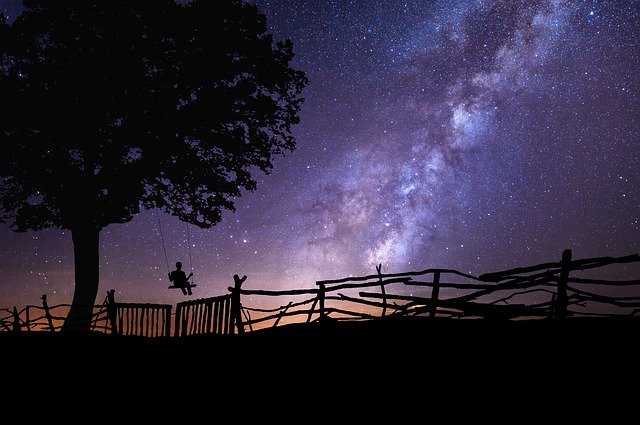
Create Your Own Dark Sky Preserve

I sometimes wonder if people who live in the countryside have a better appreciation for God’s creation than we city folk?

I’m specifically thinking of the ability to see the majesty of God’s handiwork as seen in the starry night sky.

Living in a big city (in my case, Toronto), I’m only able to see a handful of heavenly bodies. I can see the Big Dipper and a smattering of other stars, bright planets such as Venus, and the moon in its phases. But that’s about it.

Big cities produce so much ambient light that it obscures our view of the wonder of the night sky. That’s why many jurisdictions are creating what’s known as “dark sky preserves.” These are regions far enough away from the lights of built-up urban areas that the majority of stars can still be seen.

Governments commit to protecting these preserves from development so that the full range of the starry sky will always be visible from those areas. They seem to understand that it’s important for us to be able to maintain our connection with the night sky, and see it the way our ancestors did.

Perhaps we should take a page from their book, and create some “dark sky preserves” in our own lives.

I don’t mean areas from which to see the night sky, but spaces in our lives that remind us of God’s majesty and creative ingenuity as expressed in nature.

Read more
The Language of Flowers and the Language of God

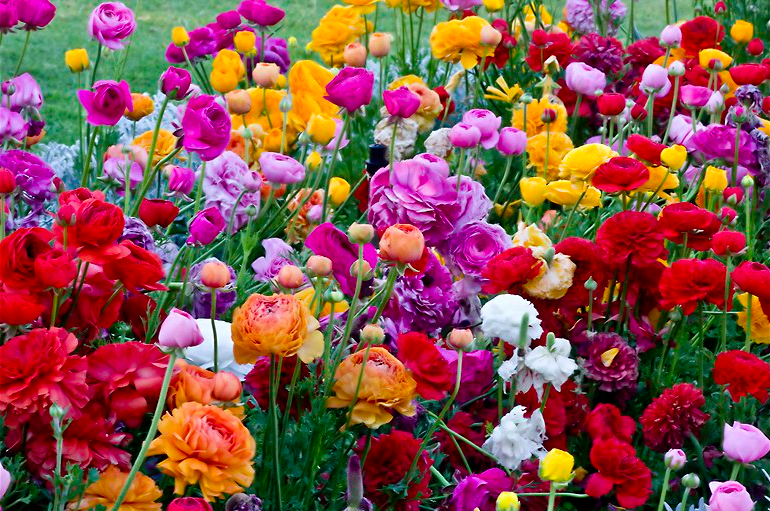
Say it with flowers!
Wikimedia Commons, CC BY-SA-2.0

Flowers speak. Not just through their fragrance or their beauty, but with secret codes, too.

Perhaps you’ve heard of the “language of flowers” that was popular during Victorian times?

This enchanting symbolic language enabled suitors to send coded messages to their paramours, ones that couldn’t be spoken aloud. The message depended on the particular flowers and colours chosen for the bouquet. An entire conversation could be carried out solely through flowers, with no words employed at all.

We all know that red roses symbolize true love, and we’d rightly guess that the forget-me-not begs that the giver be remembered. But did you know the following flower meanings?

Red carnation: My heart aches for you
Hyacinth: Your loveliness charms me
Canterbury bell: Your letter received
Yellow rose: Jealousy
Butterfly weed: Let me go
Weeping willow: Sadness

The Victorian language of flowers is a cryptic tongue. Most people only see the surface of the flower and not the symbolic meaning hidden within it.

God has His own “language of flowers,” but it actually encompasses all of creation. God is continually speaking to us through nature:

“For ever since the world was created, people have seen the earth and sky. Through everything God made, they can clearly see his invisible qualities—his eternal power and divine nature. So they have no excuse for not knowing God.” (Romans 1:20)
“The heavens proclaim the glory of God. The skies display his craftsmanship.” (Psalm 19:1)

If we listened in to what nature was saying about its Creator, what messages would be revealed?

Read more

Why Is The Universe So Big?

Image from Pixexid

Have you ever wondered why the universe is so immensely big?

Astronomers at NASA suggest that the most distant objects in the universe are about 47 billion light years away from Earth. This would make the size of the observable universe about 94 billion light years across. (A light year is the distance light travels in one year, about 6 million million miles.)

But that just describes the extent of our observable limits. The universe is vastly larger than that, because it is expanding at a rapid rate.

If there is an “edge” to the universe, it’s expanding away from us faster than we could ever catch up. No matter how swift our spaceship, we would never hit a boundary of some kind.

So for all practical purposes, you could say that the universe is infinitely big.

But why did God create it this way?

Read more

Eternity In Our Hearts

Image by Szabolcs Molnar from Pixabay

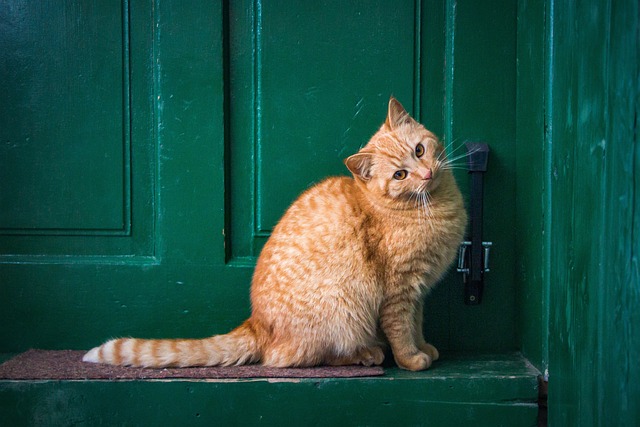
They say elephants never forget; I think the same may be true of cats.

A friend of mine recently downsized by moving into the lower level of her own home and renting out the upstairs.

She’s perfectly happy with the arrangement. One of her cats, however, is not.

This cat remembers that he once had the run of the entire house. He still recalls that there was a wonderful place called Upstairs.

Despite having lots of room to roam downstairs, including access to a big backyard, this cat keeps trying to break into the upper level of the house. I’m told he meows plaintively at the connecting door between the two units, and tries to pry it open with his paw.

This cat knows that there’s something missing in his life. Even though Downstairs is perfectly nice, he still feels the ache to be Upstairs once again.

I think many of us know the feeling.

We have an innate sense that this world is not as it should be.

It’s broken in some way: there’s something missing.

Humans seem to have a mysterious longing for a world set right. We ache for it, even though we haven’t experienced it.

Read more

See What You’re Missing!

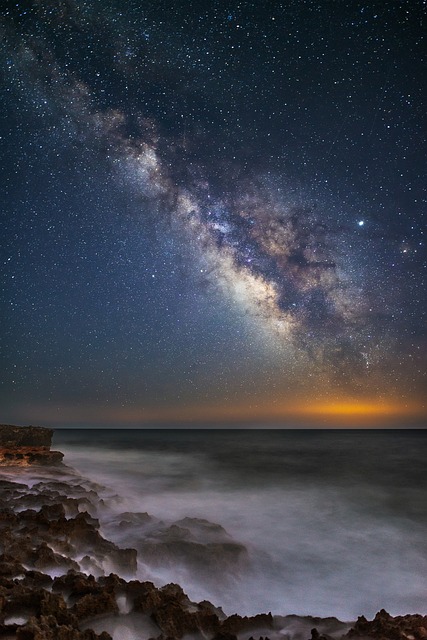
Image of the Milky Way by Evgeni Tcherkasski from Pixabay

Have you seen the Milky Way recently?

If you have, you can count yourself among the fortunate.

Astronomers say that light pollution from artificial lights is strong enough in many places to blot out the stars. They’ve calculated that over a third of humanity, and almost 80 percent of North Americans, can no longer see the Milky Way. Indeed, here in Toronto we’re lucky if we can even see the Big Dipper.

Few of us seem to recognize how sad this really is.

Vision scientist Sonke Johnsen does. He wrote:

“The thought of light traveling billions of years from distant galaxies only to be washed out in the last billionth of a second by the glow from the nearest strip mall depresses me no end.”

We seem to devalue the incredible gift of the night skies. We don’t pay it much mind when it’s there. And if we can’t see it any longer, the loss is of little importance to us.

Why is it that losing our connection to the wonder of our galaxy doesn’t seem to bother us? Is it our self-sufficiency? Are we so caught up with our shiny, man-made baubles that we’re blind to our need for something real?

I think this detachment from the cosmos speaks to a spiritual apathy, too.

How is it that we’re indifferent to the awesome gift of the Son of God?

Read more

The Things That Bug Us

Image by Ralf Kunze from Pixabay

Do you ever think that you could have designed this planet a bit better than God did?

Don’t get me wrong. I love the beauty of God’s Creation: the animals, birds, trees, flowers, oceans, mountains, and starry night sky.

But I have just one quibble….

Bugs.

I think God made far too many of them.

Scientists estimate that there are 10 quintillion bugs on Earth, which works out to well over a billion insects per person.

I find this excessive. All most of them do is bite, sting, or frighten people.

In an ideal world of my creation, there would only be a few select insects. Cute ones like ladybugs and beautiful ones like butterflies would make the cut, but I can do without the rest.

Plus, I’d make a lot more flowers. Sound good?

There’s only one problem with the utopia I’ve designed: what would pollinate the flowers?

Insects are responsible for the vast majority of pollination. In my version of this world, I would have eliminated the very things that make possible productivity in flowering plants.

I think we take the same attitude when it comes to things in our lives that we find unpleasant or demanding.

We want nothing to do with the things that “bug” us.

Read more

God Didn’t Make a Mistake When He Made You

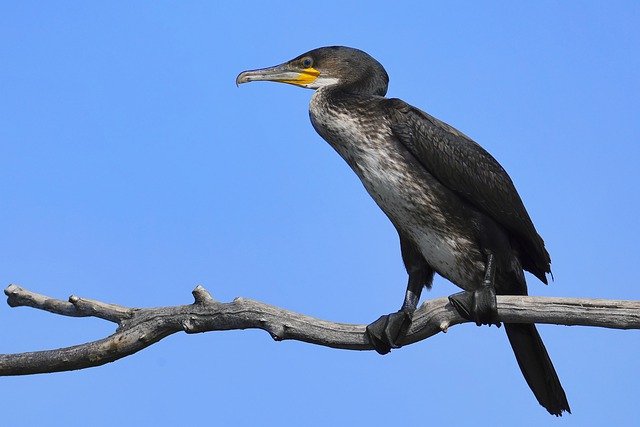
Cormorant. Image by sharkolot from Pixabay

Pity the poor cormorant.

This ungainly waterfowl is never at the top of anyone’s list of favourite birds.

It looks almost prehistoric, with its matte black feathers and strongly hooked bill. It lacks the beauty of a brightly coloured cardinal or the elegance of a swan.

The cormorant sits unusually low in the water, as though it’s about to sink. And because its wing feathers aren’t waterproof like those of other waterfowl, it needs to stand for long periods with wings outstretched, drying its feathers out in the sun.

It’s clumsy on land, and must expend more energy flying than other birds.

Nothing seems quite right about the cormorant.

Did God make a mistake when he fashioned them?

Not at all!

The cormorant’s lack of waterproofing actually plays to its advantage. Its waterlogged feathers make it less buoyant than ducks, enabling it to dive deeper in search of fish to eat.

Cormorants are excellent divers, agile and swift, with some species being able to dive to an astounding 150 feet.

So its “deficiencies” aren’t actually a bug, but rather a feature.

Do you ever feel like you’re not as good at things as other people? Do you feel as though you simply don’t measure up?

Rest assured, God didn’t make a mistake when he made you.

Read more

Want To Feel God’s Love?

Image by Adina Voicu from Pixabay

It seems like marriage proposals these days are a competitive sport.

It used to be that a man would propose to his beloved over a romantic dinner, with flowers on the table and perhaps some violins playing. He would get down on bended knee, present a ring, and ask for her hand in marriage.

Apparently, that just doesn’t cut it anymore.

Now, proposals have to be over-the-top. They might feature anything from fireworks to skywriting. A will-you-marry-me moment nowadays might involve a scavenger hunt, a fake movie trailer, a full orchestra and choir, or a ride in a hot-air balloon.

More adventurous grooms might enlist a celebrity in the proceedings, hire a flash mob at Times Square, or arrange to appear on the Jumbotron at a sports game.

And then there’s the man whose proposal took an entire year to create. Unbeknownst to his girlfriend Jennifer, each day for 365 days Dean Smith videotaped himself proposing to her, every time with a unique message. On the 366th day, he showed her the completed video and finally proposed in person (she said yes).

Why do people go to so much trouble?

Because they want to show their intended how much they’re loved.

Did you know that God has done the same for you?

He loves you deeply and He wants you to know it!

Let’s see how God stacks up when it comes to showing love.

Read more

Sounds Like Paradise

Image of New Zealand by Lars_Nissen from Pixabay

Right now, living in countries like New Zealand sounds like a sort of paradise to the rest of the world.

Some island nations have been able to beat back the novel coronavirus to the point where life is almost back to normal.

People in those countries can once again attend concerts, go out to restaurants or to church, return to their workplaces, and hug their friends and family.

They can pretty much go about their pre-pandemic lives.

For those of us living in countries still battling second or third waves of COVID-19, life in places like New Zealand seems like a dream.

We hope that one day maybe life will be like that for us, too: we long for a world where there are no more restrictions, suffering or death due to COVID-19.

In essence, we all yearn for a release from “bondage,” don’t we?

But even when we’ve been able to put the novel coronavirus in the rear-view mirror, this ache for freedom won’t quite go away.

Why?

Read more

The Language of Flowers and the Language of God

Say it with flowers!
Wikimedia Commons, CC BY-SA-2.0

Flowers speak. Not just through their fragrance or their beauty, but with secret codes, too.

Perhaps you’ve heard of the “language of flowers” popular during Victorian times? This enchanting symbolic language enabled suitors to send coded messages to their paramours, ones that couldn’t be spoken aloud. The message depended on the particular flowers and colours chosen for the bouquet. An entire conversation could be carried out solely through flowers, with no words employed at all.

We all know that red roses symbolize true love, and we’d rightly guess that the forget-me-not begs that the giver be remembered. But did you know the following flower meanings?

Red carnation: My heart aches for you
Hyacinth: Your loveliness charms me
Canterbury bell: Your letter received
Yellow rose: Jealousy
Butterfly weed: Let me go
Weeping willow: Sadness

The Victorian language of flowers is a cryptic tongue. Most people only see the surface of the flower and not the symbolic meaning hidden within it.

God has His own “language of flowers,” but it actually encompasses all of creation. God is continually speaking to us through nature:

“For ever since the world was created, people have seen the earth and sky. Through everything God made, they can clearly see his invisible qualities—his eternal power and divine nature. So they have no excuse for not knowing God.” (Romans 1:20 NLT)

“The heavens proclaim the glory of God. The skies display his craftsmanship.” (Psalm 19:1 NLT)

If we listened in to what nature was saying about its Creator, what messages would be revealed?

Read more