This Is Who We Are

Today, Canada celebrates its birthday! July 1st is Canada Day, a holiday on which we have parties, set off fireworks, and wave the flag.

We’re all attached to our national flags, aren’t we? Each is beautiful in its own way. Some flags have blocks of colour; some feature significant symbols; others have patterns of stars and stripes. A handful of countries depict plants or trees on their flags, mine among them.

Canada’s flag has a maple leaf at its centre. In fact, the nickname for our flag is the Maple Leaf. As a nature lover, I’m proud to have a symbol of a plant on my national flag, and especially pleased that it’s a leaf from one of my favourite trees.

Growing up, I loved maple trees: I climbed them, enjoyed the sugar and fudge made from their sap, collected their red and orange leaves in autumn to press and even jumped into raked-up piles of them.

I’d venture to say that all Canadians love maple trees. The trees themselves are beautiful and stately; the wood harvested from them is so strong it can be used as the flooring for bowling alleys; we harvest precious sap from them to make sought-after products like maple syrup; and the leaves turn gorgeous colours in the autumn.

The maple leaf is the emblem of Canada. It symbolizes who we are as a people: hardy, strong, nature-loving northerners.

Just as the maple tree is important to Canadians, there’s another tree which is very important to a certain group of people:

It’s the tree Christ was crucified on.

Read more

With God, You Get the Flower First!

Eastern Redbud Tree

Sometimes nature can be a bit unpredictable—things happen in an order we wouldn’t expect.

Normally, plants put forth leaves long before they produce flowers.

But some trees and shrubs flip the script, so to speak.

With certain plants, the normal sequence is reversed: the flowers come first, before the leaves have developed.

A good example is the beautiful redbud tree. It puts forth gorgeous pink flowers on its bare branches in early spring, when none of its leaves are yet in sight.

The forsythia shrub bears its bright yellow flowers in advance of its leaves, and the lovely magnolia presents its pink or white blooms before the green foliage appears. Some maples and oaks also exhibit this flower-first behaviour, although with less showy blossoms.

All of these plants give us a treat in springtime when we’re starved for colour. We get the flower first without having to wait for the leaves.

Why do some plants reverse the normal order of things?

Some trees are wind-pollinated, so put forth flowers before their bulky leaves get in the way. The same goes for flowers that need extra sunlight. Other plants produce a mass of conspicuous flowers first, unobscured by leaves, to better attract the attention of pollinating insects.

Did you know that God also flipped the script and gave us the flower first, so to speak?

Read more

A Cruciform Life

There are some things that can only be seen if you take a bird’s-eye view.

It’s only when you look down from a great height that you realize that the artificial island of Palm Jumeirah in Dubai is designed to resemble a palm tree.

You only really get a sense of why the Pentagon was given its name when you view this building from above and see its five-sided shape.

Someone at ground level in Nazca, Peru, might completely miss the fact that the lines etched into the desert sands at their feet actually form massive shapes of animals and plants. The full designs can only be seen from up high.

Similarly, it might not be obvious to you when entering certain churches that the outline of the building itself forms a cross when viewed from above.

Many European cathedrals feature a cross-shaped floor plan. The Church of the Nativity in Bethlehem is prime example of a cruciform building.

I like to think that when God looks down at these buildings from above, it pleases Him to see a cross reflected back at Him.

Here’s a question for you:

When God looks down from above at your life, does He see the Cross reflected in how you live? How “cruciform” is your life?

Read more

Lest We Forget

View from D-Day Landing Craft, June 6, 1944

Each year we mark November 11th as Remembrance Day in Canada (Veterans Day in the US).

On this special day, we remember the servicemen and -women who lost their lives to ensure the freedom we cherish so deeply today.

The numbers are staggering: it’s estimated that over 400,000 U.S. military personnel lost their lives during World War II. The US National D-Day Memorial Foundation estimates that over 4,000 Allied servicemen lost their lives on June 6, 1944 (D-Day) alone.

The fatalities during World War I are equally appalling, with close to 60,000 Canadians having lost their lives in service. The best estimate of war historians is that over 140,000 Allied soldiers lost their lives during the hellish Battle of the Somme alone in 1916 (including my great-uncle Pte. Robert John Tisdale, still in his teens).

The numbers who lost their lives in the Korean War, the Gulf War, Afghanistan, and others only adds to the toll of war’s terrible cost.

But wait a minute…every sentence I just wrote contained a mistake. Did you spot it?

Read more

How to Win at Chess

Image by Jan Vašek from Pixabay

Let’s assume you’ve challenged the all-time, undefeated World Chess Champion to a game.

You were confident in your chess skills, and figured that you had a fair chance of winning. The challenge seemed like a good idea at the time.

As the game progresses, however, you realize you’re vastly outmatched. You severely overestimated your abilities. The champion is on course to trounce you easily.

Worse still, you’d made a rash and cocky wager. You bet everything you had that you’d win: your house, your car, all your possessions.

Now you have a horrible sinking feeling, certain that you’re about to lose everything you own.

But then the chess champion does something unexpected.

He comes over to your side of the table, picks up one of your pieces, and makes a move for you.

Then he goes back to his side of the table and makes his own move.

This pattern repeats several times. Eventually you realize what he’s doing: he’s making very shrewd moves on your behalf, employing a strategy you’d never have thought of.

It slowly dawns on you that he’s opening up a path to victory for you.

The chess champion is actually helping you win! He’s doing for you what you had no possibility of doing for yourself.

After he’s won the game for you, the champion gives you a hearty handshake and a wink. All you can do is humbly thank him with profound gratitude. If it weren’t for his gracious actions, you’d have lost everything.

What’s the spiritual lesson for us here?

To ultimately “win” at life, you need God to be on both sides of the equation.

Read more

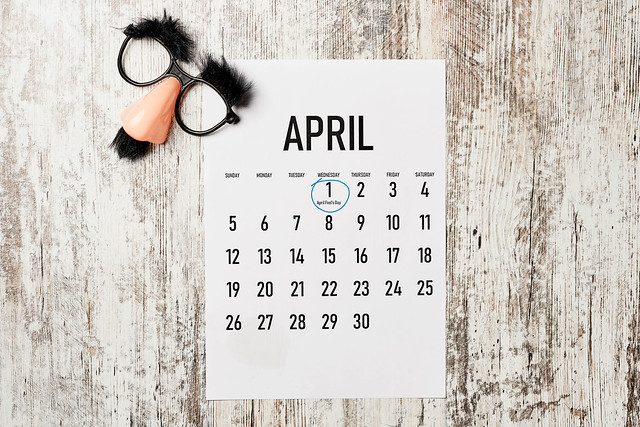
Fooled You, Satan!

Image by Marco Verch on Flickr

What is the best April Fool’s prank in history?

Many believe that a BBC TV hoax from over 60 years ago takes the cake.

In 1957 the news show Panorama reported that, thanks to a mild winter in Switzerland, the dreaded spaghetti weevil had been eradicated. As a result, Swiss farmers had enjoyed a bumper crop of spaghetti. The programme showed farmers carefully plucking strands of spaghetti from trees.

Scores of viewers fell for the prank, calling the BBC and asking how they could grow a spaghetti tree themselves. They were advised to “place a spring of spaghetti in a tin of tomato sauce and hope for the best.”

There must be something in the water at the BBC, because in 1980 their pranksters were at it again. On April Fool’s Day they announced that Big Ben, London’s iconic clock tower, would become digital and henceforth be known as Digital Dave. This “news” produced a flood of irate calls to the station.

Other European countries are no slouches at April Fool’s pranks either.

In 1969 the Netherlands’ public broadcaster announced that government inspectors would be roving the streets armed with remote scanners, detecting people who had not paid their TV/radio tax. It was suggested that the only way to stymie the scanners was to wrap the TV or radio in aluminum foil. The next day, all the supermarkets were sold out of foil, and suddenly a flood of TV/radio taxes were being paid.

These probably rate as some of the best wide-scale practical jokes ever.

But with Easter Monday falling on April Fool’s Day this year, it got me thinking of an ever greater example of someone being outwitted.

Read more

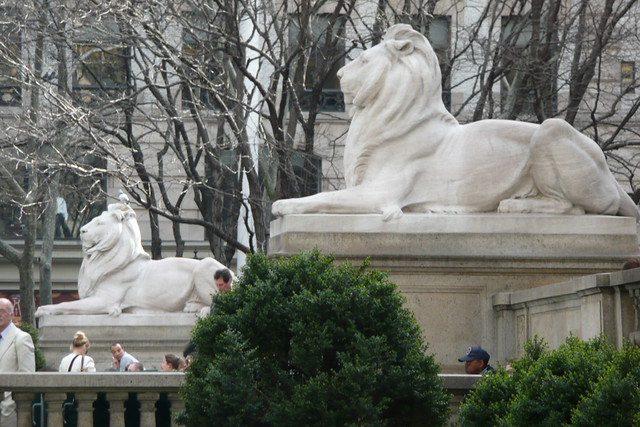
What Love Looks Like

The incomparable Taj Mahal, India

The Taj Mahal, in Agra, India, is considered to be one of the world’s most beautiful buildings, and rightly so.

Built from white marble, it was commissioned in 1631 by Shah Jahan as a memorial to his favourite wife, Mumtaz Mahal, who died that year giving birth to their fourteenth child.

For many in India and around the world, the Taj Mahal is an iconic symbol of love. Every stone and jewel used in its construction speaks of the tremendous affection the Shah had for his wife, and his grief at her passing. To many people, the Taj Mahal is the embodiment of love.

What does love look like to you?

Read more

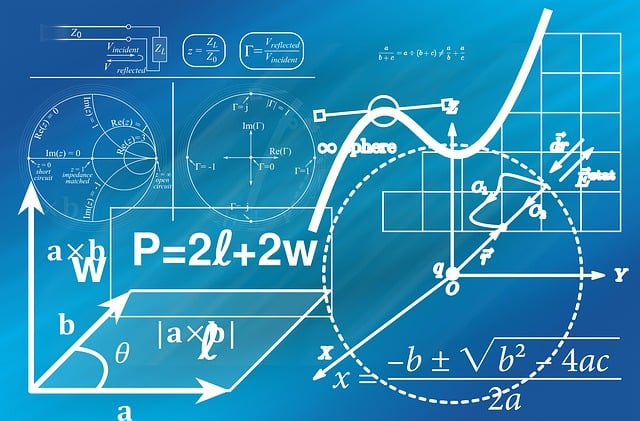
Do The Math

Image by Gerd Altmann from Pixabay

Life is sort of like math class.

How so?

Let’s assume I’m in school and have to take a math test.

There’s an equation at the top of the page I’m handed, and blank space underneath for me to write out my solution to the equation.

But I don’t solve the equation.

Instead, in the first third of the blank space I write a funny, rhyming poem about math class. Next, I draw a bunch of smiling numerals with little arms and legs and depict them as dancing together. In the last third of the page I write a short essay about the benefits of studying math.

I hand in my test to the teacher, and await the results.

The next day, the teacher tells me, “Lori, the poem you wrote had me in stitches. Your drawing of the dancing numbers was delightful, too. And I’d love to incorporate some of the insights in your essay into one of my lessons.”

“That’s great!” I’d say. “So what mark did I get?”

“Zero,” the teacher would respond.

“But why?” I’d ask. “I thought you loved what I wrote.”

“I did: the things you filled the page with were all good and creative and helpful. But they don’t count towards your mark. You failed to do the one thing required of you, which was to solve the equation.”

Is the teacher being fair? Yes.

Is there one thing that God requires of us?

Read more

The Stand-In

Daniel Radcliffe as Harry Potter.
Photo by longplay on Flickr.

If you’re a Harry Potter fan, this post might have special resonance for you.

While much media attention has focussed on the astonishing success of the Harry Potter juggernaut over the years, perhaps less attention has been paid to the stories of the unsung heroes behind the scenes who have worked so hard to create the films in the franchise.

A recent documentary, “David Holmes: The Boy Who Lived,” sheds light on the poignant story of one of these individuals.

David Holmes was chosen early on to be the stunt double for Daniel Radcliffe, who played Harry Potter in the films. Starting with the very first film, and for the next ten years, David and Daniel worked closely together and developed a strong bond.

David’s exceptional talents as a gymnast enabled him to perform breathtaking stunts. As a stand-in for Daniel, David’s skills were brought into play whenever a stunt was deemed too dangerous for the lead actor himself.

All went well, until the filming of the next-to-last Harry Potter movie in 2009.

While filming a scene for “Harry Potter and the Deathly Harrows, Part One,” a tragic accident left David paralyzed with a spinal injury, turning his world upside down.

The documentary is an inspiring account of David’s story and of the bond that still exists between the two men. It also depicts the reverberations the accident had on Daniel’s life, and how he navigated the complex mix of guilt and admiration brought on by seeing the great cost his friend bore for taking his place.

And therein lies the lesson we can learn from this as believers.

We, too, have someone who stood in our place and paid a terrible price for doing so.

Read more

The Greatest Miracle of All

Image by Chil Vera from Pixabay

What would you pick as Jesus’ greatest miracle?

Feeding the 5,000 with just five loaves and two fish?

Yes, that definitely rates as one of Jesus’ greatest hits.

Calming a storm with only His words?

That one would make the top ten as well.

How about walking on water?

Oh, now we’re getting somewhere! That miracle surely places in the top three.

Wait a second….we haven’t mentioned Jesus’ raising of the dead. He did that several times: the widow of Nain’s son, Jairus’ daughter, and Lazarus.

That has to be Jesus’ greatest miracle!

Doesn’t it?

Perhaps not. Perhaps none of these is Jesus’ greatest miracle.

But if that’s true, then what would qualify?

Read more