Inscribed in the Palms of His Hands

Image by Lisa Johnson from Pixabay

Have you ever been tempted to carve initials or names in the trunk of a tree?

Perhaps linking yours with those of someone you love, like “M + F” or “Josh loves Amanda”? The inscriptions could last for centuries, emblems immortalizing your love for generations to come.

(Of course, as a nature lover, I’d rather people not make carvings in the bark of a living tree. But I can understand the impulse to do so.)

In fact, people have been engraving things on tree trunks for millennia.

Birch trees are a natural choice due to their white bark. The smooth silver-grey bark of beech trees is also a magnet for trunk-carvers. Indo-European peoples have used it for writing-related purposes since antiquity. In some modern European languages, the words for “book” and “beech” are either very close or identical. No wonder the beech has been called the “patron tree” (sort of like a patron saint) of writers.

Did you know that God sometimes inscribes things in usual places, too?

Read more

Ultimate Victory Is Coming

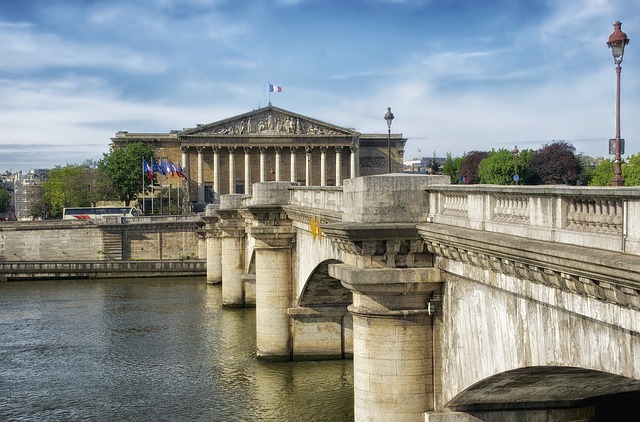
Pont de la Concorde, Paris. Image by David Mark from Pixabay

If you’ve ever been to Paris, you’ll know that many of its bridges have a story to tell.

The Pont de la Concorde is no exception.

This stone-arch bridge across the River Seine connects the Place de la Concorde with the National Assembly.

Construction of the bridge started during the late 1700s and continued even during the turmoil of the French Revolution. It was completed in 1791.

Interestingly, some of the stones used for the Pont de la Concorde were sourced from the rubble of the demolished Bastille prison. The bridge’s architect, Rudolph Perronet, said this was “so that the people could forever trample the old fortress.”

Today you can traverse this bridge and trample under your own feet the stones from the once-feared stronghold which imprisoned so many.

It’s a satisfying feeling to show your contempt for something vile by actually stomping on it, isn’t it?

Scripture tells us that Jesus will do something similar:

Read more

Your “Spring” Is On Its Way!

Image by Jill Wellington from Pixabay

A beautiful red cardinal has been singing heartily outside my window the past week, as though it’s already spring.

My hibiscus houseplant has broken its winter dormancy and is putting forth flower buds.

But there’s still snow on the ground, and there’s bound to be more snow coming. This is Canada, after all, and it’s only March. It’s still cold enough outside to need a winter coat.

Doesn’t seem like spring to me.

Do the cardinal and the hibiscus know something I don’t?

In fact, they do. They sense the lengthening of the day and the increased hours of sunlight, things that have escaped my notice.

They know that spring is on its way, even if I can’t see it coming just yet.

In the same way, God knows a thing or two that we don’t.

He knows when a turnaround in our situation on its way, even if we can’t see any evidence of a change in the offing.

He knows that our “spring” is coming.

Read more

His Footprints Are Still Here

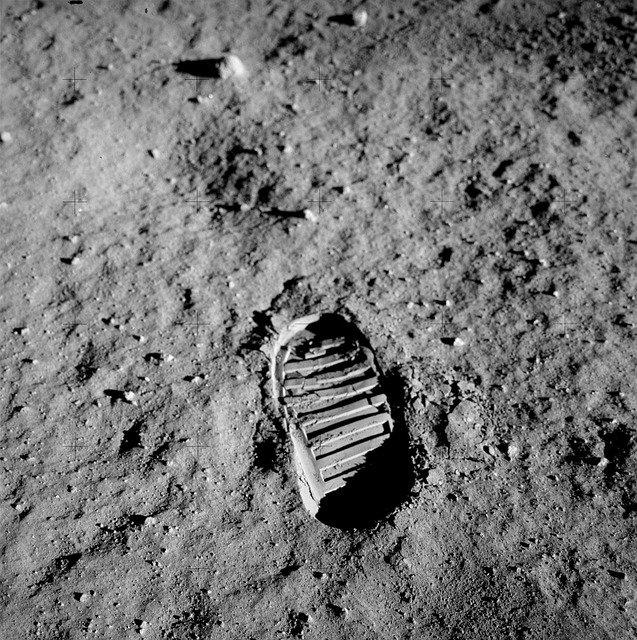
Footprint on the Moon. Image by WikiImages from Pixabay

“The footprints are still there,” the article began.

Whose footprints? And where?

The article was talking about the footprints of astronauts Neil Armstrong, Buzz Aldrin and the ten others who have walked on the moon.

Astonishingly, their footprints are still there. It’s been over 50 years since humans first walked on the lunar landscape, but the moon’s dusty surface is still marked with our historic bootprints.

How can this be?

After all, here on earth, footprints in the dirt can be washed away by rain days later. An imprint of a foot on a sandy beach might be erased in seconds by an incoming wave. Other people or vehicles can trample a footprint, cancelling it out.

But it’s different on the moon. The moon has no atmosphere, and therefore no breezes or rain to erode any footprints. Earth’s satellite also doesn’t get a lot of visitors, so no one else’s footprints or vehicle tracks have obscured those made half a century ago.

Scientists suggest that the lunar footprints of the astronauts might last a million years, maybe almost as long as the moon itself continues to exist.

That couldn’t happen here on earth. Or could it?

Are there footprints on earth that will last for millennia or eons, or even for eternity?

Yes.

The footprints of Jesus will.

Read more

Remembering The Few and The One

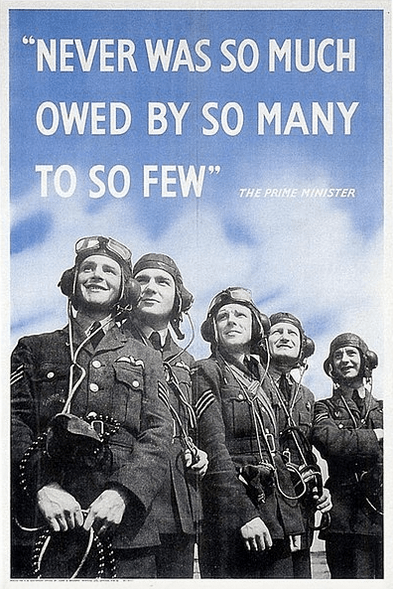
Squadron Leader D Finlay, CO of No. 41 Squadron RAF, standing with four of his pilots in front of a Supermarine Spitfire Mk II at Hornchurch, Essex, December 1940.
Wikimedia Commons, Public Domain

This week we commemorate Remembrance Day, and honour those who gave their lives for our freedom.

Some of those we remember are the airmen who made the ultimate sacrifice eighty years ago in the Battle of Britain during World War II. This battle, fought in the skies in 1940, saved that island nation from almost certain invasion by Hitler’s Nazis.

But it came at a terrible cost to the Allied flight crews who were battling the Luftwaffe. The average life expectancy of a Spitfire pilot during the battle was heartbreakingly short: a mere four weeks.

British Prime Minister Winston Churchill paid tribute to those airmen in his famous wartime speech on August 20, 1940:

“Never in the field of human conflict was so much owed by so many to so few.”

This became one of the most famous of Churchill’s sayings, and those airmen became known as “The Few.”

Battle of Britain poster
Wikimedia Commons, Public Domain

But did you know that Churchill actually started out with a different line when he was composing his speech, and felt he had to change it?

Read more

This Is Who We Are

Canadian Flag Photo from PickPik

In a few days, Canada will be celebrating its birthday. July 1st is Canada Day, a holiday on which we have parties, set off fireworks, and wave the flag.

We’re all attached to our national flags, aren’t we? Each is beautiful in its own way. Some flags have blocks of colour, some feature significant symbols, others have patterns of stars and stripes. A handful of countries depict plants or trees on their flags, mine among them.

Canada’s flag has a maple leaf at its centre. In fact, the nickname for our flag is the Maple Leaf. As a nature lover, I’m proud to have a symbol of a plant on my national flag, and especially pleased that it’s a leaf from one of my favourite trees.

Growing up, I loved maple trees: I climbed them, enjoyed the sugar and fudge made from their sap, collected their red and orange leaves in autumn to press and even jumped into raked-up piles of them.

I’d venture to say that all Canadians love maple trees. The trees themselves are beautiful and stately; the wood harvested from them is so strong it can be used as the flooring for bowling alleys; we harvest precious sap from them to make sought-after products; and the leaves turn gorgeous colours in the autumn.

The maple leaf is the emblem of Canada. It symbolizes who we are as a people: hardy, strong, nature-loving northerners.

Just as the maple tree is important to Canadians, there’s another tree which is very important to a certain group of people:

It’s the tree Christ was crucified on.

Read more

Spot The Mistake

View from D-Day Landing Craft, June 6, 1944

On Remembrance Day in Canada (Veterans Day in the US), we remember the servicemen and -women who lost their lives to ensure the freedom we cherish so deeply today.

The numbers are staggering: it’s estimated that over 400,000 U.S. military personnel lost their lives during World War II. The US National D-Day Memorial Foundation estimates that over 4,000 Allied servicemen lost their lives on June 6, 1944 (D-Day) alone.

Read more