The Most Dazzling Christmas Light

Photo by Paul Vladuchick on Flickr CC BY-NC-ND 2.0

What’s your favourite Christmas tradition? Is it exchanging gifts, baking special desserts, decorating the tree, or perhaps wearing ugly Christmas sweaters?

For many of us, our most cherished Christmas tradition probably involves lights, whether they’re on your own Christmas tree, or decorating houses in your neighbourhood.

Some people go all out, putting tens of thousands of lights on their home. There’s even a long-running TV reality show called “The Great Christmas Light Fight,” in which families compete against each other to create elaborate Christmas light displays.

This season is inextricably linked to lights, but might we have missed the most important light of all?

We’re putting up Christmas lights in houses and on streets that are already well lit. The colourful lights are beautiful and bring us joy, but don’t really provide much extra illumination. We seem to have all the light we need.

But maybe we don’t realize how much darkness we’re really in. With our busy, self-sufficient lives, we may not recognize that we’re lacking a different sort of light, one that resides inside of us.

Read more

The Polar Bear’s Secret

Pop quiz: What colour is a polar bear’s skin?

Did you guess “white”?

It’s the obvious answer, isn’t it, because their fur is white.

Surprisingly, though, you’d be wrong.

If you shaved a polar bear, you’d discover that it would look much like its cousin, the black bear.

That’s right: polar bears have black skin!

Don’t believe me? Here’s a clue: check out their noses and foot pads. They’re both black. Their thick fur so completely hides the blackness underneath that you’d never know it’s there.

Not only that, but polar bears’ fur isn’t actually white.

Pardon me?

It’s true! Their outer coat of fur consists of translucent hollow hairs that scatter and reflect visible light. These hairs have no white pigment, but merely appear white due to an optical trick involving the physics of light.

The polar bears certainly had us fooled, didn’t they?

And they’re not the only ones.

There are people whose lives have been so thoroughly changed by the gospel of Christ that you’d be shocked to discover their dark past.

Read more

Shine Your Light!

Image by StockSnap from Pixabay

If you’re fumbling around in the darkness, what should you do?

Turn on a light, of course.

But there are places on earth where this truism can have unexpected effects.

The “midnight zone” of oceans is one of them.

This zone, ranging from about 3,000 to 13,000 feet below the water’s surface, is in constant darkness. The sun’s rays simply cannot penetrate this far down.

The only light at this extreme depth comes from the bioluminescence of various sea creatures themselves.

Scientists who want to study the sea life in this region are faced with a problem. Normally, if you want to examine a dark area, you’d simply shine a light into it. Indeed, the submersibles scientists use for underwater research have headlights for this express purpose.

But casting a light on the creatures in the midnight zone freaks them out. They’re not used to bright light, and assume it’s some sort of enemy.

Startled swordfish will attempt kamikaze runs at a submersible’s lights. Other creatures are blinded or are plunged into terror by the blazing illumination: they either freeze or flee.

Scientists soon realized that their submersibles’ lights were simply creating a no-go zone around the vessel, hampering their research. So they switched to using a red light, a colour which most of the undersea creatures can’t see.

Sometimes light can have a contradictory effect, can’t it?

As believers we see this when we introduce the light of Christ to others.

Read more

Islands of Hope

Image of lighthouse on the coast of Newfoundland by Felix Dilly from Pixabay

Transoceanic plane travel has always been fraught with potential problems.

Fuel could run low or a plane could develop mechanic problems mid-flight. The pilots would need a place to set down, pronto.

But in the middle of the ocean, where is there to land?

That’s where islands come in.

There are some handy places to land even in the vast expanse of the oceans.

In the Pacific, islands such as Midway, Wake, and Hawaii are available. The Atlantic offers Iceland, the Azores, and Bermuda, among others.

Not least is Newfoundland, an island off the eastern coast of Canada. For decades its Gander airport was used as a refuelling stop for planes making the hop across the Atlantic. It’s also an emergency landing spot for aircraft in trouble.

Gander is perhaps best known for its role in accepting 38 diverted planes that had to set down during the terrorist attacks in the U.S. on 9/11, twenty-two years ago today. Over six thousand passengers were generously hosted by the surrounding communities until U.S. airspace was reopened, a story commemorated in the hit musical, “Come From Away.”

Gander was truly an island of hope during that time.

I think we can all be islands of hope for others.

Read more

Welcome to Your Spring!

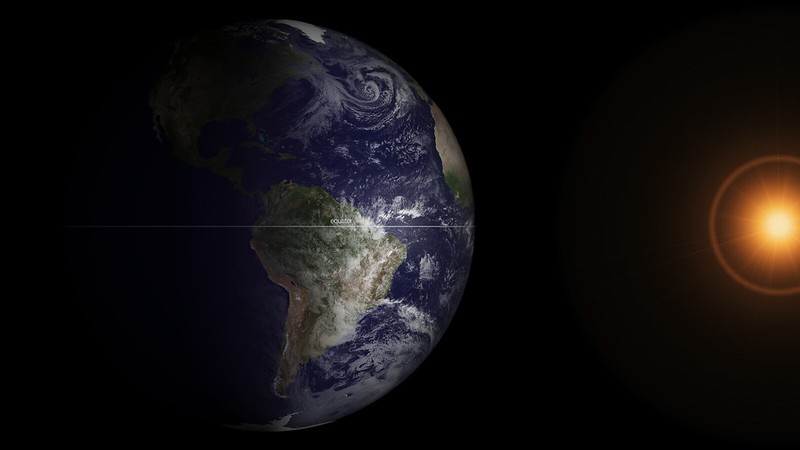
Satellite captures moment of spring equinox. Image by NASA Goddard Space Flight Center via Flickr CC BY-2.0

Welcome to Spring!

If you live in the Northern Hemisphere, today marks the vernal equinox, the first day of astronomical spring. (For those Down Under, this day heralds the arrival of autumn.)

The return of spring signals longer days with more sunlight and warmer temperatures. Even though it may take a while to see blooming flowers (especially in Canada!), the spring equinox is a reminder that brighter days are ahead.

But what exactly is an equinox?

We have two of them each year, in spring and fall. Each one marks the day when the sun is directly above the Earth’s equator (from our perspective), and night and day are of equal length.

The sun’s path then crosses the celestial equator (an imaginary line or circle in the sky directly above the Earth’s equator), and heads north or south, depending on the time of year.

At the spring equinox, the sun is rising into the Northern Hemisphere: it’s our turn for renewal.

But no matter where you live on the planet or what time of year it is, you can experience a new season of rebirth in your life.

Your new beginning comes when the Son rises in your life.

Read more

See What You’re Missing!

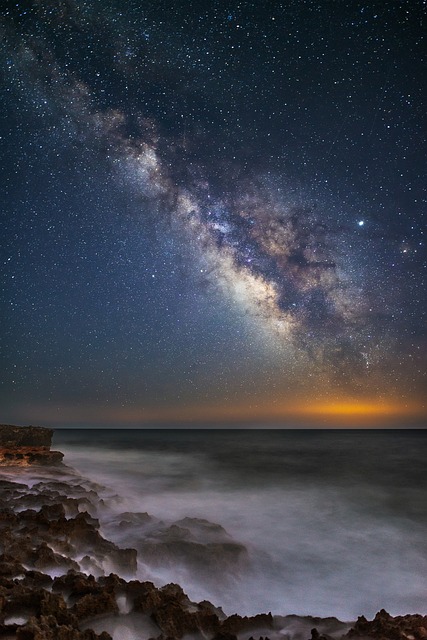
Image of the Milky Way by Evgeni Tcherkasski from Pixabay

Have you seen the Milky Way recently?

If you have, you can count yourself among the fortunate.

Astronomers say that light pollution from artificial lights is strong enough in many places to blot out the stars. They’ve calculated that over a third of humanity, and almost 80 percent of North Americans, can no longer see the Milky Way. Indeed, here in Toronto we’re lucky if we can even see the Big Dipper.

Few of us seem to recognize how sad this really is.

Vision scientist Sonke Johnsen does. He wrote:

“The thought of light traveling billions of years from distant galaxies only to be washed out in the last billionth of a second by the glow from the nearest strip mall depresses me no end.”

We seem to devalue the incredible gift of the night skies. We don’t pay it much mind when it’s there. And if we can’t see it any longer, the loss is of little importance to us.

Why is it that losing our connection to the wonder of our galaxy doesn’t seem to bother us? Is it our self-sufficiency? Are we so caught up with our shiny, man-made baubles that we’re blind to our need for something real?

I think this detachment from the cosmos speaks to a spiritual apathy, too.

How is it that we’re indifferent to the awesome gift of the Son of God?

Read more

God Always Leaves a Light On For You

Image of Border Collie by Jacqueline Galand from Pixabay

When you come home late at night, isn’t it nice when a family member has left a light on for you?

It shows they care about you, and want you to be guided safely back inside.

I was reminded of this recently when I came across a fun fact about border collies, a highly intelligent breed of dog often used to herd sheep.

The border collie usually sports a prominent white tip on its tail. This characteristic colouration is known as the “Shepherd’s Lantern.”

The white tip of the collie’s tail stands out in the dim light of dusk, allowing the shepherd to be guided home from the pasture after a long day’s work.

That got me thinking:

Our Heavenly Father gives us a “lantern,” too.

God loves us and wants to make sure we’re guided home to him.

He does this in two ways:

Read more

5 Things A Monstera Plant Can Teach You

Photo by Maja Dumat on Flickr CC BY-2.0

Can the monstera houseplant teach us something about our faith in God?

This plant, nicknamed the Swiss cheese plant, has become hugely popular in recent times. Much sought after, it has risen to the status of an icon among houseplant aficionados.

But besides being a fun plant to grow indoors, is there anything we can learn from the monstera? Can its example help us grow spiritually?

I believe that just about everything in the natural world can teach us something that can deepen our faith. I like how Ralph Waldo Emerson put it: “Every natural fact is a symbol of some spiritual fact.”

And the monstera is no exception!

Here are 5 things this special and beloved plant can teach us:

Read more

The Dark Side of the Moon

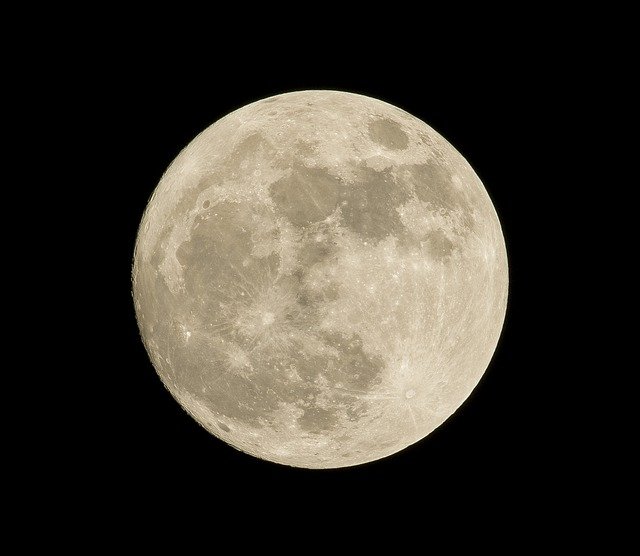
Image by Pexels from Pixabay

Is the “dark side” of the moon truly as dark as we think it is?

From Earth, we only see one side of our companion satellite. The moon is “tidally locked” with our planet, with the result that it always presents the same face to us.

Because we can’t see the side of the moon facing away from the Earth, we sometimes assume that it’s in perpetual darkness.

But this isn’t so. The “dark side” of the moon (which should more accurately be called the “far side”) gets just as much sunlight as the face we see. All sides of the moon receive the sun’s light equally in turn.

From the sun’s perspective, the moon doesn’t have a dark side at all.

It’s our perspective that throws us off and leads us to the wrong conclusion.

We can easily fall prey to misconceptions about our own lives, too. When we don’t have the right perspective, we can assume that things are darker than they really are.

Naomi in the Old Testament Book of Ruth certainly made this mistake.

Read more

Light in the Darkness

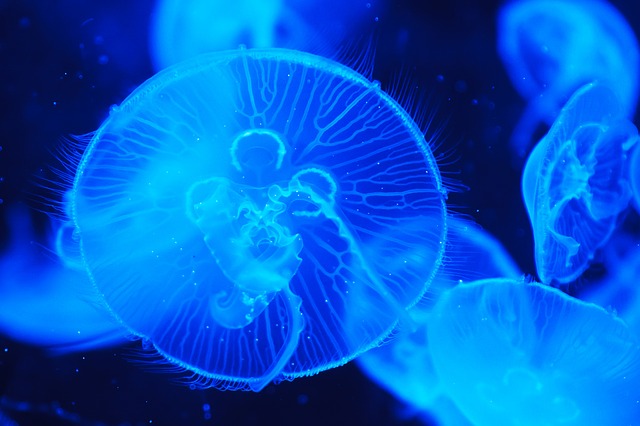
Jellyfish Image by PublicDomainPictures from Pixabay

The Earth’s oceans are a bit mysterious to landlubbers, aren’t they? Especially the farther down you go.

The top zone of the ocean, 200 meters or less from the surface, is called the “sunlight” zone. This zone hosts the vast majority of fish, sea mammals and aquatic plant life that we’d be familiar with.

In the next zone down, the “twilight” zone, the amount of sunlight rapidly diminishes. Such a tiny amount of light penetrates this region that photosynthesis is no longer possible.

But it’s the lowest reaches of the oceans that are the most otherworldly and forbidding.

The bottom zone, below 1,000 meters, is called the “midnight” zone, and with good reason. Sunlight has no hope of penetrating this far down. These inky depths are darker than most humans have ever experienced.

And yet some creatures down here have eyes.

What on earth for? What is there to see in this eternal darkness?

There’s actually still light in the deepest part of the oceans. It comes not from the sun but from bioluminescent creatures. Some deep-sea organisms, like jellyfish, can generate and emit light much the way fireflies do here on land.

There’s still light, even in areas where sunlight never penetrates and the darkness seems impossible to vanquish. Even in the “midnight” zone.

Are you going through a “midnight” of your own?

Does it seem to you that you’re living in a kind of darkness, that you’ll never see the light of day in your situation?

Rest assured that there’s no place on earth where God’s light can’t reach you.

Read more