God Will Go Ahead of You

Do you ever get a bit anxious when faced with something completely new?

Like how to find a new job in an economy that’s unlike anything you’ve seen before? Or how to navigate a world that’s turned upside-down?

Many of us shrink from the prospect of entering uncharted territory.

And we’re not the only ones: even some animals balk when confronted with something unfamiliar.

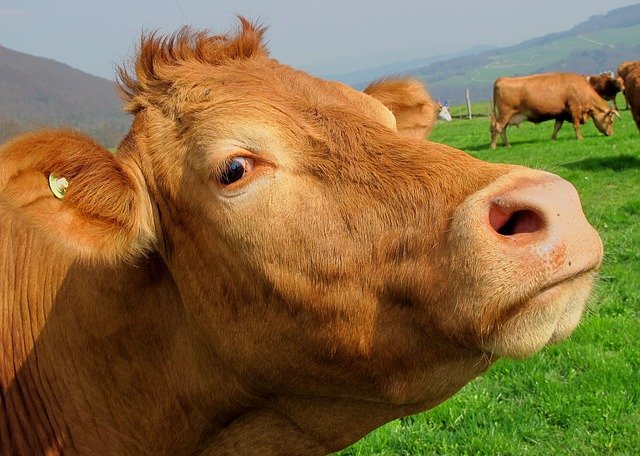
Cows are notorious for disliking disruptions to their routines and environments. They’re particularly averse to new gates. Cows are made so nervous by new entrances and openings that they’ll stubbornly resist going through them.

This trait is so well known that it’s given rise to a phrase: “Like a cow looking at a new gate.” It means to view something with bewilderment and confusion, as though to say, “Are you serious? I’m not going through that.”

Do you feel this way when faced with the uncertainties that a new situation may bring? Is fear of the unknown keeping you from stepping forward in faith to realize your dreams?

Fear has a way of paralyzing us, so that we stay stuck where we are instead of trying something new.

But we needn’t be afraid.

God will go through the gate ahead of us.

Read more
How to Win at Chess

Image by Jan Vašek from Pixabay

Let’s assume you’ve challenged the all-time, undefeated World Chess Champion to a game.

You were confident in your chess skills, and figured that you had a fair chance of winning. The challenge seemed like a good idea at the time.

As the game progresses, however, you realize you’re vastly outmatched. You severely overestimated your abilities. The champion is on course to trounce you easily.

Worse still, you’d made a rash and cocky wager. You bet everything you had that you’d win: your house, your car, all your possessions.

Now you have a horrible sinking feeling, certain that you’re about to lose everything you own.

But then the chess champion does something unexpected.

He comes over to your side of the table, picks up one of your pieces, and makes a move for you.

Then he goes back to his side of the table and makes his own move.

This pattern repeats several times. Eventually you realize what he’s doing: he’s making very shrewd moves on your behalf, employing a strategy you’d never have thought of.

It slowly dawns on you that he’s opening up a path to victory for you.

The chess champion is actually helping you win! He’s doing for you what you had no possibility of doing for yourself.

After he’s won the game for you, the champion gives you a hearty handshake and a wink. All you can do is humbly thank him with profound gratitude. If it weren’t for his gracious actions, you’d have lost everything.

What’s the spiritual lesson for us here?

To ultimately “win” at life, you need God to be on both sides of the equation.

Read more

Fooled You, Satan!

Image by Marco Verch on Flickr

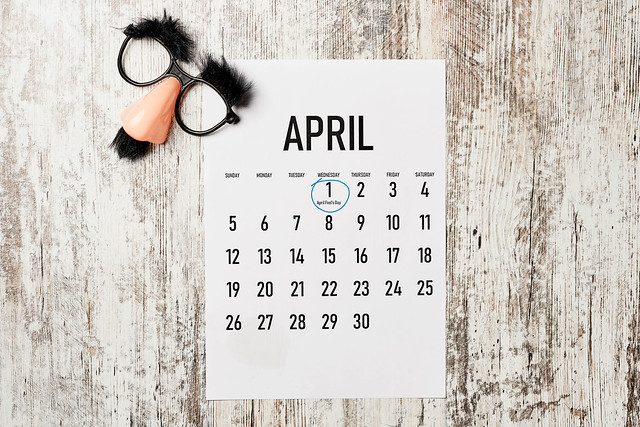
What is the best April Fool’s prank in history?

Many believe that a BBC TV hoax from over 60 years ago takes the cake.

In 1957 the news show Panorama reported that, thanks to a mild winter in Switzerland, the dreaded spaghetti weevil had been eradicated. As a result, Swiss farmers had enjoyed a bumper crop of spaghetti. The programme showed farmers carefully plucking strands of spaghetti from trees.

Scores of viewers fell for the prank, calling the BBC and asking how they could grow a spaghetti tree themselves. They were advised to “place a spring of spaghetti in a tin of tomato sauce and hope for the best.”

There must be something in the water at the BBC, because in 1980 their pranksters were at it again. On April Fool’s Day they announced that Big Ben, London’s iconic clock tower, would become digital and henceforth be known as Digital Dave. This “news” produced a flood of irate calls to the station.

Other European countries are no slouches at April Fool’s pranks either.

In 1969 the Netherlands’ public broadcaster announced that government inspectors would be roving the streets armed with remote scanners, detecting people who had not paid their TV/radio tax. It was suggested that the only way to stymie the scanners was to wrap the TV or radio in aluminum foil. The next day, all the supermarkets were sold out of foil, and suddenly a flood of TV/radio taxes were being paid.

These probably rate as some of the best wide-scale practical jokes ever.

But with Easter Monday falling on April Fool’s Day this year, it got me thinking of an ever greater example of someone being outwitted.

Read more

Have You Found The Way?

Image by claumoho on Flickr CC BY-2.0

Have you ever tried navigating through a maze?

Perhaps as a kid you tried to find your way in and out of a hedge maze in a park. Or maybe you visited a maze made of corn or sunflower stalks in a farmer’s field. They’re fun, aren’t they?

Mazes can vary dramatically in size. Some are so large that visitors are given an emergency cell phone number to call if they get lost in the maze and can’t find their way out!

You might wonder, is a maze the same as a labyrinth?

The terms are often used interchangeably, but there’s actually a difference between them.

A maze is known as “multicursal.”

It branches off into many confusing paths and surprising dead ends. A maze may have several entrances and exits. The surrounding hedges or walls are so high and dense that you can’t see the whole pattern unless you get up high in a viewing tower or balloon ride. A maze is for entertainment, a fun puzzle to try to solve.

A labyrinth, on the other hand, is “unicursal.”

A labyrinth has only one track or walkway, and it doesn’t branch off into dead ends. There’s only one way in or out. You enter, follow the path to the centre, and continue on the same path until you reach the exit. Sometimes the barriers on either side are very low, allowing you to see the entire pattern. Walking a labyrinth can be a calming, spiritual practice.

Which does Christianity most resemble, a maze or a labyrinth?

Jesus implies that it’s more like a labyrinth:

There’s only one way in, and one path to follow.

Read more

Ultimate Victory Is Coming

Pont de la Concorde, Paris. Image by David Mark from Pixabay

If you’ve ever been to Paris, you’ll know that many of its bridges have a story to tell.

The Pont de la Concorde is no exception.

This stone-arch bridge across the River Seine connects the Place de la Concorde with the National Assembly.

Construction of the bridge started during the late 1700s and continued even during the turmoil of the French Revolution. It was completed in 1791.

Interestingly, some of the stones used for the Pont de la Concorde were sourced from the rubble of the demolished Bastille prison. The bridge’s architect, Rudolph Perronet, said this was “so that the people could forever trample the old fortress.”

Today you can traverse this bridge and trample under your own feet the stones from the once-feared stronghold which imprisoned so many.

It’s a satisfying feeling to show your contempt for something vile by actually stomping on it, isn’t it?

Scripture tells us that Jesus will do something similar:

Read more

Sounds Like Paradise

Image of New Zealand by Lars_Nissen from Pixabay

Right now, living in countries like New Zealand sounds like a sort of paradise to the rest of the world.

Some island nations have been able to beat back the novel coronavirus to the point where life is almost back to normal.

People in those countries can once again attend concerts, go out to restaurants or to church, return to their workplaces, and hug their friends and family.

They can pretty much go about their pre-pandemic lives.

For those of us living in countries still battling second or third waves of COVID-19, life in places like New Zealand seems like a dream.

We hope that one day maybe life will be like that for us, too: we long for a world where there are no more restrictions, suffering or death due to COVID-19.

In essence, we all yearn for a release from “bondage,” don’t we?

But even when we’ve been able to put the novel coronavirus in the rear-view mirror, this ache for freedom won’t quite go away.

Why?

Read more

God Will Go Ahead of You

Cow eyeing something suspiciously. Image by ArtTower from Pixabay

Do you ever get a bit anxious when faced with something completely new?

Like how to find a new job in an economy that’s unlike anything you’ve seen before? Or how to navigate a world that’s turned upside-down?

Many of us shrink from the prospect of entering uncharted territory.

And we’re not the only ones: even some animals balk when confronted with something unfamiliar.

Cows are notorious for disliking disruptions to their routines and environments. They’re particularly averse to new gates. Cows are made so nervous by new entrances and openings that they’ll stubbornly resist going through them.

This trait is so well known that it’s given rise to the phrase, “like a cow looking at a new gate.” It means to view something with bewilderment and confusion, as though to say, “Are you serious? I’m not going through that.

Do you feel this way when faced with the uncertainties that the new year may bring? Is fear of the unknown keeping you from stepping forward in faith to realize your dreams?

Fear has a way of paralyzing us, so that we stay stuck where we are instead of trying something new.

But we needn’t be afraid.

God will go through the gate ahead of us.

Read more

2020: Here Be Dragons?

Map of Norwegian coast, 1539. Public Domain.

Have you ever seen antique maps with the ominous words, “Here Be Dragons” written across the uncharted regions, or with drawings of sea monsters lying in wait in the menacing oceans?

Heading into a new year, do you feel like you’re entering into unmapped territory in your own life? Do you worry there may be “dragons” lurking ahead for you in 2020?

Read more