Why Is The Universe So Big?

Image from Pixexid

Have you ever wondered why the universe is so immensely big?

Astronomers at NASA suggest that the most distant objects in the universe are about 47 billion light years away from Earth. This would make the size of the observable universe about 94 billion light years across. (A light year is the distance light travels in one year, about 6 million million miles.)

But that just describes the extent of our observable limits. The universe is vastly larger than that, because it is expanding at a rapid rate.

If there is an “edge” to the universe, it’s expanding away from us faster than we could ever catch up. No matter how swift our spaceship, we would never hit a boundary of some kind.

So for all practical purposes, you could say that the universe is infinitely big.

But why did God create it this way?

Read more

Spring Is On Its Way!

Public domain from PXfuel

The shortest day of the year in the northern hemisphere is the winter solstice, which occurred last year on December 21st. From that day on, the days begin to lengthen and the sun’s position in the sky begins to rise from our perspective.

But if the days are now getting longer and we’re getting more sunlight, why does it keep getting colder and snowier here in January and February?

Where is spring?

There are two reasons for this temperature lag: one having to do with the tilt of the earth, the other with how slowly the earth heats up and cools down in response to the sun’s energy.

Think of a rock near a bonfire. When the fire is first lit, the rock will stay cool for a while. It takes time for it to heat up, even though it’s being exposed to a roaring fire. The rock will eventually absorb the fire’s heat, though, and will retain that heat for a while even after the fire is put out.

Similarly, even though the days are now lengthening, it takes time for the earth to warm up, resulting in colder temperatures in the early months of the year. The earth is also slow to release accumulated heat energy from the sun after the summer solstice in June. This gives us hotter July and August days in the northern hemisphere, even as the days are getting shorter.

In the same way, sometimes we pray about something but don’t see any immediate results. There seems to be an inexplicable “lag” in receiving answers to our prayers. We don’t see any evidence that things are changing; in fact, our situation might seem to get worse.

What’s going on? Where is our “spring”?

I think we need to understand that God can answer our prayers in several ways.

Read more

Life on Mars

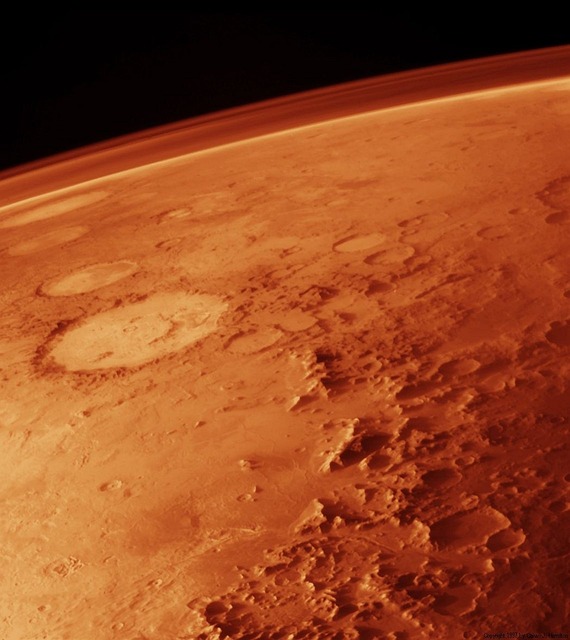
Image of Mars by WikiImages from Pixabay

Is there life on Mars?

For generations, we earthlings have conjectured about the possible existence of alien life on the planet next door to us.

I’m afraid this blog can neither confirm nor deny the presence of little green men on Mars.

Scientists do tell us, however, that water once flowed on its surface.

That’s right: the Red Planet was once blue, like Earth.

So why is Mars known today as a dusty, dry, barren place, whereas Earth still has abundant supplies of water?

The key lies in Earth’s magnetic field.

A planet’s magnetic field acts as a shield, protecting its atmosphere from being blown into space by radiation from its star.

Mars once had a magnetic field of its own. But is was both farther from the Sun and smaller than Earth to begin with. Scientists theorize that over time, its molten iron core cooled, and with it the dynamo powering its magnetic field.

As Mars’ magnetic field weakened, the Sun’s solar wind slowly stripped away its atmosphere. The water which once flowed on its surface dried up, until there was nothing left but some empty channels to hint at the rivers which once coursed through them.

Simply put, Mars let its fire burn out.

I think we can learn an important lesson from our planetary neighbour.

We shouldn’t let our fire for God fizzle out.

Read more

Jesus, Our Fellow Astronaut

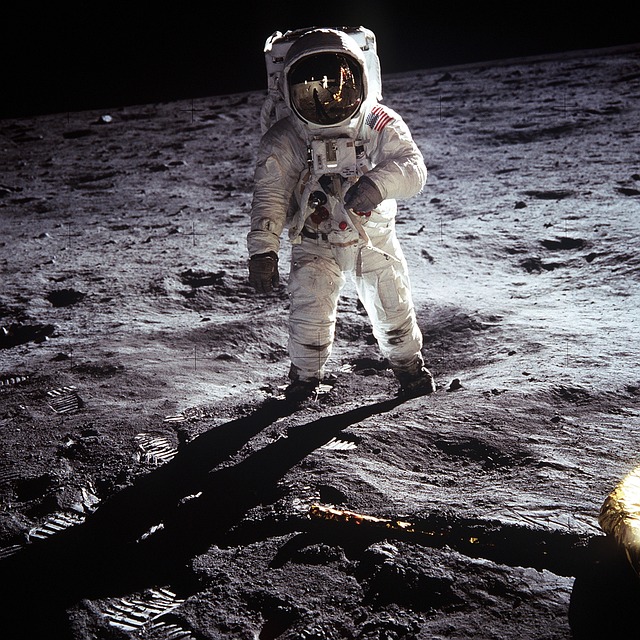
Image by WikiImages from Pixabay

When you’re an astronaut about to set foot on a new world, you don’t want an amateur at the helm back at Mission Control on Earth.

That’s why the role of CAPCOM is so crucial to any space journey.

CAPCOM is short for Capsule Communicator, the person at NASA who is the liaison between the astronauts in their “capsule” and Mission Control. This individual is the single voice the crew members on the spacecraft hear when communicating with Earth, with all information being filtered through them.

The CAPCOM is listening to all the data about the mission from every console at Mission Control. This person hears what the Flight Director wants the crew to know, and turns it into words the crew will understand. They’re also the crew’s trusted agent on the ground, fighting battles and arguing in their stead.

The CAPCOM is essential to the success of each mission.

Understandably, this job isn’t given to just anyone.

Right from the start of the U.S. space program, it was recognized that the astronauts would need someone they could trust to be their relay back on Earth. Someone who knew what they were going through, because they’d gone through the same experience.

So the role of CAPCOM has traditionally been given almost exclusively to former astronauts.

Although there are numerous highly trained and very talented people at Mission Control who could assume the job of CAPCOM, NASA felt that someone who had been an astronaut themselves would be best able to understand what’s going on in the spacecraft and to pass information along in the clearest way.

After all, no one but an astronaut knows what it’s like to blast off in a rocket and “let slip the surly bonds of Earth.” No one but a fellow space traveller knows the vulnerable feeling of floating in the vast blackness of space, hundreds or even thousands of miles from your home planet.

Even though you and I may not be launching into space anytime soon, we still need a CAPCOM of our own.

Read more

The Dark Side of the Moon

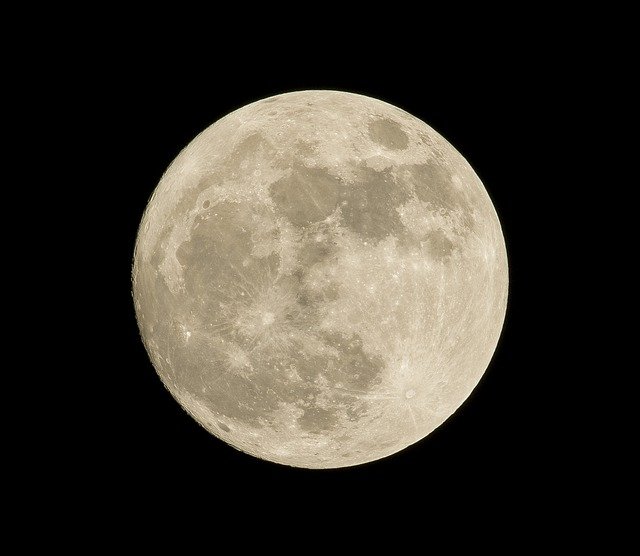
Image by Pexels from Pixabay

Is the “dark side” of the moon truly as dark as we think it is?

From Earth, we only see one side of our companion satellite. The moon is “tidally locked” with our planet, with the result that it always presents the same face to us.

Because we can’t see the side of the moon facing away from the Earth, we sometimes assume that it’s in perpetual darkness.

But this isn’t so. The “dark side” of the moon (which should more accurately be called the “far side”) gets just as much sunlight as the face we see. All sides of the moon receive the sun’s light equally in turn.

From the sun’s perspective, the moon doesn’t have a dark side at all.

It’s our perspective that throws us off and leads us to the wrong conclusion.

We can easily fall prey to misconceptions about our own lives, too. When we don’t have the right perspective, we can assume that things are darker than they really are.

Naomi in the Old Testament Book of Ruth certainly made this mistake.

Read more

Angels Are Fighting For You

Image of the Northern Lights by Noel Bauza from Pixabay

If you’re lucky enough to have seen the Northern or Southern Lights, what do you think you’re seeing?

This spectacular light display, called the aurora borealis or australis, is usually confined to the high latitudes at the Earth’s poles.

Many people view these shifting ribbons of light as a sort of otherworldly dance in the sky. Others see the swirling colours as a mystical painting come to life. Some indigenous peoples believed the eerie, glowing streamers were ancestral spirits.

But when you look at the auroras, what you’re really seeing is a battle.

The entrancing, ghostly lights result from charged particles from the Sun interacting with the Earth’s magnetic field. These particles, borne on the solar wind, are constantly bombarding our planet. At times they’re more intense, as during periods of high sunspot activity.

The Earth’s magnetic field protects us from this barrage of particles, like a “deflector shield” in a science fiction movie. Without this protection, the solar wind would eventually kill us.

Our magnetic field is always there, an invisible but highly effective shield. It deflects 98% of the particles spewed out by the Sun in our direction, but is slightly weaker near the poles. During the ethereal display known as the Northern and Southern Lights, our magnetic blanket becomes visible as it works to protect us.

What we see as an intriguing and beautiful phenomenon is actually visible evidence of a fierce battle going on for our lives.

Likewise, in life, sometimes we don’t fully understand the battles that are raging behind the scenes.

Unknowingly, as we go about our daily lives, believers are being protected by heavenly forces from harm. We usually can’t see these protective beings, but they’re there nonetheless, working on our behalf.

Read more