Who Loves You?

Photo from Pxhere

How many times today has someone told you that they love you?

If you have a loving family, you’ll probably hear them express their love for you frequently.

But what if your family ties are a bit strained? What if you don’t have many close relationships at all, and consider yourself to be fairly alone in the world?

Then you probably don’t hear the words “I love you” nearly enough.

There’s a remedy for that:

Open a Bible.

The unfailing love of God is a soundtrack that reverberates through the Scriptures.

It’s easy to find verses in the New Testament that exemplify God’s love:

“But God demonstrates his own love for us in this: While we were still sinners, Christ died for us.” (Romans 5:8)
“This is real love—not that we loved God, but that he loved us and sent his Son as a sacrifice to take away our sins.” (1 John 4:10)
And of course: “For God so loved the world that he gave his one and only Son, that whoever believes in him shall not perish but have eternal life.” (John 3:16)

But what about the Old Testament?

Read more

What’s in a Name?

Photo by Jill Wellington on Pixabay

As a gardener, I must admit that I prefer using the common or folk names for flowers.

These sometimes ancient names are often whimsical and enchanting. Who wouldn’t love calling flowers by such names as cherry pie plant, lady’s slipper, love-in-a-mist, baby blue eyes, bachelor’s button, quaker ladies, whirling butterflies, johnny-jump-up, busy lizzie, or candytuft? It makes the heart sing to use endearing names like these.

The scientific or botanical names for flowers, on the other hand, can seem daunting. They’re usually derived from Latin, and while they can give a more accurate description of what a plant’s nature is, they can sound a bit intimidating to my ears.

In fact, some botanical names actually sound like a disease:

“Don’t tell anyone, but I’ve got Scabiosa again.”

“That’s nothing! You should see my sister’s Myosotis: it’s rampant.”

“You don’t say! But did you hear about Kelly? She’s got Nepeta nervosa.”

“No! Is she seeing a psychiatrist for that?”

(In case you’re wondering, Scabiosa is the botanical name for the pincushion flower; you might know Myosotis better as the little blue forget-me-not; and Nepeta nervosa is a type of catmint.)

I’m so glad that we have the opportunity to use informal names for the flowers we cherish.

In the same way, believers have been given the great privilege of using a remarkably intimate name for God: “Abba Father.”

Read more

Stay With The Tried And True

Old family cookbooks of the author’s.

Do you have a collection of old family recipes or cookbooks?

Many of us are fortunate enough to have such treasures, lovingly passed down to us. They’re worth hanging on to.

The recipes might be contained in a cookbook, or written down on index cards and filed in a plastic or wooden box. They may be handwritten and neatly organized in a binder, or simply clipped from the newspaper and stuffed haphazardly into the pages of an old cookbook.

But no matter how the recipes are filed, there’s an easy way to tell which ones are the best:

The pages they’re on are a bit of a mess.

The best recipes probably have food stains on them, from when a cook referred to the recipe and absentmindedly pressed a finger, still wet with sauce or melted chocolate, on the page. Or the page got splattered when the cook was stirring the batter with a bit too much gusto.

Read more

The Recipe For Your Life

Photo by silviarita on Pixabay

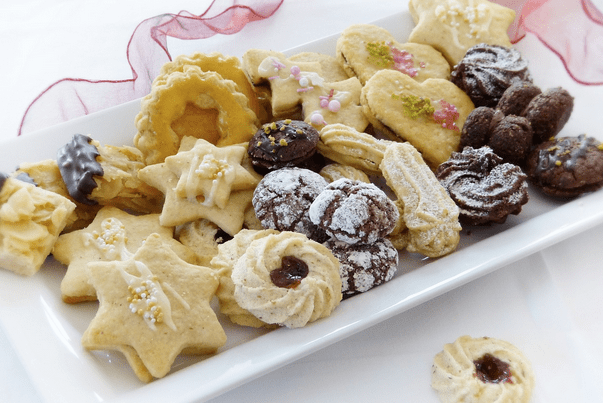
Don’t you love cookie recipes that give you a lot of leeway in creating your own variations?

The instructions will give you the ingredients for a basic cookie, but then list options for different flavours or additions to create your own version.

Perhaps you want to add pecans instead of chocolate chips. Or maybe you’d rather substitute mint flavouring in place of vanilla.

These build-your-own cookie recipes sure are versatile. You get to pick and choose exactly what you want to put in the dough.

Don’t you wish life was like this?

Do you ever wish you could have chosen the “recipe” for your life story? That you could have picked out beforehand which “ingredients” would be part of your life?

Read more

Stay With the Tried and True

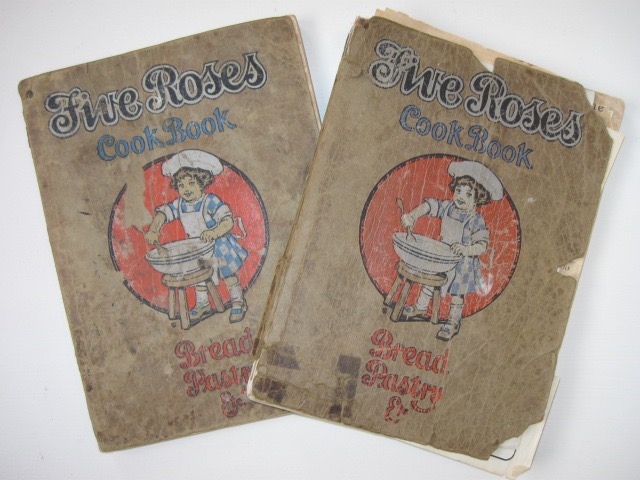
My Mom’s and Dad’s 1915 Five Roses Cookbooks:
They each brought a copy into their marriage.

Do you have a collection of old family recipes or cookbooks? Many of us are fortunate enough to have such treasures, lovingly passed down to us. They’re worth hanging on to.

The recipes might be contained in a cookbook, or written down on index cards and filed in a plastic or wooden box. They may be handwritten and neatly organized in a binder, or simply clipped from the newspaper and stuffed haphazardly into the pages of an old cookbook.

But no matter how the recipes are filed, there’s an easy way to tell which ones are the best:

The pages they’re on are a bit of a mess.

Read more