Consider the Lilies

Photo of Tiger Liliy from Pxfuel

Do you spend a lot of time in the morning fretting about what to wear?

You’re not alone. Many of us worry about our clothes. We’re afraid that they aren’t stylish enough, or that they make us look fat, or that they’re last year’s (or even last millennium’s) fashions.

Some of us even worry that we won’t have enough money to buy the basic clothes we need.

But we shouldn’t be anxious that God won’t provide for us. After all, look how He’s clothed the flowers.

Have you ever marvelled at the rich “vestments” some flowers are clad in?

Look at the iris attired in silky frills, the peony robed in ruffles, or the delicate tracery of Queen Anne’s lace. The sumptuous, constantly unfurling petals of the rose boast the finest tailoring. Some flowers are decked out in speckles, mimicking the polka-dots on a dress; others are costumed in stripes, like a crocus. Even the common petunia can have petals that resemble luxurious velvet.
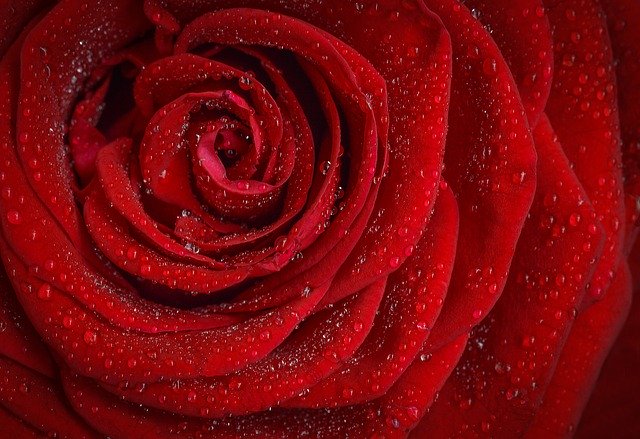
Red Rose photo by AliceKeyStudio on Pixabay

God hasn’t stinted on giving flowers rich colours, either. What about the intense blue of lobelia, suitable for any royal robe? Or the bright yellows of daffodils, the vivid oranges of marigolds, or the saturated reds of poppies? On the paler end of the spectrum are the shy blues of the forget-me-nots and the delicate ballet-pinks of some tulips.

Some flowers even have names which relate to clothing: bachelor’s buttons, lady’s slipper, Texas bluebonnet, foxglove, lady’s mantle, and monk’s hood.

And how about those lilies? In fact, I seem to remember a Bible verse which talks about the beautiful garments lilies wear:

“So why do you worry about clothing? Consider the lilies of the field, how they grow: they neither toil nor spin, yet I say to you that even Solomon in all his glory was not arrayed like one of these.” (Matthew 6:28-29 NKJV)
Read more

How Can We Sum Up God?

Image by Gerd Altmann from Pixabay

“The quick brown fox jumps over the lazy dog.”

Some of you might recognize this sentence from typing tests in school. It’s an example of a “pangram,” a sentence which contains every letter of the alphabet at least once.

At 35 letters, this is not the shortest pangram, however. This next one comes in at a slim 28 letters:

"Waltz, bad nymph, for quick jigs vex."

We can trim it even shorter than that if we allow abbreviations. The following sentence is a perfect pangram, using each of the 26 letters of the English alphabet only once:

"Mr. Jock, TV quiz PhD, bags few lynx.”

That got me thinking… If we wanted to construct a sentence expressing all of God’s attributes, how short could we make it? Is it possible to sum up God?

This is a tall order, because God is so multi-faceted.

We’d have to start off with His role as Creator of the universe and all life on earth, including you and me.

We’d have to include His unfathomable love, His mercy, truth, justice, holiness, faithfulness, wisdom, righteousness, goodness and grace.

We couldn’t leave out His omniscience, omnipotence, and omnipresence. And let’s not forget his unchanging, eternal nature.

Whew! Looks like our sentence is getting pretty long. We might have to trim it a bit.

I wonder if we can encapsulate all God is in one word?

Turns out, we can:

Jesus.

Read more

When Nature Sings, Sing Along!

Image of crocuses by Annette Meyer from Pixabay

No matter where you live, spring is a time of joy.

In my part of the world, shy white snowdrops are the first flowers to bloom in spring.

Crocuses, slightly bolder in colour with their yellows or purples, are the next to make an appearance.

The tulips take their time, first poking the tips of their leaves above the ground like a periscope, as if checking to see whether it’s safe to emerge. They then burst forth in bright, vivid colours, their blooms held aloft on tall stems like upright trumpets.

“The flowers are springing up, the season of singing birds has come, and the cooing of turtledoves fills the air.” (Song of Solomon 2:12)

After a long, colourless winter, it makes my heart sing to see the arrival of spring.

But do the flowers and trees themselves sing? And if they do, what is their song telling us?

Author Linda Brooks, in her 2018 book, “Orchestra In My Garden,” seems to share my sentiments about the spring season:

”Once the snow disappears and my garden starts to emerge from its slumber, I cannot jump up fast enough to catch the first light, to lose (and find) myself among kindred spirits and bend my ear to their voices. No, I am not deluded. I do understand that plants are not human and cannot speak, but no one can convince me that they do not sing.”

She’s right: plants do sing. But she’s perhaps missed who they’re singing to.

They sing to God.

Read more

Why Is The Universe So Big?

Image from Pixexid

Have you ever wondered why the universe is so immensely big?

Astronomers at NASA suggest that the most distant objects in the universe are about 47 billion light years away from Earth. This would make the size of the observable universe about 94 billion light years across. (A light year is the distance light travels in one year, about 6 million million miles.)

But that just describes the extent of our observable limits. The universe is vastly larger than that, because it is expanding at a rapid rate.

If there is an “edge” to the universe, it’s expanding away from us faster than we could ever catch up. No matter how swift our spaceship, we would never hit a boundary of some kind.

So for all practical purposes, you could say that the universe is infinitely big.

But why did God create it this way?

Read more

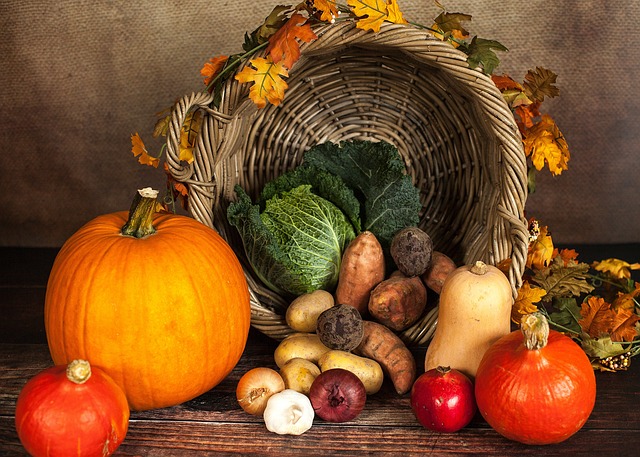
Multiply Your Thanksgiving

Image by Sabrina Ripke from Pixabay

Is it ever possible to be too thankful?

Not in my books.

Especially when Thanksgiving Day involves your favourite foods; roast turkey with all the trimmings, cranberry sauce, potatoes and gravy, and pumpkin pie.

That’s why Canadians who visit relatives in the States in the fall are lucky: they get to celebrate Thanksgiving Day twice.

This year, Canadian Thanksgiving is today, Oct. 9, while Americans celebrate their Thanksgiving on Nov. 23. Canadians popping across the border to spend time with American relatives on their holiday get to have an encore of the Thanksgiving feast.

This is not a problem if you love turkey, as I do. (If you don’t, please invite me over and I’ll eat your share for you.)

This got me thinking: is it ever possible to be too thankful to God?

Again, my answer would have to be no.

It pleases God greatly when we thank Him for what He’s done in our lives.

Read more

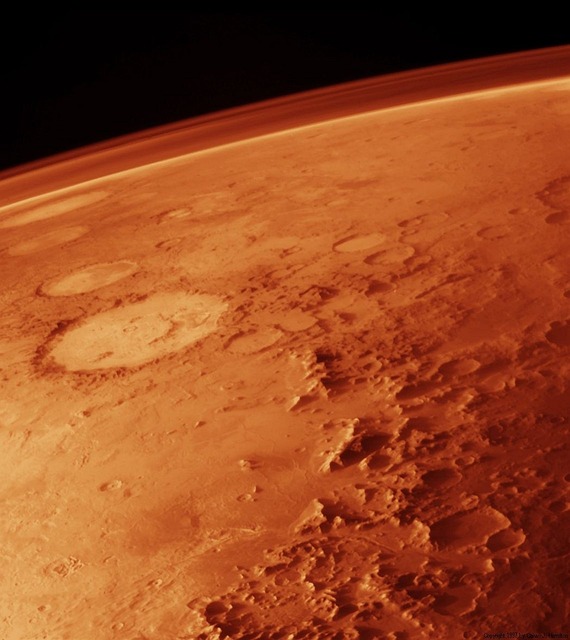
Life on Mars

Image of Mars by WikiImages from Pixabay

Is there life on Mars?

For generations, we earthlings have conjectured about the possible existence of alien life on the planet next door to us.

I’m afraid this blog can neither confirm nor deny the presence of little green men on Mars.

Scientists do tell us, however, that water once flowed on its surface.

That’s right: the Red Planet was once blue, like Earth.

So why is Mars known today as a dusty, dry, barren place, whereas Earth still has abundant supplies of water?

The key lies in Earth’s magnetic field.

A planet’s magnetic field acts as a shield, protecting its atmosphere from being blown into space by radiation from its star.

Mars once had a magnetic field of its own. But is was both farther from the Sun and smaller than Earth to begin with. Scientists theorize that over time, its molten iron core cooled, and with it the dynamo powering its magnetic field.

As Mars’ magnetic field weakened, the Sun’s solar wind slowly stripped away its atmosphere. The water which once flowed on its surface dried up, until there was nothing left but some empty channels to hint at the rivers which once coursed through them.

Simply put, Mars let its fire burn out.

I think we can learn an important lesson from our planetary neighbour.

We shouldn’t let our fire for God fizzle out.

Read more

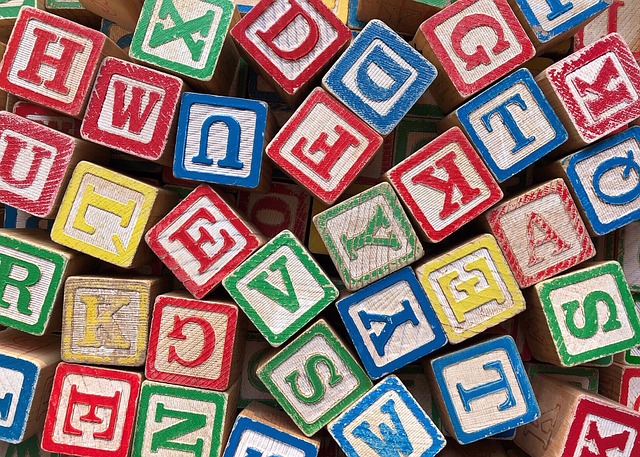
Cna Yuo Raed Tihs?

Image by WOKANDAPIX from Pixabay

I’ll bet you can!

I’m sure most of us immediately deciphered the title of this post as “Can You Read This?”

But how was your brain able to make sense of the jumbled letters so quickly?

Researchers believe that our brains use context to make predictions about what’s to come. Take an example like:

“Yuo cna porbalby raed tihs esaliy desptie teh msispeillgns.”

This is readable because as our brains decipher each word, they also predict which words would logically come next in order to make a coherent sentence. When faced with a word we can’t quite unscramble, our brains fill in the gaps based on subsequent words.

This even works with words that have NUMB3RS 1NST3AD 0F L3773RS. The numbers’ similar appearance to letters trumps their normal meaning.

Jumbled words are easiest to read when the first and last letters of the word remain the same, and only the letters between them are transposed. But when the middle letters are scrambled more confusingly, your brain has a harder time trying to process all the letters simultaneously. Try deciphering this:

“Big ccunoil tax ineesacrs tihs yaer hvae seezueqd the inmcoes of mnay pneosenirs.”

That was a bit more difficult, wan’t it?

But what about when it’s our lives that are a-jumble? When things happen to us that don’t seem to fit a meaningful pattern?

How do we make sense of the bewildering hardships and crises that often beset believers?

Read more

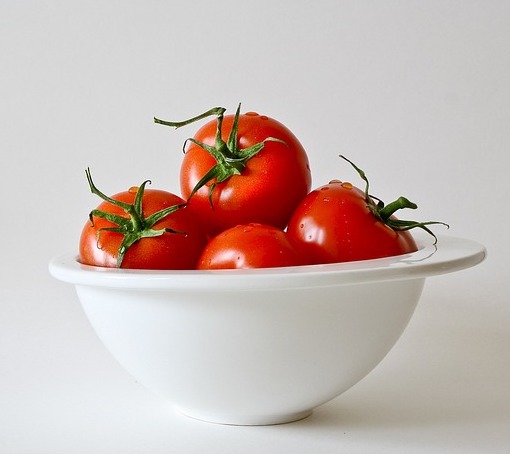
The Burning Question

Image by Anelka from Pixabay

Are tomatoes fruits or vegetables?

I might have opened up a can of worms just by asking, because disagreement has surrounded this issue for generations.

In fact, the US Supreme Court has even weighed in on this burning question.

This issue was brought to a head in 1893 in Nix v. Hedden. The Court held that, even though tomatoes are fruits botanically, they would be classified as vegetables for the purposes of tariffs, imports and customs.

Did this settle the matter? Hardly.

Some US states have since named the tomato their state fruit; others call it their state vegetable.

It’s the sort of issue that produces arguments to this day.

Let me ask you another question:

Was Jesus simply a good man and teacher, or was He Lord?

The answer to this question has eternal consequences for each of us. It’s not simply a matter of “You say tomayto, I say tomahto.”

Read more

In the Shadow of His Wings

Image by Radovan Zierik from Pixabay

Sometimes there can be something very powerful right above you, and you’re not even aware of it.

I’ve found this out a few times while on a walk in a nature area.

I’ll think I’m totally alone: I don’t see or hear any other creature.

But then suddenly a large shadow will zoom across the path in front of my feet.

I look up to see what the shadow belongs to, and spot a majestic red-tailed hawk. He’d probably been circling above me the whole time, but he was so silent that I didn’t know he was there.

Recently, I came across two large, striped feathers on the ground. Their tell-tale markings told me they belonged to a bird of prey. Looking up into a nearby tree, I was surprised to see a hawk perched by its nest. I’d walked underneath the same tree many times before without realizing the nest was even there.

In each case, the bird had been right there with me, but I initially hadn’t been aware of its presence.

Similarly, sometimes we feel that God isn’t near us.

We can’t see or hear Him. We can’t seem to feel His presence in our lives. It feels like we’re alone in our struggles.

But there is something (or rather, Someone) powerful right above us, who promises to never leave us or forsake us. God’s children are never truly alone.

Read more

Turning the Bitter Sweet

Image by Steve Buissinne from Pixabay

“Go suck a lemon!”

Have you ever heard anyone say that?

It means they’re annoyed with you and want you to experience something unpleasant. Lemon juice is so sour that it makes your mouth pucker.

But if lemon juice is so bitter, why are lemon desserts so yummy?

It’s thanks to the addition of a sweetener.

I like lemon-based desserts much better than orange-flavoured ones. It seems to me that the combination of sour and sweet is what makes lemon desserts so satisfying (see below for Lemon Poppyseed Cake recipe).

They say when life hands you lemons, make lemonade.

No, when life hands you lemons, turn it over to God.

He can transform your unwelcome experiences into something good, and make the bitter waters of your life sweeter than any lemonade.

Read more