The Best Worst Day

There are some dates in history which stand out for being associated with awful events. Each year, when the calendar rolls around to these dates, we shudder in horror when we recall what happened.

Here are a few “worst days in history” that come to mind:

September 11th, 2001: the deadly World Trade Centre terrorist attacks in New York.

August 6, 1945: the dropping of a nuclear bomb on Hiroshima, Japan.

June 28, 1914: the day Archduke Ferdinand was assassinated, igniting the horrific First World War which killed tens of millions.

December 26, 2004: the Boxing Day tsunami which killed hundreds of thousands.

Some horrible dates in history have specific terms associated with them, such as:

December 7, 1941: the Japanese attack on Pearl Harbor, a date which President Roosevelt said would “live in infamy.”

October 29, 1929: called “Black Tuesday,” the worst day of a stock market crash which would send the world spiralling into the Great Depression.

What term is associated with the horrible day Jesus Christ was crucified?

“Good.” It’s called Good Friday.

But why?

Read more
Lost In Translation

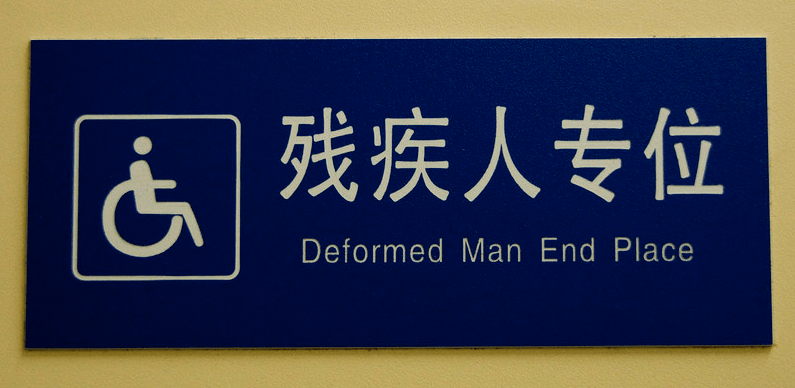
Sign on toilet door in Chengdu airport, China
Photo by Anne Roberts on Flickr, CC BY-NC-SA-2.0

There’s a real art to translation: zeroing in on just the right words to convey the nuance of what the original author intended.

Done well, a translated work can be a masterpiece in its own right.

Oftentimes, though, a translation can turn out to be a farce, as in the following examples:

A menu item in Chinese for a roasted gluten dish was translated into English as “Sixi Roasted Husband.” (The perfect dish for wives who’ve finally had enough of their mates?)

A hot and spicy chicken dish on another Chinese menu became “Chicken Rude and Unreasonable” in English. (No wonder the chicken met his end—he had it coming!)

Or this Google Translate zinger: “It’s been the goat in the budget, because His raining badly, so quite short, he is on the bucket month out.” (Not sure what this meant in the original Danish, but I hope the goat was able to figure it out.)

Then there’s the sign for a hair salon in China whose English name is “Could Not Connect To Translator Service.” (A bit of a give-away that they didn’t bother hiring a real live translator?)

Sometimes, we have a different understanding or “translation” of what God actually meant in certain Bible verses.

For example, in times of difficulty, we cling to verses such as Romans 8:28:

“And we know that all things work together for good to those who love God, to those who are the called according to his purpose.”

However, it can often be hard to see what good could possibly come from our difficult situations. We might be going through health challenges, injustice, hardship or loneliness. Where is the good in any of that?

But maybe we have a limited understanding of what “good” means. Perhaps we and God have different “translations” of what this looks like in our lives.

Read more

The Cleanest Place in the World

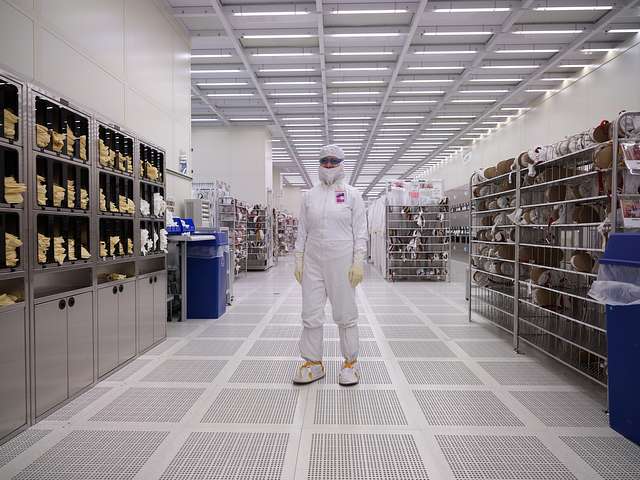
What is the cleanest place on Earth?

If you guessed a room where semiconductors are made, you’d probably be right.

A microchip factory has to be exceptionally clean to avoid introducing contamination into the chip-making process. In fact, the air in their “cleanrooms” is filtered to be vastly cleaner than that of a sterile hospital operating room.

Anything that sheds particles must be avoided in a microchip cleanroom. Contaminants include human hair, dead skin cells, makeup, bacteria, and even micro-dust from pencils or paper.

So semiconductor workers must wear head-to-toe “bunny suits,” protective glasses, booties, hoods, face masks, and two pairs of gloves. These suits may include self-contained HEPA filter packs, because even human breath contains contaminants.

Let’s assume that I arrived one morning at a microchip factory as a new employee.

Let’s say I told the supervisor that I’d cleaned myself diligently in the shower that morning, washed my hair twice, gargled with Listerine, scrubbed my hands with bleach, and put on brand-new clothes. I was certain that I was clean enough to enter the factory.

The supervisor would say, “Hold your horses, Lori. You still have to put on a protective covering before you can come into the cleanroom.”

I might argue, “But I’m already cleaner than 95% of other people. I don’t need a covering. Let me in!”

My boss would say, “I’m sorry, but you’re not as clean as you think you are. We have very high standards here. You have to suit up first.”

Isn’t that sort of what entering Heaven is like?

Read more

The Wrong Idea of Dessert

Image of sweet red bean soup by Roland from Flickr, CC BY 2.0

Do you like brownies? How about chocolate cake?

If you do, then you and I are on the same page when it comes to sweets. We both have the same idea of what a perfect dessert is.

Not everyone might agree with us, however.

Take my friend John, whose background is Greek. He likes syrupy-sweet desserts like the Greek classic baklava, or nut-based ones like walnut cake, things I love as well.

John happens to be married to an Asian woman. They agree on most things, except when it comes to dessert.

Case in point: John’s in-laws once treated him to dinner at a Chinese restaurant. They promised him an extra-special dessert to finish off the banquet, something he’d absolutely love.

John couldn’t wait: his mouth was watering in anticipation of this mystery dessert. He imagined something intensely sweet to finish off the meal, perhaps a cake with multiple layers and lots of icing.

But when the dessert was placed in front of him, John was confused.

It was red bean soup.

While this dish is popular among Chinese people and is considered the crown jewel to end a banquet with, it wasn’t John’s idea of dessert. He was gracious in front of his in-laws, but secretly felt cheated.

The problem? John’s definition of dessert was different to that of his in-laws. His expectations were askew, so he was disappointed with what he got.

I think the same thing happens to us when read certain Bible verses—we may build up incorrect expectations based on our ingrained ideas.

Read more

Are You On The Naughty Or Nice List?

Image by Jill Wellington from Pixabay

Are you on Santa’s “Naughty” list or his “Nice” list?

Sometimes it’s hard to know, isn’t it?

You shovelled the snow off your elderly neighbour’s walkway, so that counts as nice.

But on the other hand, you greedily ate half a pan of freshly baked brownies before sharing them with your family. Not so nice.

You made up for that by running errands for a sick friend, and volunteering to work late at the office to help finish a project. Definitely heading well into “nice” territory!

But then you lost your temper at your spouse, fibbed to get out of visiting your mother-in-law, and illegally parked your car in a disabled space while you dashed into the store to buy milk. Uh-oh! Looks like you’re squarely back on the naughty list.

With Santa, it’s hard to know where you stand on the naughty/nice spectrum.

That’s why it’s good to know that, if you’re a believer in Jesus, there’s only one list:

Forgiven.

Read more

Lost In Translation

Sign on toilet door in Chengdu airport, China
Photo by Anne Roberts on Flickr, CC BY-NC-SA-2.0

There’s a real art to translation: zeroing in on just the right words to convey the nuance of what the original author intended.

Done well, a translated work can be a masterpiece in its own right.

Oftentimes, though, a translation can turn out to be a farce, as in the following examples:

A menu item in Chinese for a roasted gluten dish was translated into English as “Sixi Roasted Husband.” (The perfect dish for wives who’ve finally had enough of their mates?)

A hot and spicy chicken dish on another Chinese menu became “Chicken Rude and Unreasonable” in English. (No wonder the chicken met his end—he had it coming!)

Or this Google Translate zinger: “It’s been the goat in the budget, because His raining badly, so quite short, he is on the bucket month out.” (Not sure what this meant in the original Danish, but I hope the goat was able to figure it out.)

Then there’s the sign for a hair salon in China whose English name is “Could Not Connect To Translator Service.” (A bit of a give-away that they didn’t bother hiring a real live translator?)

Sometimes, we have a different understanding or “translation” of what God actually meant in certain Bible verses.

Read more

Beauty Out Of Brokenness

Sea glass on a rock
Photo by treenabelle on Pixabay

Once the worst of this pandemic is over, psychologists warn that many of us may suffer from post-traumatic stress for some time to come. Some of us will have lost a job, seen our business close down for good, suffered isolation and loneliness, or may have even lost a loved one during the COVID-19 crisis.

But is PTSD a given in these circumstances? Is there different outcome that can occur, an unexpected benefit that may arise out of these difficult times?

Psychologists say yes: there’s such a thing as post-traumatic growth. It’s been found in survivors of war, cancer, and natural disasters. Some people emerge from a crisis with increased spirituality, a greater sense of personal strength, new priorities and closer relationships with others. What could have broken them actually made them better.

This phenomenon reminds me a bit of “sea glass.” Sea glass, or beach glass, found washed up on shores, starts out as merely cast-aside pieces of broken glass. Perhaps they’ve been tossed overboard from a ship, or thrown into the sea from land along with other garbage.

These shards of glass endure years of being buffeted against the stones of the sea bottom. It seems like they’re being dashed about mercilessly by the relentless action of the waves. Surely no good could come of this?

But then, something almost magical emerges.

Read more