Who Loves You?

Photo from Pxhere

How many times today has someone told you that they love you?

If you have a loving family, you’ll probably hear them express their love for you frequently.

But what if your family ties are a bit strained? What if you don’t have many close relationships at all, and consider yourself to be fairly alone in the world?

Then you probably don’t hear the words “I love you” nearly enough.

There’s a remedy for that:

Open a Bible.

The unfailing love of God is a soundtrack that reverberates through the Scriptures.

It’s easy to find verses in the New Testament that exemplify God’s love:

“But God demonstrates his own love for us in this: While we were still sinners, Christ died for us.” (Romans 5:8)
“This is real love—not that we loved God, but that he loved us and sent his Son as a sacrifice to take away our sins.” (1 John 4:10)
And of course: “For God so loved the world that he gave his one and only Son, that whoever believes in him shall not perish but have eternal life.” (John 3:16)

But what about the Old Testament?

Read more

Your Spiritual Resumé

If you had to write a resumé for God’s consideration, what would you list on it?

You’d probably assume that you should list all the good, noble, and praiseworthy things you’ve done.

Your perfect church attendance, your faithful donations to Christian charities, and your decades of volunteering at the soup kitchen would certainly top the list on your spiritual resumé.

You’d also want to throw in your kindness to others, your endless good deeds, and the fact that people consider you a saint.

It probably wouldn’t hurt to mention your lack of even so much as a parking ticket on your driving record.

All this would surely carry weight with God, wouldn’t it? Your impressive list of virtuous accomplishments would undoubtedly factor into in His decision as to whether He would accept you or not.

Or would it?

Read more

What Is Your Inukshuk?

Inukshuk Photo by Jsig9 on Pixabay

If you’re Canadian, you probably know what an inukshuk is.

If you’re not Canadian, then let me offer you my condolences. (Sorry! Just kidding!)

But seriously, as we Canadians celebrate our national birthday today, it seems apt to delve into the meaning behind this iconic symbol of the high north.

An inukshuk is a stone structure built by the Inuit and other peoples of the Arctic regions of North America. The stones may simply be stacked vertically, or they may take the form of a human figure.

The distinctive shape of the inukshuk is featured on the flag of Nunavut, a Canadian territory, and also served as the inspiration for the logo of the 2010 Olympics in Vancouver.

Inukshuks have been traditionally used by the Inuit people as landmarks for navigation, guideposts for travellers in a barren landscape. They might also mark out a sacred spot, or function as a commemorative sign.

I think we believers need “inukshuks” in our lives, don’t we?

Reminders of the things God has done for us, how far He’s brought us. Beacons to others travelling the same journey, showing them the path that leads to life.

Read more

The Throne of Grace

Image by Ralph from Pixabay

What does your favourite chair look like?

Is it a ratty recliner held together with pieces of duct tape, like the one used by Marty Crane on the TV sitcom “Frasier”?

Or is it more regal and imposing, dominating the room like a throne?

I think many of us rather like the idea of having a throne like the ones monarchs throughout history sat on.

The seat of the Chinese emperors was known as the Dragon Throne. The Mughal emperors of India had the Peacock Throne.

Korean monarchs sat on the Phoenix Throne, and Japanese emperors on the Chrysanthemum Throne.

The Shahs of Persia sat on a royal throne known as the Marble Throne, while Swedish monarchs were crowned on the Silver Throne.

Both the emperors of Vietnam and the Pharaoh Tutankhamen were enthroned on a Golden Throne.

And of course fantasy novelist George R. R. Martin has given us the Iron Throne, the seat of the monarch in the fictional Seven Kingdoms of Westeros. It was said to have been made of the swords of defeated enemies.

But there’s a throne made of something infinitely more precious than any of the above…

The Throne of Grace.

Read more

It’s Raining Diamonds!

If diamonds are a girl’s best friend, I’m on the wrong planet.

I’ve just discovered that there are planets on which it rains diamonds.

Scientists believe that diamond rain could occur deep in the atmospheres of our gas giant neighbours in the solar system: Jupiter, Saturn, Uranus and Neptune.

Thousands of miles below the surface of these planets, carbon atoms come under such crushing pressure in the dense atmospheres that diamonds could form. The conditions are so extreme that further down, the diamonds could melt into liquid, forming diamond “rain” drops.

On some planets in the universe, these drizzles could involve diamonds millions of carats in size.

The wonders of the cosmos don’t end there. Scientists suggest that on the exoplanet WASP-121b it rains liquid rubies and sapphires. Clouds on this planet could be made of corundum, a mineral out of which these precious gems are formed.

It gets better.

The asteroid Psyche 16, which orbits the sun in the asteroid belt between Mars and Jupiter, is made entirely of solid metal. It has enough gold to turn every person on Earth into a billionaire. As well as gold, this intriguing minor planet contains metals such as platinum, iron and nickel in abundance. If Psyche 16’s metals were on Earth, their combined value would be worth perhaps $100,000 quadrillion.

Talk about an embarrassment of riches!

What does all this tell us?

That the precious gems and metals we covet are a dime a dozen in God’s universe. After all, Scripture tells us that in Heaven, the streets are paved with gold.

More importantly, God has an inexhaustible supply of the things that we truly need: grace, mercy, love, and forgiveness.

Read more

Forgive and Forget? Not!

Image by John Liu on Flickr CC BY-2.0

I know you’ll love these wise insights on forgiveness from my friend Veronica Gerber. We’re very fortunate to have her as our guest blogger today!


It’s popular to think of “forgive and forget” but, paradoxically, the bridge to forgiveness includes remembering, not forgetting!

Remembering what?

  • How much I’ve been forgiven and what it cost the Savior
  • Actions have consequences; learning from past mistakes
  • Vengeance belongs to the Lord

What dynamic is at work when you find it hard to forgive?

In my own experience, I’ve found it easiest to forgive when I remember how much I myself have been forgiven. When it’s hard to forgive, perhaps it’s because I’ve actually forgotten how much the Lord has forgiven me.

"Be kind and compassionate to one another, forgiving each other, just as in Christ God forgave you." (Ephesians 4:32, NIV)

That being said, actions do have repercussions. There is often a place for rebuke. Forgiving one another does not mean sweeping consequences aside! It’s not an easy or glib exercise.

"He who rebukes a man will in the end gain more favour than he who has a flattering tongue." (Proverbs 28:23, NIV)

True forgiveness includes a thorough assessment of the offence and yet chooses to extend the grace of forgiveness.

Read more

Check In To The Grace Hotel

Image by Andrea Piacquadio via Pexels.

As any traveller knows, hotel staff can make or break your stay.

Especially the staff at the front desk, because they set the tone immediately. Within minutes, you get the sense of whether your hotel stay will be a happy or problematic one.

Case in point: when I was very young, my family spent some time travelling in Europe.

We stayed in a beautiful country where the people happened to be sticklers for rules and regulations. While we enjoyed our time in this nation, dealing with officials who insisted on strict adherence to protocols and procedures, even for tourists, became a bit tiresome.

Then we landed up in the south of France.

We arrived at a hotel late at night, exhausted, and trudged up to the front desk. My father introduced himself and mentioned to the clerk what country we’d just arrived from. He then began fishing out the documentation he needed to register for our stay.

The desk clerk took one look at two weary travellers with a cranky toddler in tow (me!), and said,

“Relax. You’re not in that country anymore. Here’s your room key. Go get some sleep and we’ll deal with the paperwork in the morning.”

I think my Dad almost cried out of gratitude and relief.

Although we settled the bill with the hotel when we left, my Dad doesn’t remember us ever properly registering with them!

Isn’t that what God’s grace is like?

God accepts us before we’ve proven ourselves or filled out all the forms or ticked off all the boxes.

Read more

The Wrong Yardstick

Image by Ariel from Pixabay

Do you have a friend who’s a bit of a screw-up?

No? You’ve got to get one!

Friends who make a shambles of things are amazing, because they make you feel so competent by comparison.

Your friend Sue might misplace one of her children, regularly set off the smoke detector when cooking, or accidentally rear-end a police car.

You roll your eyes smugly and think, “At least I’m not as bad as she is!”

In the same way, we like to justify ourselves before God by comparing our sins to those of others.

We think, “At least I’m not a bank robber or a serial killer. I’m not as bad as others. On the whole, I figure I’m a pretty decent person. I don’t think I really qualify as a ‘sinner.’ ”

The problem with this is that we’re using the wrong yardstick.

Instead of measuring ourselves against other people, we should be seeing whether we pass muster according to God’s standards.

Read more

You Were Meant to Soar

Image of European swift by Kev from Pixabay

What is the ultimate flying machine?

The Concorde? A high-tech fighter jet?

I’d suggest to you that the holder of this title belongs to the common swift.

The swift holds the record for the fastest confirmed level flight of any bird: 111.5 km/h (69.3 mph). (Birds like falcons can fly faster, but only when diving down through the air to catch prey.)

Swifts also spend most of their lives on the wing, landing only to nest. Some individuals can spend up to ten months in continuous flight. In a single year a common swift can cover at least 200,000 km. No other bird spends as much of its life in the sky.

They are truly astonishing creatures.

A funny thing about swifts, though: they don’t do very well on the ground.

Their small, weak legs, which are placed far back on their bodies, are really only good for clinging to vertical surfaces like cliffs. They never voluntarily settle on the ground, where they’d be vulnerable to predation. Although swifts are capable of taking flight from level ground, they prefer to “fall” into the air from a high point.

Simply put, swifts were meant to soar.

And so were you.

But oftentimes there are things inhibiting our flight…

Read more

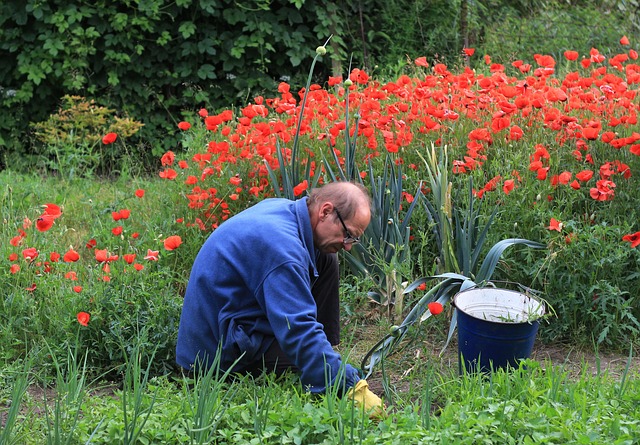
Weeding, Like Forgiving, Never Ends

Weeding the garden, like forgiving, is a task that’s never-ending.

We can’t simply say, “I weeded last week, so I’m done now. I won’t need to weed for the rest of the season.”

Every gardener know that the weeds will keep cropping up. The job of weeding is one that lasts for as long as you have a garden.

So it is with forgiving those who have offended or hurt us. Forgiving is not optional for believers: we are to forgive others as God has forgiven us.

But sometimes we think that it’s a “one-and-done” effort. We grudgingly forgive someone once, and assume we’re done with it.

Inevitably, though, we learn that it doesn’t work that way. The next week, we might ruminate about what they did to us and get mad all over again. We find there’s still a root of bitterness in our heart, and we have to forgive them once more.

Like weeding, the duty to forgive is ongoing. It may require more “rinse and repeat” cycles than you might imagine.

Read more