Your Training Won’t Make Sense at First

Image by Bart via Flickr. CC-BY-NC 2.0

“Why do we have to learn math? We’ll never use it in real life!”

Did you ever say something like that to your teachers in school?

It’s true that you may never have used algebra once you graduated from high school. Your knowledge of trigonometry or calculus may have lain dormant since then, too.

But that wasn’t actually the point of algebra, or any other subject.

The point of learning math was to train your brain.

Mastering mathematical concepts increases your problem-solving skills, develops flexible thinking and creativity, and encourages analytical reasoning.

These are things that are extremely valuable in every area of life.

But you might not have been able to see that when you were trying to understand the Pythagorean theorem in school.

That’s because your training often won’t make sense until much later.

Several heroes in the Bible found this out:

Read more
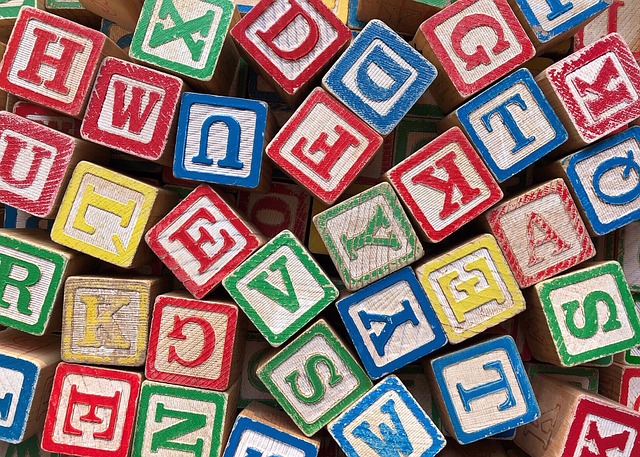
Cna Yuo Raed Tihs?

Image by WOKANDAPIX from Pixabay

I’ll bet you can!

I’m sure most of us immediately deciphered the title of this post as “Can You Read This?”

But how was your brain able to make sense of the jumbled letters so quickly?

Researchers believe that our brains use context to make predictions about what’s to come. Take an example like:

“Yuo cna porbalby raed tihs esaliy desptie teh msispeillgns.”

This is readable because as our brains decipher each word, they also predict which words would logically come next in order to make a coherent sentence. When faced with a word we can’t quite unscramble, our brains fill in the gaps based on subsequent words.

This even works with words that have NUMB3RS 1NST3AD 0F L3773RS. The numbers’ similar appearance to letters trumps their normal meaning.

Jumbled words are easiest to read when the first and last letters of the word remain the same, and only the letters between them are transposed. But when the middle letters are scrambled more confusingly, your brain has a harder time trying to process all the letters simultaneously. Try deciphering this:

“Big ccunoil tax ineesacrs tihs yaer hvae seezueqd the inmcoes of mnay pneosenirs.”

That was a bit more difficult, wan’t it?

But what about when it’s our lives that are a-jumble? When things happen to us that don’t seem to fit a meaningful pattern?

How do we make sense of the bewildering hardships and crises that often beset believers?

Read more

God Is Always At Work

Why is it that when traffic is diverted around “Men At Work” signs on the road, we often don’t see anyone doing any actual work?

Sometimes the construction zone is deserted, and work on the project seems to be at a standstill. And yet vehicles are still forced to circumvent the area.

At other times there might be a few workers milling about and talking, or peering down an open maintenance hole. But again, lanes are blocked off and traffic is being slowed down for seemingly very little reason.

We naturally find this very annoying. The disruptions and delays would be easier to handle if we could actually see some work getting done, some real progress being made.

Sometimes we show the same impatience with God, don’t we?

We have prayers that we want Him to answer, and circumstances in our lives that we want Him to change. But we get frustrated when nothing seems to be happening.

Read more