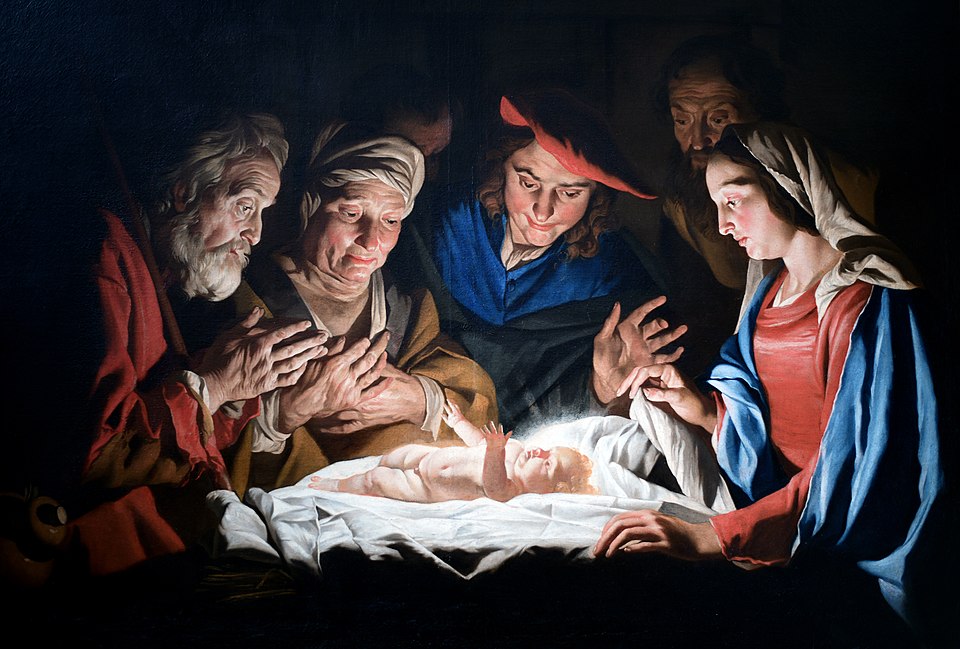
The Most Astounding Thing About Christmas

What’s the most astounding thing about Christmas to you?

The amount of electricity used in powering all the Christmas lights on people’s homes?

The credit card bill you’re racking up to buy gifts for family, friends, and coworkers?

The way your Uncle Louie consistently manages to buy you the most inappropriate gift imaginable, every single year?

The ugly Christmas sweater said uncle wears to every holiday event, even formal ones?

No, the most astounding thing about Christmas is that the Creator of the Universe, Almighty God, came down to earth and was born as a baby.

God Himself, the perfect and holy One, entered our messy, sinful world in the form of Jesus and dwelt with us for 33 years. Then He died on a Cross for our sins. All this was done out of immense love for us.

The theological term for God coming to us in this fashion is the Incarnation, which literally means “God made flesh.”

The Incarnation features heavily in my favourite Christmas carol, “Hark the Herald Angels Sing.”

Its writer, Charles Wesley, seems to have been so astounded by the fact of the Incarnation that he sprinkled this hymn with at least 10 references to it. See if you can spot them:

Read more

If This Isn’t Love…

The love of God for us is one of those topics that you could spend a lifetime exploring.

As believers, we often focus on the Crucifixion of Jesus to demonstrate God’s love.

And rightly so: Jesus’ sacrifice on the Cross to redeem us from our sins was the epitome of extravagant love.

“God showed his great love for us by sending Christ to die for us while we were still sinners.” (Romans 5:8)

But I wonder if we give short shrift to the Incarnation.

The fact that God took on human form and walked among us for 33 years shows an astonishing level of love.

When Jesus came to earth, our story became His story. He chose to go through the same pain we do, and carry the same burdens we do.

Read more

How Larch Trees Are Like Jesus

Larch Trees, Banff National Park, Alberta, Canada
Photo by Steve Jurvetson on Flickr CC BY-2.0

It’s easy to categorize trees, isn’t it? Deciduous trees lose their leaves in the autumn. Coniferous trees bear cones and keep their needles throughout the year. It’s simple to tell them apart.

Case closed, right?

But what about the larch tree? It bears cones and has needles like a conifer, but the needles drop off each autumn like a deciduous tree.

So which is it, coniferous or deciduous?

Read more