Yes, Virginia, There Really Is A Jesus Christ!

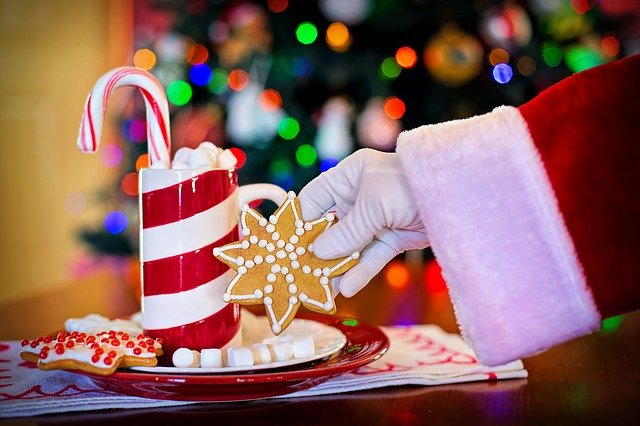
Image by Jill Wellington from Pixabay

If you still believe in Santa Claus, please avert your eyes from the screen right now.

I’ll wait.

For the rest of you, how old were you when you realized that there wasn’t really a Santa Claus?

Five or six? Nine or ten? Thirty?

For me, the realization came on bit by bit over the years when I was little.

First off, on the gift tags on my Christmas presents, I noticed that the “To Lori, Love Santa” inscription was written in handwriting that looked an awful lot like my Mom’s. In fact, exactly like hers. I realized that it was, in fact, my Mom’s handwriting, not Santa’s.

That was my first inkling that something was up with this whole Santa thing.

Read more
No Matter Your Age, There’s a Miracle For You!

Stained glass window depicting Gabriel and Mary. Image by Dorothee Quennesson on Pixabay

When we think of the Christmas story, we often focus on the birth of Jesus as the only miraculous event that occurred.

And indeed it was an awesome miracle: the virgin birth of a baby who would become the Saviour of the world.

But there was another miraculous birth that happened around the same time, described only in the gospel of Luke.

The angel Gabriel told Mary she would conceive without having had relations with her betrothed, Joseph. The Holy Spirit would come upon her, and she would give birth to a son, who was to be called Jesus.

This was no doubt astounding news to Mary. But the angel didn’t stop there: he had another amazing news flash.

Read more

His Footprints Are Still Here

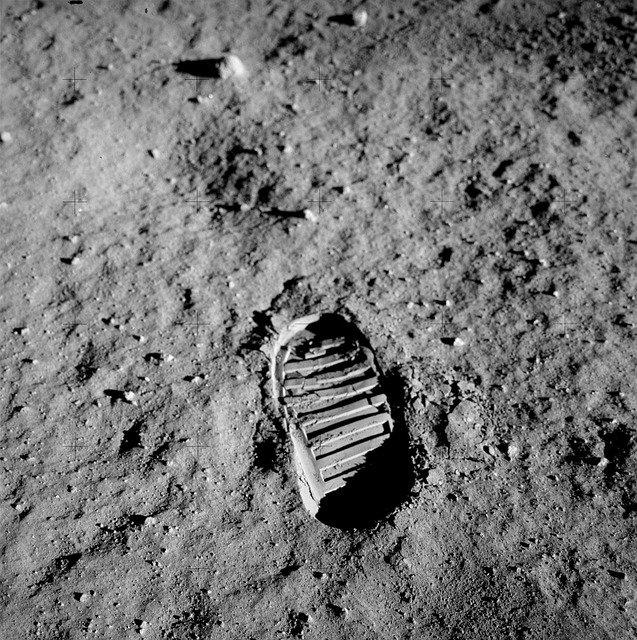
Footprint on the Moon. Image by WikiImages from Pixabay

“The footprints are still there,” the article began.

Whose footprints? And where?

The article was talking about the footprints of astronauts Neil Armstrong, Buzz Aldrin and the ten others who have walked on the moon.

Astonishingly, their footprints are still there. It’s been over 50 years since humans first walked on the lunar landscape, but the moon’s dusty surface is still marked with our historic bootprints.

How can this be?

After all, here on earth, footprints in the dirt can be washed away by rain days later. An imprint of a foot on a sandy beach might be erased in seconds by an incoming wave. Other people or vehicles can trample a footprint, cancelling it out.

But it’s different on the moon. The moon has no atmosphere, and therefore no breezes or rain to erode any footprints. Earth’s satellite also doesn’t get a lot of visitors, so no one else’s footprints or vehicle tracks have obscured those made half a century ago.

Scientists suggest that the lunar footprints of the astronauts might last a million years, maybe almost as long as the moon itself continues to exist.

That couldn’t happen here on earth. Or could it?

Are there footprints on earth that will last for millennia or eons, or even for eternity?

Yes.

The footprints of Jesus will.

Read more

Preparing a Place Just For You

Photo by Jill Wellington on Pixabay

If this were a normal Christmas, I imagine that many of us would be preparing to have guests over for the holidays.

We’d be spiffing up the house, decorating the Christmas tree, and getting the guest bedroom ready for overnight visitors.

We might also be planning the decorations for the dining table: choosing which candles and flowers to use, bringing out the best china, or making whimsical place cards.

It’s fun to prepare for guests, isn’t it? Selecting special touches that you know they’ll like, ensuring that they’ll be comfortable, even customizing things so that each guest feels cherished.

This year, however, COVID-19 has thrown a wrench into our Christmas plans. For many of us, preparing for guests is something that’s off the menu.

But did you know that there’s someone who’s still preparing a place for you, pandemic or not?

Read more

Which Body Part Are You?

Photo by Jill Wellington on Pixabay

Don’t you just love cookies shaped like little people, such as gingerbread men and women?

I always start munching on gingerbread people at the head. According to a survey conducted by the folks at Dunkin’ Donuts, I’m not alone. Almost two thirds of people surveyed start at the top when eating a gingerbread figure. A fifth of people begin with the legs, while the remainder go for the arms first. (To make some gingerbread cookies yourself, see below for a classic recipe.)

We seem to have a penchant for foods shaped like bodies, or at least named after various body parts.

There are chicken fingers, kidney beans, artichoke hearts, navel oranges, black-eyed peas, heads of lettuce, ladyfingers and elbow macaroni.

The Italians have given us pasta shapes like orecchiette (little ears), linguini (little tongues), and capellini (angel’s hair). In France, cotton candy is called, “Dad’s beard.”

Our bodies are precious to us and are wondrously made, so it’s no wonder we pay tribute to them by naming foods after our various body parts.

But did you know that if you’re a believer, you don’t just have your own body, you’re a part of another body, too?

Read more

How Are You Sleeping?

Photo by Danny Chang on Pixabay

How have you been sleeping recently? Do you find yourself waking at night, worried about the future?

Wish you could sleep as soundly as your pet?

Cats and dogs have an advantage when it comes to sleeping deeply. They’re predator animals: in the wild, canines and felines are hunters. Large predator mammals generally spend more time in deep non-REM sleep than their prey.

Prey animals such as rabbits or deer, the hunted, spend more time in lighter non-REM sleep. They also experience very little REM sleep at all. Their survival is dependent on being permanently alert, and the paralysis of REM sleep would make them too vulnerable to their predators.

I wonder if the poor sleep we humans often experience relates to our feeling “hunted,” relentlessly chased by worries, deadlines, and obligations?

Is there a way we can calm our anxious minds and get a good night’s rest?

Yes! I believe the Bible offers some tips to help us sleep better.

Read more

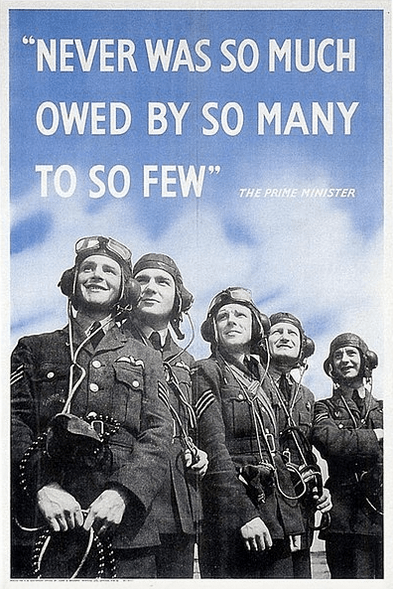
Remembering The Few and The One

Squadron Leader D Finlay, CO of No. 41 Squadron RAF, standing with four of his pilots in front of a Supermarine Spitfire Mk II at Hornchurch, Essex, December 1940.
Wikimedia Commons, Public Domain

This week we commemorate Remembrance Day, and honour those who gave their lives for our freedom.

Some of those we remember are the airmen who made the ultimate sacrifice eighty years ago in the Battle of Britain during World War II. This battle, fought in the skies in 1940, saved that island nation from almost certain invasion by Hitler’s Nazis.

But it came at a terrible cost to the Allied flight crews who were battling the Luftwaffe. The average life expectancy of a Spitfire pilot during the battle was heartbreakingly short: a mere four weeks.

British Prime Minister Winston Churchill paid tribute to those airmen in his famous wartime speech on August 20, 1940:

“Never in the field of human conflict was so much owed by so many to so few.”

This became one of the most famous of Churchill’s sayings, and those airmen became known as “The Few.”

Battle of Britain poster
Wikimedia Commons, Public Domain

But did you know that Churchill actually started out with a different line when he was composing his speech, and felt he had to change it?

Read more

The Gift You Didn’t Expect

Photo from Needpix, Public Domain

Did you ever receive a gift that wasn’t quite what you were expecting?

Maybe you’d dropped hints to your husband that you wanted a certain designer perfume for Christmas, and instead you received…a power drill (coincidentally, exactly the one he wanted for his workshop!).

Or you were certain that your brother was going to give you a gift certificate to a spa so you could be pampered on your birthday, but somehow all you got from him was a new ironing board.

Let’s hope no one visiting this blog received the most tone-deaf Valentine’s Day gift I’ve heard of: a pre-planned funeral arrangement!

Our Father in Heaven knows how to give good gifts to His children, but He doesn’t always answer our requests in exactly the way we expected.

Read more

“Magic” Still Happens

Vintage poster of magician from 1899
Wikimedia Commons CC BY-2.0

Have you ever tried a recipe you secretly doubted would work out?

They’re often the ones with the word “magic” in the recipe title, and they seem to promise the impossible.

The “Magic Chocolate Pudding Cake” below is a good example. The recipe instructs you to press a firm batter into a baking pan, and then pour flavoured boiling water on top of it. It claims this will magically transform into cake and sauce during the baking process.

You may be a bit dubious about this, however. The batter seems too solid and unyielding, impenetrable to the liquid atop it. You don’t see how this “magical” transformation will ever happen.

As you put the baking pan in the oven, you may think, “This will never work out. This will be another culinary disaster my family will tease me about for years to come, like the time I tried to cook a Thanksgiving turkey but forgot to turn the oven on.”

But lo and behold, the recipe does succeed after all! The two differing natures of the mixture are indeed transformed into something new and delicious, and your family thinks you’re a genius in the kitchen.

Unlikely transformations can still happen in our lives, too.

Read more

You Need a North Star

Star trails circling Polaris, Big Bend National Park
Photo by Costa1973 on Flickr, CC BY-NC-SA-2.0

Many of us have GPS systems in our cars or on our phones. They allow us to pinpoint our locations on a map, letting us know exactly where we are.

But in the days before modern technology, how did people navigate? If they needed to cross an ocean, what told them where they were?

The North Star did.

More formally known as Polaris, the North Star is the brightest star in the Ursa Minor constellation. Because it’s almost in a direct line above the Earth’s north celestial pole, the North Star appears to stand motionless in the sky, with the other stars seeming to rotate around it.

This made it a perfect fixed point by which to draw measurements for celestial navigation. In fact, the Old English word for the North Star meant “ship-star,” reflecting its use in helping to chart a course when sailing.

We still need a north star today.

Not to get from point A to point B in our vehicles, but to navigate the seas of our lives. When our whole world has turned topsy-turvy, we need a fixed point to focus on to keep us on a stable course.

Read more