The Chocolate Doctrine

Photo by Jean Beaufort PublicDomainPictures.net

One of the wonderful things about chocolate (and there are many), is how well it pairs with other foods.

Chocolate seems to go well with just about everything. It marries happily with fruits like strawberries, raspberries, pears, cherries and bananas. It perfectly complements the flavours of nuts, such as peanuts, cashews, hazelnuts, almonds and macadamia nuts.

Chocolate cheerfully coexists with citrus, coconut, ginger, caramel, coffee, dairy or mint. It has even been known to blend with the flavours of chili and meat in some Mexican dishes.

Some adventurous people claim that chocolate goes well with broccoli (well, perhaps…if you held the broccoli).

You’ve got to hand it to a food that is uncompromising about its own flavour yet harmonizes with such a wide variety of other substances.

Did you know that the Bible implies that we should be a bit like chocolate? Not in so many words, of course, but the concept is still there.

Read more

Get With God’s Program!

Photo by Jill Wellington on Pixabay

I don’t seem to have much luck getting birds to cooperate with me.

Years ago, I bought a Victorian-style birdhouse, and painted it light blue with white trim. I nailed it to a tree where I could see it when sitting at my kitchen table. I imagined the delight I’d have watching birds move in and raise their young there. I couldn’t wait for my new feathered neighbours!

But the birds refused to move in.

Year after year, the pretty birdhouse sat empty. I was so disappointed. What ingrates those birds were! And after all the trouble I’d gone to for them!

The problem was, I’d put the birdhouse where I wanted it, with no thought to their needs.

The birdhouse was pretty, certainly, but its placement didn’t suit the birds one bit. Being nailed to a tree made it too accessible to predators like squirrels or racoons. The birds didn’t feel safe nesting there.

I thought the problem was with the birds, but it was with me. I’d done it all on my terms and expected them to get with the program.

Don’t we sometimes do the same with God?

We want to do things on our terms, in our own way, and expect God to get with our program. I’m afraid it doesn’t work that way.

Read more

Consider the Lilies

Photo of Tiger Liliy from Pxfuel

Do you spend a lot of time in the morning fretting about what to wear?

You’re not alone. Many of us worry about our clothes. We’re afraid that they aren’t stylish enough, or that they make us look fat, or that they’re last year’s (or even last millennium’s) fashions.

Some of us even worry that we won’t have enough money to buy the basic clothes we need.

But we shouldn’t be anxious that God won’t provide for us. After all, look how He’s clothed the flowers.

Have you ever marvelled at the rich “vestments” some flowers are clad in?

Look at the iris attired in silky frills, the peony robed in ruffles, or the delicate tracery of Queen Anne’s lace. The sumptuous, constantly unfurling petals of the rose boast the finest tailoring. Some flowers are decked out in speckles, mimicking the polka-dots on a dress; others are costumed in stripes, like a crocus. Even the common petunia can have petals that resemble luxurious velvet.

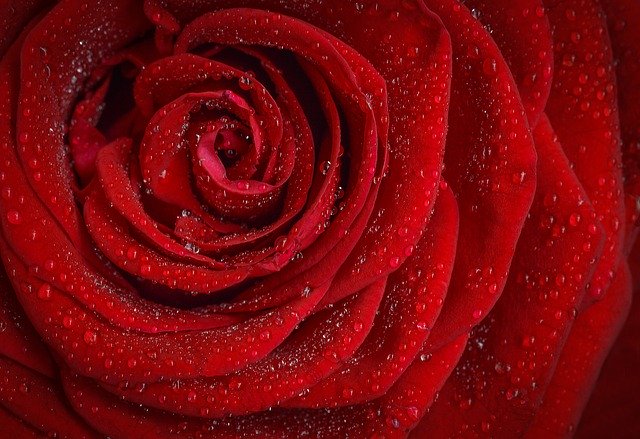
Red Rose photo by AliceKeyStudio on Pixabay

God hasn’t stinted on giving flowers rich colours, either. What about the intense blue of lobelia, suitable for any royal robe? Or the bright yellows of daffodils, the vivid oranges of marigolds, or the saturated reds of poppies? On the paler end of the spectrum are the shy blues of the forget-me-nots and the delicate ballet-pinks of some tulips.

Some flowers even have names which relate to clothing: bachelor’s buttons, lady’s slipper, Texas bluebonnet, foxglove, lady’s mantle, and monk’s hood.

And how about those lilies? In fact, I seem to remember a Bible verse which talks about the beautiful garments lilies wear:

“So why do you worry about clothing? Consider the lilies of the field, how they grow: they neither toil nor spin, yet I say to you that even Solomon in all his glory was not arrayed like one of these.” (Matthew 6:28-29 NKJV)
Read more

What’s in a Name?

Photo by Jill Wellington on Pixabay

As a gardener, I must admit that I prefer using the common or folk names for flowers.

These sometimes ancient names are often whimsical and enchanting. Who wouldn’t love calling flowers by such names as cherry pie plant, lady’s slipper, love-in-a-mist, baby blue eyes, bachelor’s button, quaker ladies, whirling butterflies, johnny-jump-up, busy lizzie, or candytuft? It makes the heart sing to use endearing names like these.

The scientific or botanical names for flowers, on the other hand, can seem daunting. They’re usually derived from Latin, and while they can give a more accurate description of what a plant’s nature is, they can sound a bit intimidating to my ears.

In fact, some botanical names actually sound like a disease:

“Don’t tell anyone, but I’ve got Scabiosa again.”

“That’s nothing! You should see my sister’s Myosotis: it’s rampant.”

“You don’t say! But did you hear about Kelly? She’s got Nepeta nervosa.”

“No! Is she seeing a psychiatrist for that?”

(In case you’re wondering, Scabiosa is the botanical name for the pincushion flower; you might know Myosotis better as the little blue forget-me-not; and Nepeta nervosa is a type of catmint.)

I’m so glad that we have the opportunity to use informal names for the flowers we cherish.

In the same way, believers have been given the great privilege of using a remarkably intimate name for God: “Abba Father.”

Read more

How Can We Sum Up God?

Image by Gerd Altmann from Pixabay

“The quick brown fox jumps over the lazy dog.”

Some of you might recognize this sentence from typing tests in school. It’s an example of a “pangram,” a sentence which contains every letter of the alphabet at least once.

At 35 letters, this is not the shortest pangram, however. This next one comes in at a slim 28 letters:

"Waltz, bad nymph, for quick jigs vex."

We can trim it even shorter than that if we allow abbreviations. The following sentence is a perfect pangram, using each of the 26 letters of the English alphabet only once:

"Mr. Jock, TV quiz PhD, bags few lynx.”

That got me thinking… If we wanted to construct a sentence expressing all of God’s attributes, how short could we make it? Is it possible to sum up God?

This is a tall order, because God is so multi-faceted.

We’d have to start off with His role as Creator of the universe and all life on earth, including you and me.

We’d have to include His unfathomable love, His mercy, truth, justice, holiness, faithfulness, wisdom, righteousness, goodness and grace.

We couldn’t leave out His omniscience, omnipotence, and omnipresence. And let’s not forget his unchanging, eternal nature.

Whew! Looks like our sentence is getting pretty long. We might have to trim it a bit.

I wonder if we can encapsulate all God is in one word?

Turns out, we can:

Jesus.

Read more

The Throne of Grace

Image by Ralph from Pixabay

What does your favourite chair look like?

Is it a ratty recliner held together with pieces of duct tape, like the one used by Marty Crane on the TV sitcom “Frasier”?

Or is it more regal and imposing, dominating the room like a throne?

I think many of us rather like the idea of having a throne like the ones monarchs throughout history sat on.

The seat of the Chinese emperors was known as the Dragon Throne. The Mughal emperors of India had the Peacock Throne.

Korean monarchs sat on the Phoenix Throne, and Japanese emperors on the Chrysanthemum Throne.

The Shahs of Persia sat on a royal throne known as the Marble Throne, while Swedish monarchs were crowned on the Silver Throne.

Both the emperors of Vietnam and the Pharaoh Tutankhamen were enthroned on a Golden Throne.

And of course fantasy novelist George R. R. Martin has given us the Iron Throne, the seat of the monarch in the fictional Seven Kingdoms of Westeros. It was said to have been made of the swords of defeated enemies.

But there’s a throne made of something infinitely more precious than any of the above…

The Throne of Grace.

Read more

Jesus Has an Open Door Policy

Image by Lori from Pixabay

When building a birdhouse for your feathered friends, the size of the “front door” is crucial.

You must create the right-sized entrance hole or the “wrong” bird will take up residence.

For instance, a wren or chickadee prefers an entrance hole to be about 1.125 inches across. A bluebird likes a slightly bigger doorway, about 1.5 inches in diameter.

A finch needs an opening 2 inches across, thank you very much, and purple martins prefer a bit more wiggle room than that to squeeze through the front door.

And if you don’t surround the hole with protective metal mesh, the squirrels will chew the hole bigger and move in themselves. Then you’ll discover you’re the proud owner of a squirrel house (I learned this the hard way).

All of this got me thinking about the story of Noah’s Ark in the Bible…

Read more

Fooled You, Satan!

Image by Marco Verch on Flickr

What is the best April Fool’s prank in history?

Many believe that a BBC TV hoax from over 60 years ago takes the cake.

In 1957 the news show Panorama reported that, thanks to a mild winter in Switzerland, the dreaded spaghetti weevil had been eradicated. As a result, Swiss farmers had enjoyed a bumper crop of spaghetti. The programme showed farmers carefully plucking strands of spaghetti from trees.

Scores of viewers fell for the prank, calling the BBC and asking how they could grow a spaghetti tree themselves. They were advised to “place a spring of spaghetti in a tin of tomato sauce and hope for the best.”

There must be something in the water at the BBC, because in 1980 their pranksters were at it again. On April Fool’s Day they announced that Big Ben, London’s iconic clock tower, would become digital and henceforth be known as Digital Dave. This “news” produced a flood of irate calls to the station.

Other European countries are no slouches at April Fool’s pranks either.

In 1969 the Netherlands’ public broadcaster announced that government inspectors would be roving the streets armed with remote scanners, detecting people who had not paid their TV/radio tax. It was suggested that the only way to stymie the scanners was to wrap the TV or radio in aluminum foil. The next day, all the supermarkets were sold out of foil, and suddenly a flood of TV/radio taxes were being paid.

These probably rate as some of the best wide-scale practical jokes ever.

But with Easter Monday falling on April Fool’s Day this year, it got me thinking of an ever greater example of someone being outwitted.

Read more

The Mystery of the Larch Tree

It’s easy to categorize trees, isn’t it?

Deciduous trees lose their leaves in the autumn. Coniferous trees bear cones and keep their needles throughout the year. It’s simple to tell them apart.

Case closed, right?

But what about the larch tree? It bears cones and has needles like a conifer, but the needles drop off each autumn like a deciduous tree.

So which is it, coniferous or deciduous?

The answer to this mystery is that it’s both at once. The larch tree is actually a “deciduous conifer.”

Larches fall into a special third category of tree. It’s a member of the pine family, and yet its wood is harder than pine wood; it’s more like the hardwood of deciduous trees. It has needles like a conifer, but they turn a golden yellow each autumn and drop off, like the leaves of a deciduous tree.

Larches are a rare combination of deciduous and coniferous, unique trees with characteristics of both.

You could say that larches are two things at the same time.

In the same way, you could say that Jesus was two things at once. Just as the larch is one tree with two natures, Jesus was one being with dual natures: both God and human.

Read more

What Love Looks Like

The incomparable Taj Mahal, India

The Taj Mahal, in Agra, India, is considered to be one of the world’s most beautiful buildings, and rightly so.

Built from white marble, it was commissioned in 1631 by Shah Jahan as a memorial to his favourite wife, Mumtaz Mahal, who died that year giving birth to their fourteenth child.

For many in India and around the world, the Taj Mahal is an iconic symbol of love. Every stone and jewel used in its construction speaks of the tremendous affection the Shah had for his wife, and his grief at her passing. To many people, the Taj Mahal is the embodiment of love.

What does love look like to you?

Read more