The Throne of Grace

Image by Ralph from Pixabay

What does your favourite chair look like?

Is it a ratty recliner held together with pieces of duct tape, like the one used by Marty Crane on the TV sitcom “Frasier”?

Or is it more regal and imposing, dominating the room like a throne?

I think many of us rather like the idea of having a throne like the ones monarchs throughout history sat on.

The seat of the Chinese emperors was known as the Dragon Throne. The Mughal emperors of India had the Peacock Throne.

Korean monarchs sat on the Phoenix Throne, and Japanese emperors on the Chrysanthemum Throne.

The Shahs of Persia sat on a royal throne known as the Marble Throne, while Swedish monarchs were crowned on the Silver Throne.

Both the emperors of Vietnam and the Pharaoh Tutankhamen were enthroned on a Golden Throne.

And of course fantasy novelist George R. R. Martin has given us the Iron Throne, the seat of the monarch in the fictional Seven Kingdoms of Westeros. It was said to have been made of the swords of defeated enemies.

But there’s a throne made of something infinitely more precious than any of the above…

The Throne of Grace.

Read more


Jesus Has an Open Door Policy

Image by Lori from Pixabay

When building a birdhouse for your feathered friends, the size of the “front door” is crucial.

You must create the right-sized entrance hole or the “wrong” bird will take up residence.

For instance, a wren or chickadee prefers an entrance hole to be about 1.125 inches across. A bluebird likes a slightly bigger doorway, about 1.5 inches in diameter.

A finch needs an opening 2 inches across, thank you very much, and purple martins prefer a bit more wiggle room than that to squeeze through the front door.

And if you don’t surround the hole with protective metal mesh, the squirrels will chew the hole bigger and move in themselves. Then you’ll discover you’re the proud owner of a squirrel house (I learned this the hard way).

All of this got me thinking about the story of Noah’s Ark in the Bible…

Read more

Fooled You, Satan!

Image by Marco Verch on Flickr

What is the best April Fool’s prank in history?

Many believe that a BBC TV hoax from over 60 years ago takes the cake.

In 1957 the news show Panorama reported that, thanks to a mild winter in Switzerland, the dreaded spaghetti weevil had been eradicated. As a result, Swiss farmers had enjoyed a bumper crop of spaghetti. The programme showed farmers carefully plucking strands of spaghetti from trees.

Scores of viewers fell for the prank, calling the BBC and asking how they could grow a spaghetti tree themselves. They were advised to “place a spring of spaghetti in a tin of tomato sauce and hope for the best.”

There must be something in the water at the BBC, because in 1980 their pranksters were at it again. On April Fool’s Day they announced that Big Ben, London’s iconic clock tower, would become digital and henceforth be known as Digital Dave. This “news” produced a flood of irate calls to the station.

Other European countries are no slouches at April Fool’s pranks either.

In 1969 the Netherlands’ public broadcaster announced that government inspectors would be roving the streets armed with remote scanners, detecting people who had not paid their TV/radio tax. It was suggested that the only way to stymie the scanners was to wrap the TV or radio in aluminum foil. The next day, all the supermarkets were sold out of foil, and suddenly a flood of TV/radio taxes were being paid.

These probably rate as some of the best wide-scale practical jokes ever.

But with Easter Monday falling on April Fool’s Day this year, it got me thinking of an ever greater example of someone being outwitted.

Read more

The Mystery of the Larch Tree

It’s easy to categorize trees, isn’t it?

Deciduous trees lose their leaves in the autumn. Coniferous trees bear cones and keep their needles throughout the year. It’s simple to tell them apart.

Case closed, right?

But what about the larch tree? It bears cones and has needles like a conifer, but the needles drop off each autumn like a deciduous tree.

So which is it, coniferous or deciduous?

The answer to this mystery is that it’s both at once. The larch tree is actually a “deciduous conifer.”

Larches fall into a special third category of tree. It’s a member of the pine family, and yet its wood is harder than pine wood; it’s more like the hardwood of deciduous trees. It has needles like a conifer, but they turn a golden yellow each autumn and drop off, like the leaves of a deciduous tree.

Larches are a rare combination of deciduous and coniferous, unique trees with characteristics of both.

You could say that larches are two things at the same time.

In the same way, you could say that Jesus was two things at once. Just as the larch is one tree with two natures, Jesus was one being with dual natures: both God and human.

Read more

What Love Looks Like

The incomparable Taj Mahal, India

The Taj Mahal, in Agra, India, is considered to be one of the world’s most beautiful buildings, and rightly so.

Built from white marble, it was commissioned in 1631 by Shah Jahan as a memorial to his favourite wife, Mumtaz Mahal, who died that year giving birth to their fourteenth child.

For many in India and around the world, the Taj Mahal is an iconic symbol of love. Every stone and jewel used in its construction speaks of the tremendous affection the Shah had for his wife, and his grief at her passing. To many people, the Taj Mahal is the embodiment of love.

What does love look like to you?

Read more

The J-Turn

Image by Kahl Orr from Pixabay

I’ll bet that for many of us, car chases on TV shows or in films are a guilty pleasure.

There’s invariably a suspenseful moment where it looks like the bad guys have the heroes at their mercy: they’re coming at the protagonists head-on. The good guys are forced to throw their car into reverse to escape their pursuers.

It seems like the baddies have the upper hand, because our heroes are at the disadvantage of driving backwards.

But then comes the thrilling moment when the good guys make a 180-degree reverse turn, spin their car around, and peel off facing forwards without losing any speed. The bad guys are left in the dust.

Our heroes have just performed a “J-turn.”

This evasive driving technique is a staple of almost every action film with a car-chase scene. It was made famous in the old detective show “The Rockford Files,” in which it was Jim Rockford’s signature maneuver. The J-turn is also called the “reverse 180” or simply “The Rockford Turn.”

The master of J-turns in the Bible was none other than Jesus.

Although he never drove a car, Jesus was adept at rescuing people by suddenly reversing their situation.

Read more

Are You At The Breaking Point?

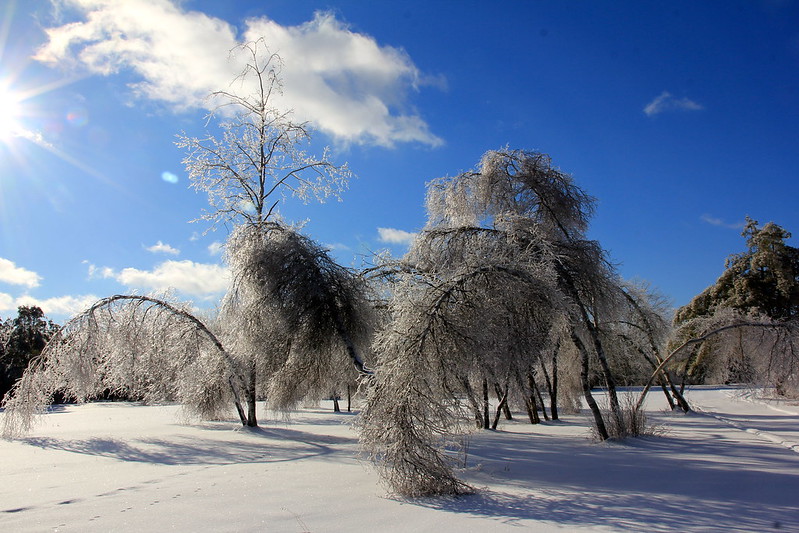
“Ice Cathedrals” photo by Daryne Rockett on Flickr CC-BY-NC-SA 2.0

If you live in a cold climate, have you ever woken up to discover that there had been an ice storm overnight? You look outside to find the bare branches of the trees are encased in a thick layer of ice.

The effect can be absolutely stunning. The branches glisten and sparkle in the sunlight. People rush outside to take photos of the ice-covered trees.

But the beauty masks a danger: those bare branches are at risk. They were never meant to carry the weight of so much ice. The branches may break off, and the tree can be left devastated.

Do you ever feel like you’re carrying too much “weight”?

We often take on too much responsibility in our lives; we carry too much weight on our shoulders. We try to juggle being a spouse, parent, employee, friend, and volunteer. It may look impressive from the outside: people might even admire our glistening, seemingly perfect lives.

But behind the facade lies an uncomfortable fact: we’re at risk. We were never meant to carry all those burdens ourselves. It may seem like we’re coping, but the weight will soon become too much to bear.

The truth is, we’re about to break.

Read more

Do The Math

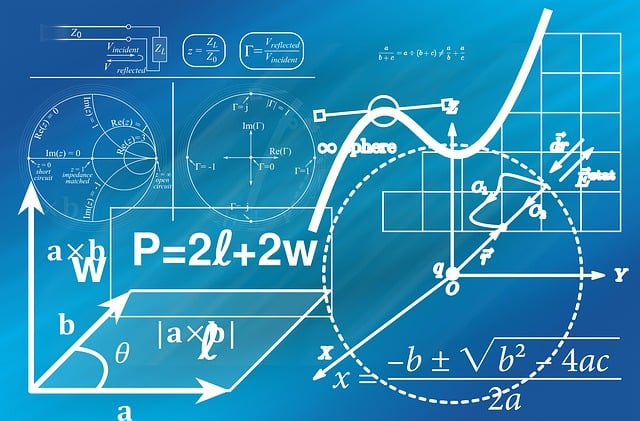
Image by Gerd Altmann from Pixabay

Life is sort of like math class.

How so?

Let’s assume I’m in school and have to take a math test.

There’s an equation at the top of the page I’m handed, and blank space underneath for me to write out my solution to the equation.

But I don’t solve the equation.

Instead, in the first third of the blank space I write a funny, rhyming poem about math class. Next, I draw a bunch of smiling numerals with little arms and legs and depict them as dancing together. In the last third of the page I write a short essay about the benefits of studying math.

I hand in my test to the teacher, and await the results.

The next day, the teacher tells me, “Lori, the poem you wrote had me in stitches. Your drawing of the dancing numbers was delightful, too. And I’d love to incorporate some of the insights in your essay into one of my lessons.”

“That’s great!” I’d say. “So what mark did I get?”

“Zero,” the teacher would respond.

“But why?” I’d ask. “I thought you loved what I wrote.”

“I did: the things you filled the page with were all good and creative and helpful. But they don’t count towards your mark. You failed to do the one thing required of you, which was to solve the equation.”

Is the teacher being fair? Yes.

Is there one thing that God requires of us?

Read more

The Greatest Miracle of All

Image by Chil Vera from Pixabay

What would you pick as Jesus’ greatest miracle?

Feeding the 5,000 with just five loaves and two fish?

Yes, that definitely rates as one of Jesus’ greatest hits.

Calming a storm with only His words?

That one would make the top ten as well.

How about walking on water?

Oh, now we’re getting somewhere! That miracle surely places in the top three.

Wait a second….we haven’t mentioned Jesus’ raising of the dead. He did that several times: the widow of Nain’s son, Jairus’ daughter, and Lazarus.

That has to be Jesus’ greatest miracle!

Doesn’t it?

Perhaps not. Perhaps none of these is Jesus’ greatest miracle.

But if that’s true, then what would qualify?

Read more

The Ultimate Makeover

Photo by Neriman Özaydın via Pexels

We all love before-and-after transformations, don’t we?

The dramatic TV makeover that transforms a Plain Jane into a femme fatale.

Or the renovation that turns a dated, nondescript room into something fit for the pages of “House Beautiful” magazine.

But TV shows and magazines aren’t the only places to find dramatic makeovers.

There are astonishing before-and-after changes in the Bible, too.

One example of this is found in Peter, the brash, impulsive disciple of Jesus. A bit hot-headed, Peter was often afflicted by “foot-in-mouth” disease.

When we first meet Peter, he’s working as a fisherman. When Jesus provides the group with a miraculous catch of fish after they’d worked all night and caught nothing, Peter is scared. He says, “Depart from me, Lord, for I am a sinful man!” ((Luke 5:1-10)

The demonstration of Jesus’ holiness and miracle-working power leaves Peter shaken.

Another snapshot of Peter is seen when he and the disciples are in a boat with Jesus. A storm whips up and they are afraid for their lives; Jesus, however, is asleep. Peter and the others wake Jesus up and say, “Don’t you care that we’re about to die?” (Matthew 8:23-27)

The prospect of imminent death rattles Peter.

Our last view of Peter occurs when Jesus has been arrested. Peter skulks around to see what will become of him while at the same time trying to disassociate himself from Jesus. When a of couple servant girls insist that he was definitely a friend of Jesus, Peter doesn’t have the courage to admit it. (Matthew 26:69-74)

The possibility of getting in trouble compels Peter to clam up about the truth.

But what a difference a day makes!

I’m referring, of course, to Resurrection day!

Read more